











1927 Stutz AA Black Hawk Vertical 8 Boattail Speedster
Inventory Number: 3130
SOLD
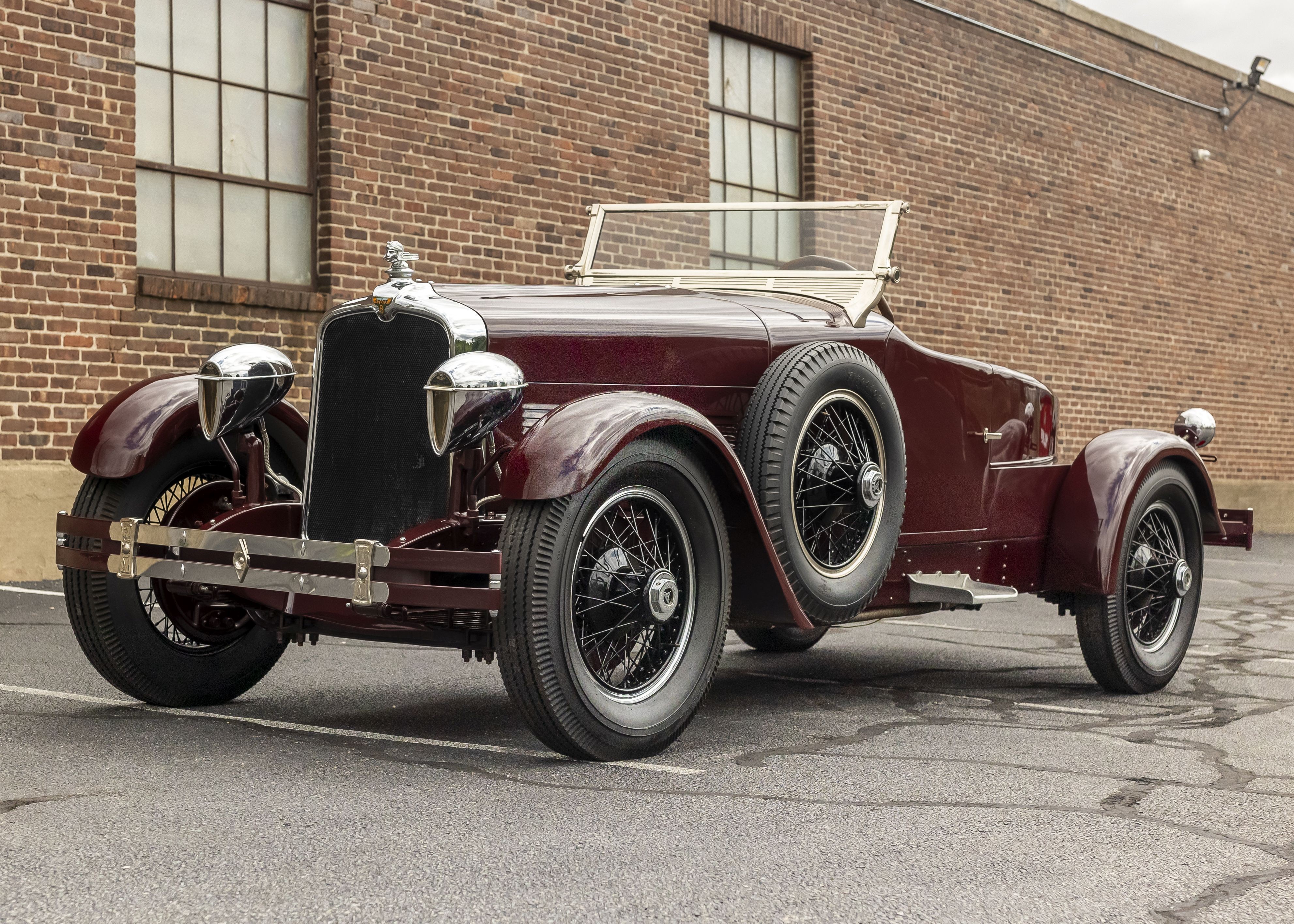
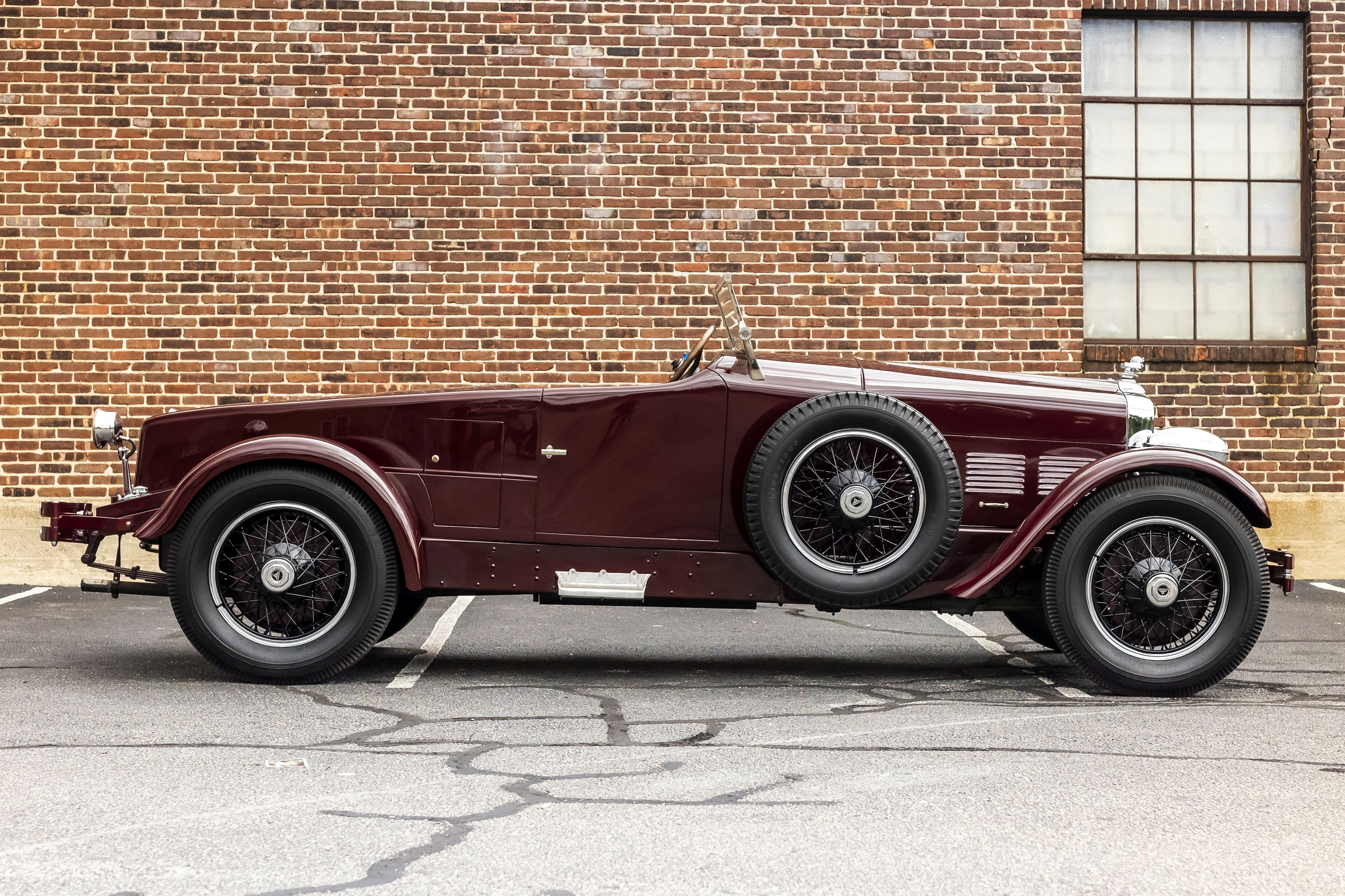
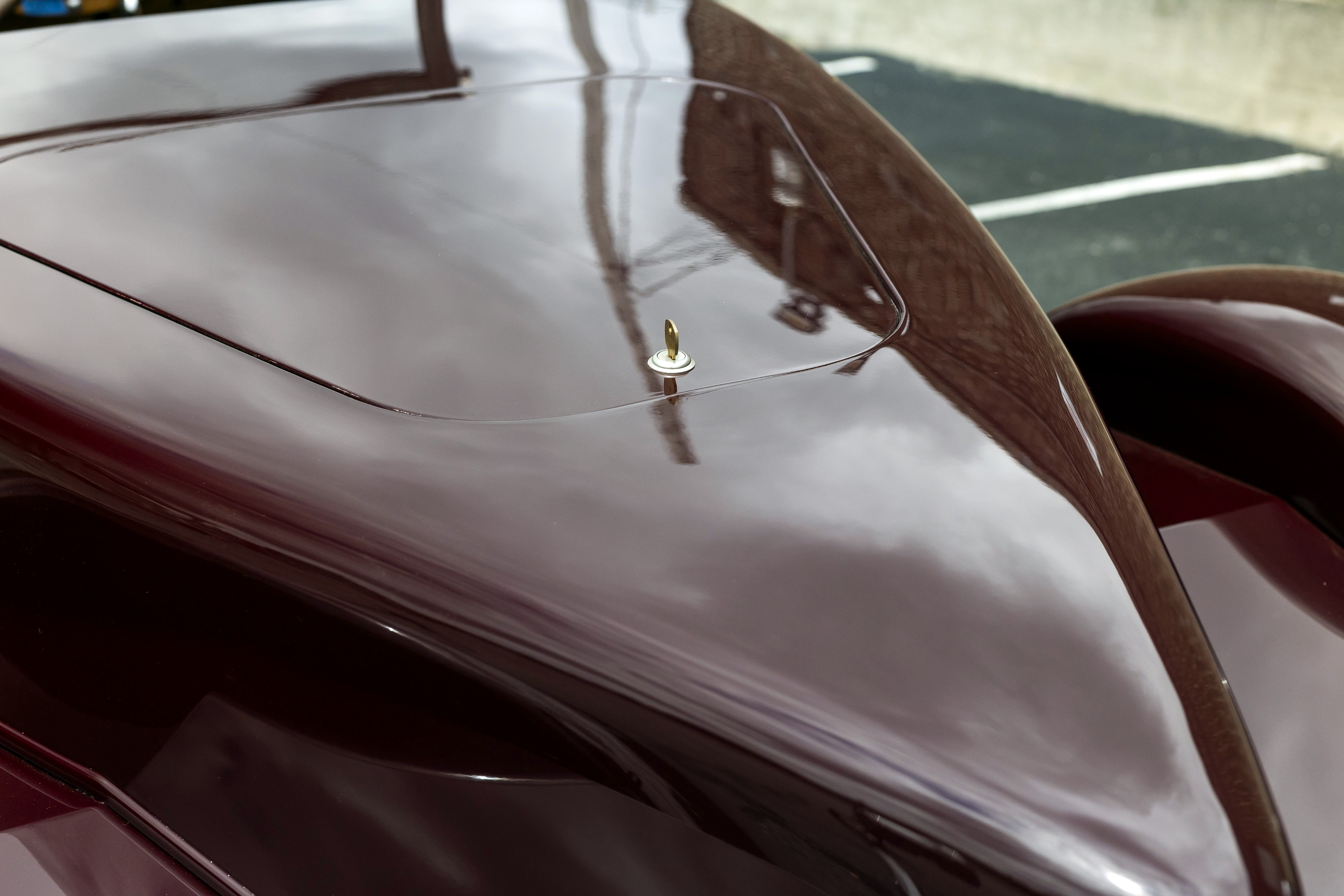
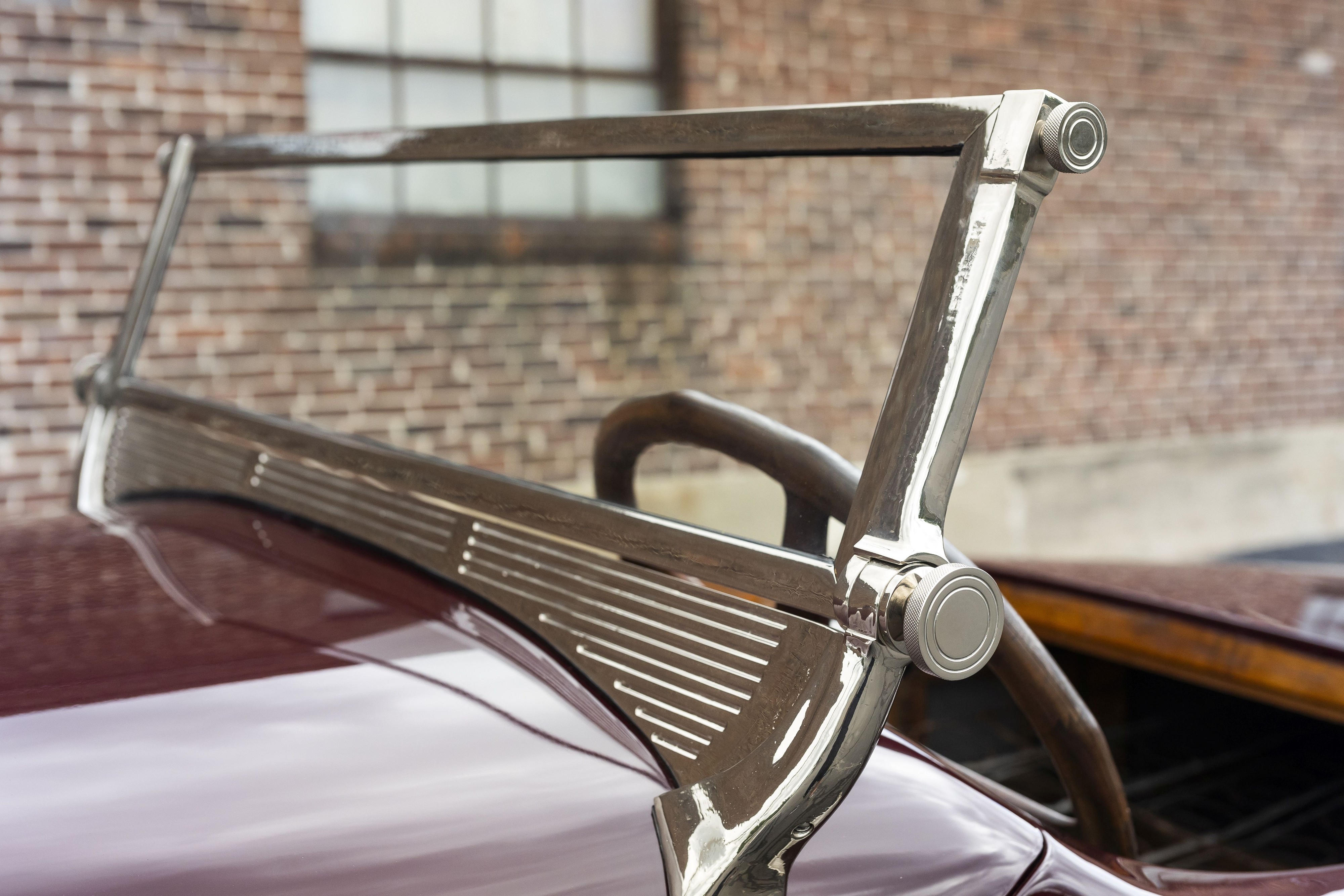
This magnificent two-passenger Stutz Vertical Eight features a beautiful sporting boattail speedster body that has been
carefully restored to a high standard. The restoration was professional and is presented in burgundy paint with
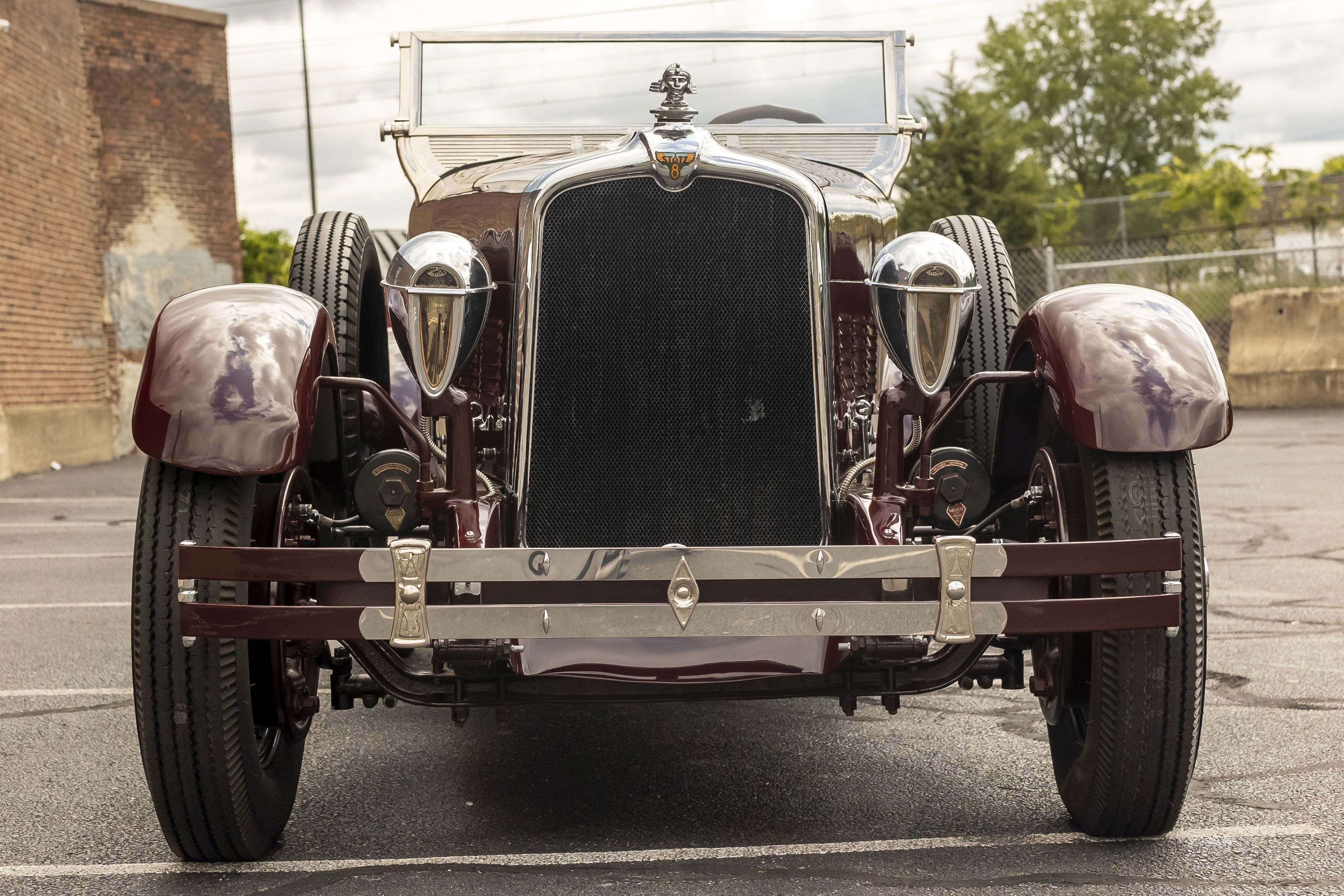
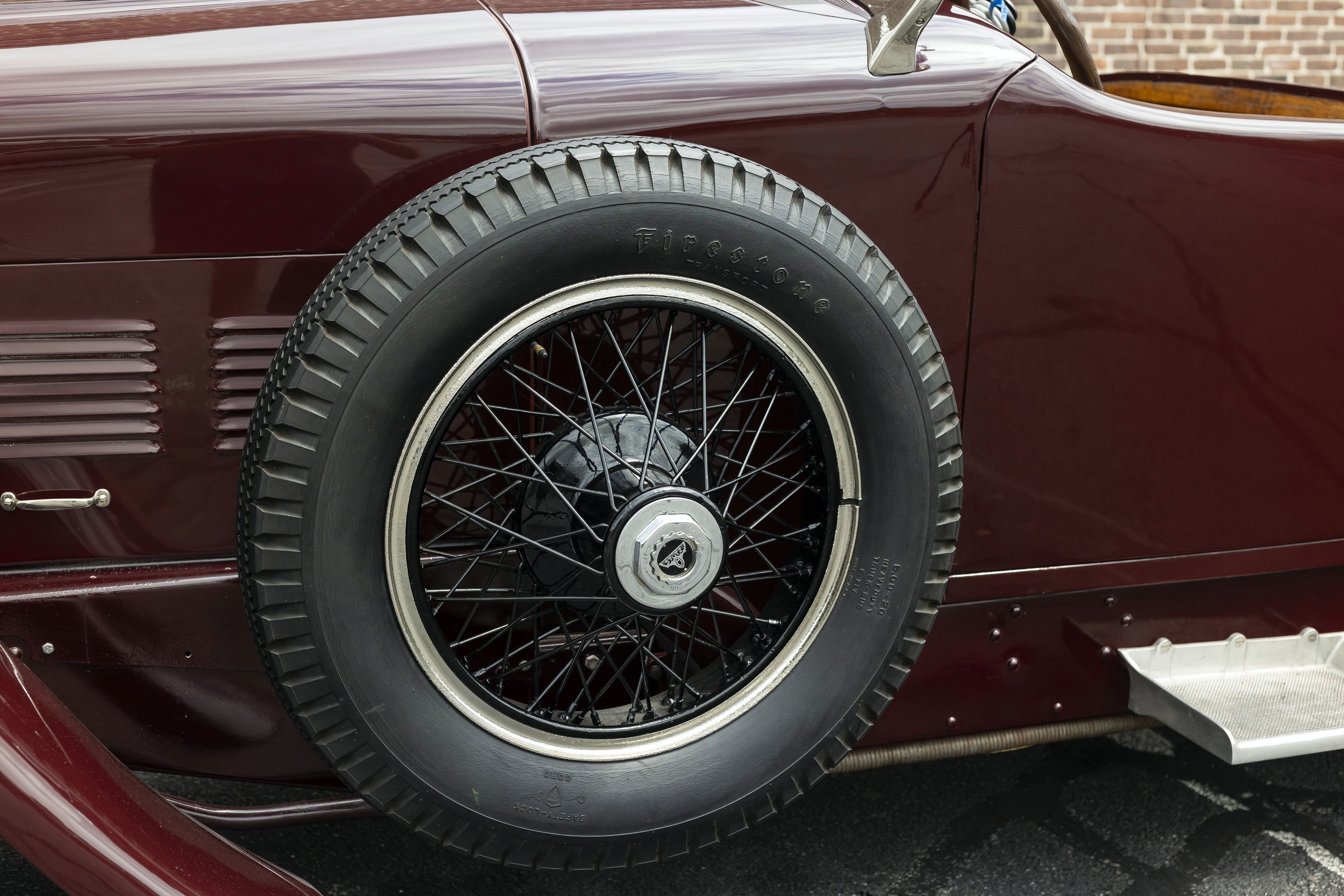
blackwall tires, a red leather interior, and cycle-style fenders. The headlights are of the rare and spectacular
“Woodlite” brand, which adds significantly to the sultry, appealing look of this stunning automobile. A rare
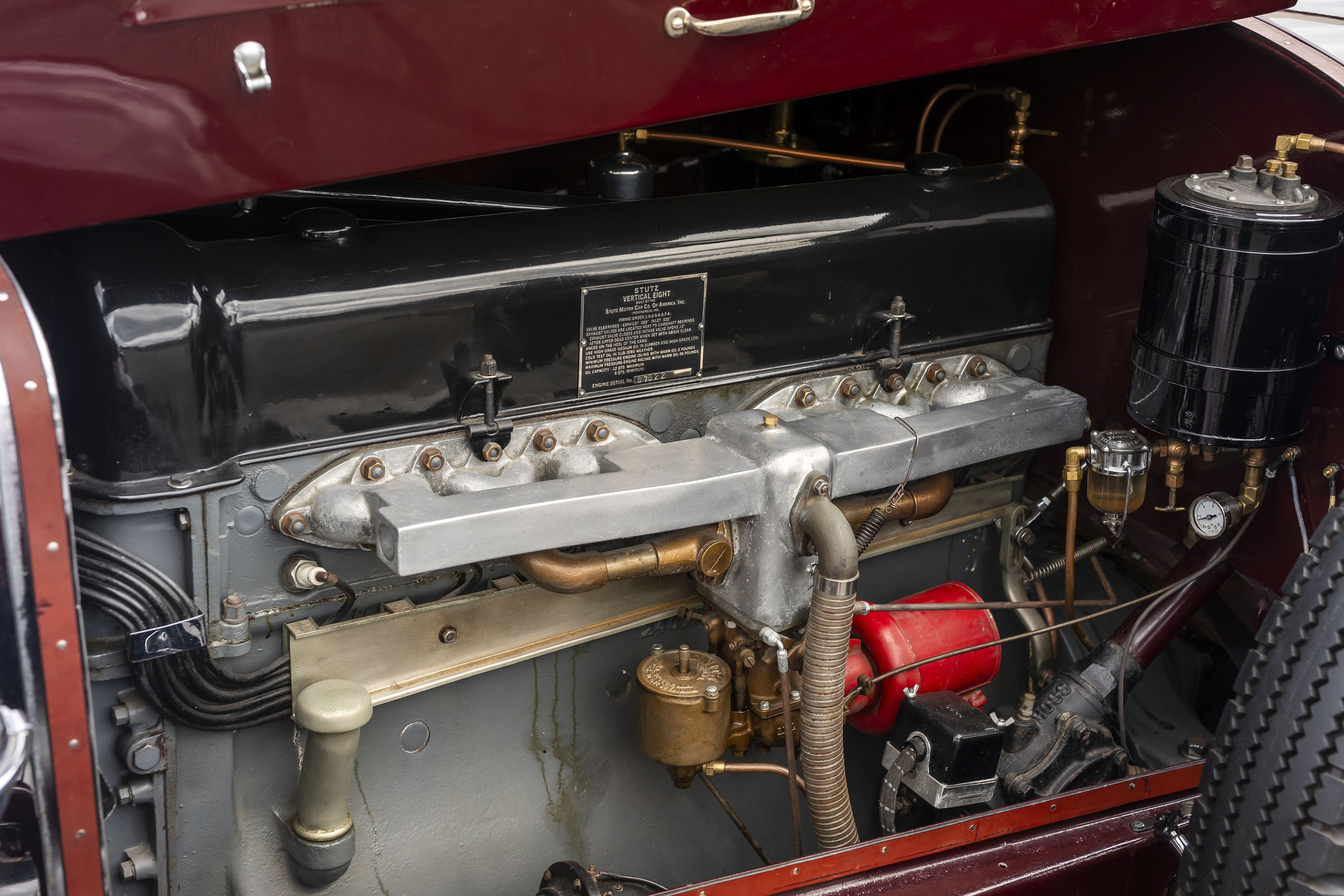
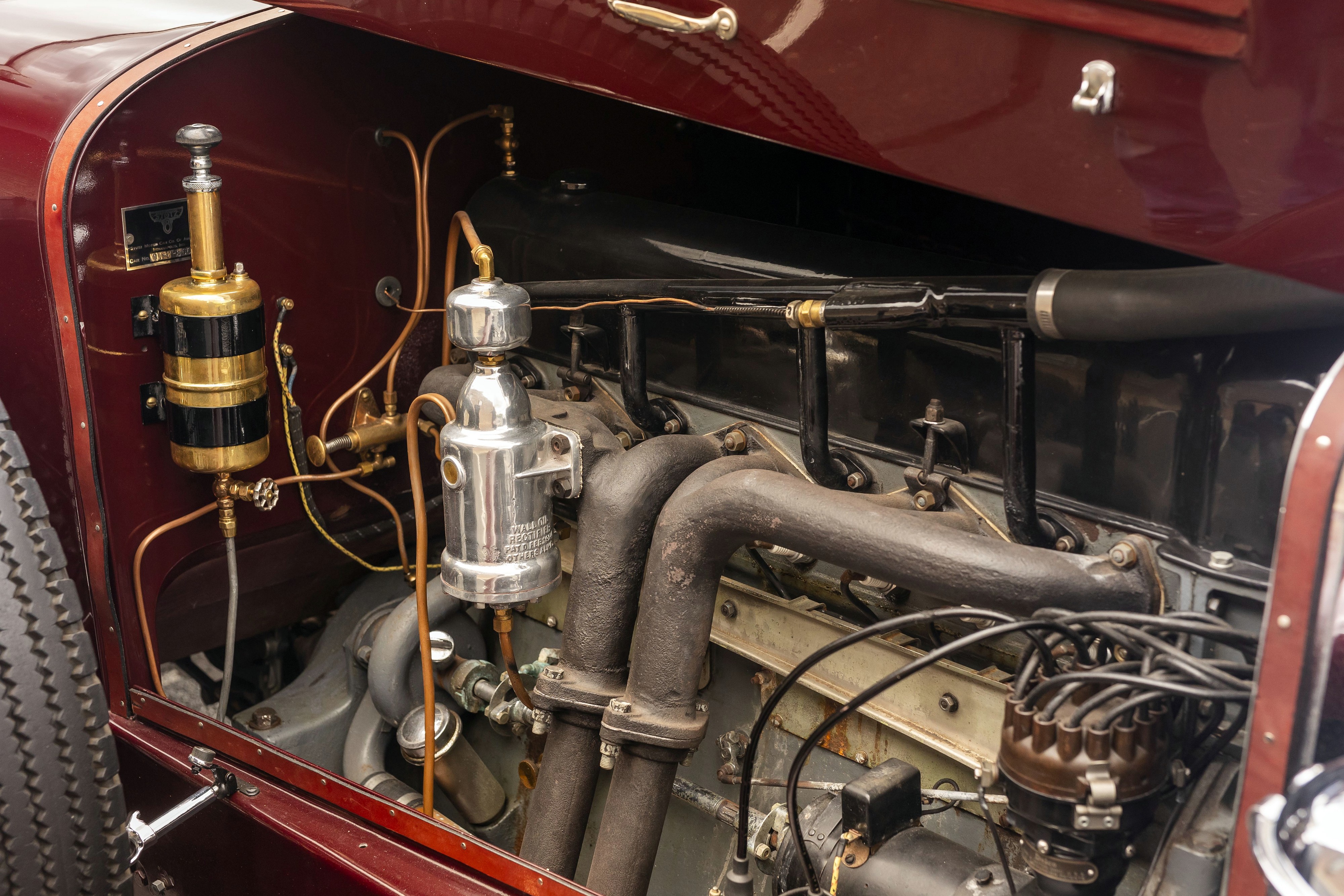
original Stutz Ra mascot adorns the radiator. The Vertical Eight engine is a powerful runner, which has been
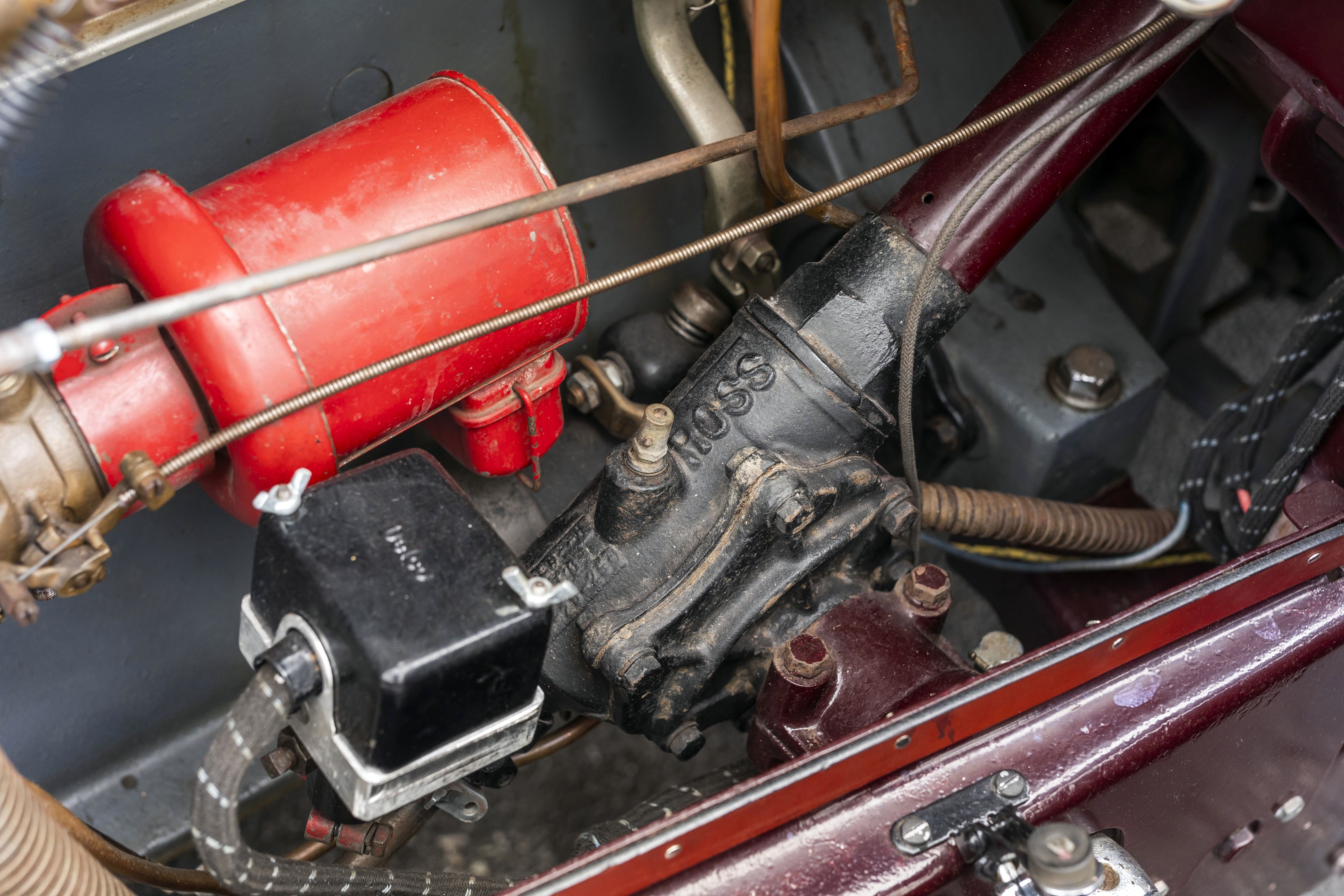
completely rebuilt and expertly detailed. It has been color-keyed with a beige-painted block and red cam covers. Thanks
to the overhead cam and dual ignition, the 298-cubic-inch mill is good for a strong 95 horsepower. This example still
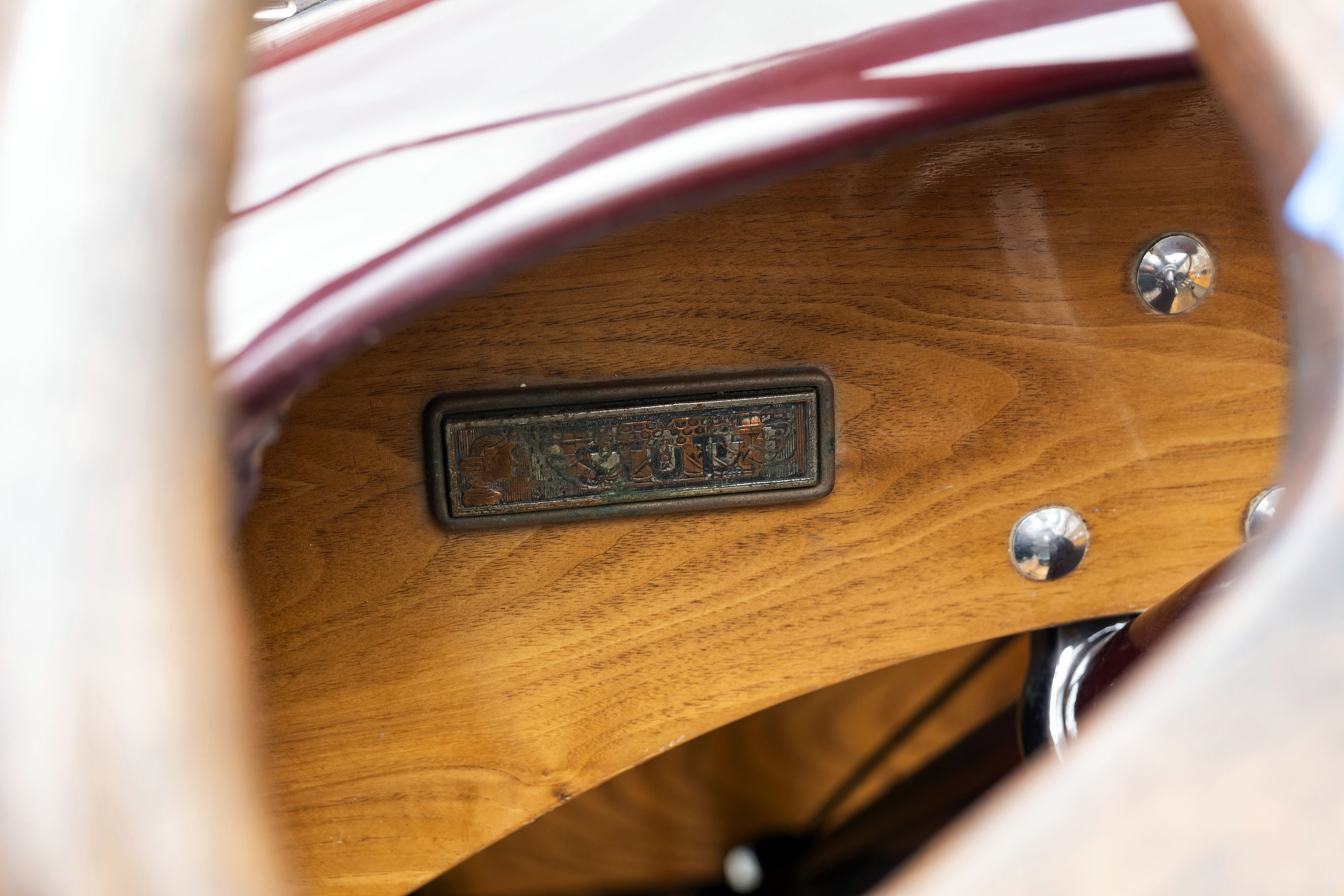
sports its original ID tag number AA-2-36601, and it presents well — ready for show or touring. Surviving examples
are rare, and rarer still are they available for sale.
In 1919, Stutz left to form other companies, leaving Allan Aloysius Ryan in control of Stutz Motor, getting them into trouble for stock manipulation a year later, and bankrupting the Company by 1922. The new owners brought in Frederick Ewan Moskowics in 1923, under whose guidance they pivoted to producing safety cars. In 1933, they began focusing on delivery vehicles, eventually ceasing production of automobiles after producing 35,000. In 1935, Stutz was again charged with stock manipulation, filed for bankruptcy in 1937, and was liquidated in 1939.
Stutz was revived in 1968 by New York banker James O’Donnell into Stutz Motor Car of America to produce neoclassic automobiles and saw reasonable success, though production was limited. Sales began to wane in 1985, and production ceased in 1995, with only 617 vehicles made, though the Company still exists.
Throughout its checkered past, Stutz accomplished many things. The Company was credited with developing the underslung chassis and, at one point, was advertised as the “World’s Most Expensive Car.” Many celebrities purchased Stutz cars, including Elvis Presley, Frank Sinatra, Dean Martin, Evel Knievel, Barry White, Sammy Davis, Jr., and Lucille Ball. In total, Stutz produced 39,000 automobiles of various models.
The 1927 Stutz Vertical Eight Black Hawk was the fastest American-built production car of the year, the successor to the famed Bearcat. It was the first “boattail” speedster manufactured by a major American manufacturer and it took home the AAA Stock Car Championship and Indianapolis Stevens Trophy Cup. Debuting in 1927, a Vertical Eight-equipped Model AA set a 24-hour speed record, and in 1928, took second at the 24 Hours of Le Mans.
- CAR NO: AA-2-86601
- ENGINE: Vertical Eight Single Overhead Camshaft 298 cu. in.
- ENGINE NO: 87622
- HP: 95
- BRAKES: Four-Wheel Hydraulic Drum
- BHP: 110
- TRANSMISSION: Three-Speed Manual
- SUSPENSION: Solid Front Axle and Live Rear Axle with Semi-Elliptic Leaf Springs
- WHEELBASE: 131 in.
- HEADLIGHT: Woodlite by Harvey Machine Co.
- STABILATOR: Watson Relaxed Motoring by John Warren Watson Co. of Philadelphia, PA
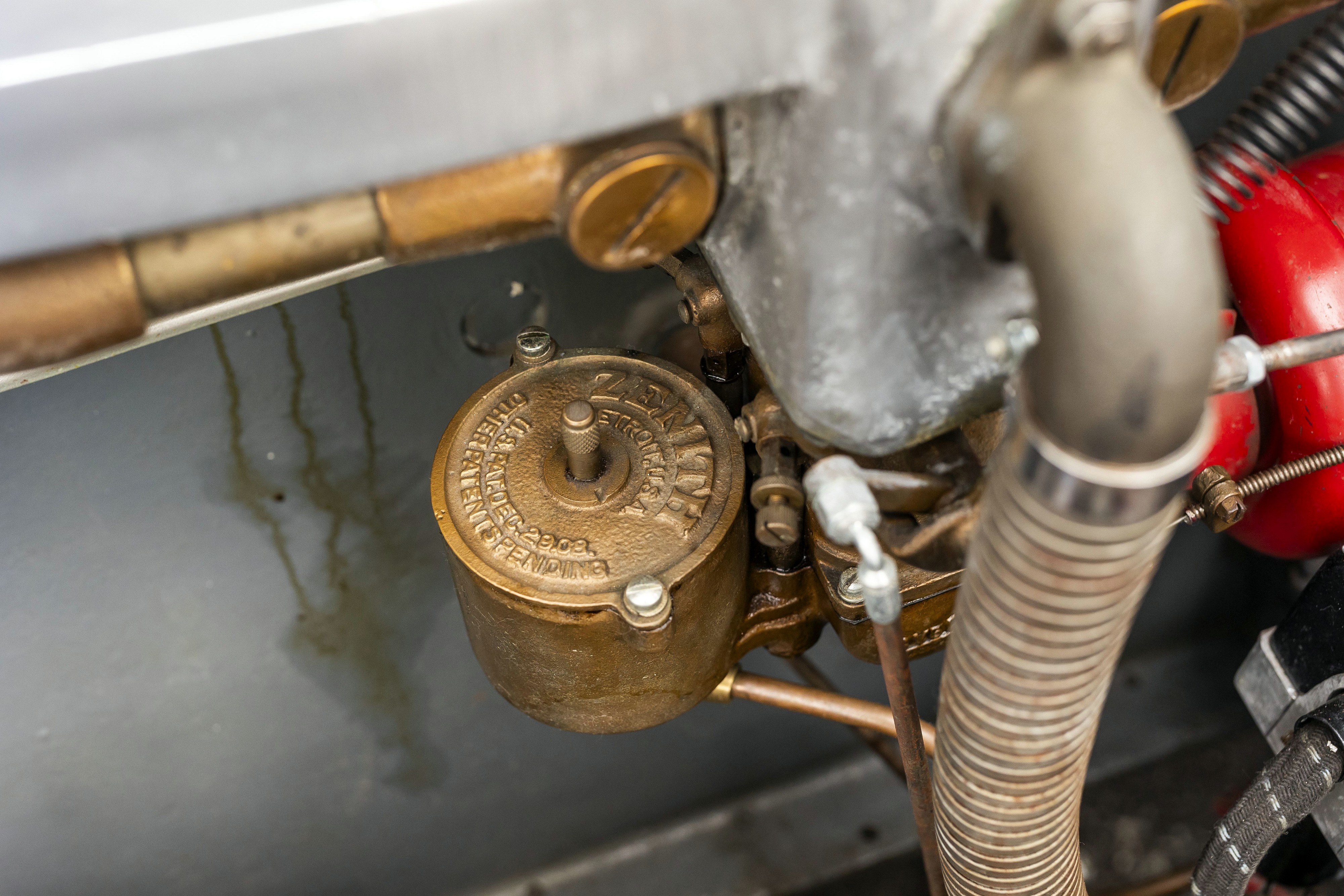
- CARBURETOR: Zenith of Detroit, MI
- VACUUM FUEL FEED SYSTEM: Stewart of Chicago, IL
- HOOD ORNAMENT: Rare Stutz Ra Mascot
- DOCUMENTATION: US Title
In 1919, Stutz left to form other companies, leaving Allan Aloysius Ryan in control of Stutz Motor, getting them into trouble for stock manipulation a year later, and bankrupting the Company by 1922. The new owners brought in Frederick Ewan Moskowics in 1923, under whose guidance they pivoted to producing safety cars. In 1933, they began focusing on delivery vehicles, eventually ceasing production of automobiles after producing 35,000. In 1935, Stutz was again charged with stock manipulation, filed for bankruptcy in 1937, and was liquidated in 1939.
Stutz was revived in 1968 by New York banker James O’Donnell into Stutz Motor Car of America to produce neoclassic automobiles and saw reasonable success, though production was limited. Sales began to wane in 1985, and production ceased in 1995, with only 617 vehicles made, though the Company still exists.
Throughout its checkered past, Stutz accomplished many things. The Company was credited with developing the underslung chassis and, at one point, was advertised as the “World’s Most Expensive Car.” Many celebrities purchased Stutz cars, including Elvis Presley, Frank Sinatra, Dean Martin, Evel Knievel, Barry White, Sammy Davis, Jr., and Lucille Ball. In total, Stutz produced 39,000 automobiles of various models.
The 1927 Stutz Vertical Eight Black Hawk was the fastest American-built production car of the year, the successor to the famed Bearcat. It was the first “boattail” speedster manufactured by a major American manufacturer and it took home the AAA Stock Car Championship and Indianapolis Stevens Trophy Cup. Debuting in 1927, a Vertical Eight-equipped Model AA set a 24-hour speed record, and in 1928, took second at the 24 Hours of Le Mans.