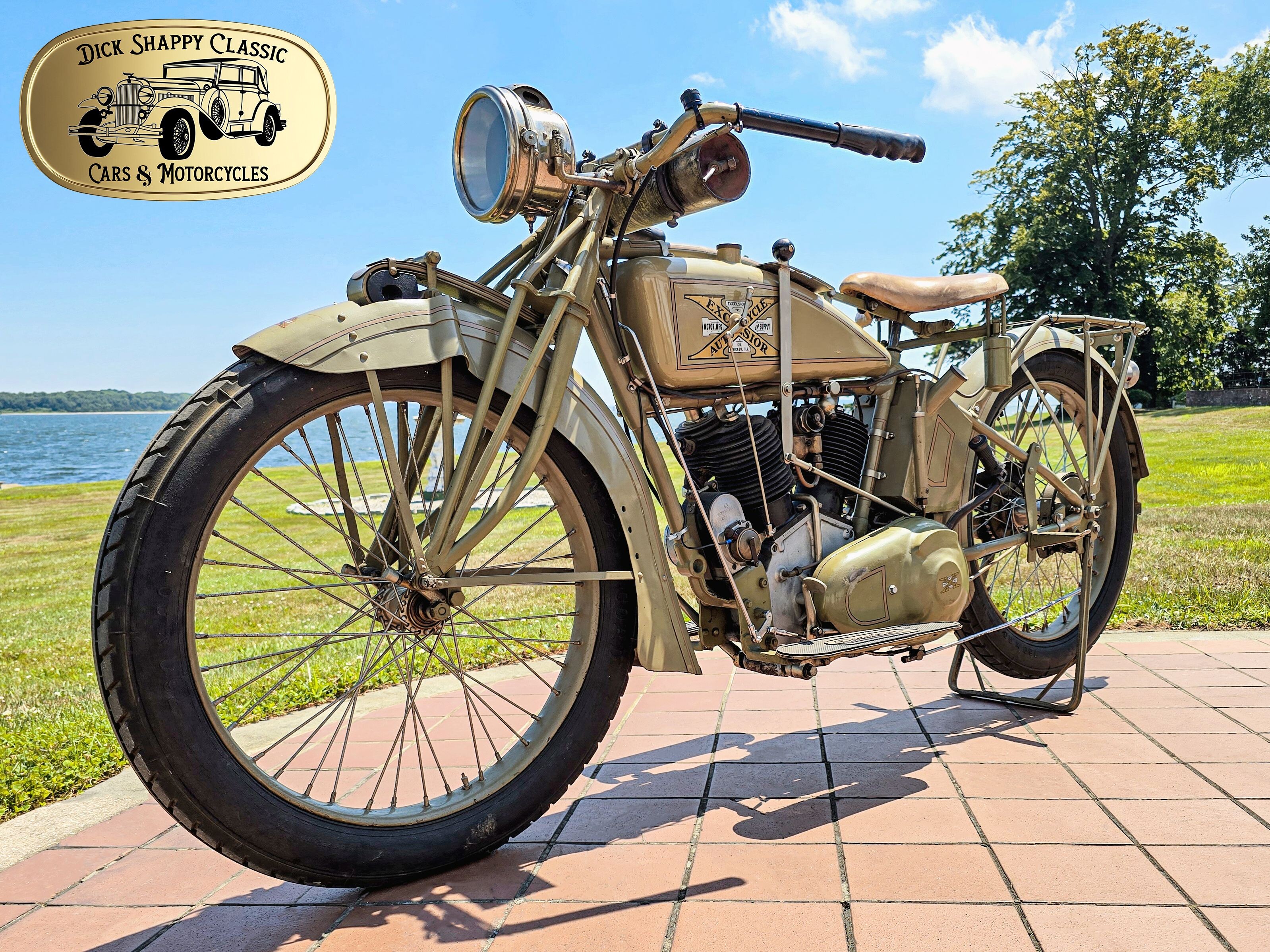
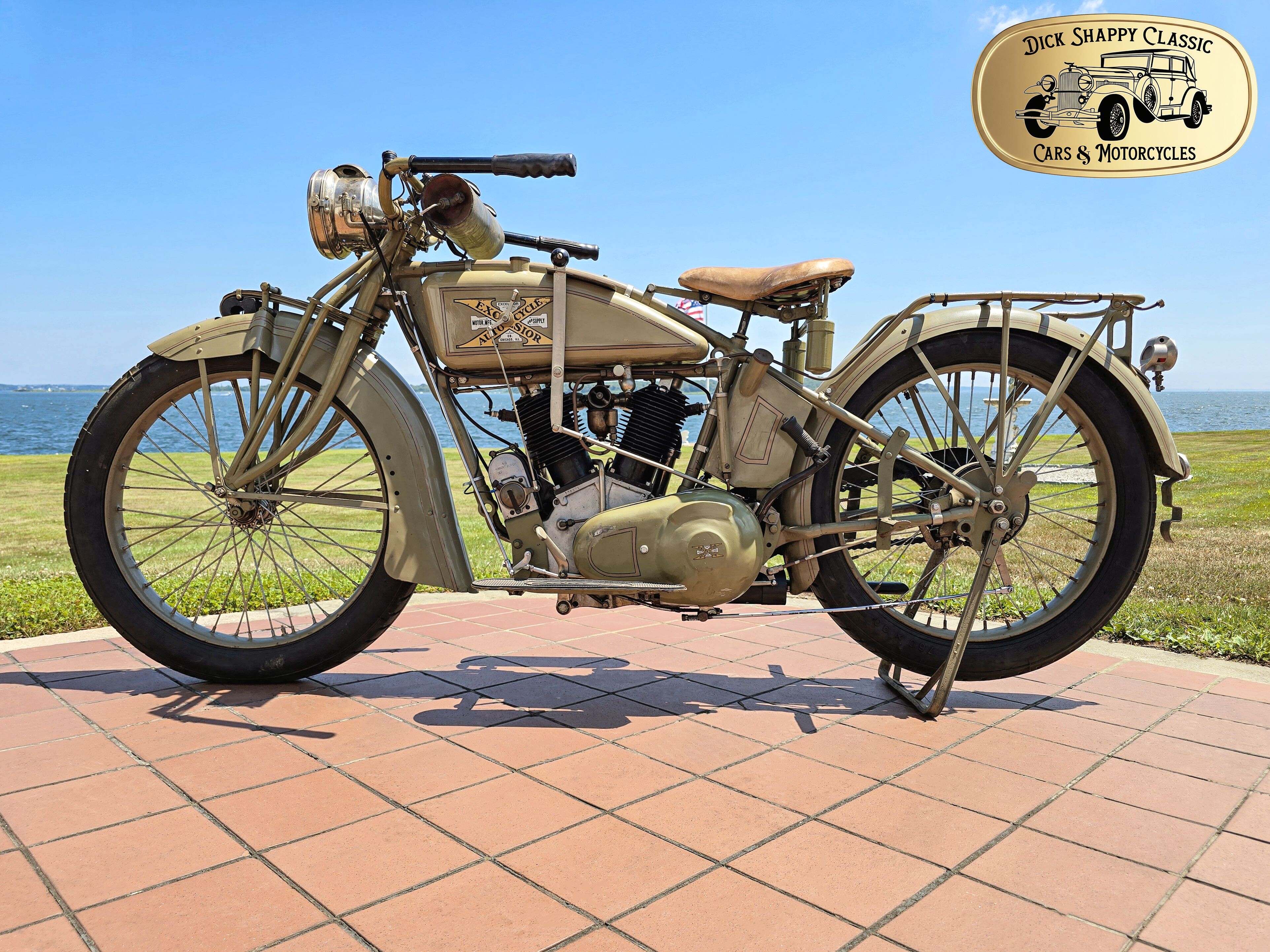
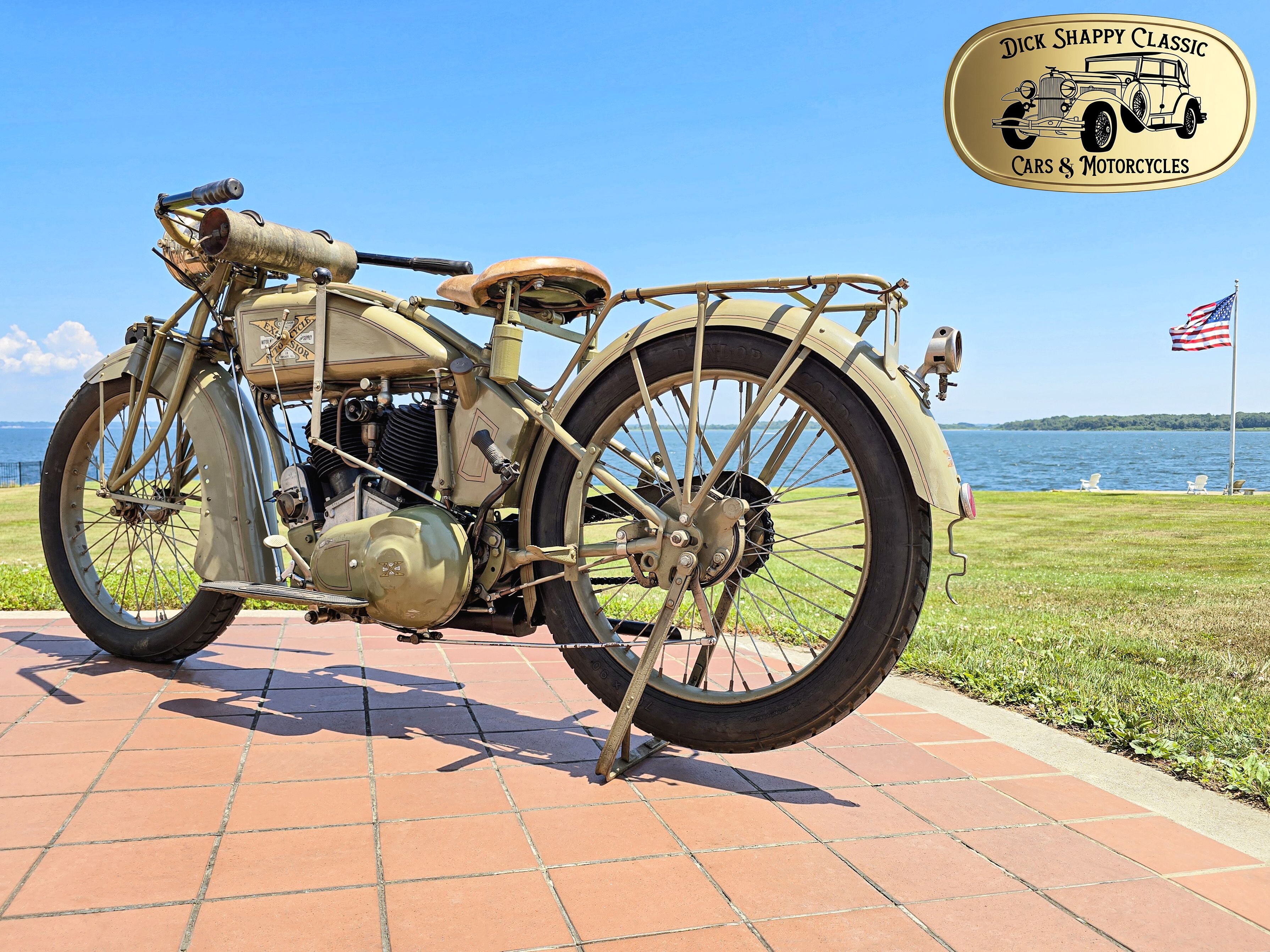
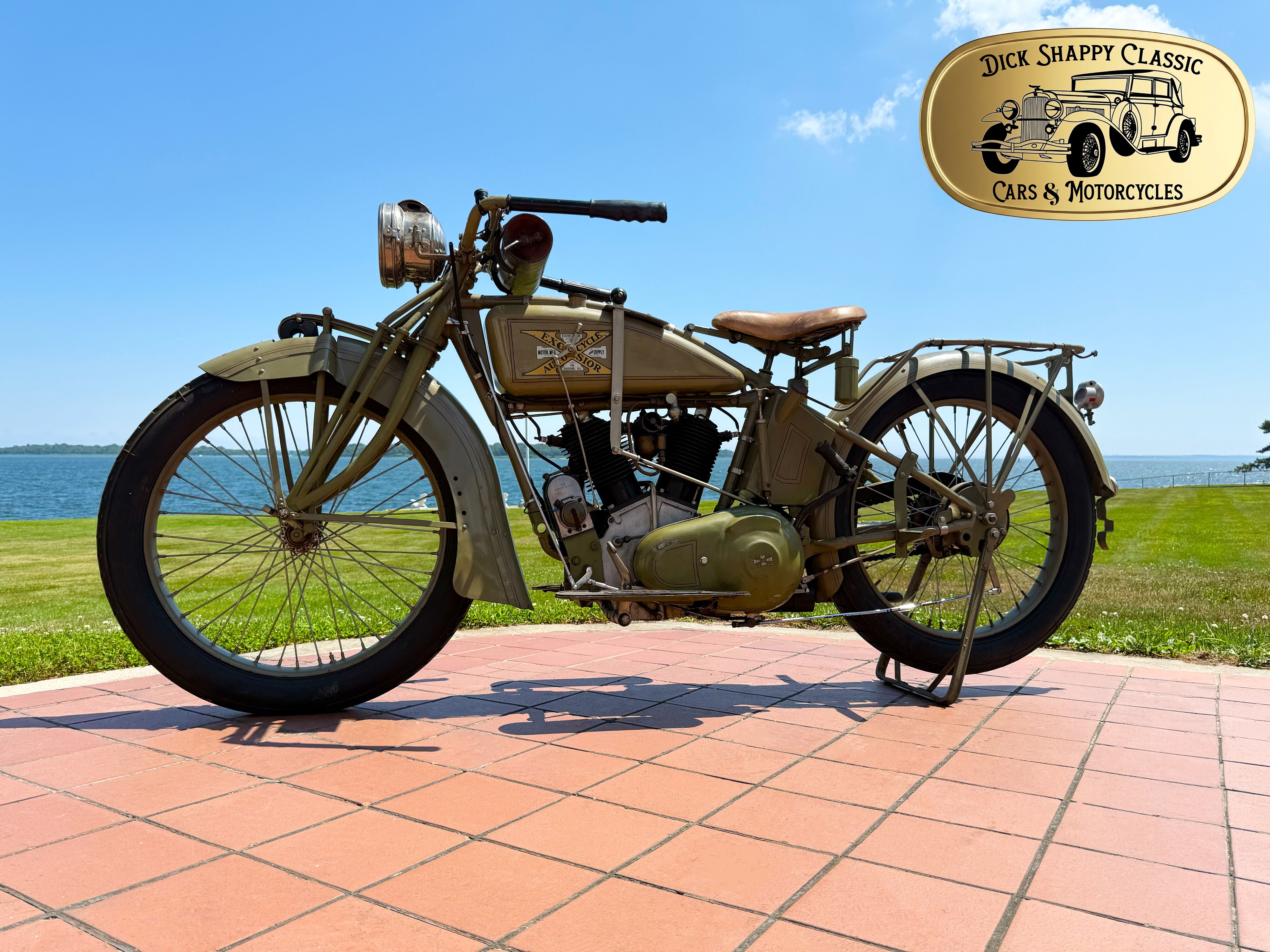
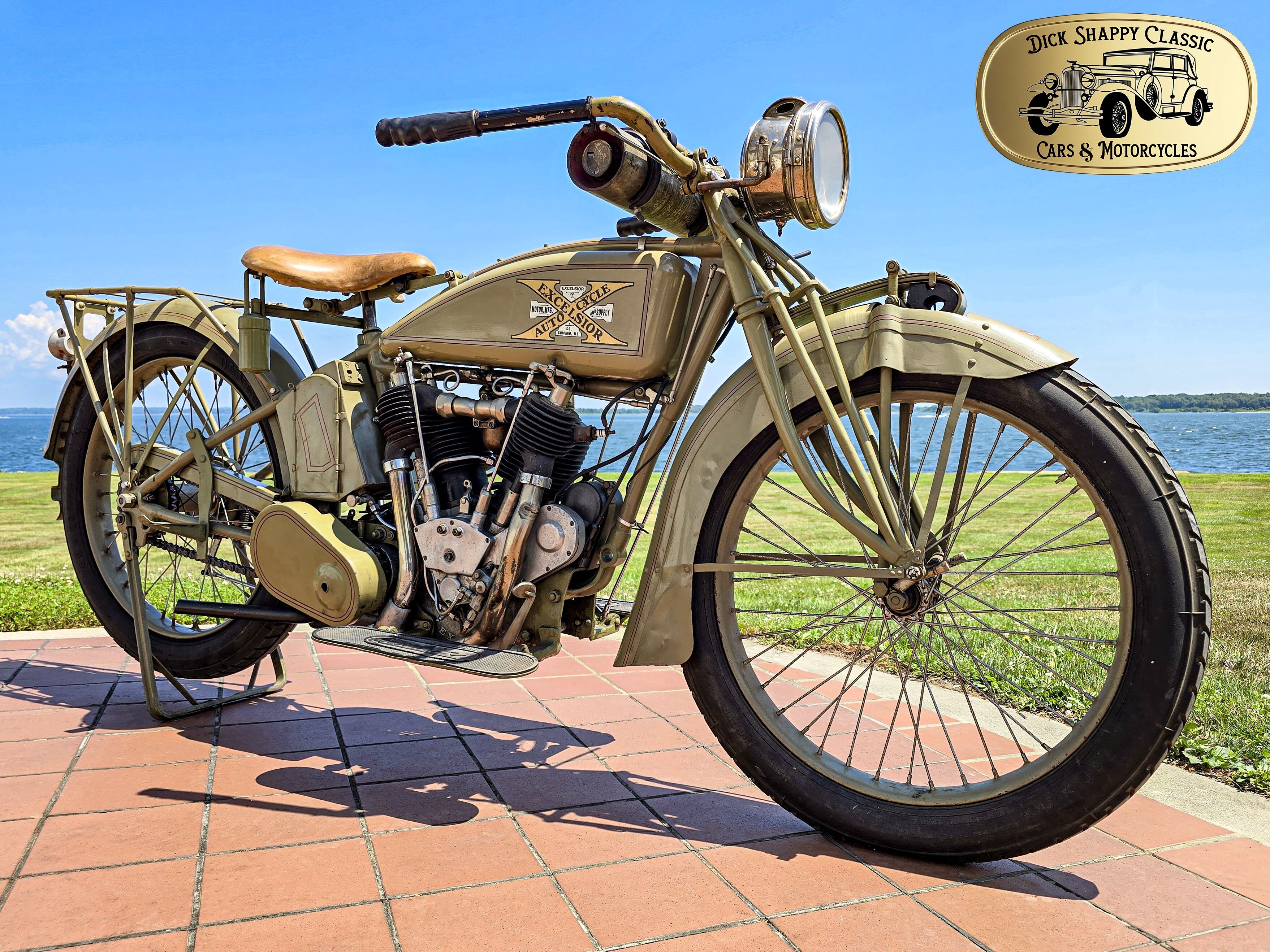
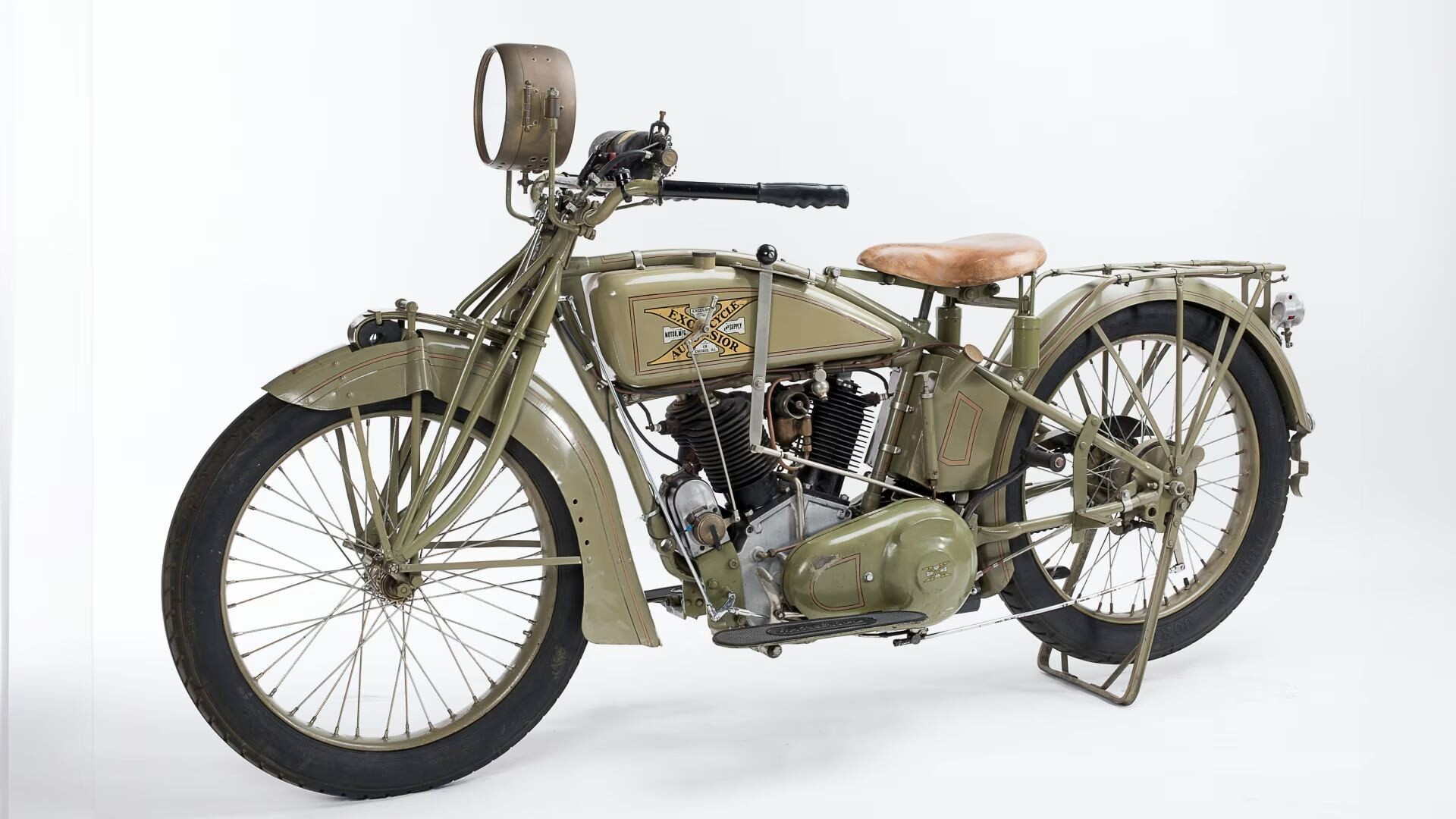
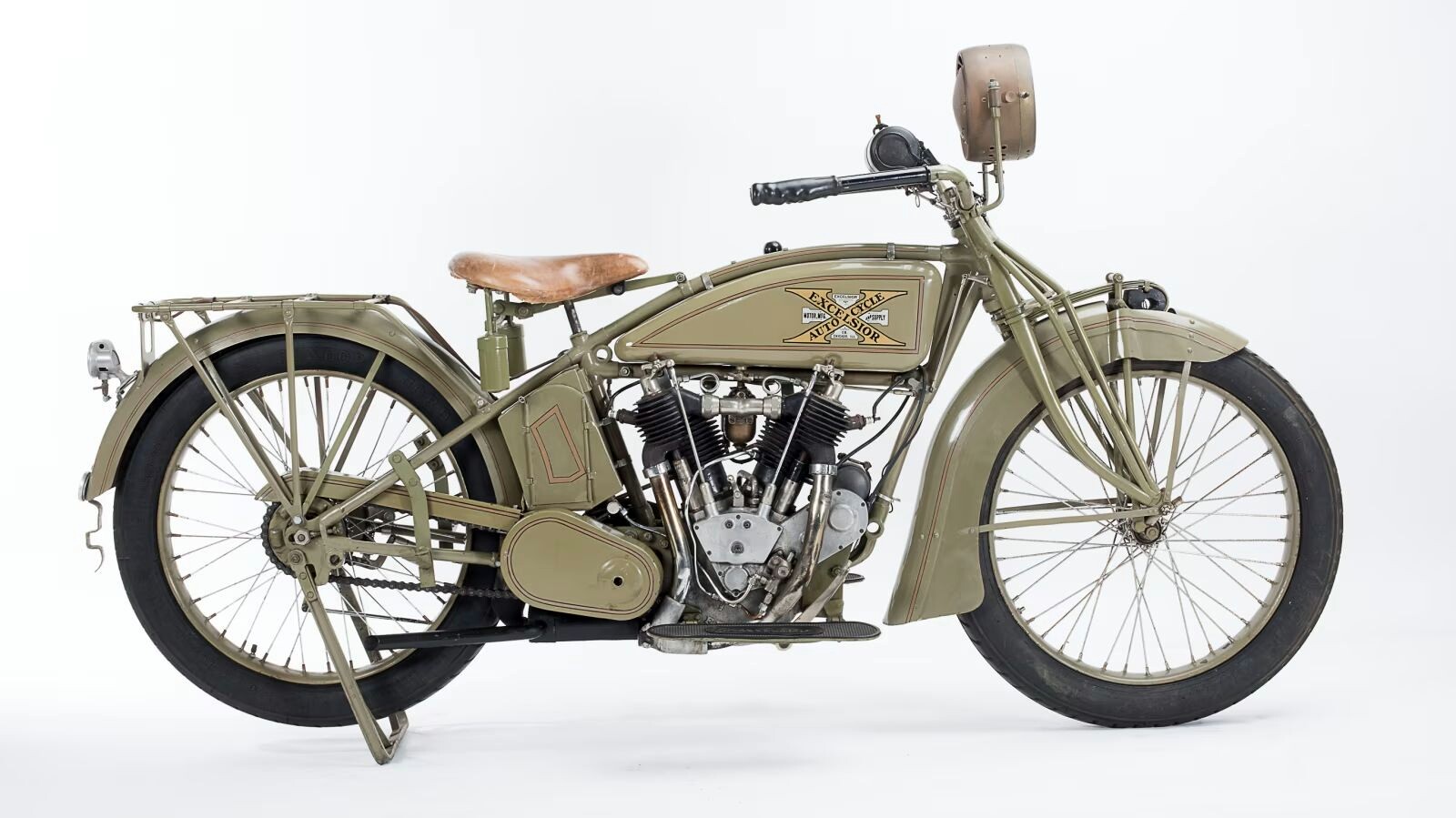
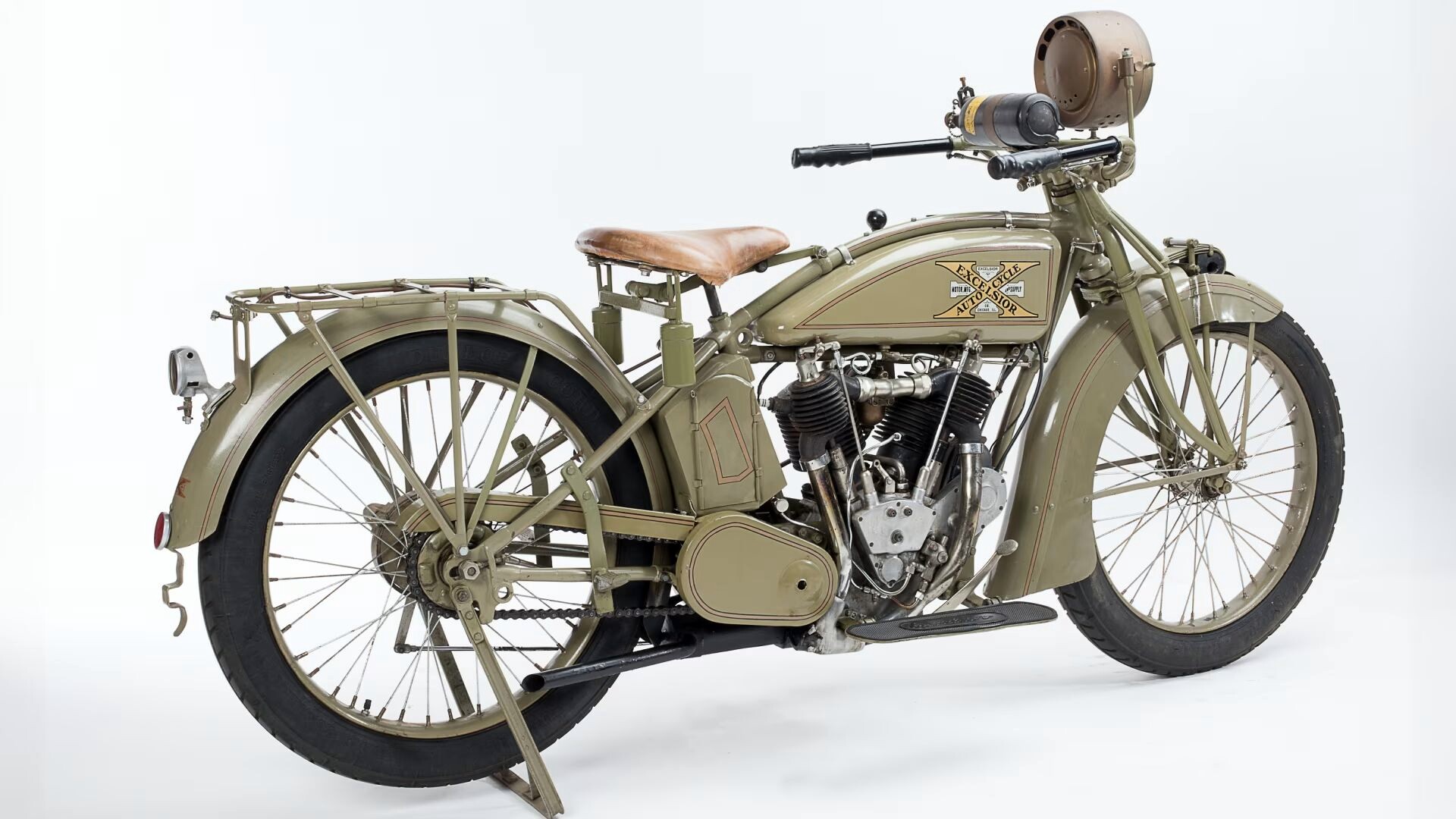
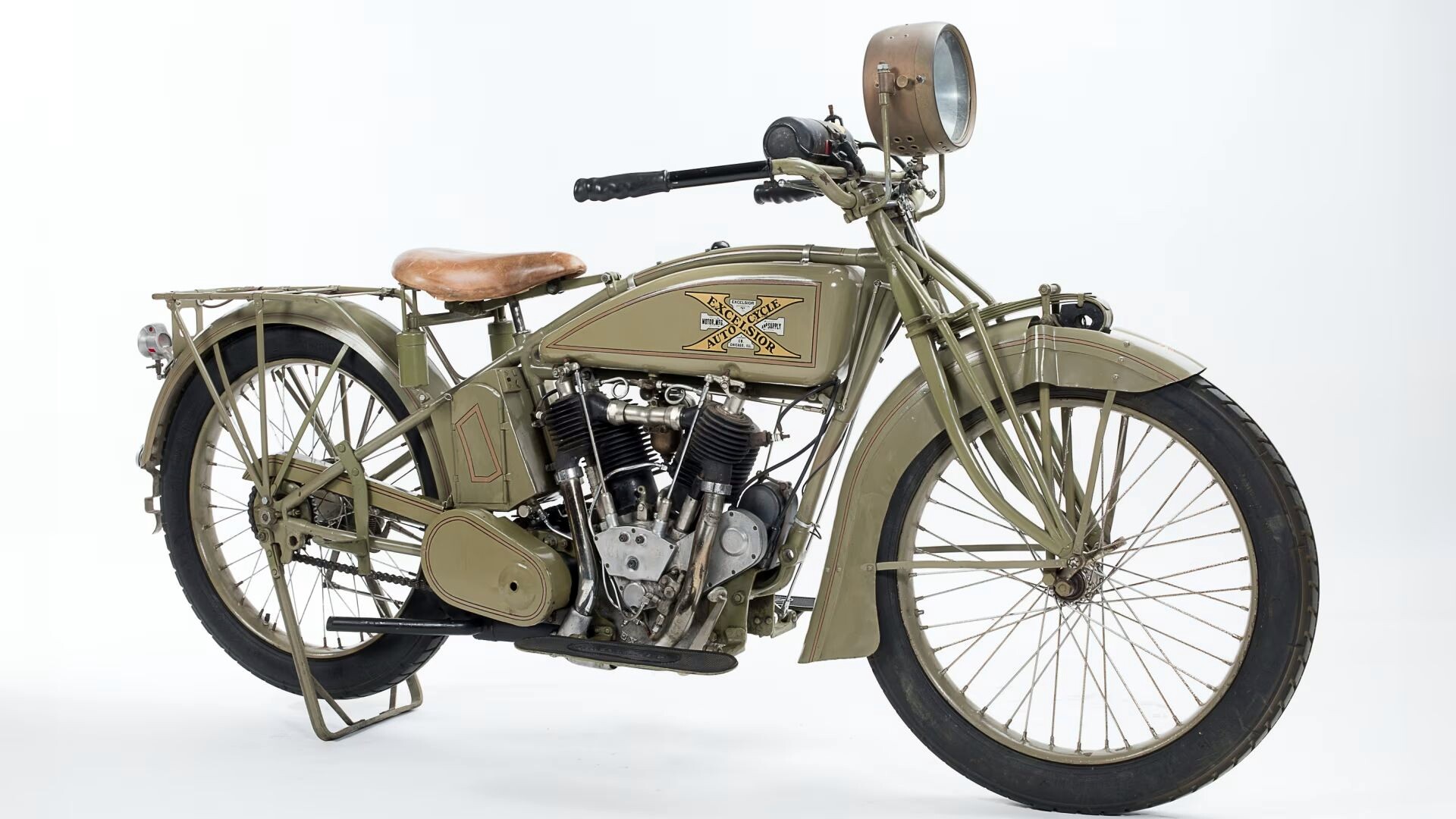
1919 Excelsior Model 19 Big-Valve Twin
Inventory Number: 5141
$65,000
- YEAR: 1919
- MAKE: Excelsior
- MODEL: Model 19 Big-Valve Twin
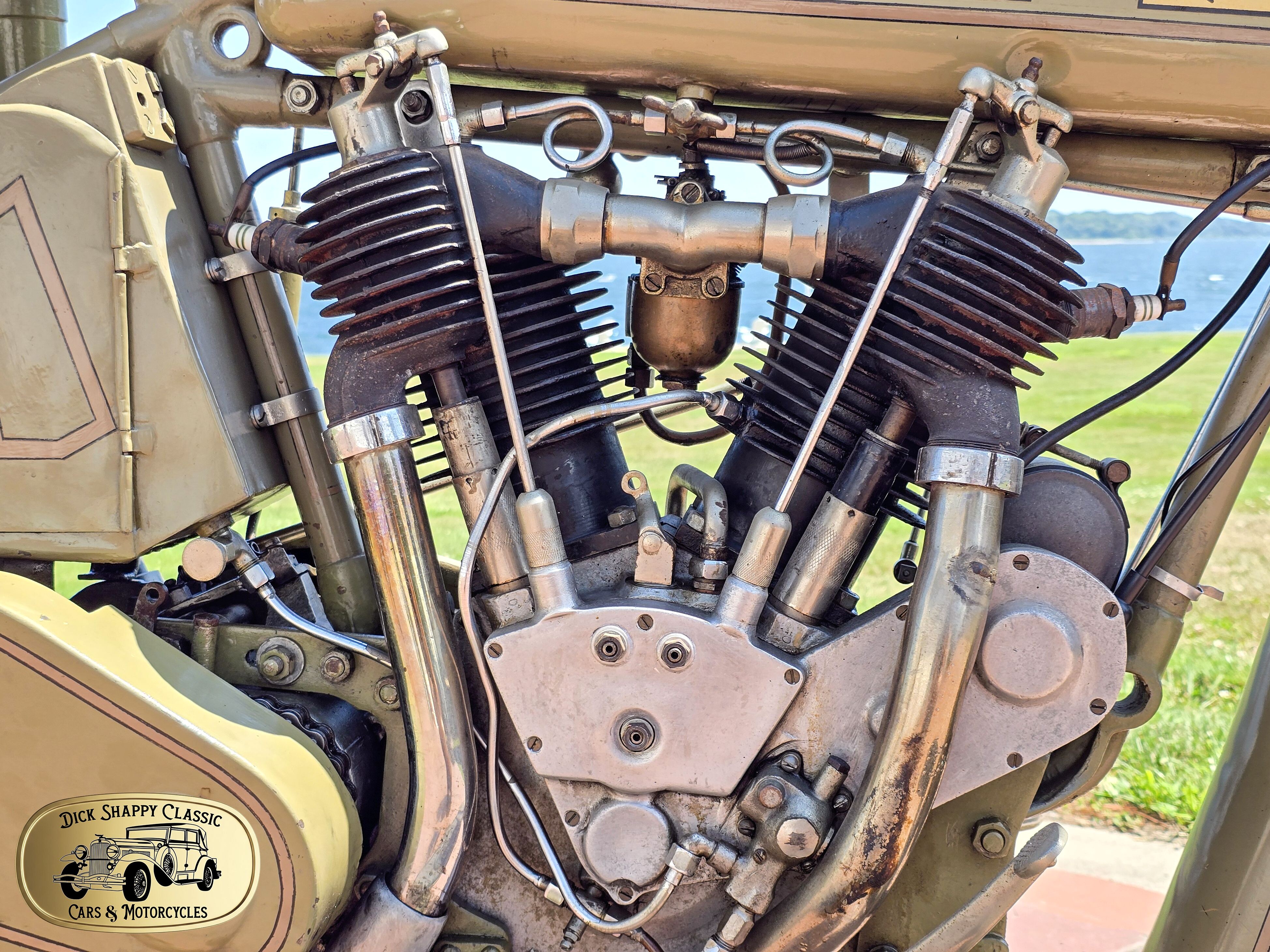
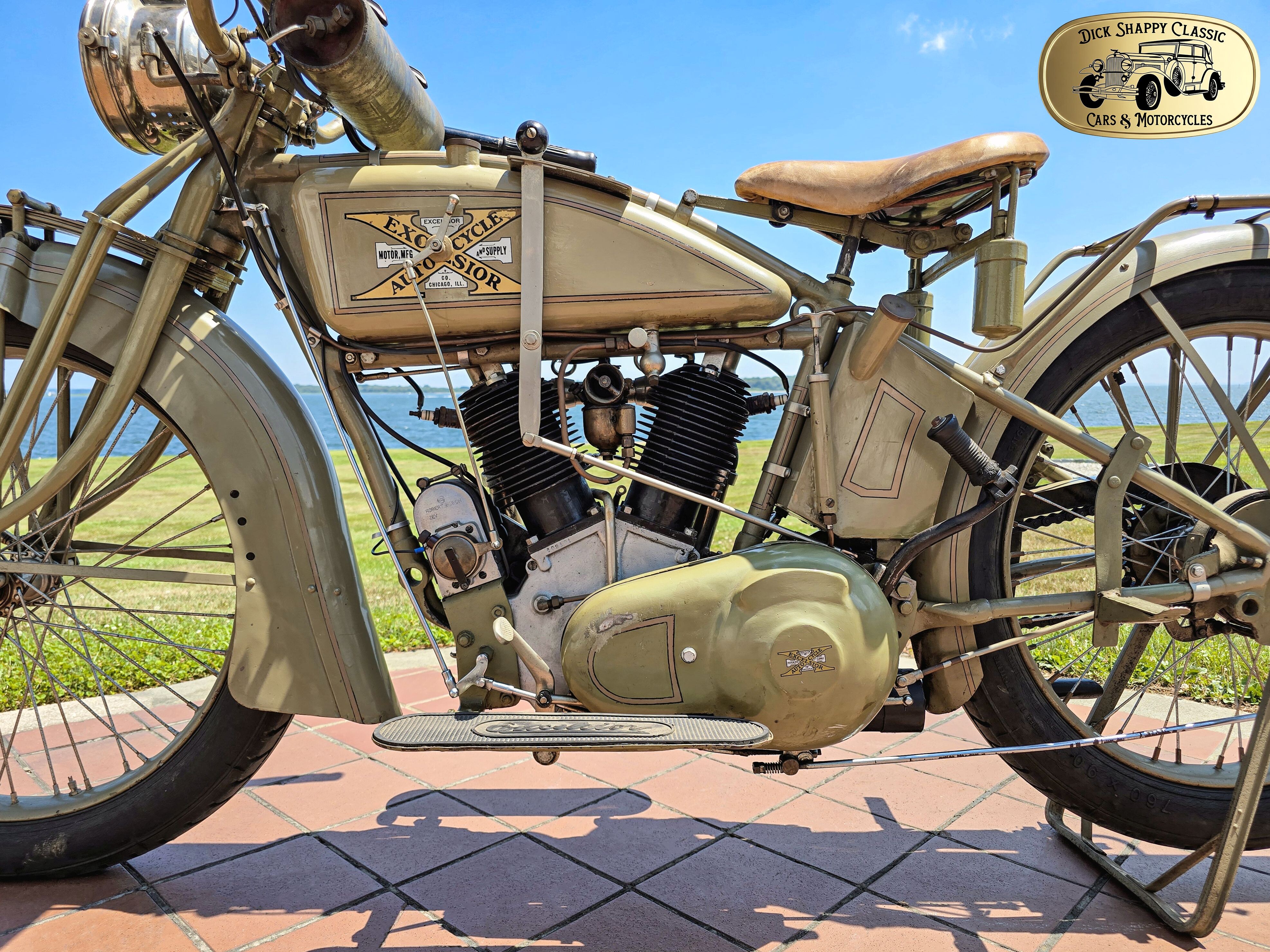
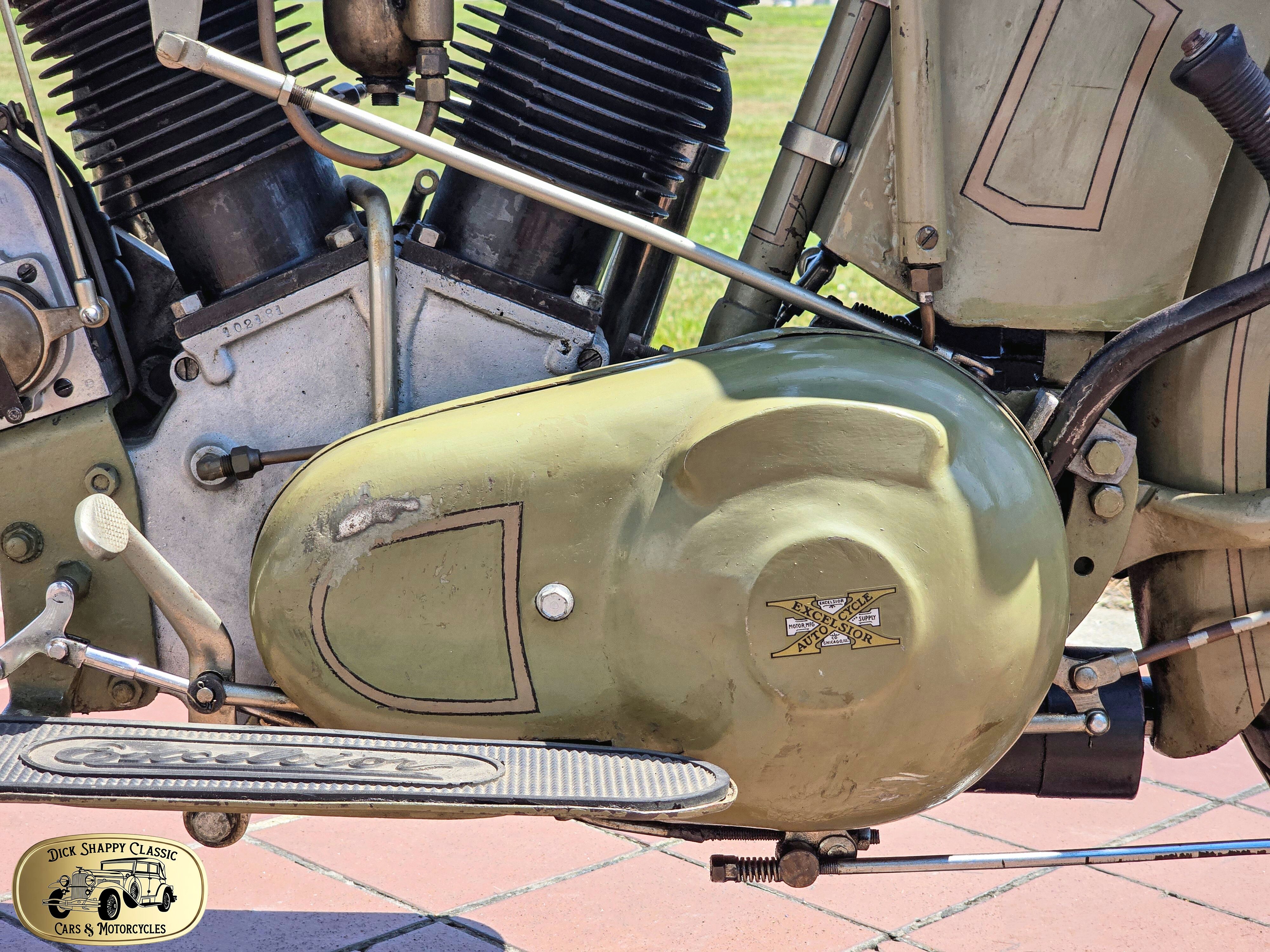
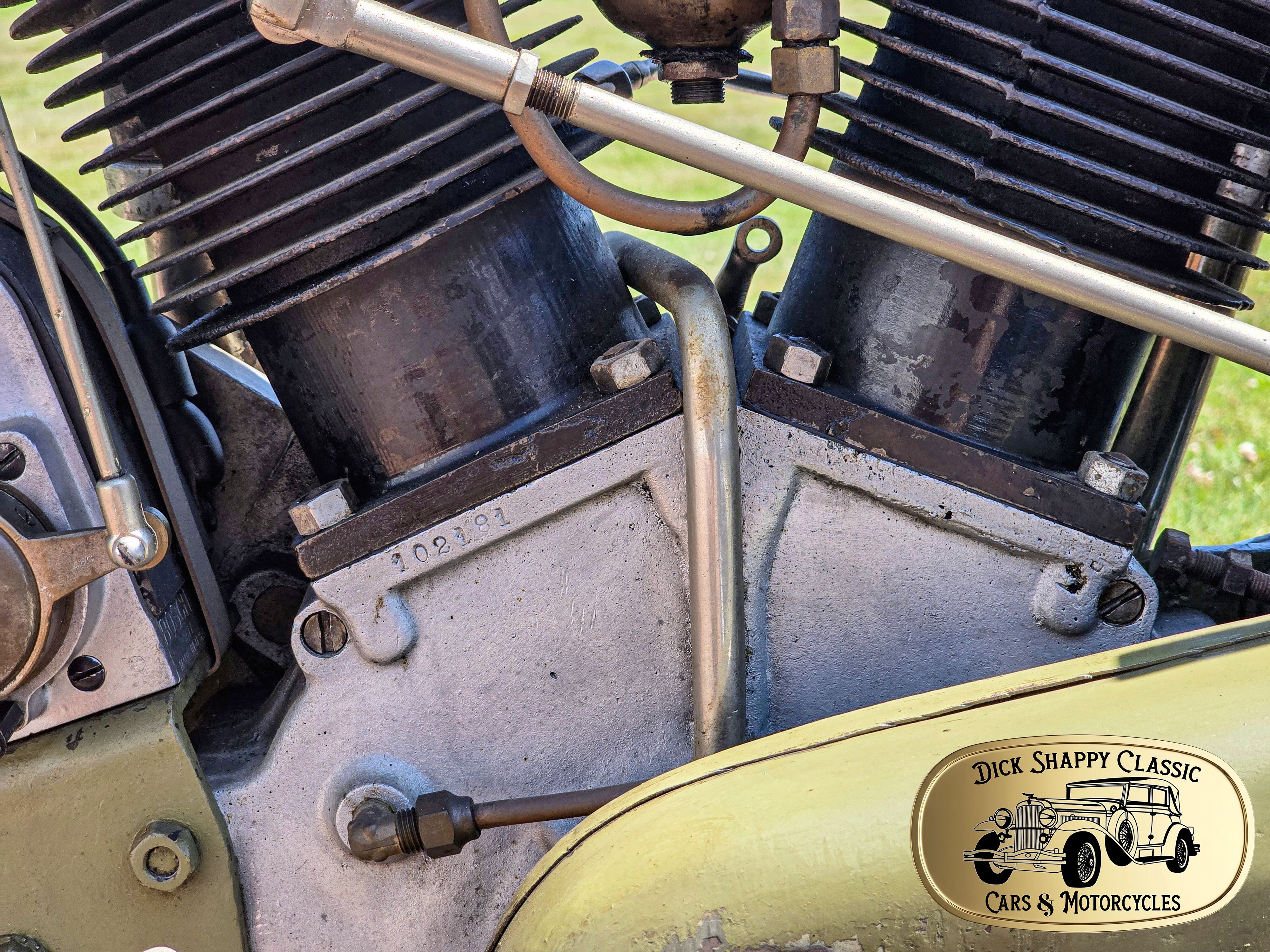
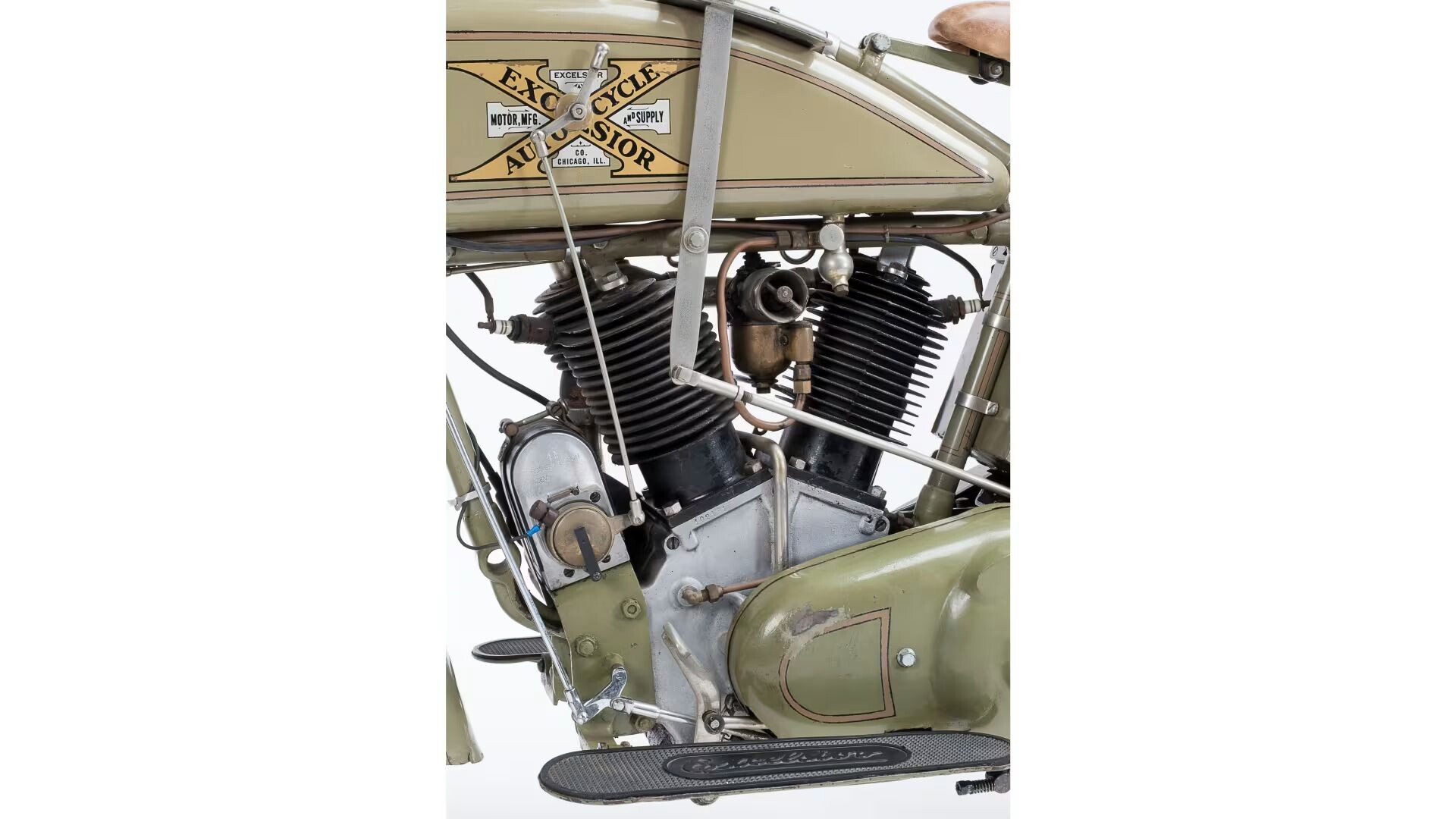
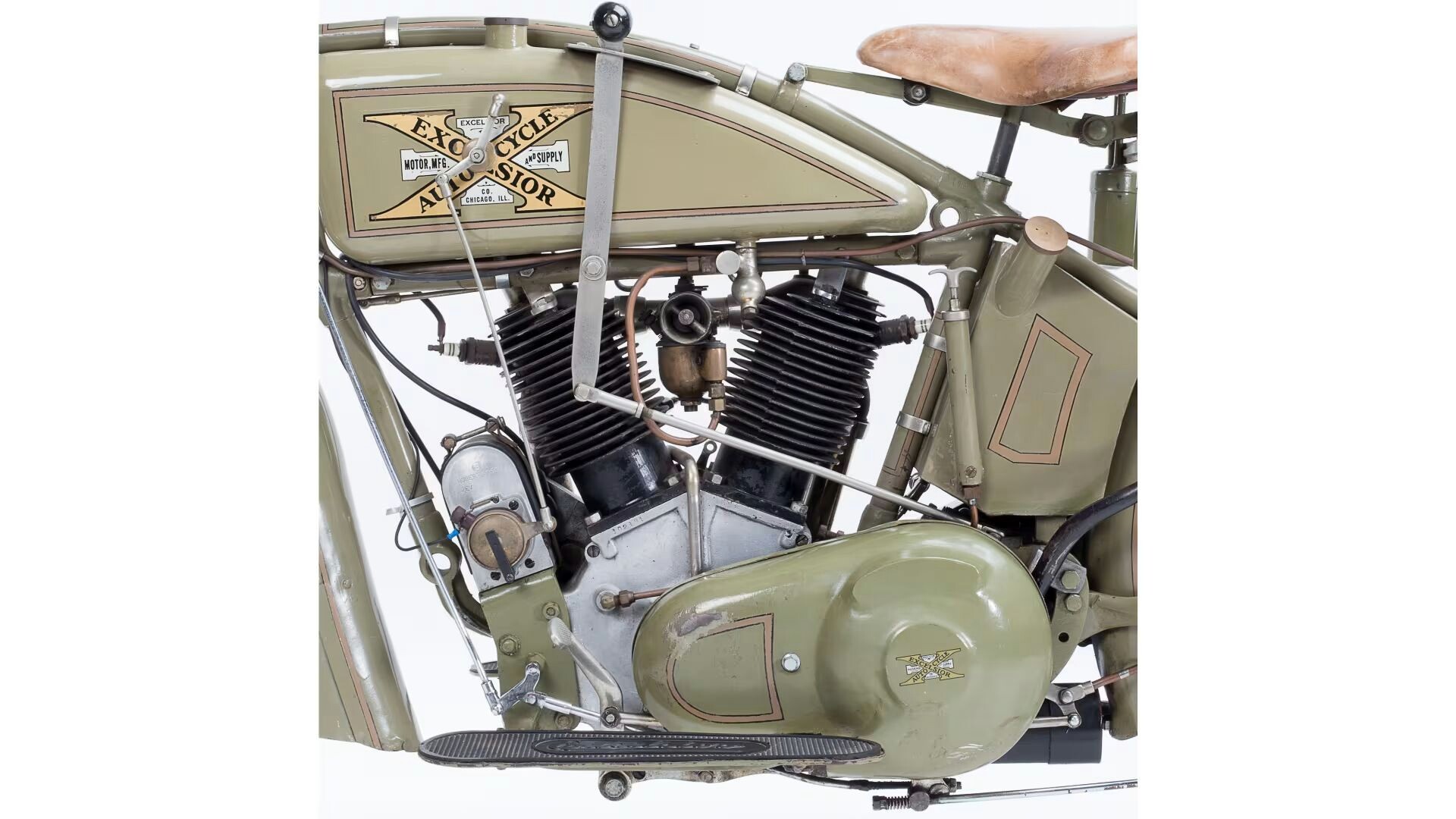
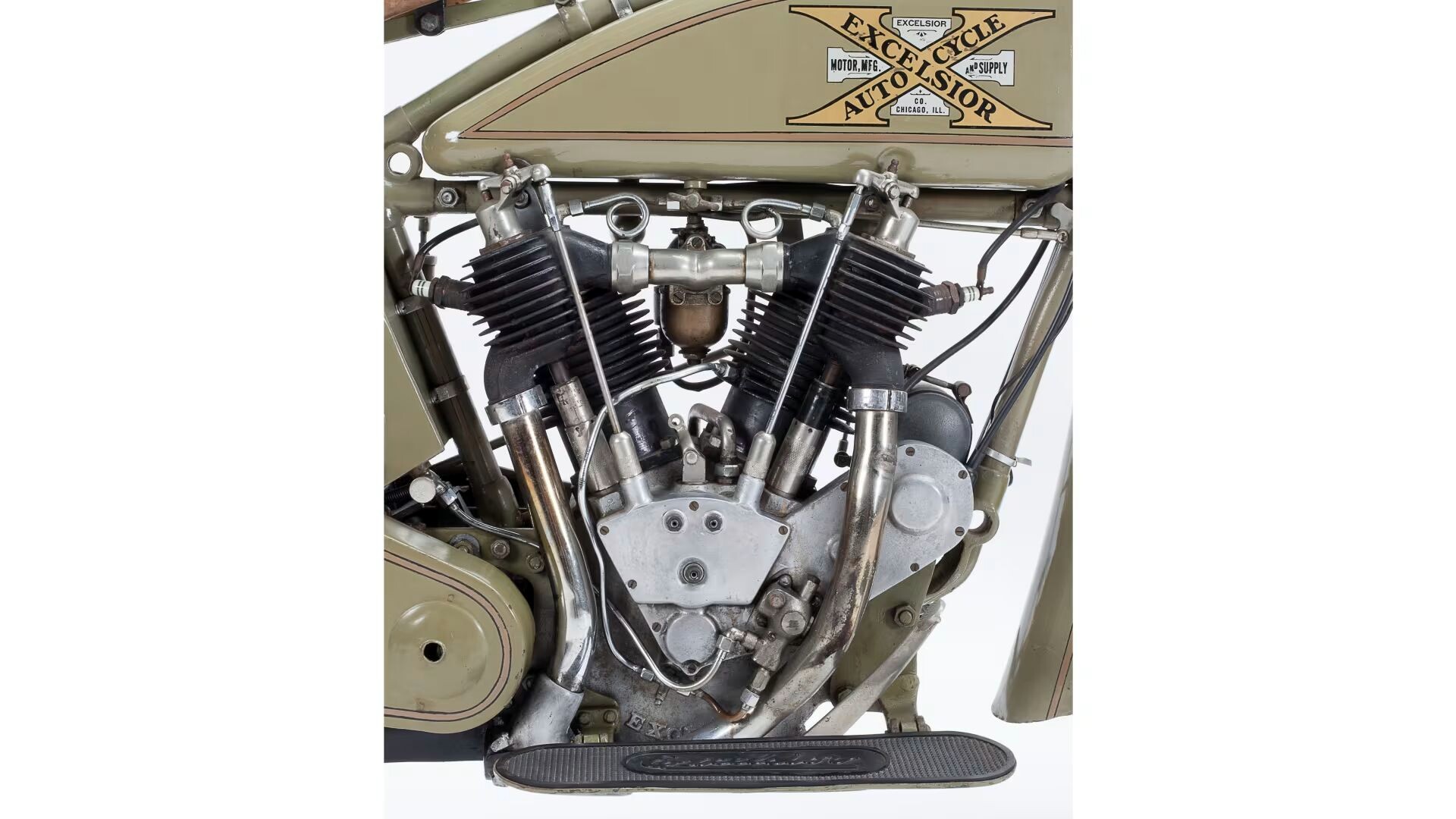
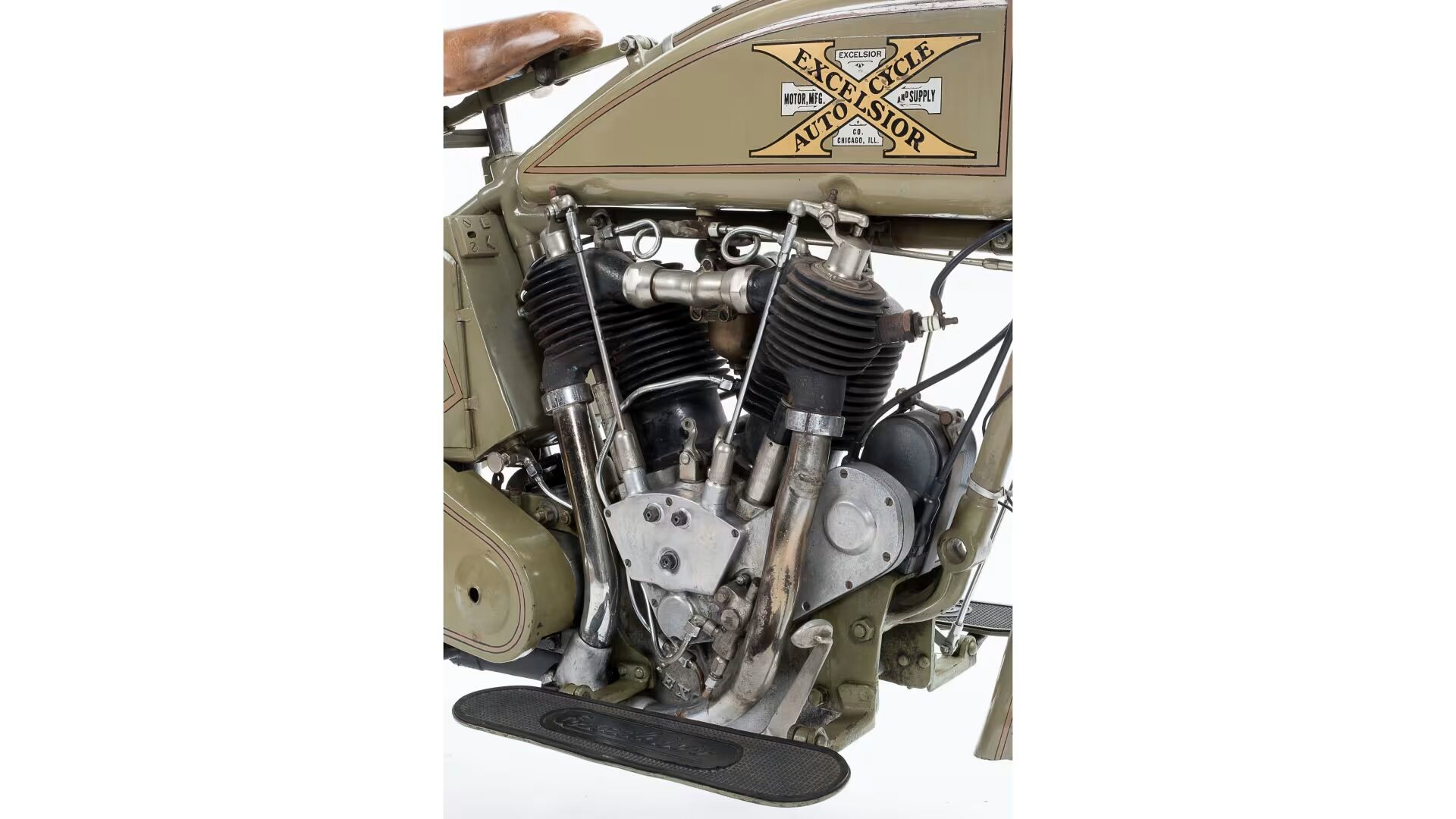
- ENGINE: 61 cu. in. 1,000cc intake over exhaust 50-degree V-Twin with chain final drive
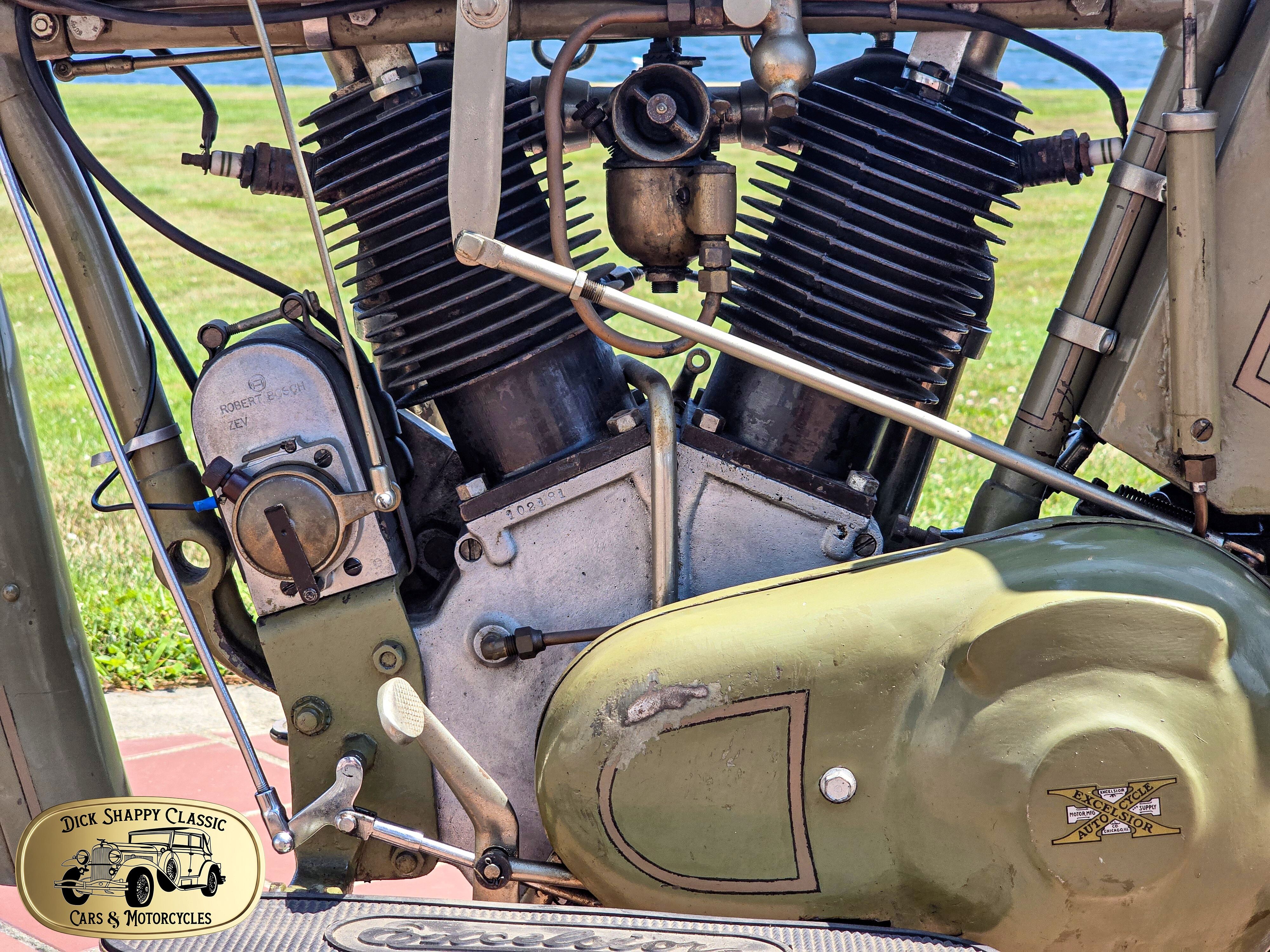
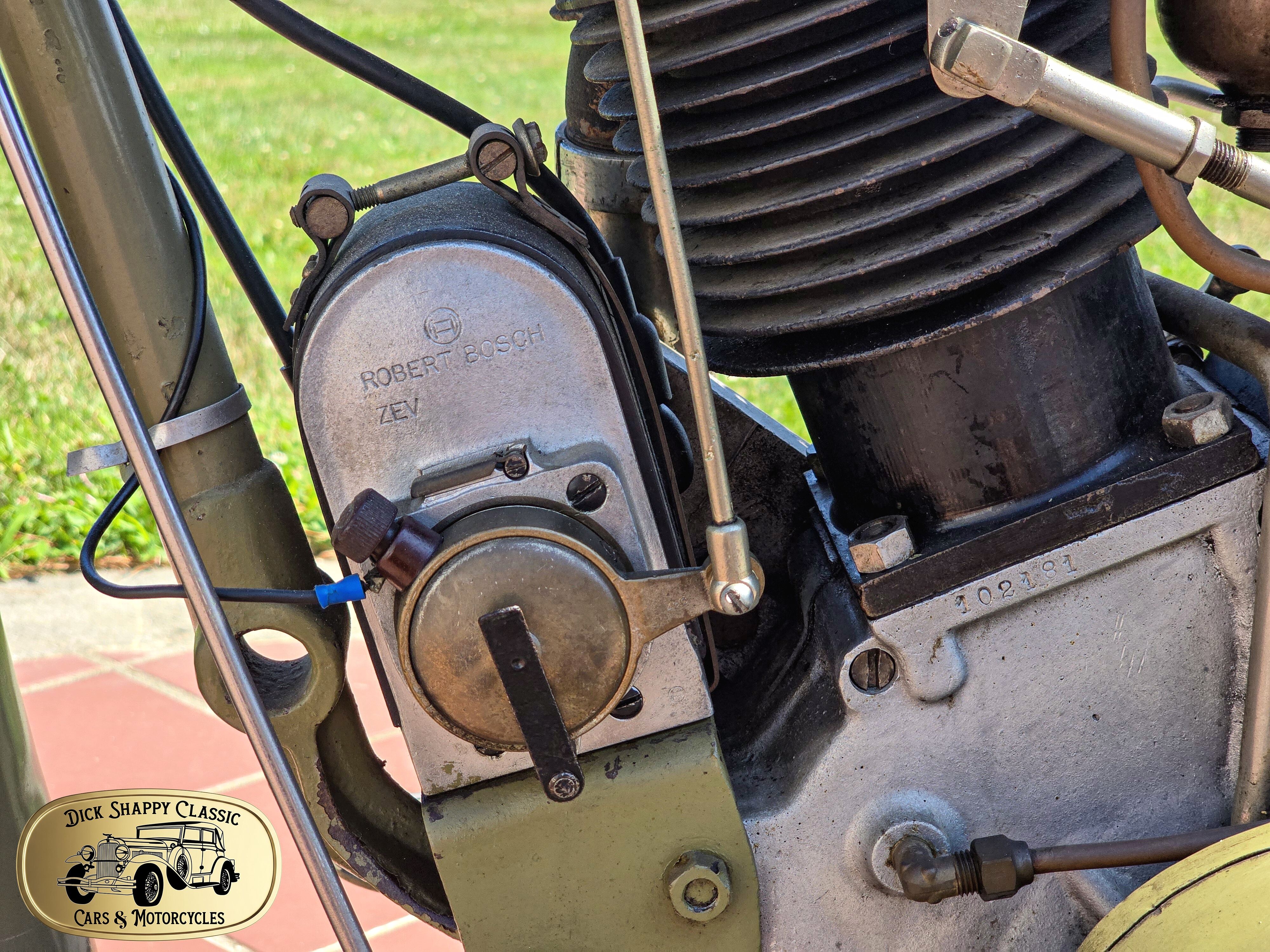
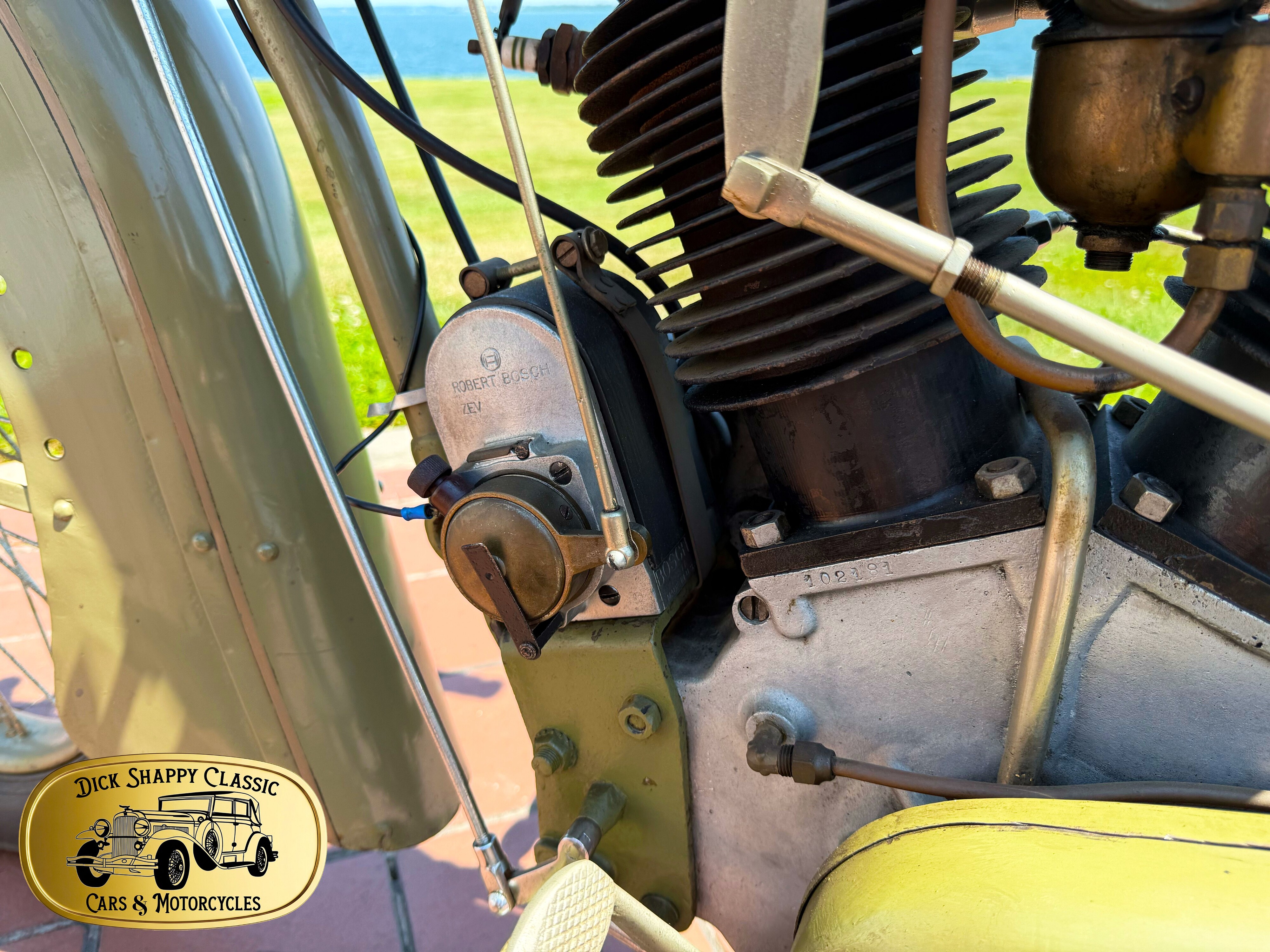
- ENGINE NO: 102181
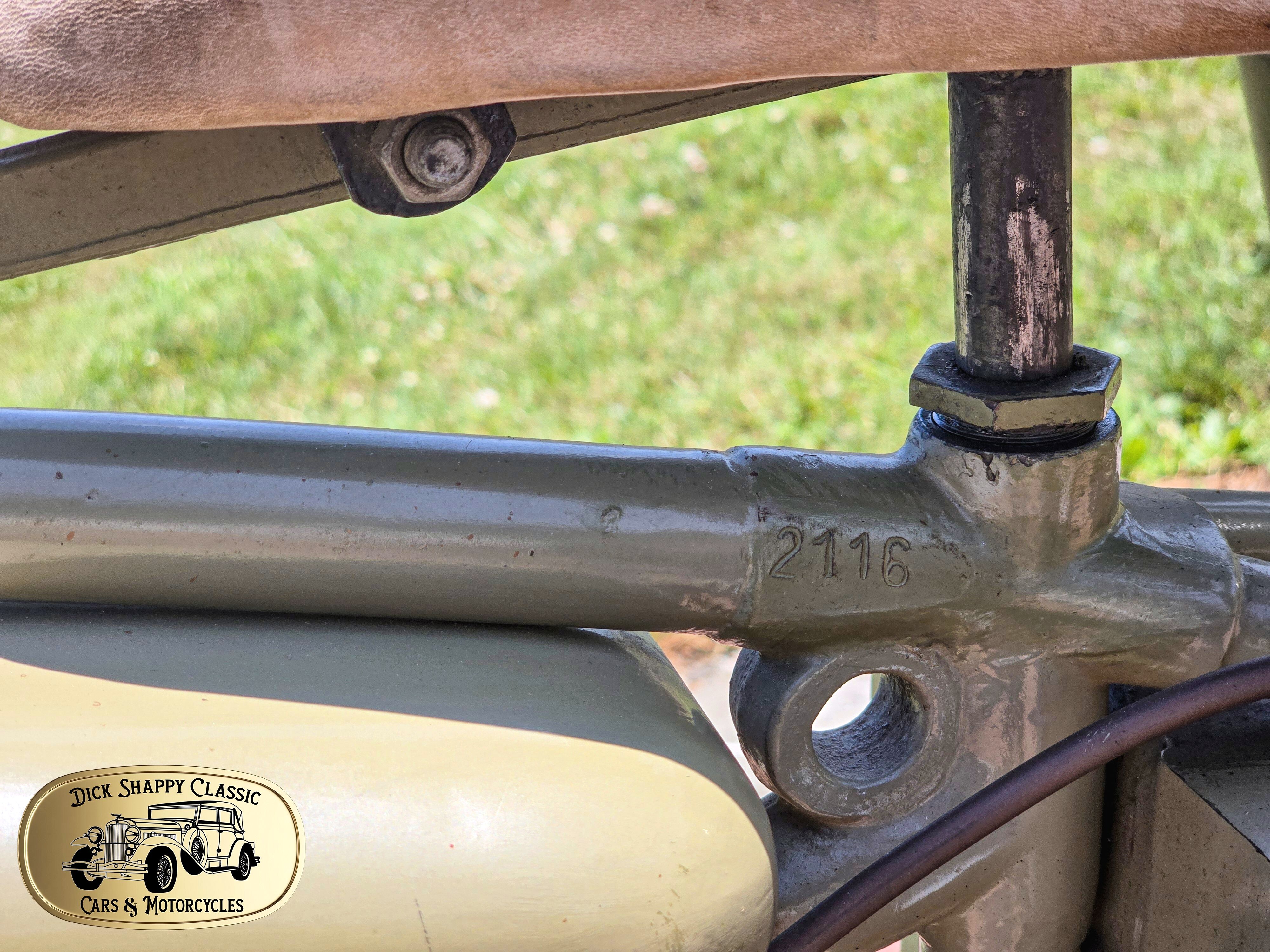
- FRAME NO: 2116
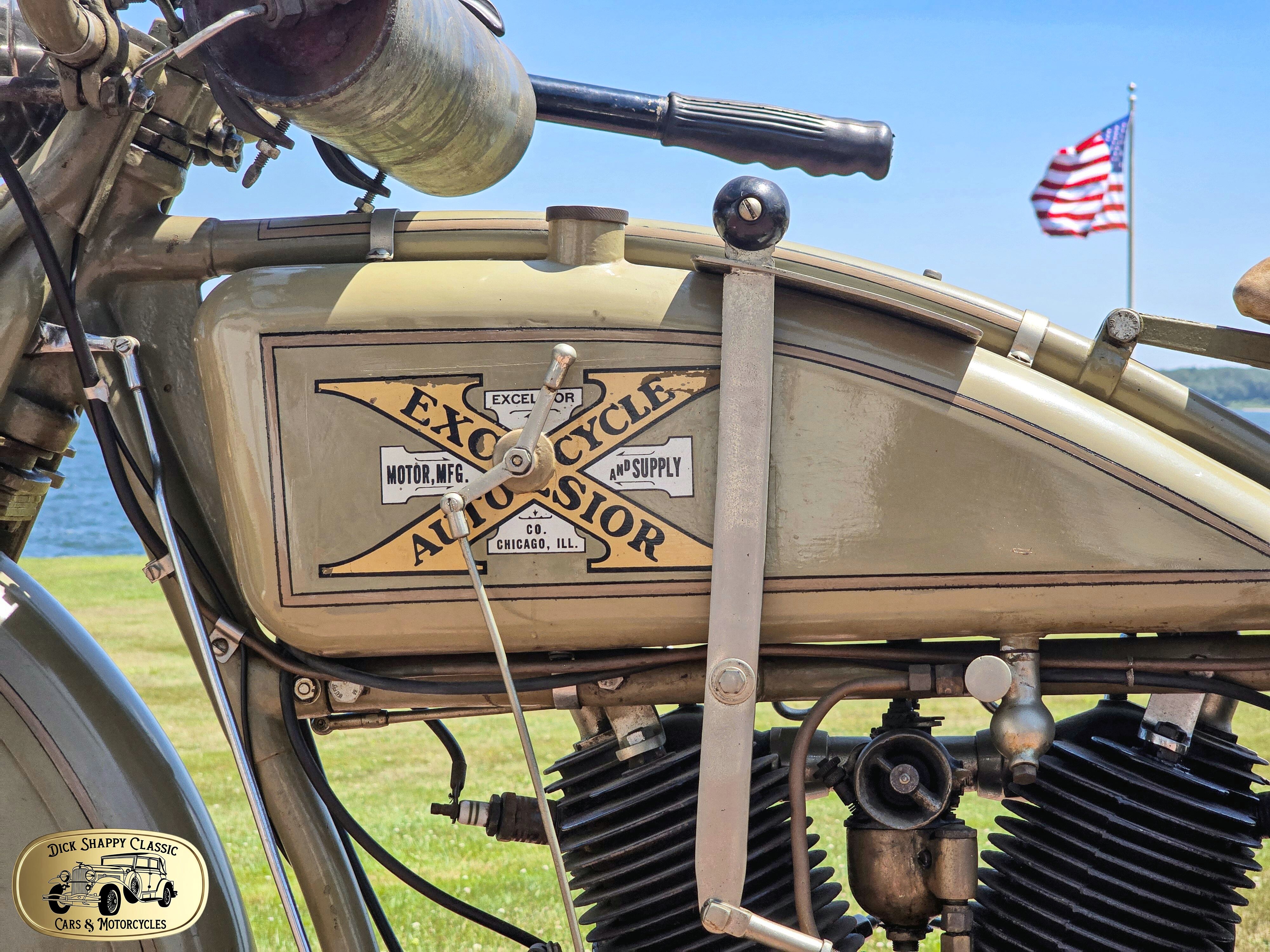
- TRANSMISSION: 3-Speed Manual gearbox with tank-side shift
- CARBURETOR: Schebler
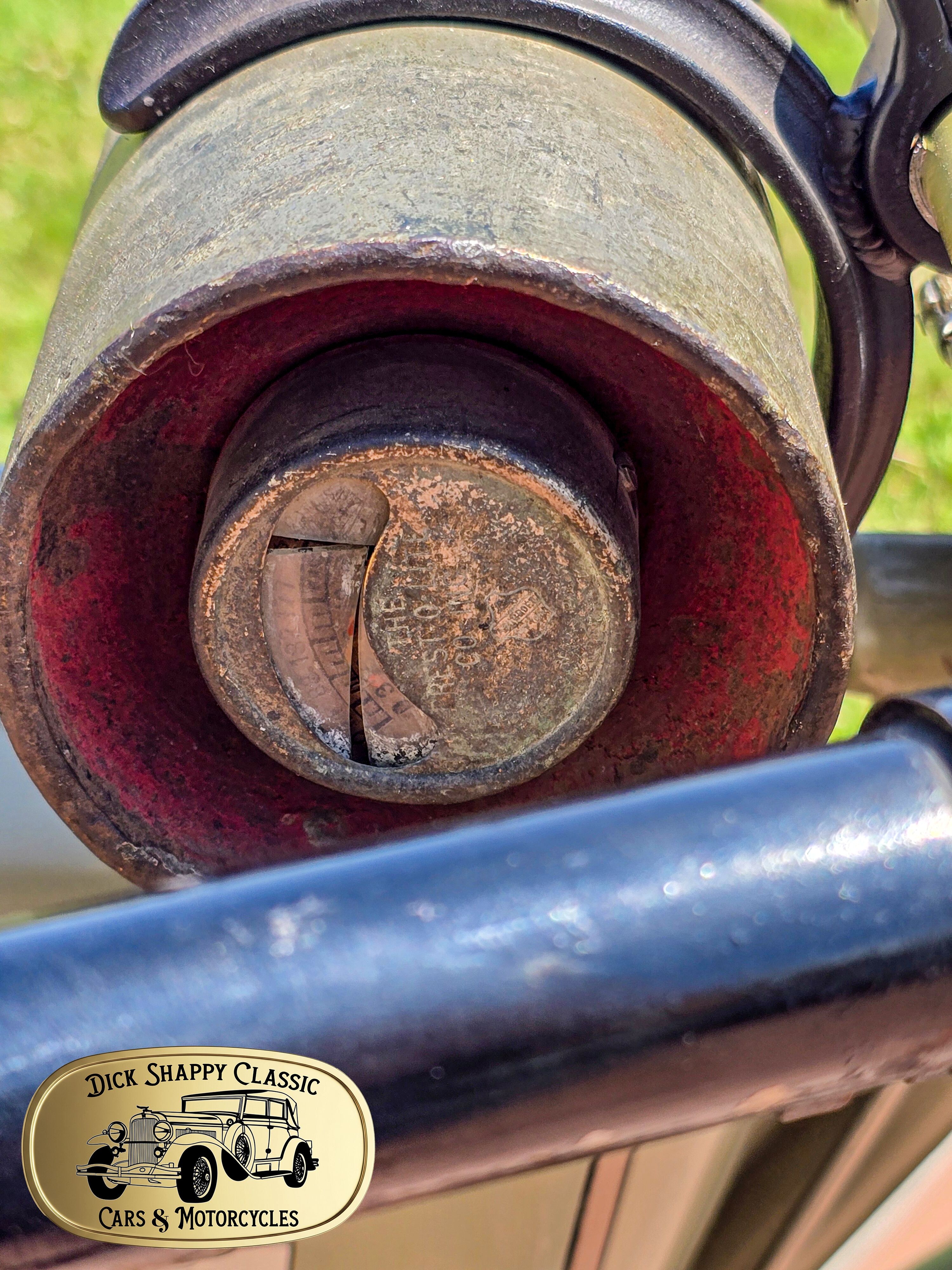
- IGNITION: Bosch magneto
- STARTER: Kick
- SUSPENSION: Leaf spring front fork, rigid rear frame
- EXHAUST: 2-into-1
- CONTROLS: Twist-grip for throttle and ignition advance
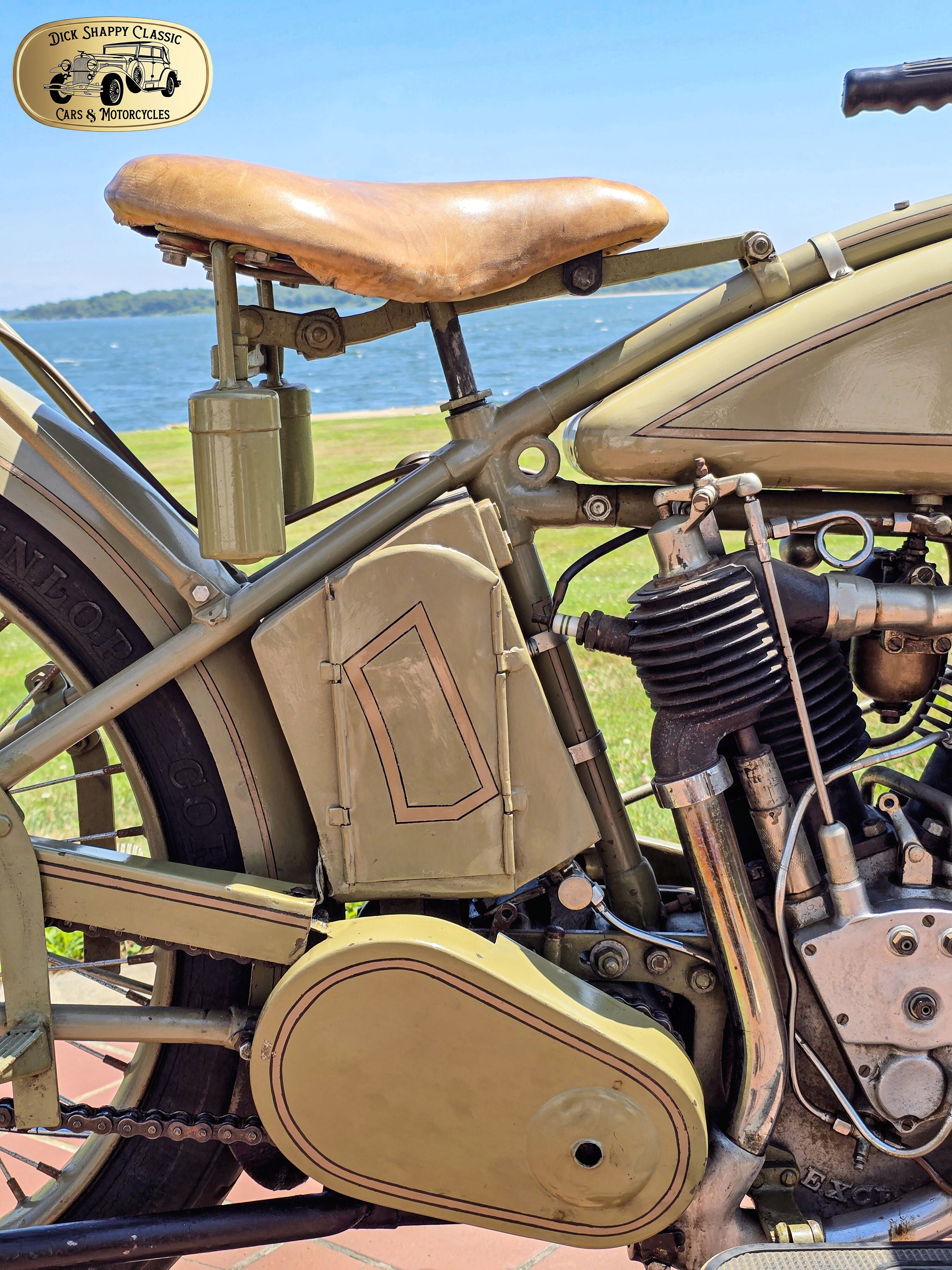
- SEAT: Sprung leather with sliding pillar spring
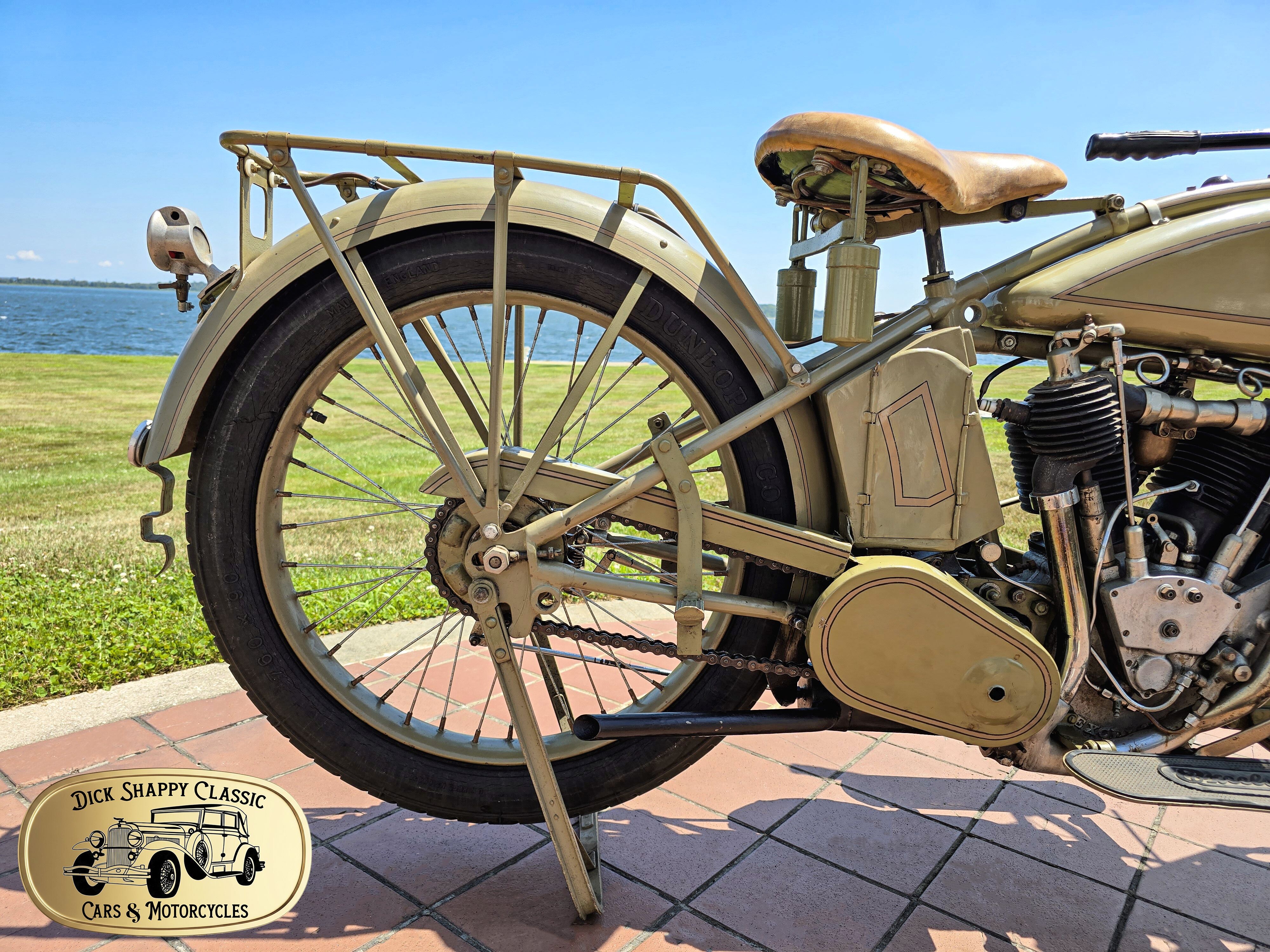
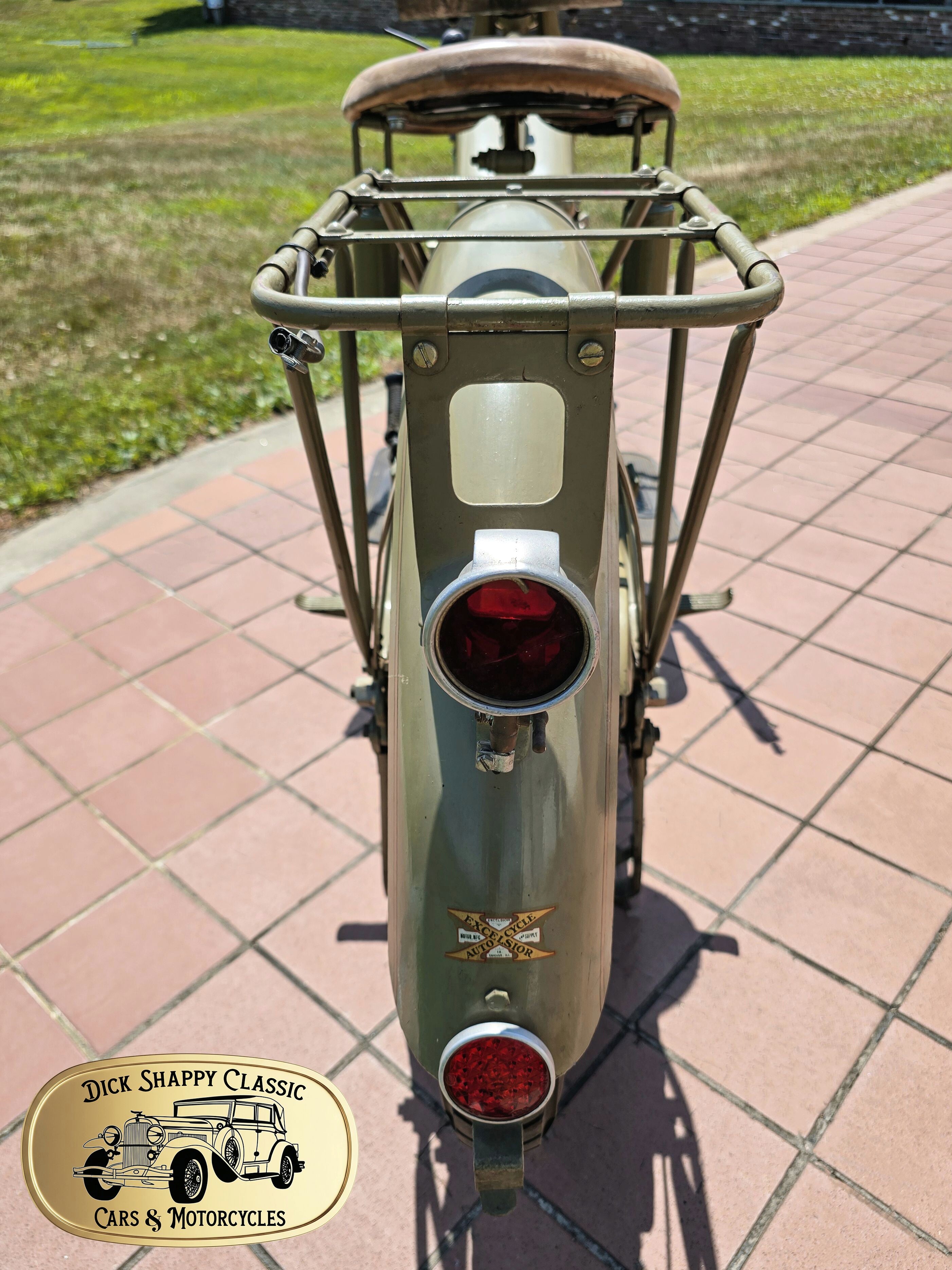
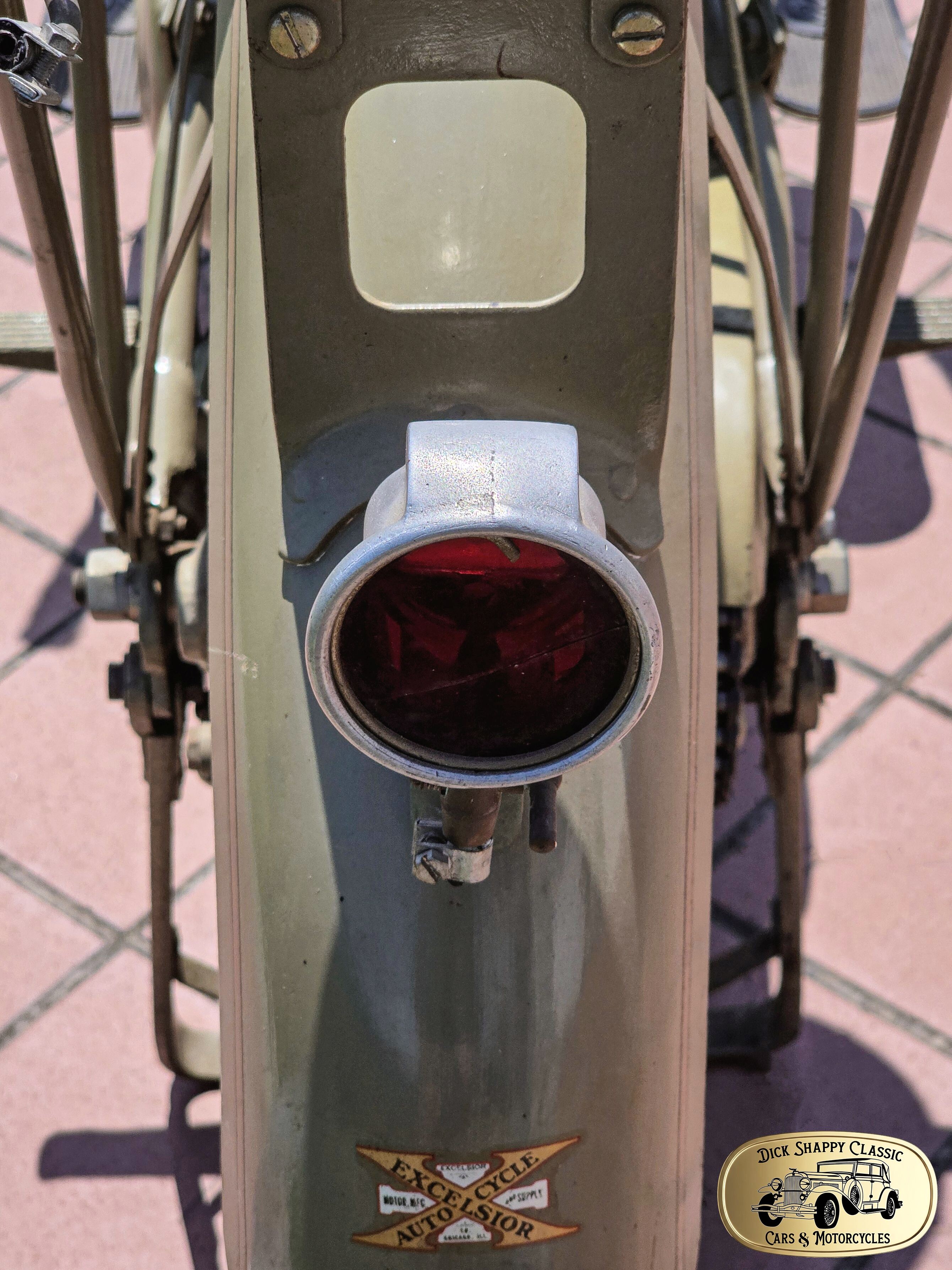
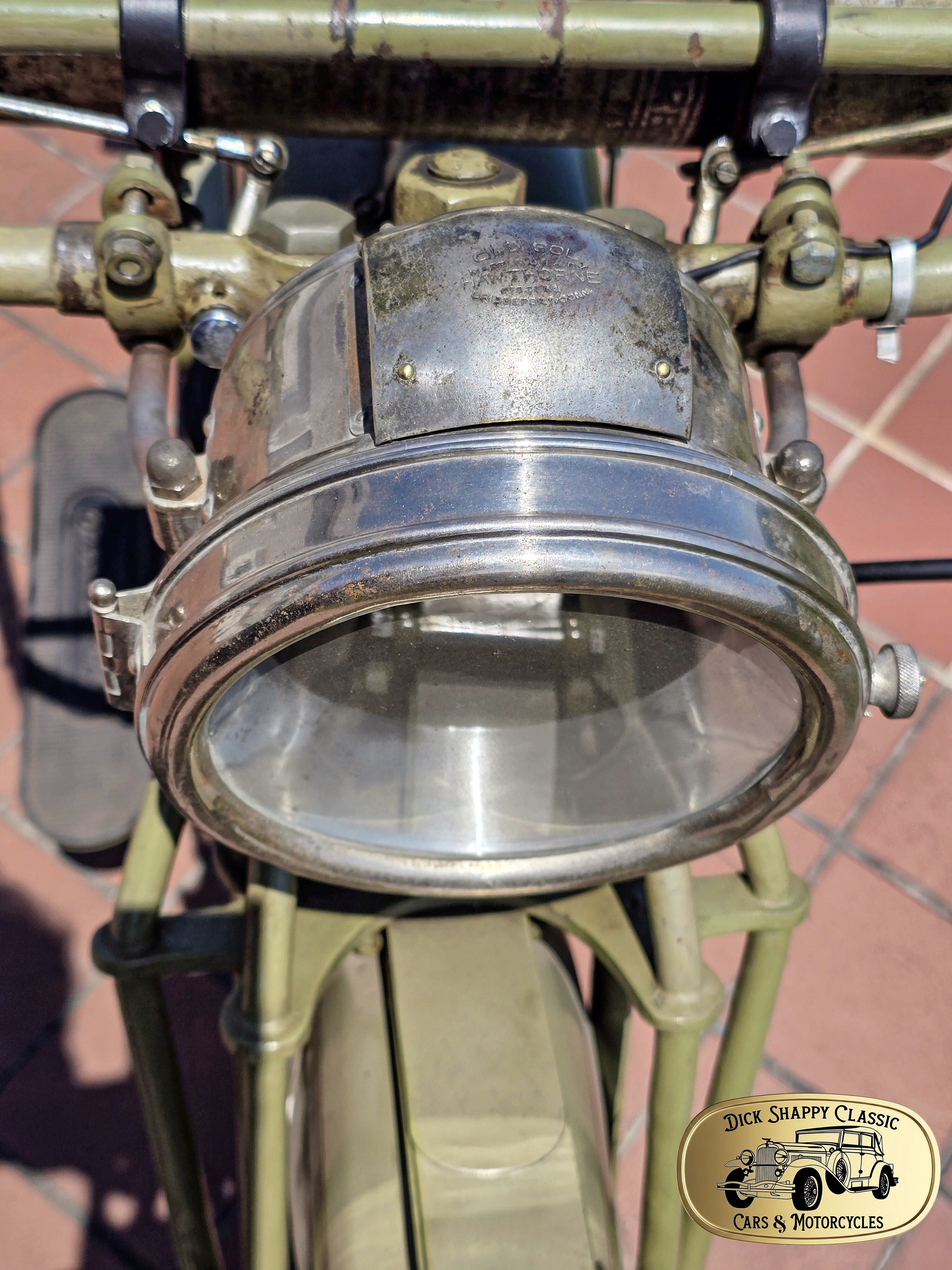
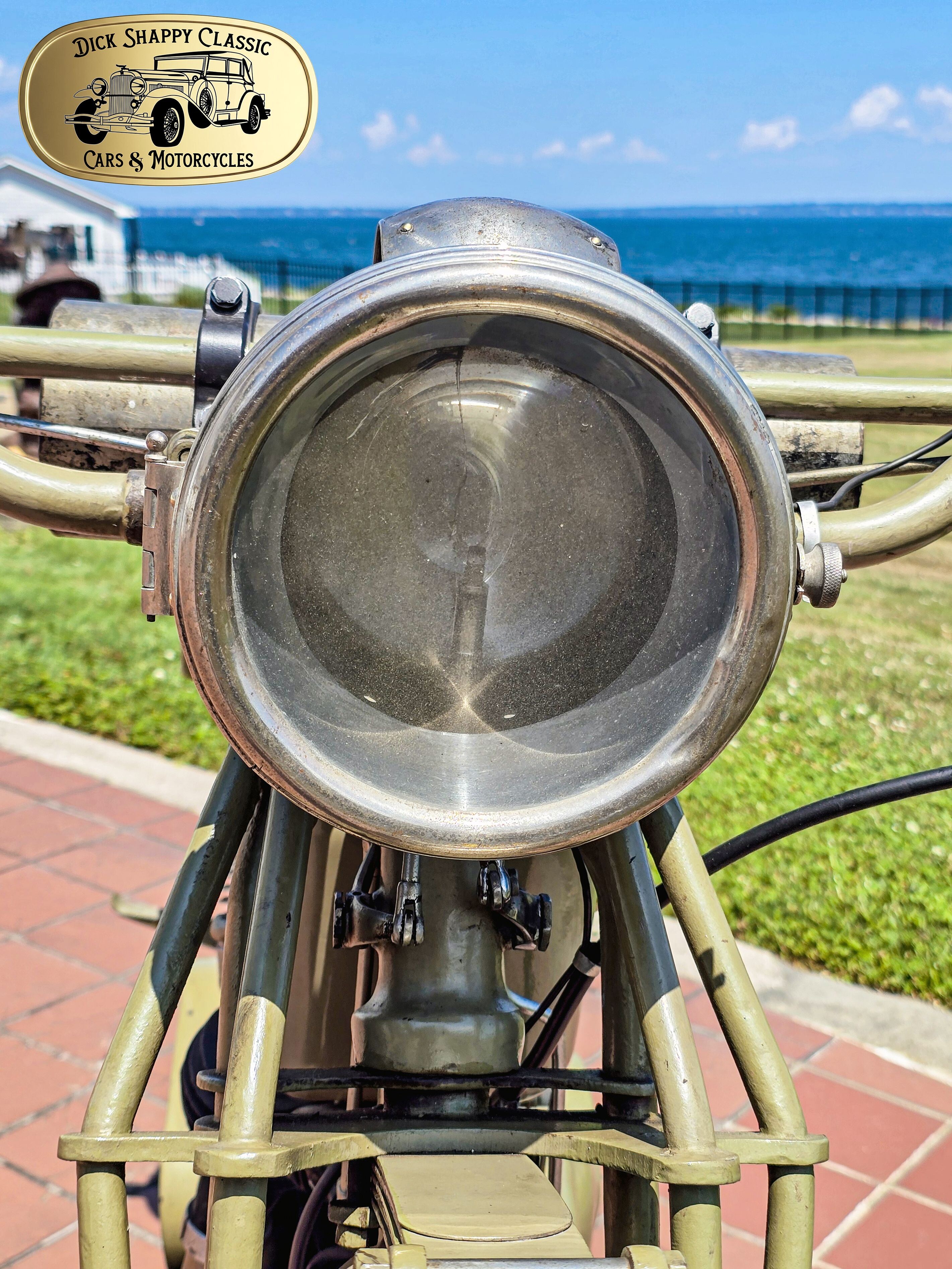
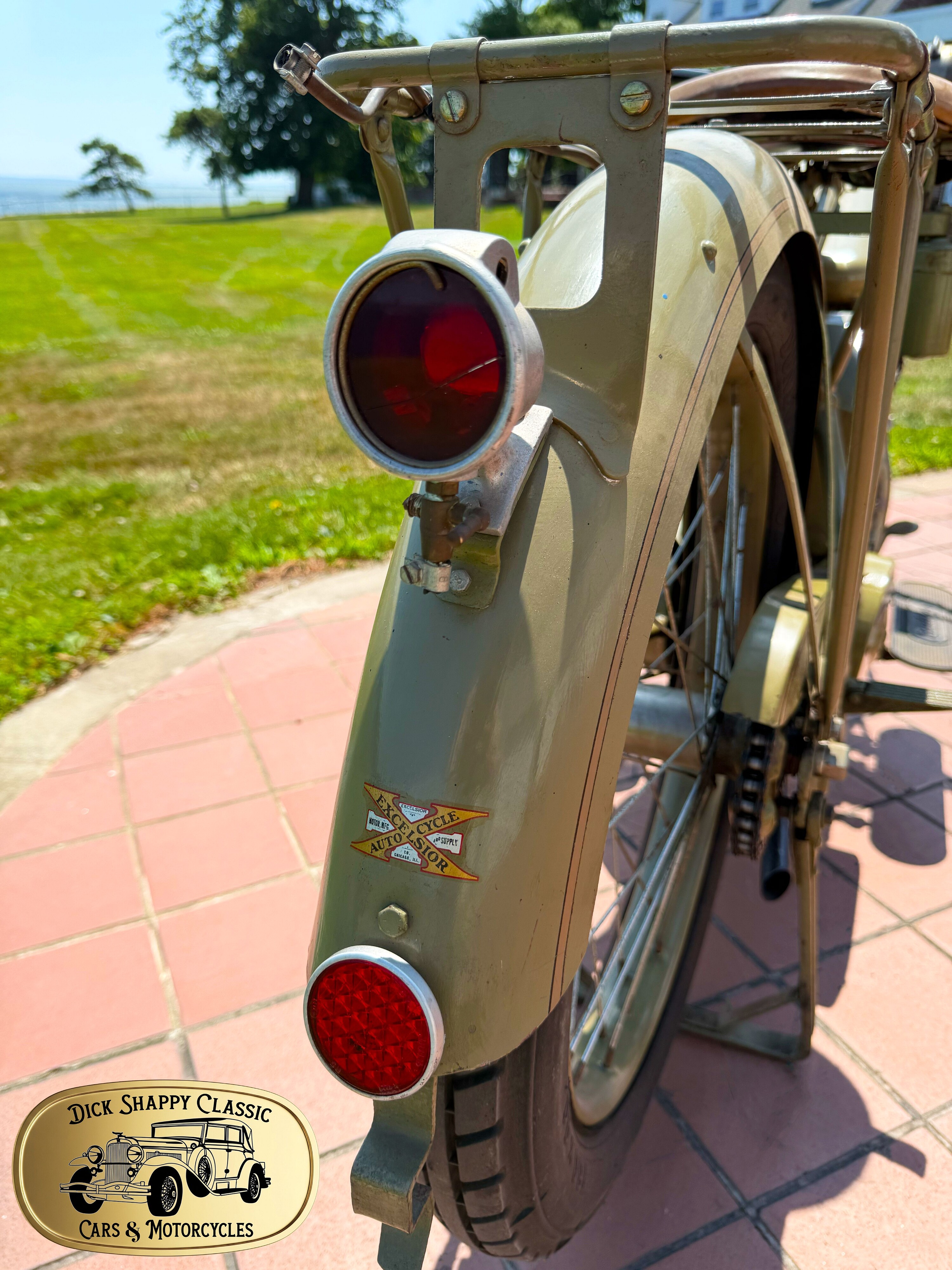
- LIGHTS: Acetylene headlight and tail light
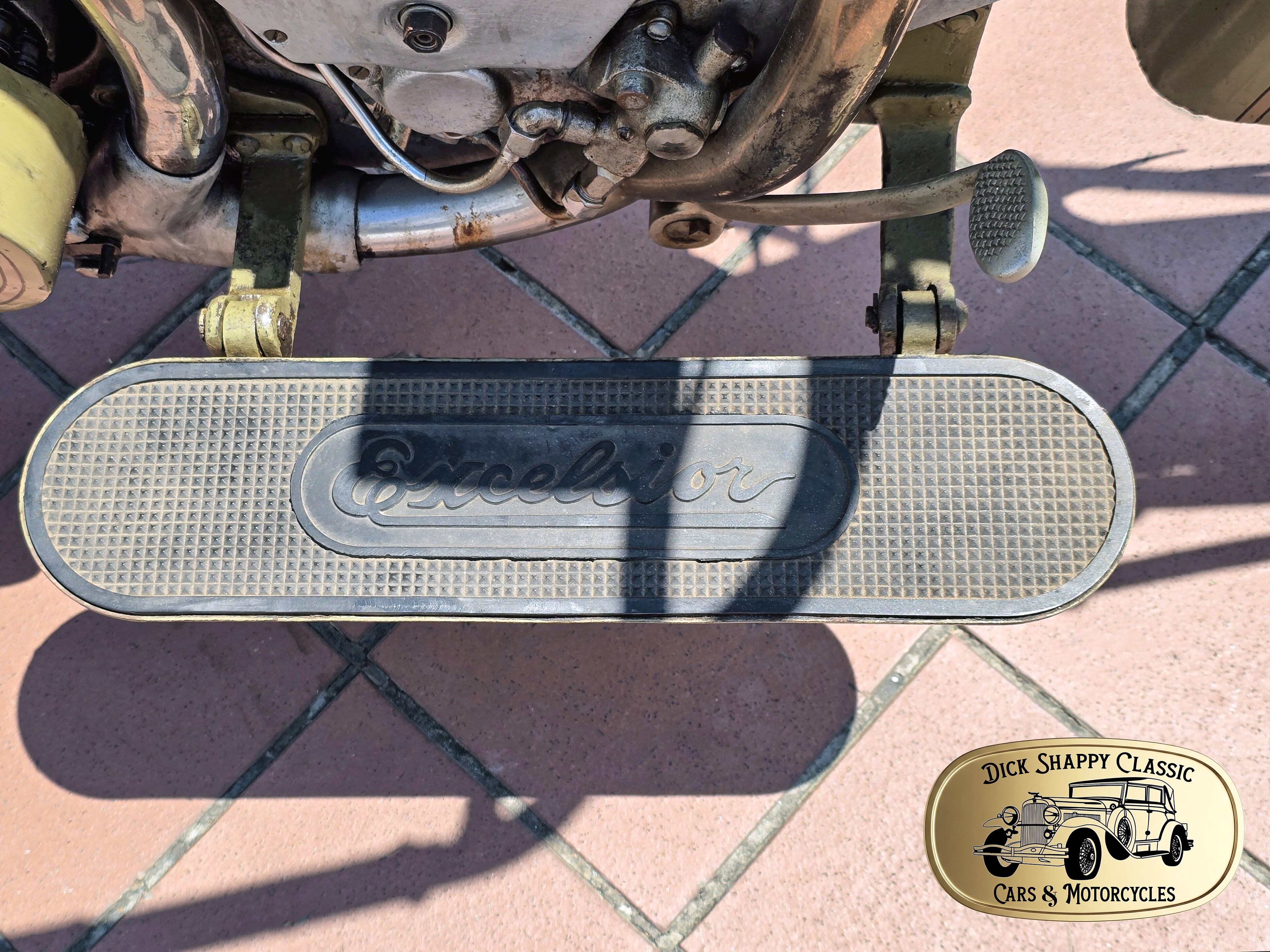
- BRAKES: Contracting band rear brake, no front brake
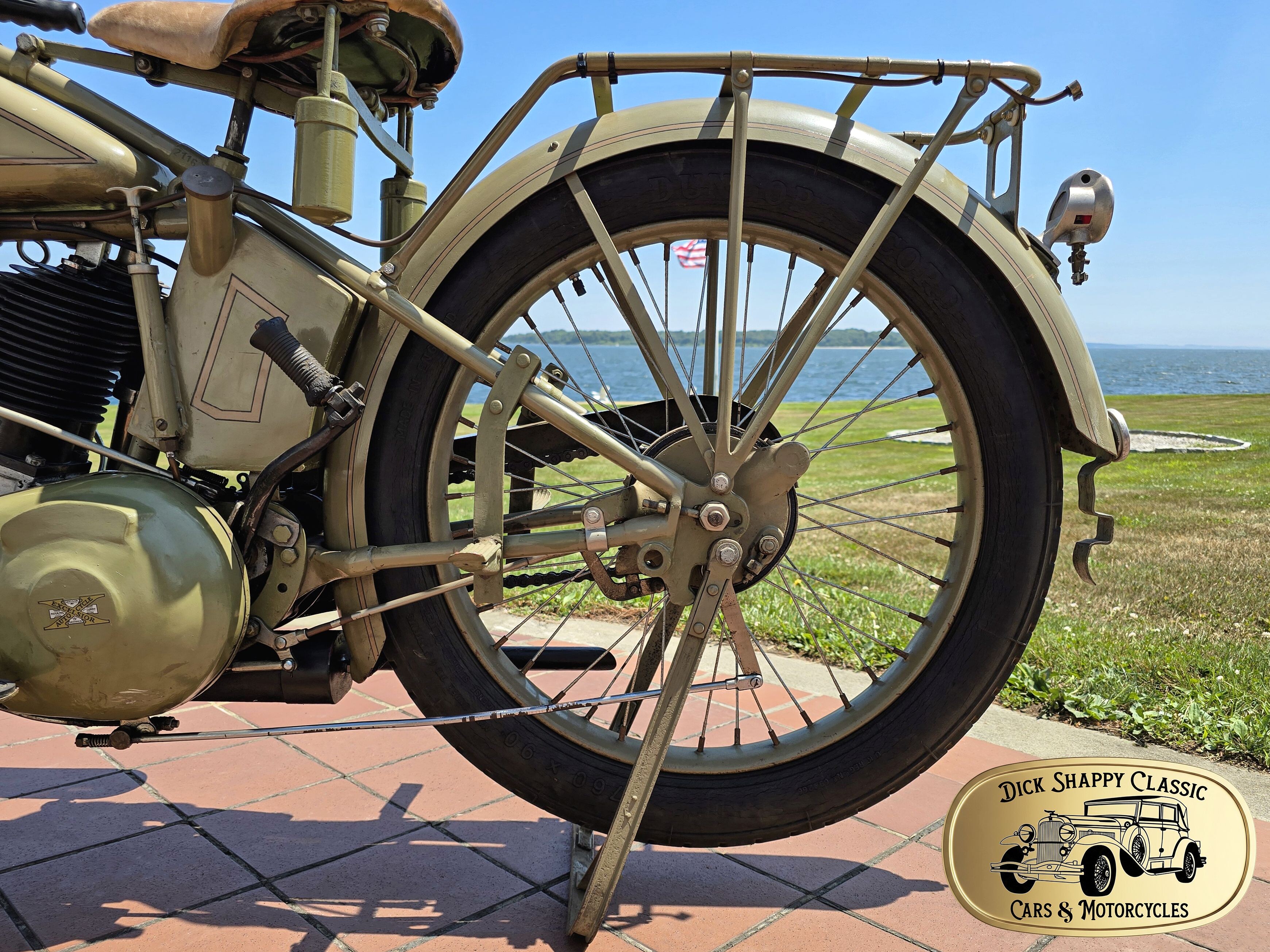
- WHEELS: Spoke with color-keyed steel rims and 3.50-28 front and rear tires
- FEATURES: Matching rear luggage rack
- HISTORY: From the Urban S. Hirsch III Collection
According to Mecum Auctions, “The Excelsior twins of the 1910s and ’20s used the most highly developed F-head design in the industry, and their special racing models proved the point decisively by taking many firsts, like the first motorcycle to be officially timed during a race over 100 mph in 1912 at Playa del Rey board track… Its famous Big Valve racers were magnificently tuned machines that were capable of sustained high speeds and beating their much larger rivals.”
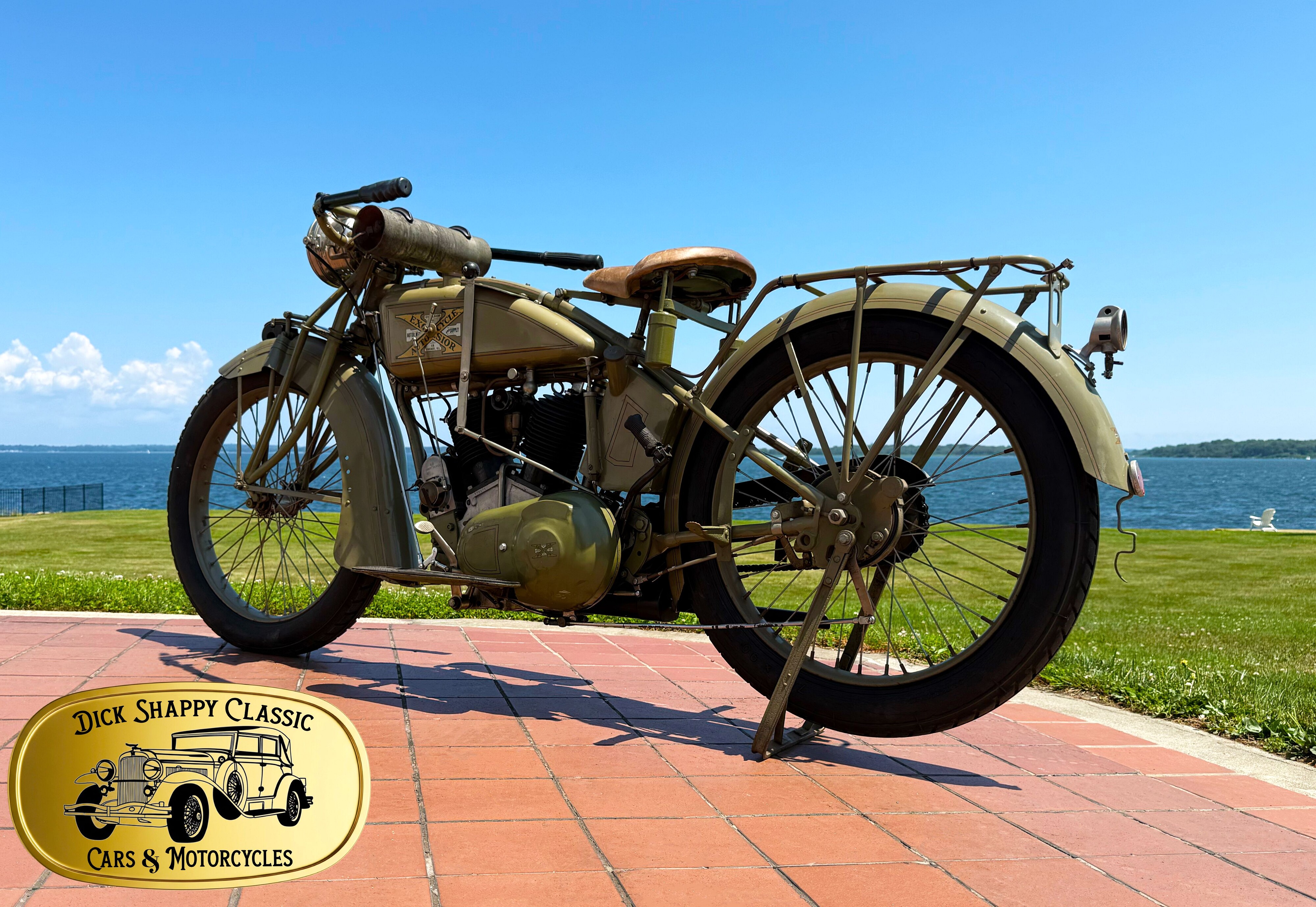
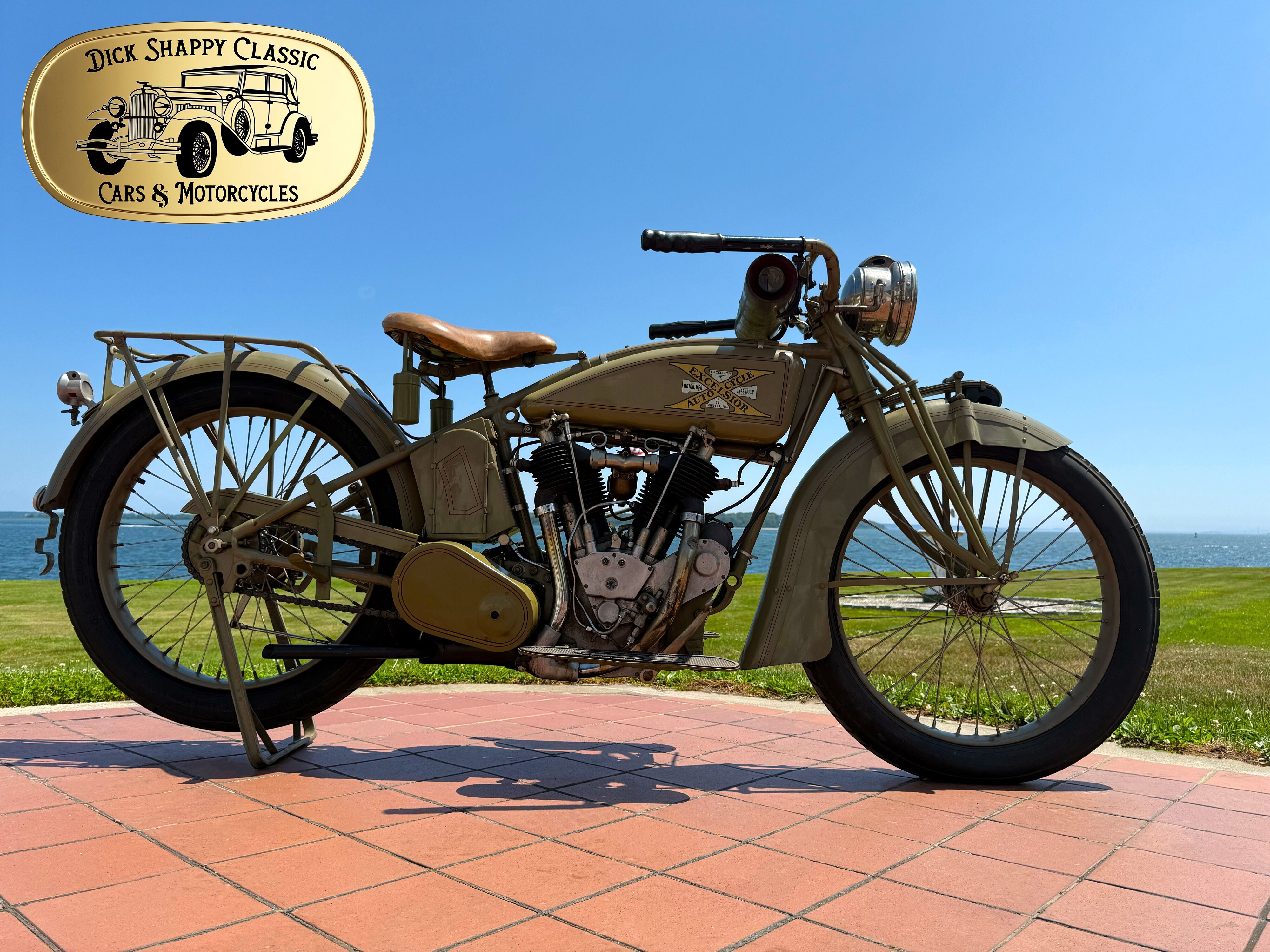
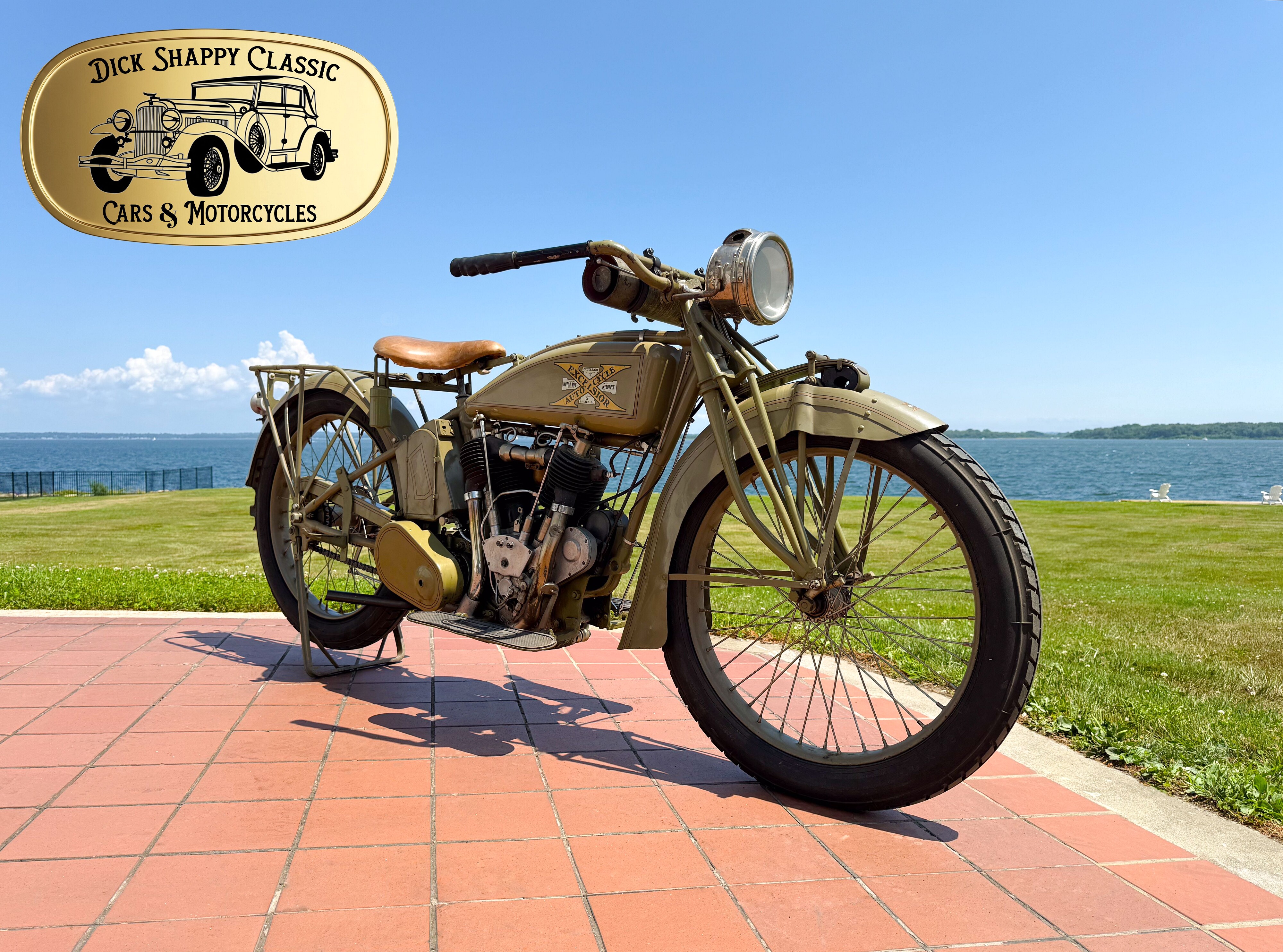
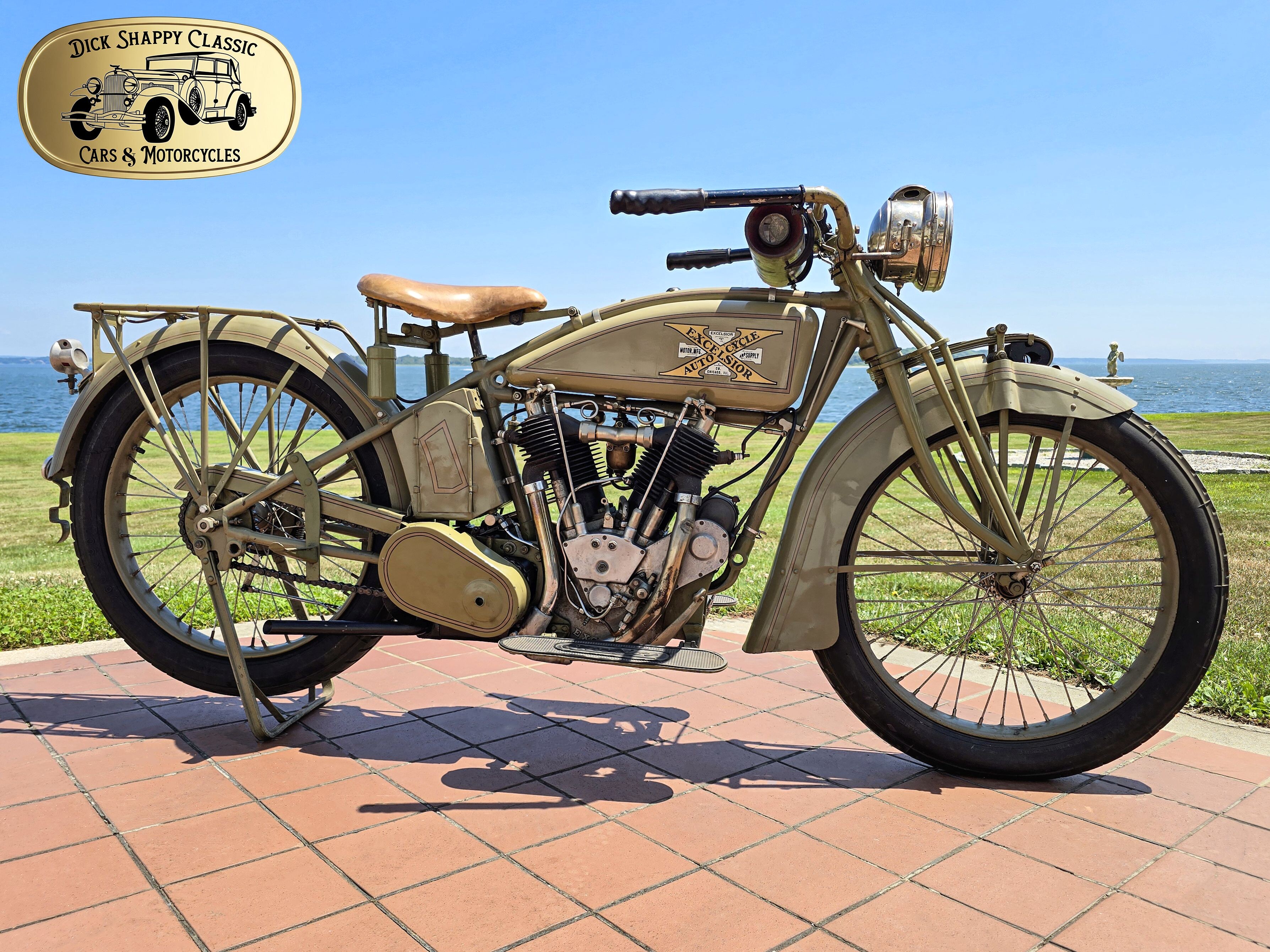
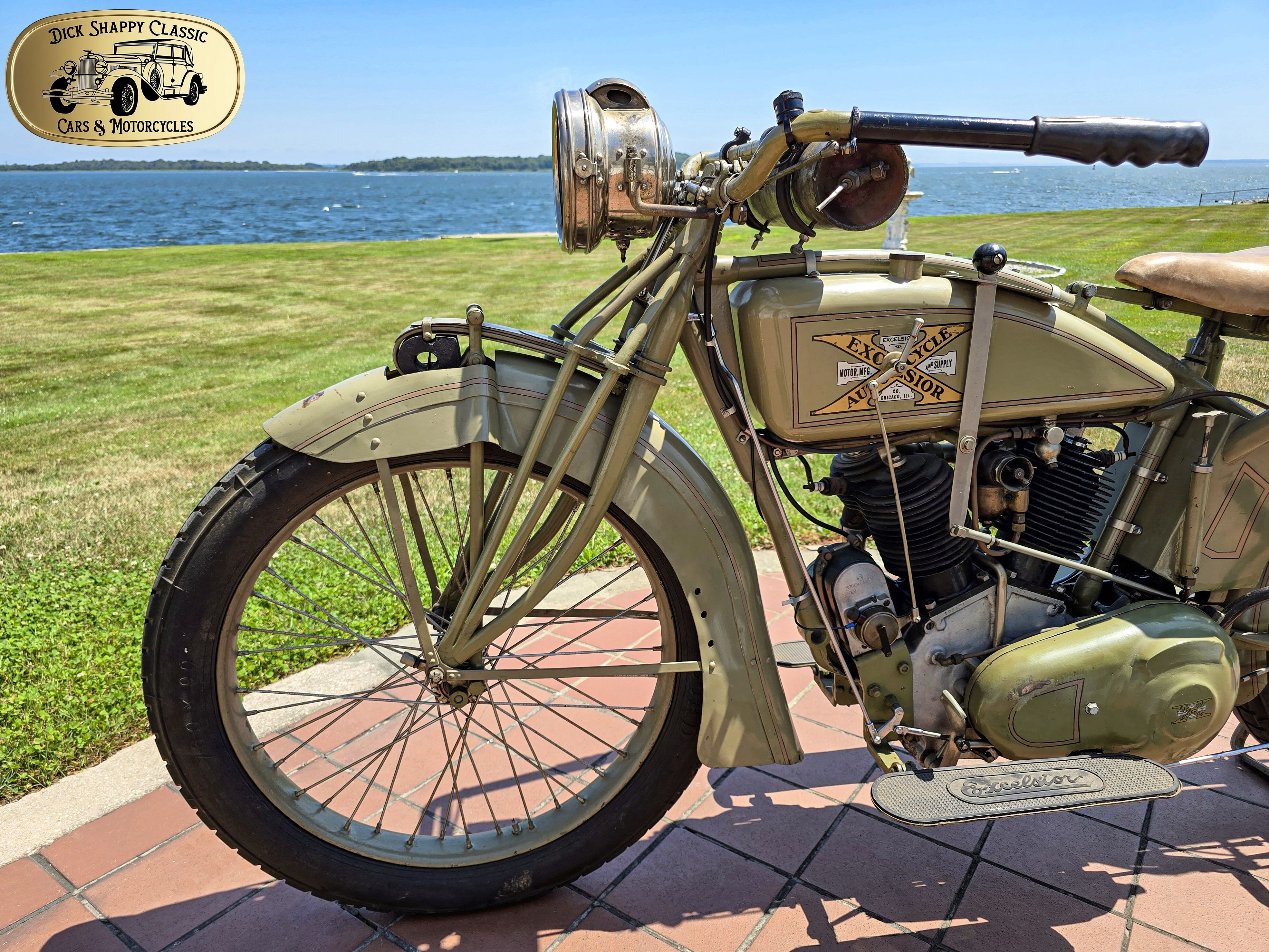
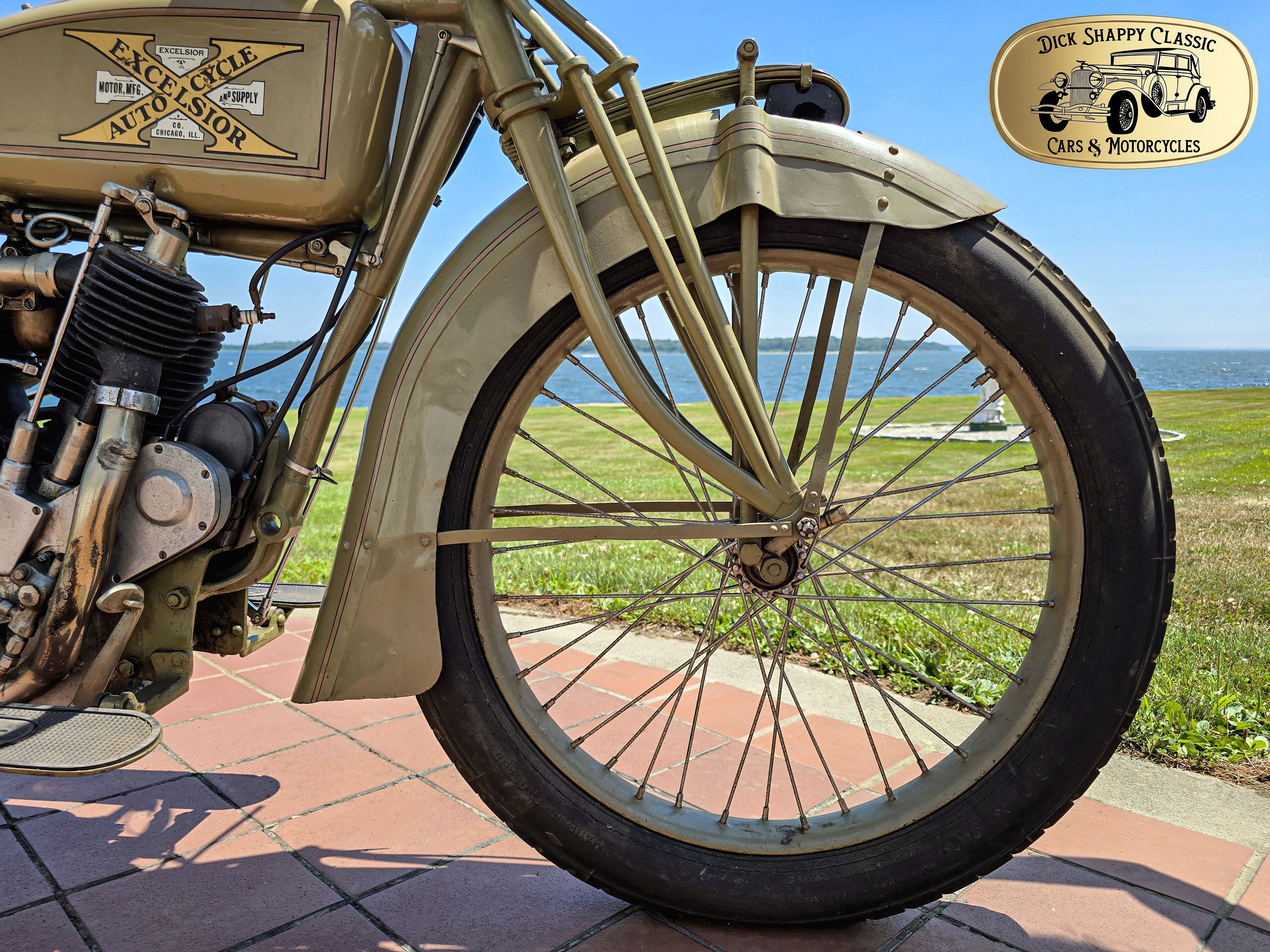
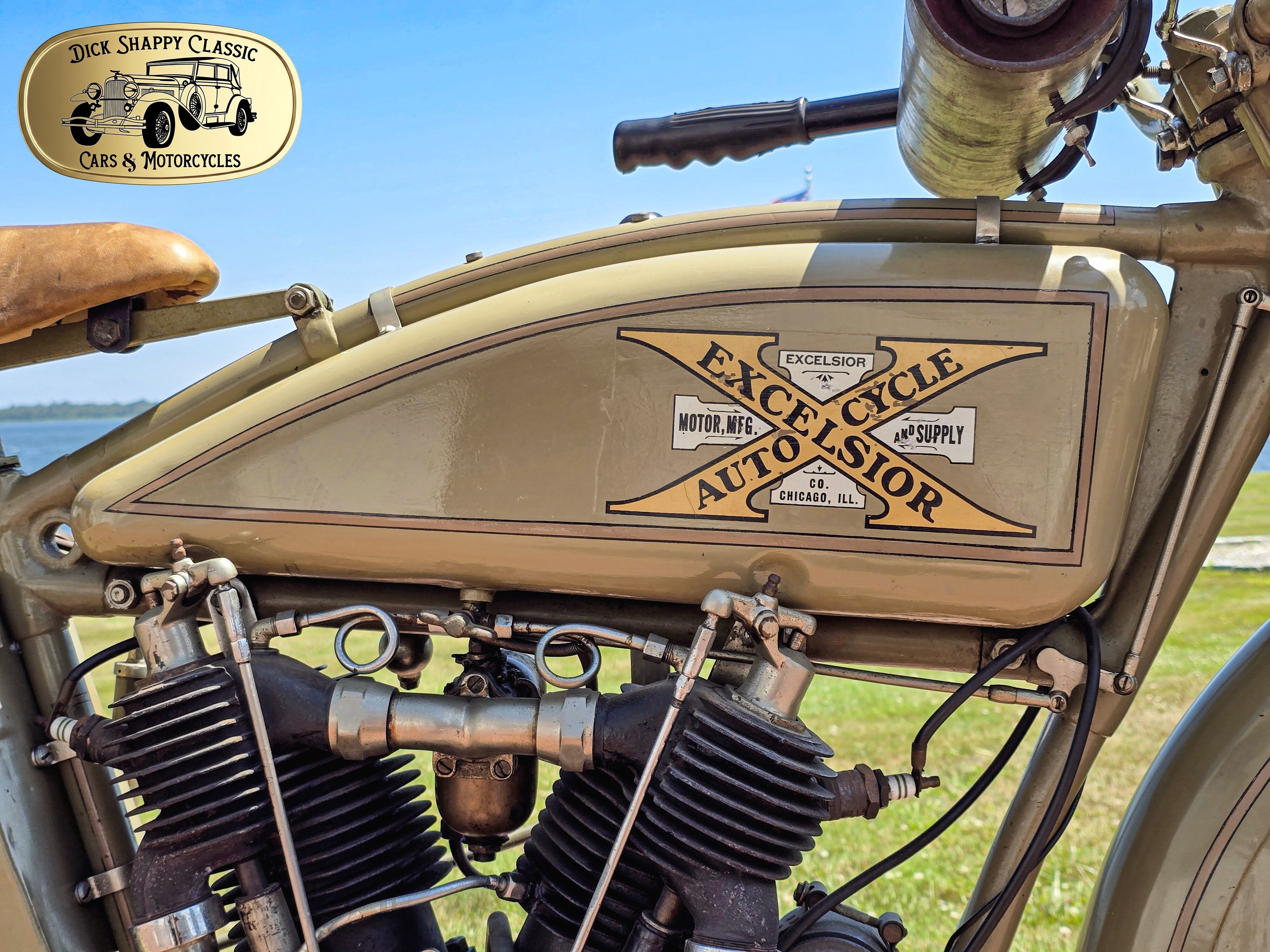
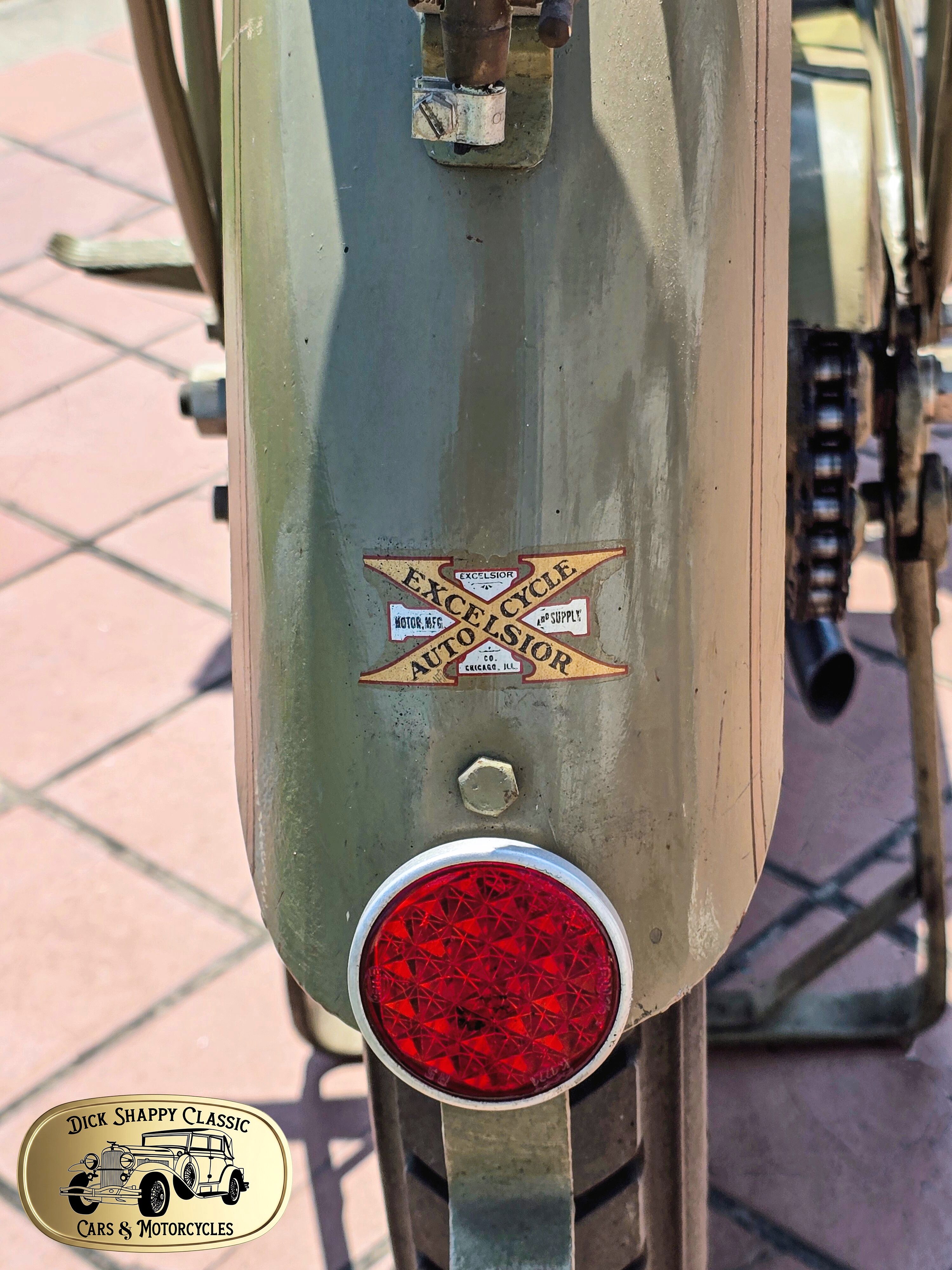
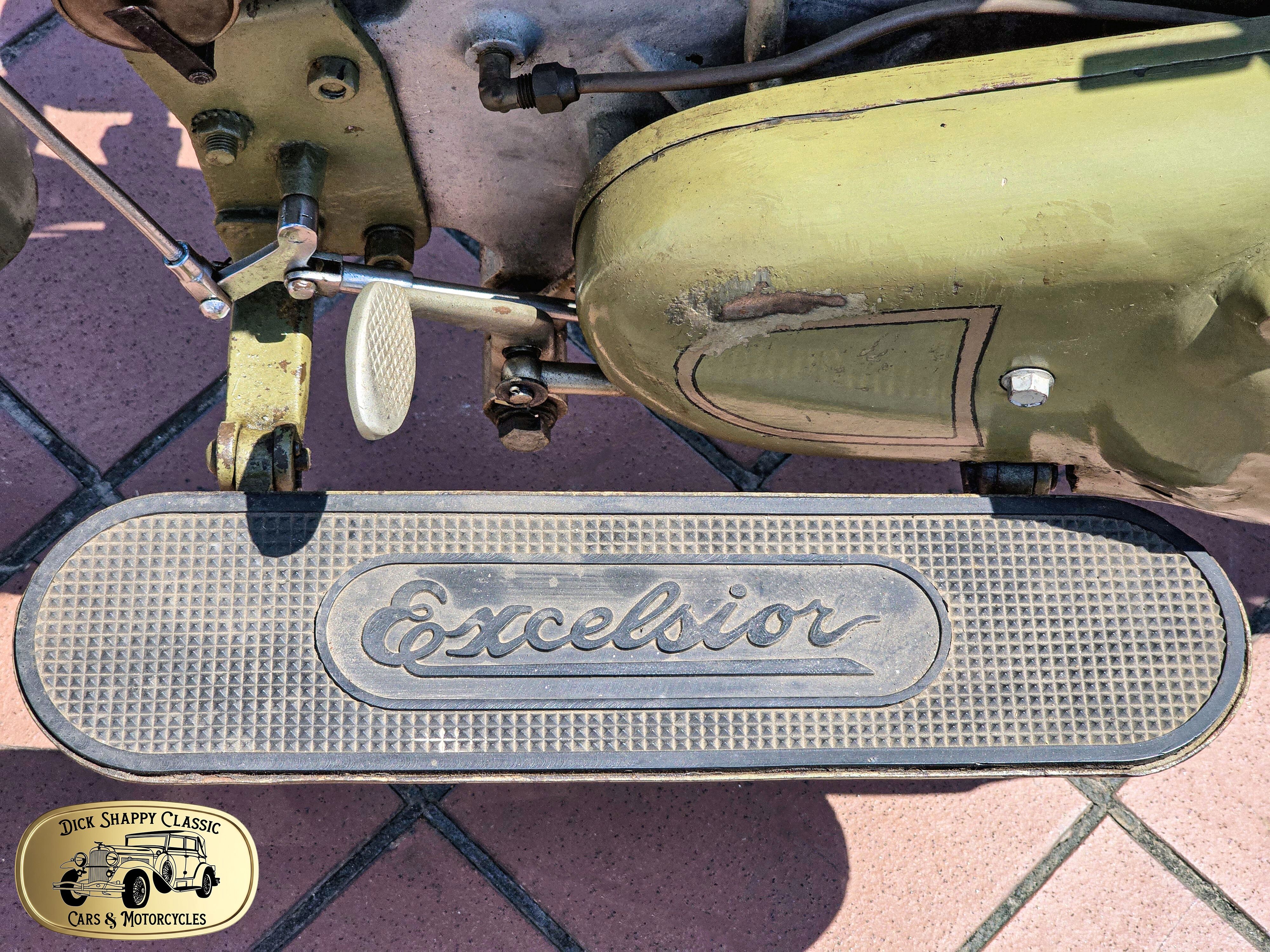
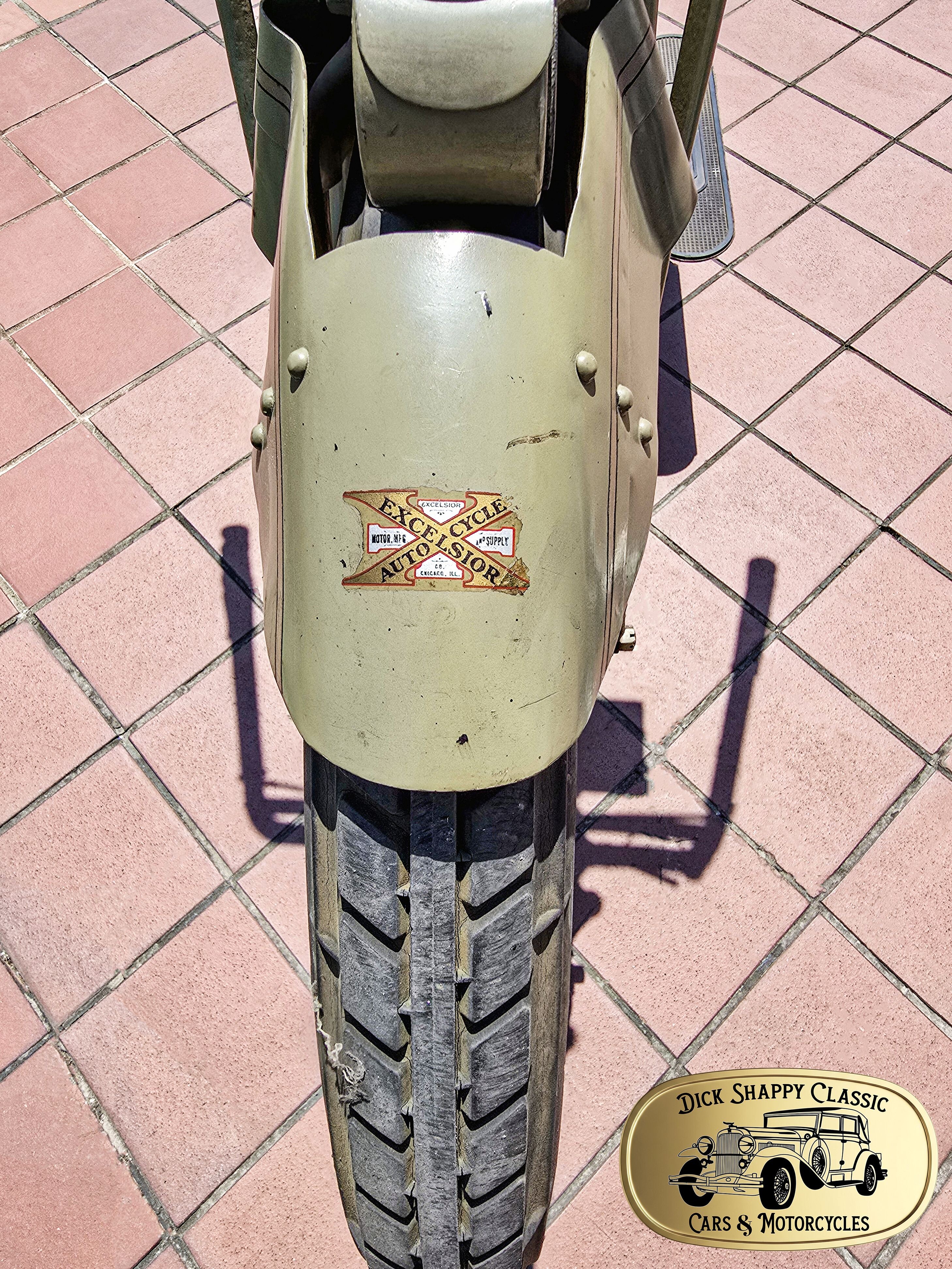
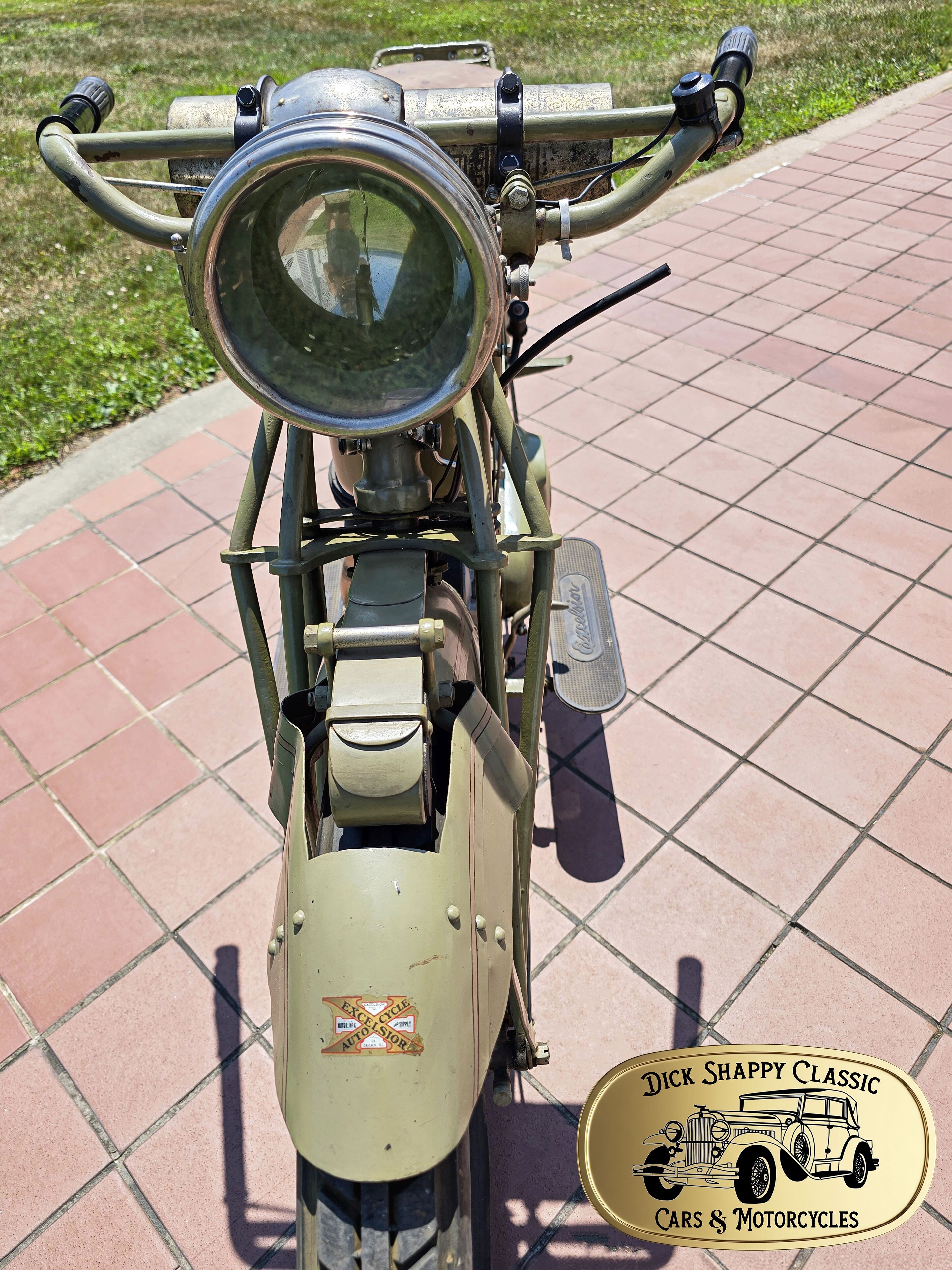
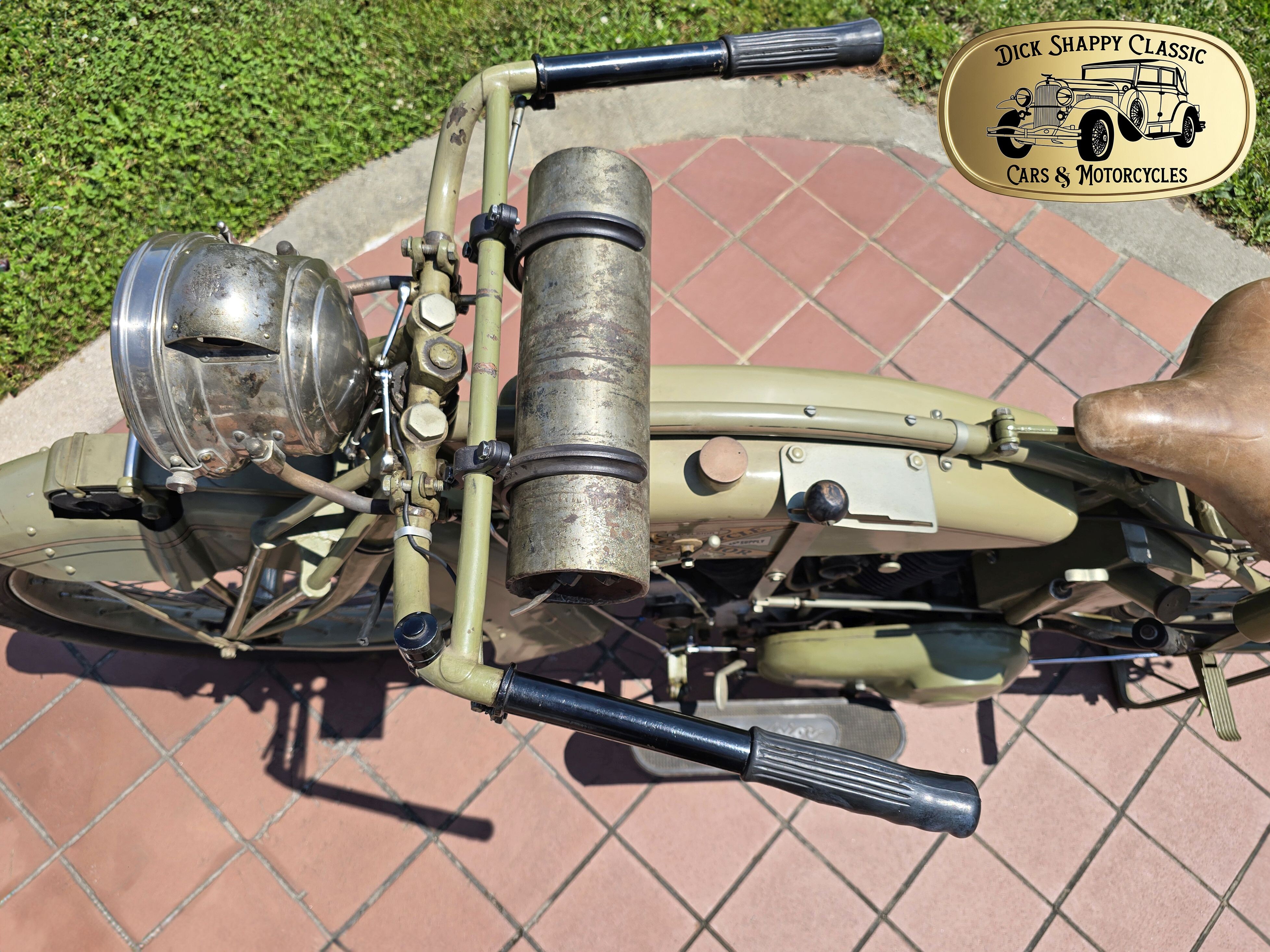
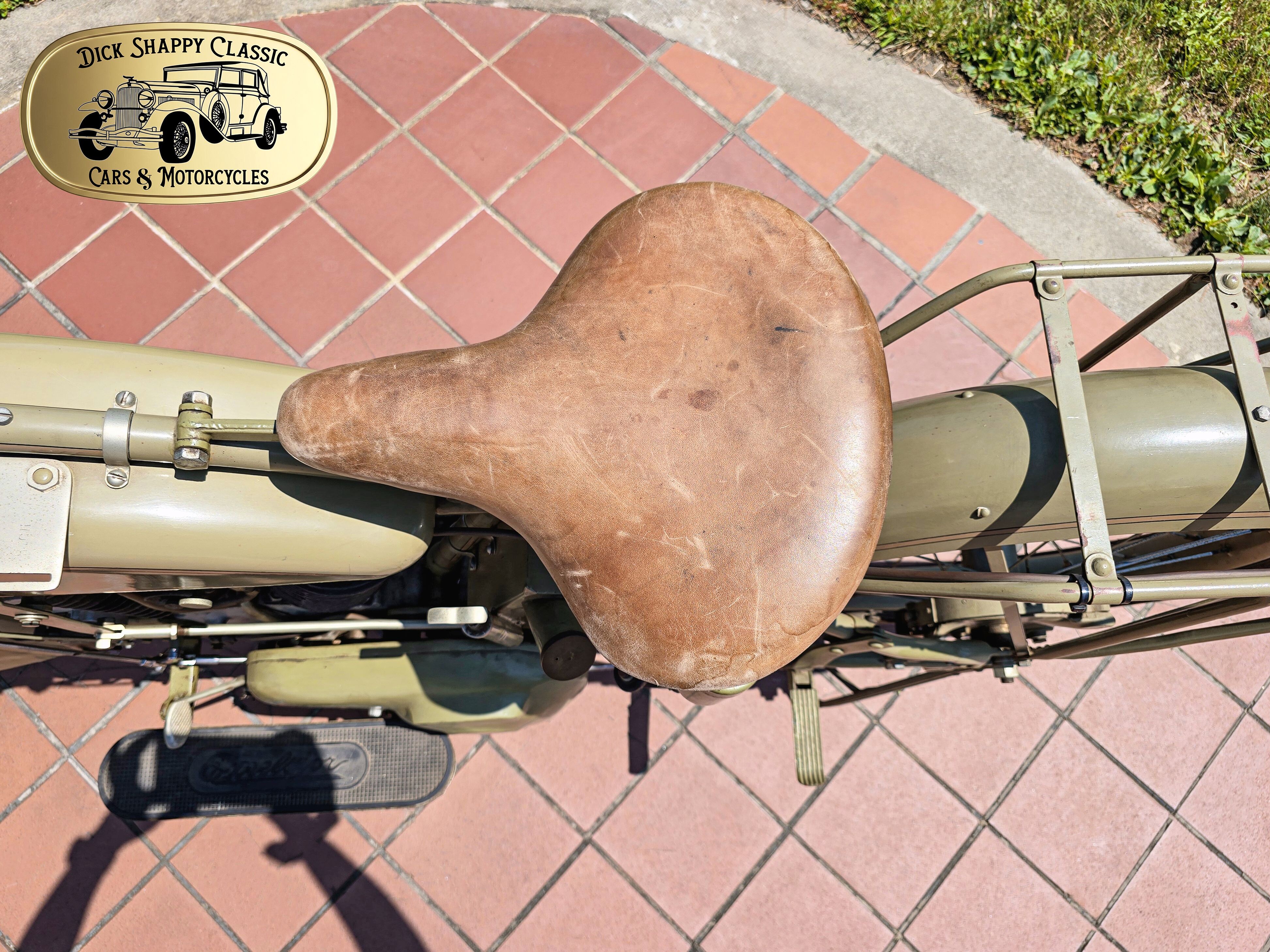
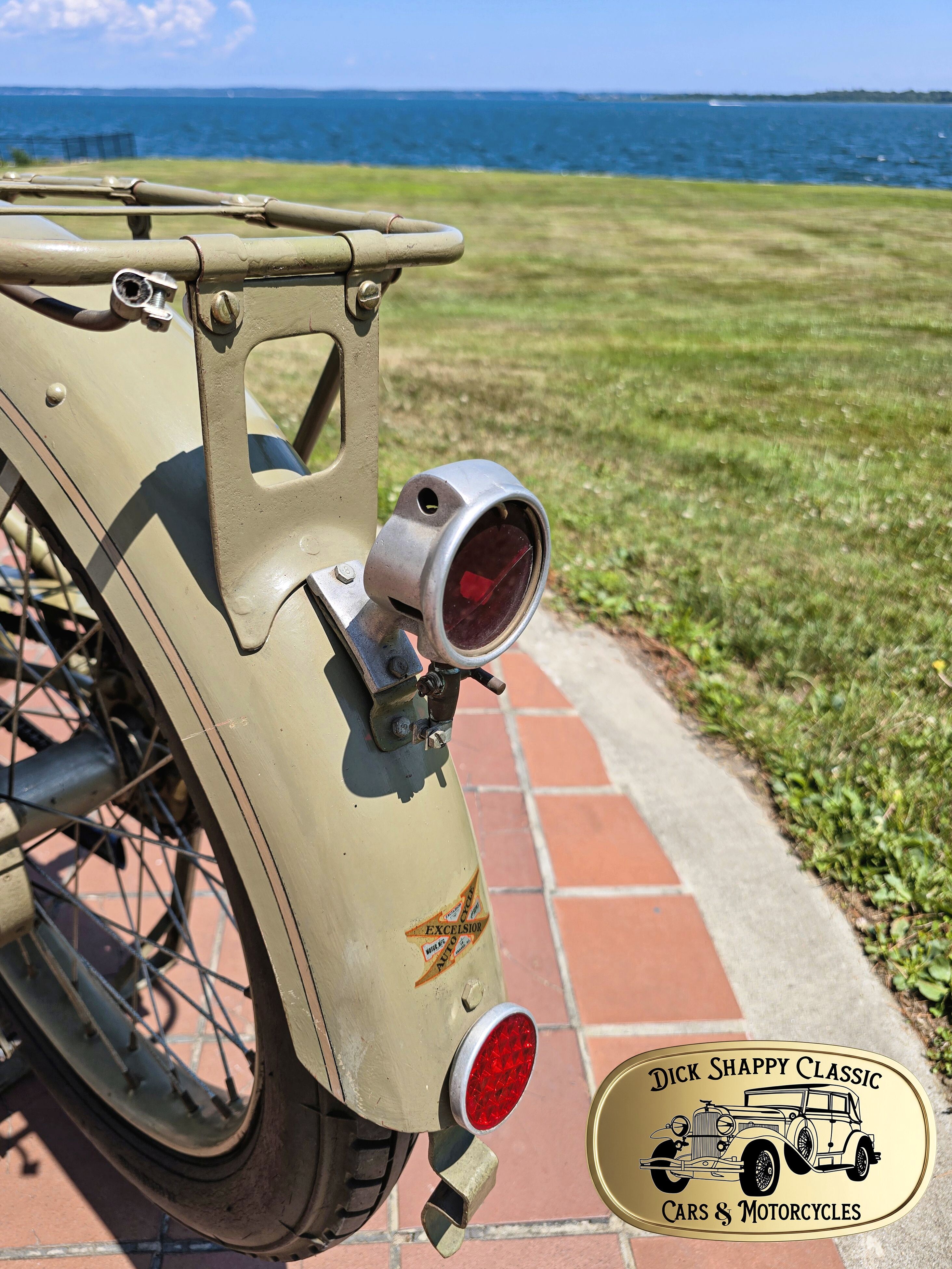
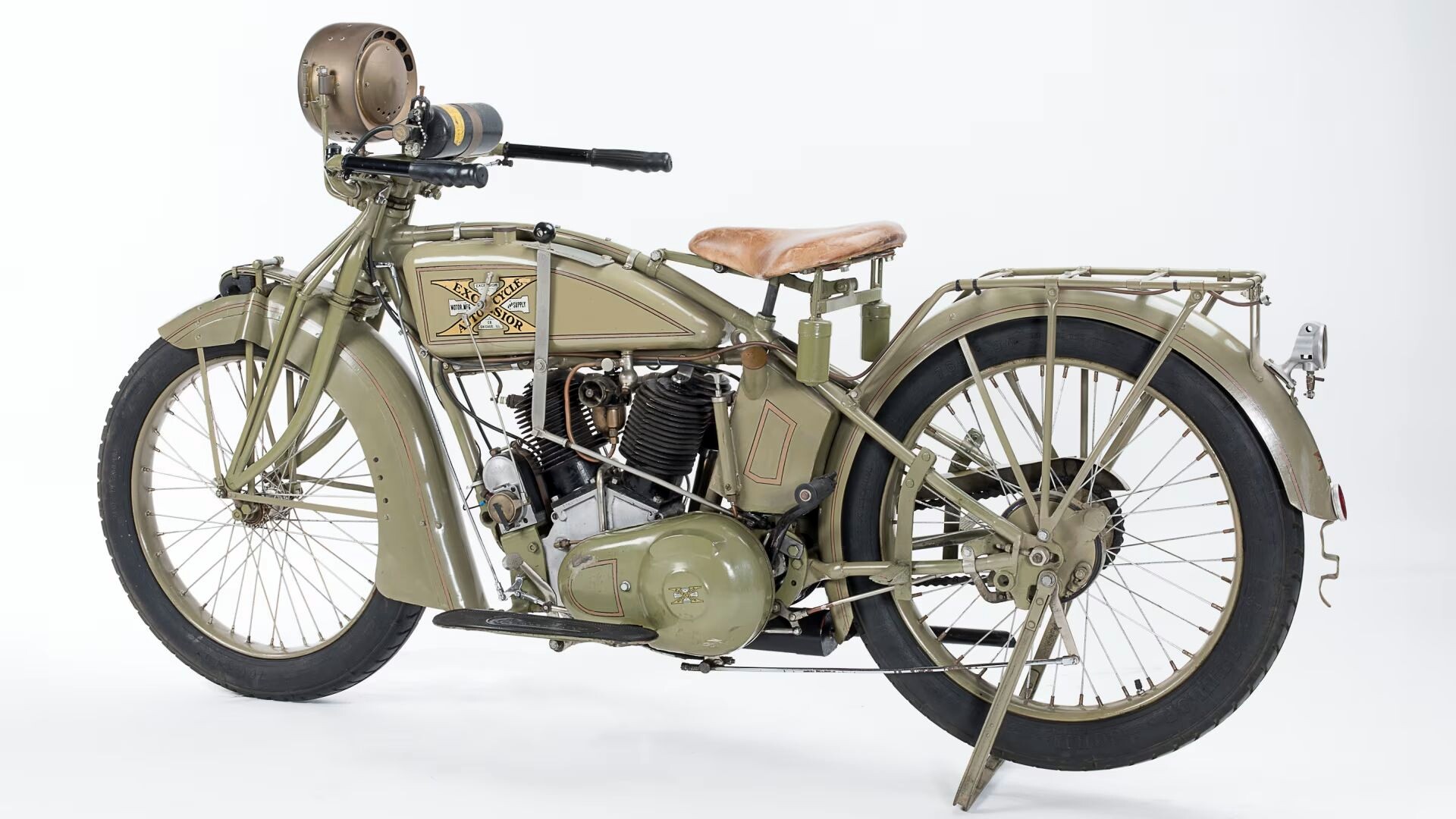
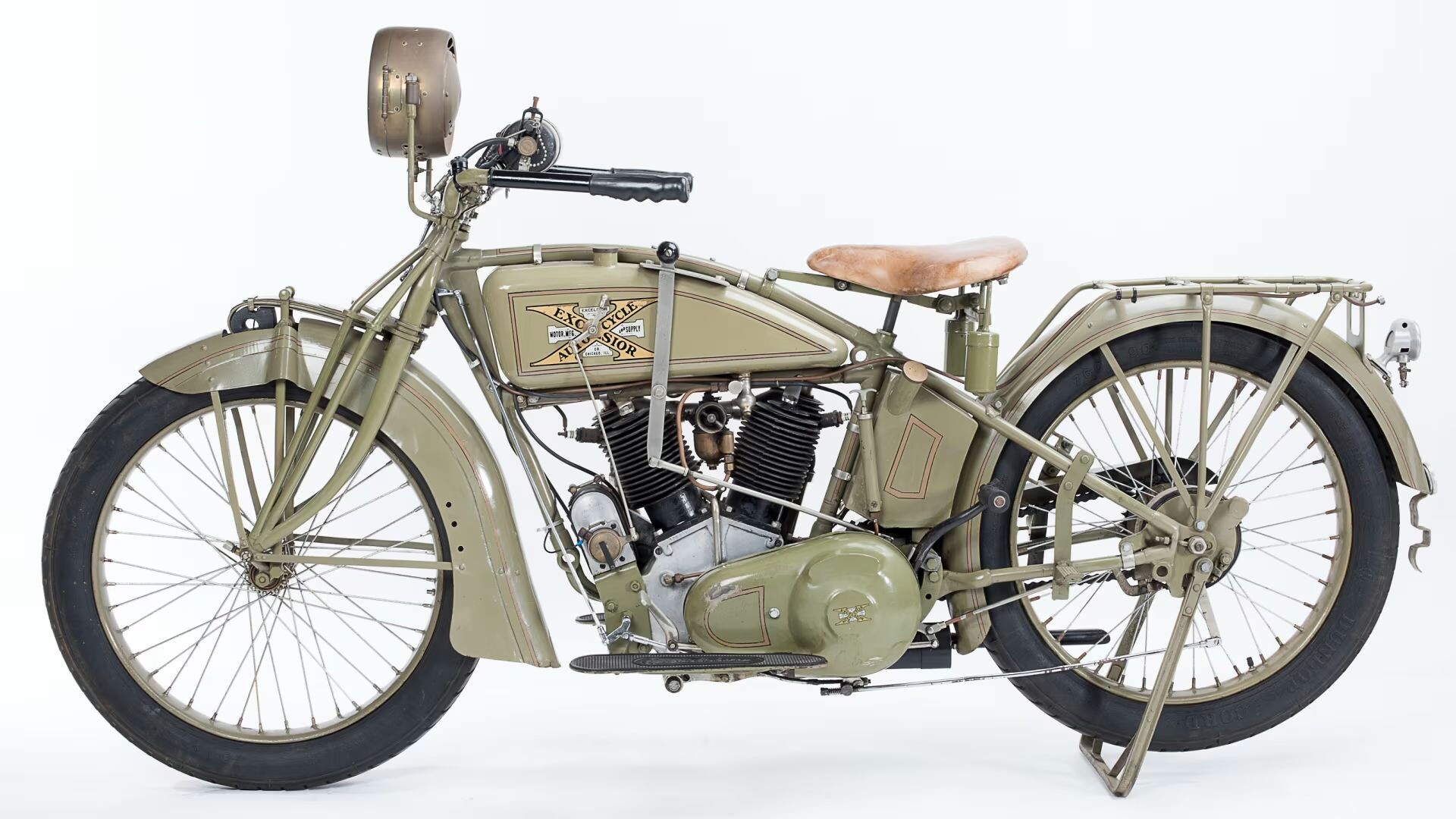
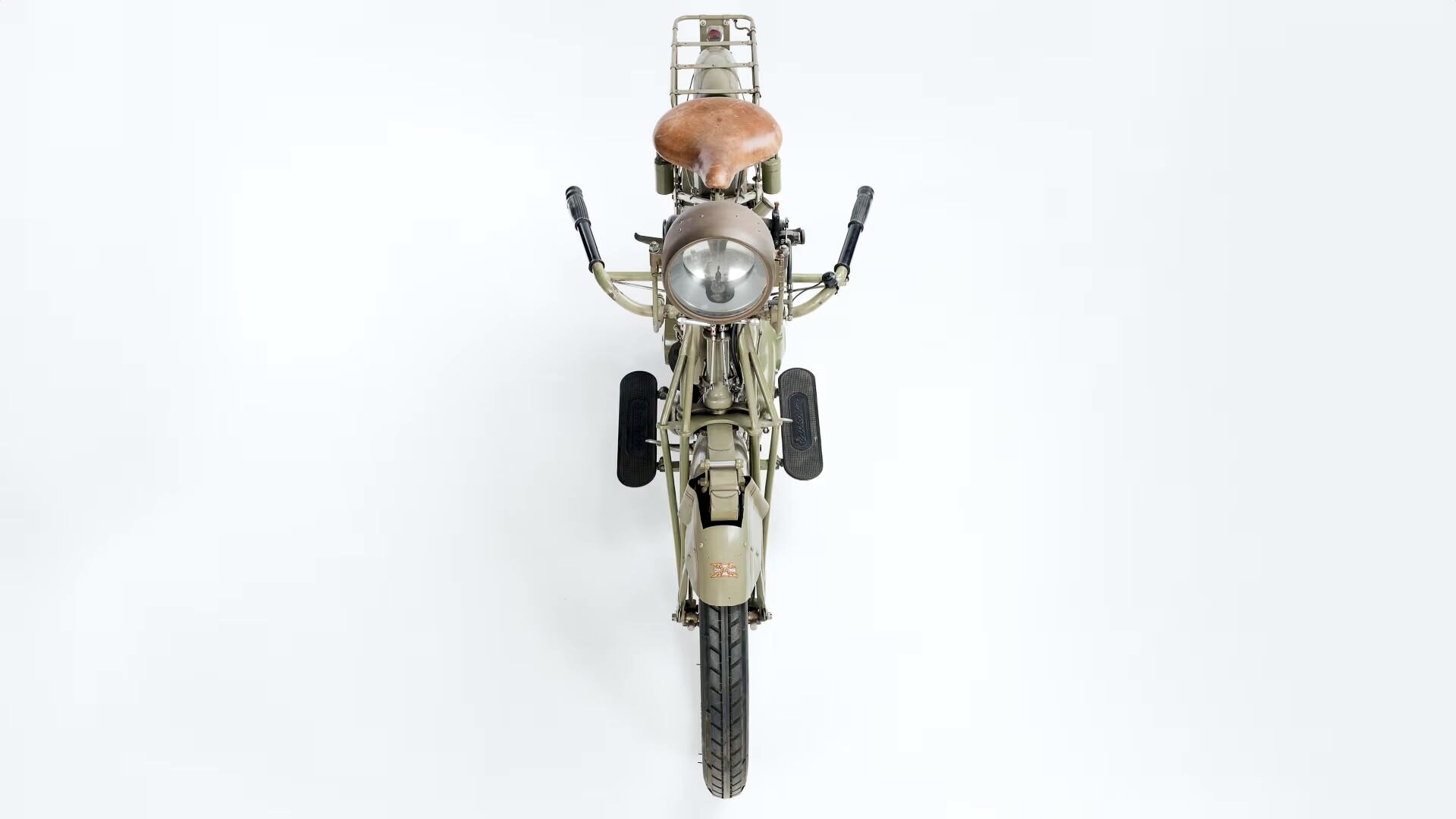
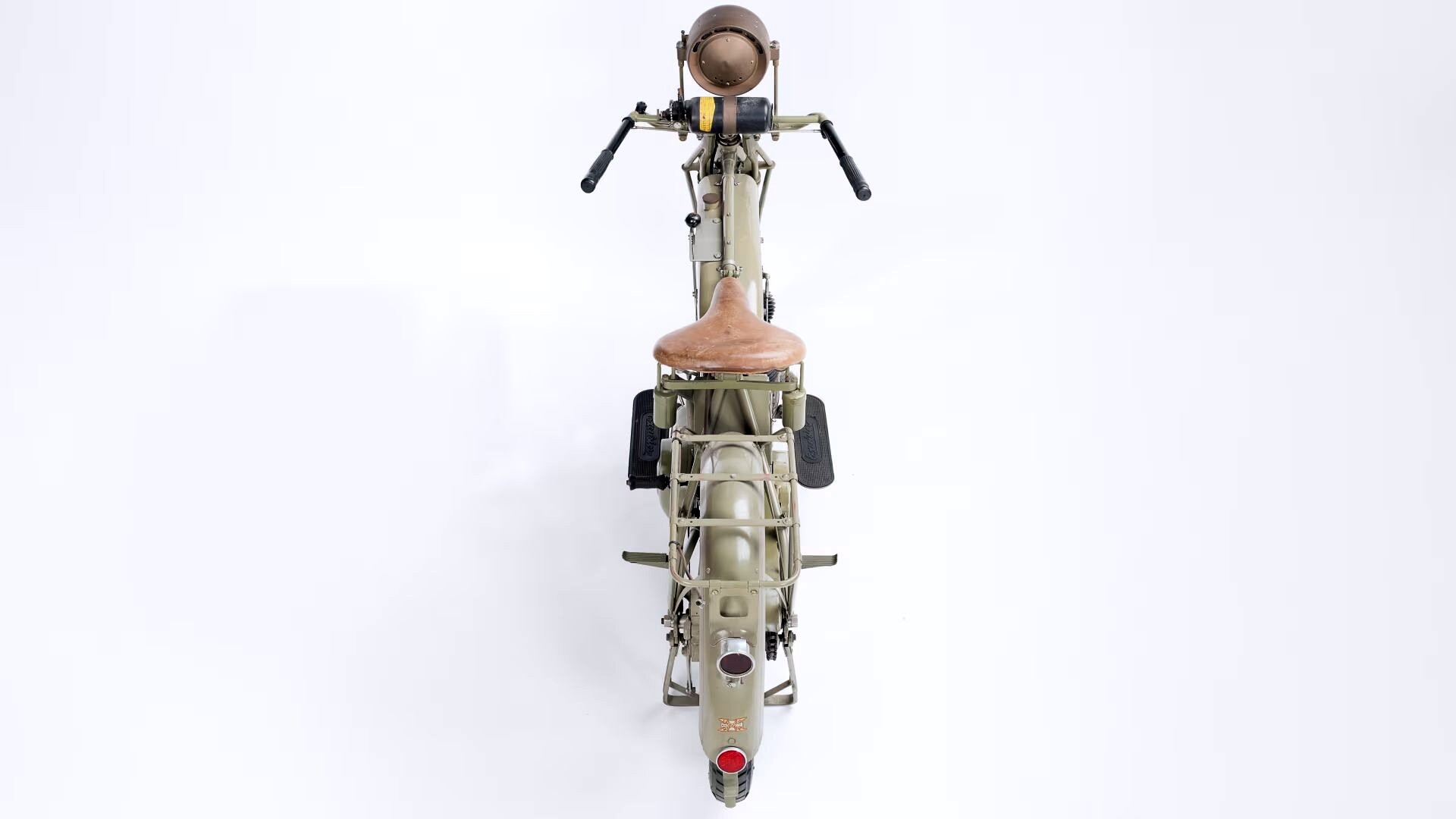
This beautifully restored 1919 Excelsior Big Valve Twin from the Urban S. Hirsch III Collection is an example of one of the most powerful V-twins in American industry. Its 61-cubic-inch, 1,000 cc intake-over-exhaust 50-degree V-twin engine often beat out larger competitors. It sports engine number 102181 and frame number 2116. The frame style is unique, with the top tube making a long arc from the steering head to the saddle lug. Initially, the Big X used a belt drive, but progressed to a two- and then three-speed gearbox by 1915. By 1919, this model was operated with a three-speed manual gearbox with a tank-side shift. The carburetor is a Schebler, and the ignition is a Bosch magneto. Excelsior’s unique tin cover hides the kickstarter. Although there is no rear suspension with its rigid frame, the front fork features a “military type” leaf spring with trailing link and extra bracing. The flat gas tank has an elegantly curved top, and the front fender is skirted, the last year of the distinctive style. The motorcycle is controlled by a twist-grip throttle and ignition advance, with a contracting band rear brake and no front brake. The seat is sprung leather with a sliding pillar spring. Offered with a variety of lighting options, this Model 19 sports an acetylene headlight and taillight. The spoked wheels with color-keyed steel rims rest on 3.50-28 front and rear tires. The look is complete with a tan steel tank featuring gold logos and red pinstriping with matching fenders and even a rear luggage rack.
The Excelsior Supply Company was founded in 1876 by George T. Robie in Chicago to distribute sewing machine and bicycle parts, but expanded into the Excelsior Motor and Manufacturing Company in 1907 with Frederick Carlton Robie at the helm as president. Motorcycle production began in 1908, and by 1912, Ignaz Schwinn, owner of Arnold, Schwinn & Co. of Schwinn Bicycles, purchased the company. His extensive engineering facilities allowed for the development of engines modified for greater strength and speed. Together, they set a new record as an Excelsior motorcycle was the first to be officially timed at a speed of 100 mph in 1912. Schwinn acquired the Henderson Motorcycle Company in 1917, combining three impressive forces.
In 1925, the Excelsior Super X model was released, the first motorcycle with a 45 cu. in. V-twin engine, to compete with the Indian Scout. Indian and Harley-Davidson quickly followed suit, but by 1928, Excelsior was in third place behind them among U.S. motorcycle manufacturers, rounding out the Big Three. Despite the success of Schwinn’s motorcycle production, after the stock market crashed in 1929, motorcycle sales plummeted, and by 1931, with a full order book, Ignaz ordered production to cease. His words, “Gentlemen, today we stop,” may have saved the company, as focusing on bicycles was a far more cost-effective endeavor, leaving surviving relics as a piece of American history.