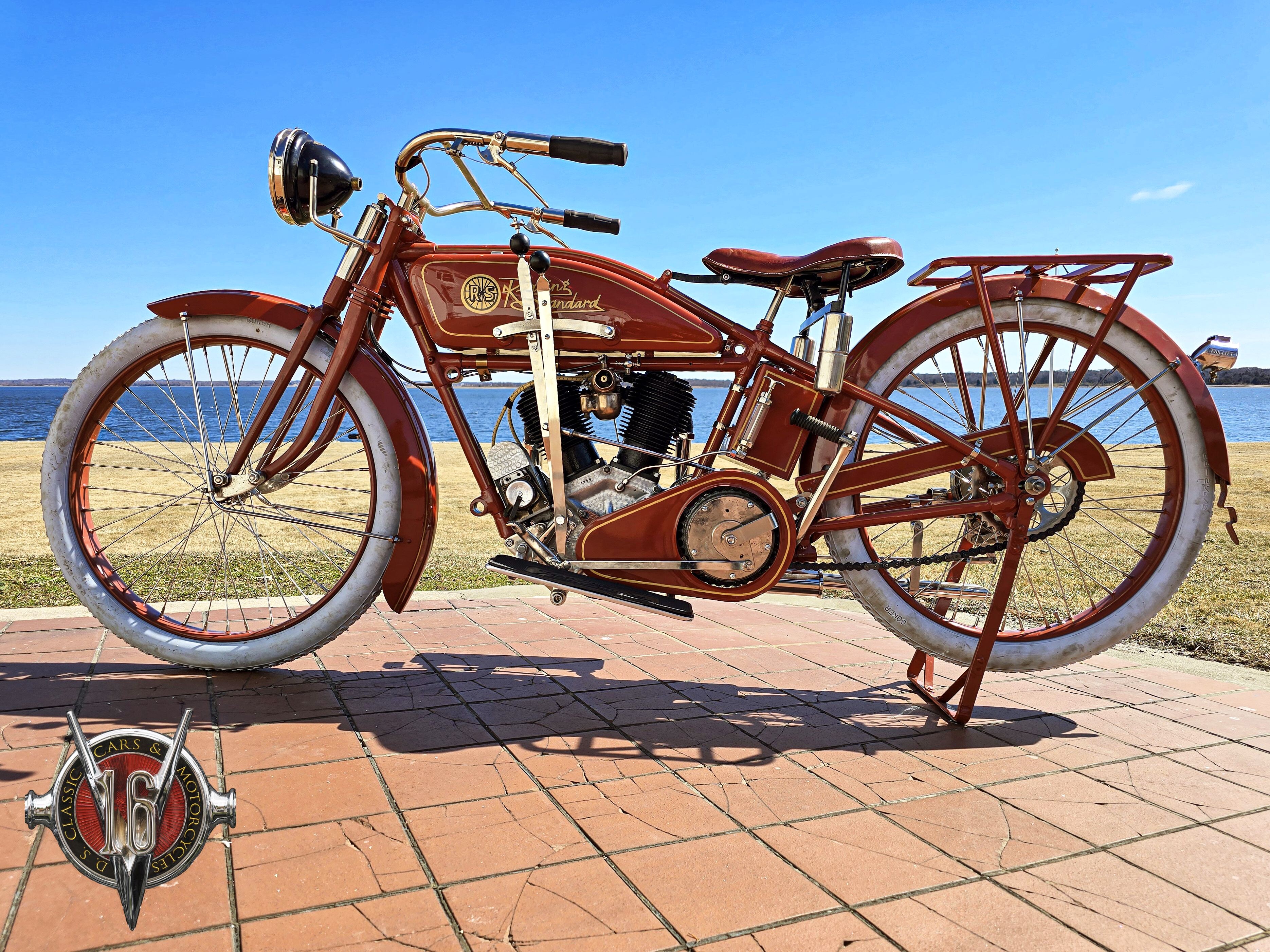
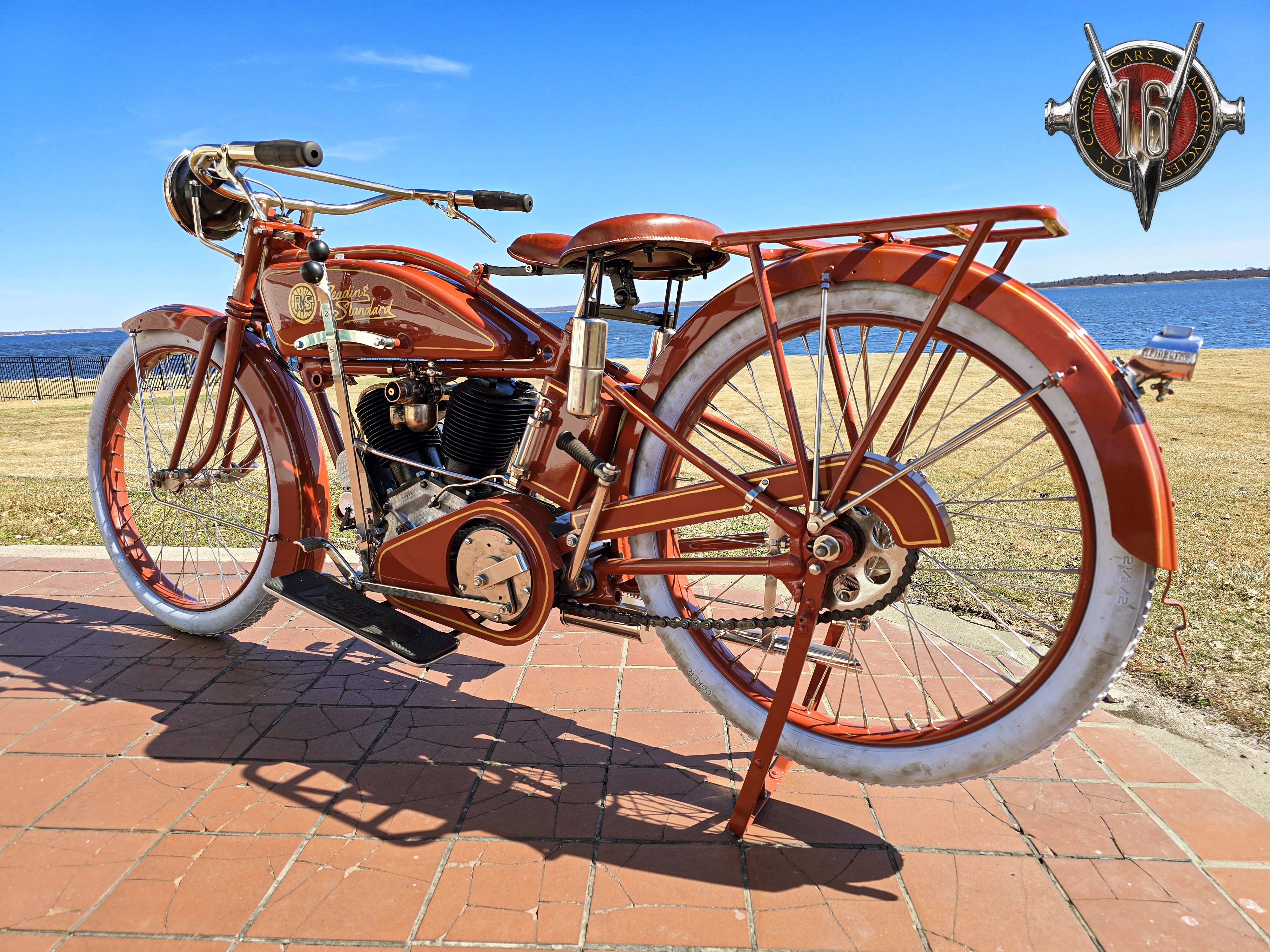
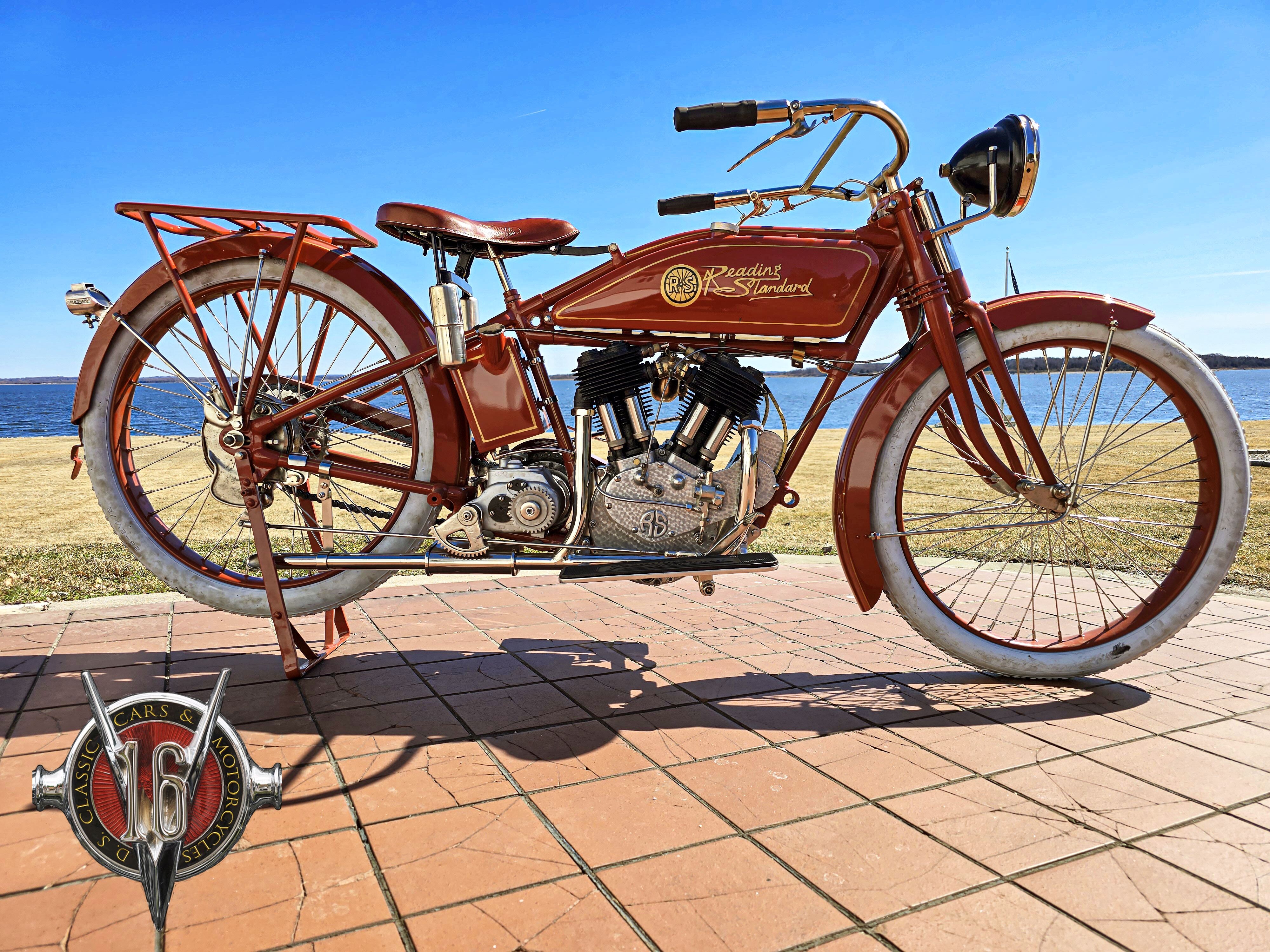
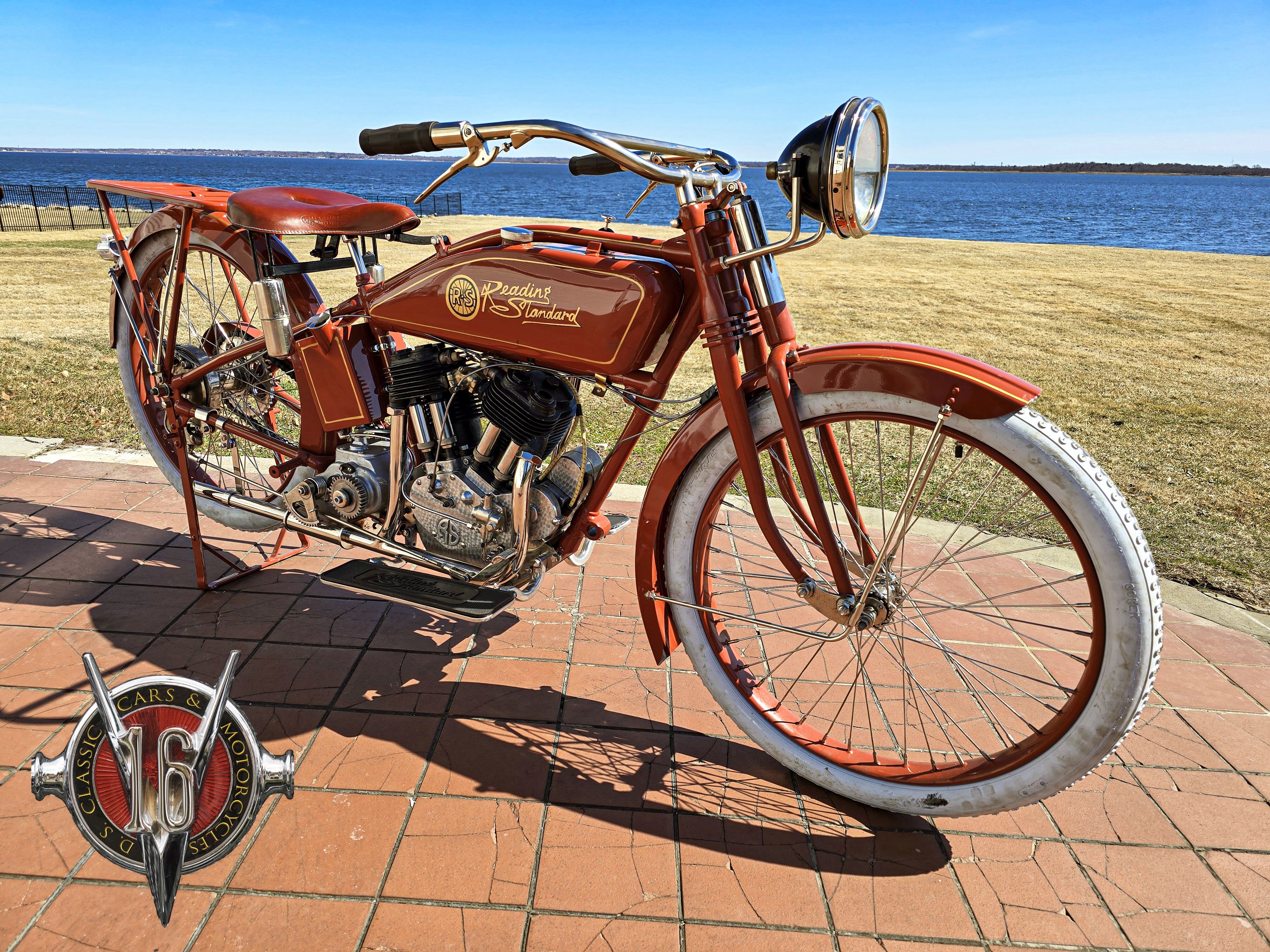
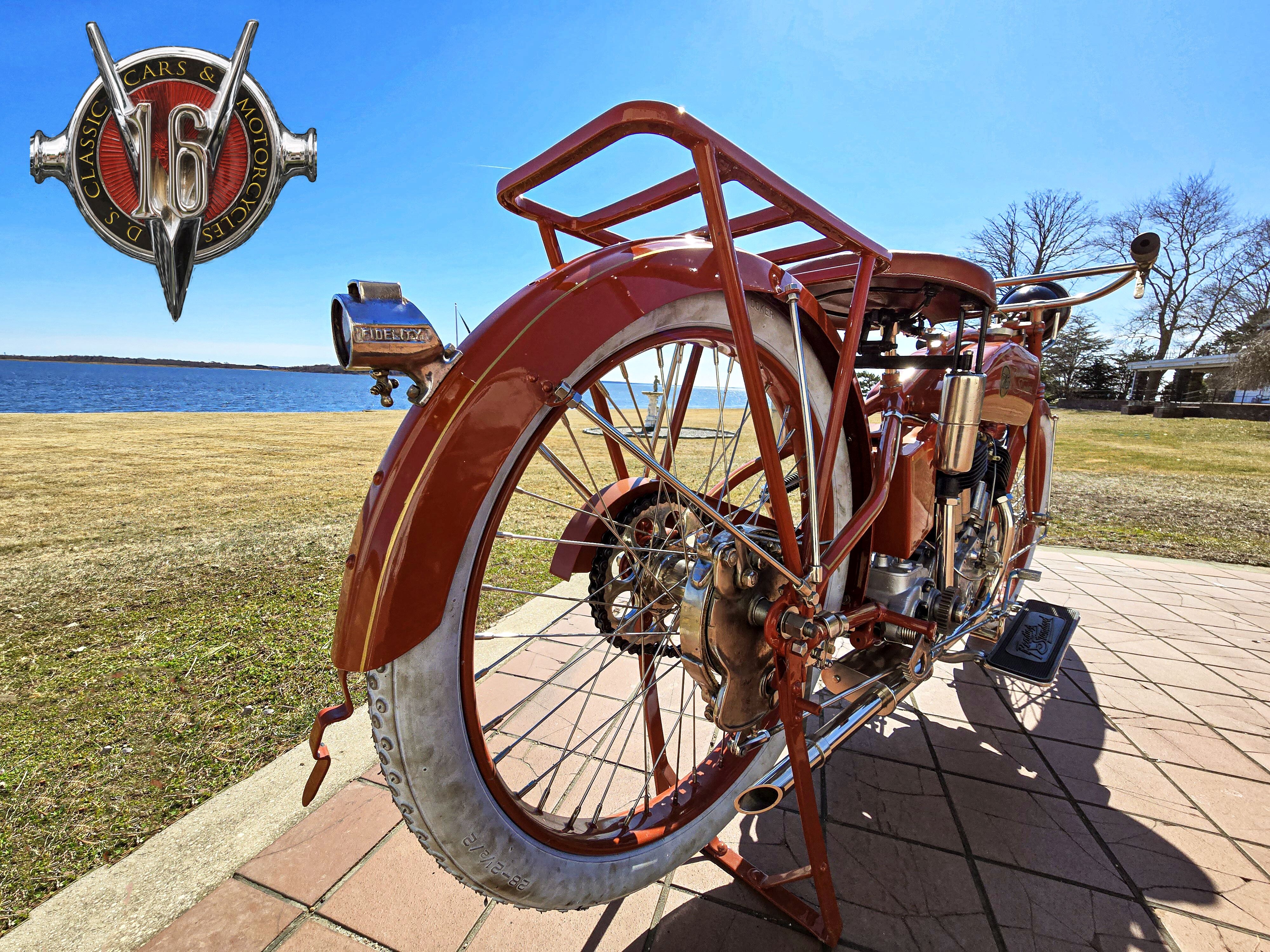
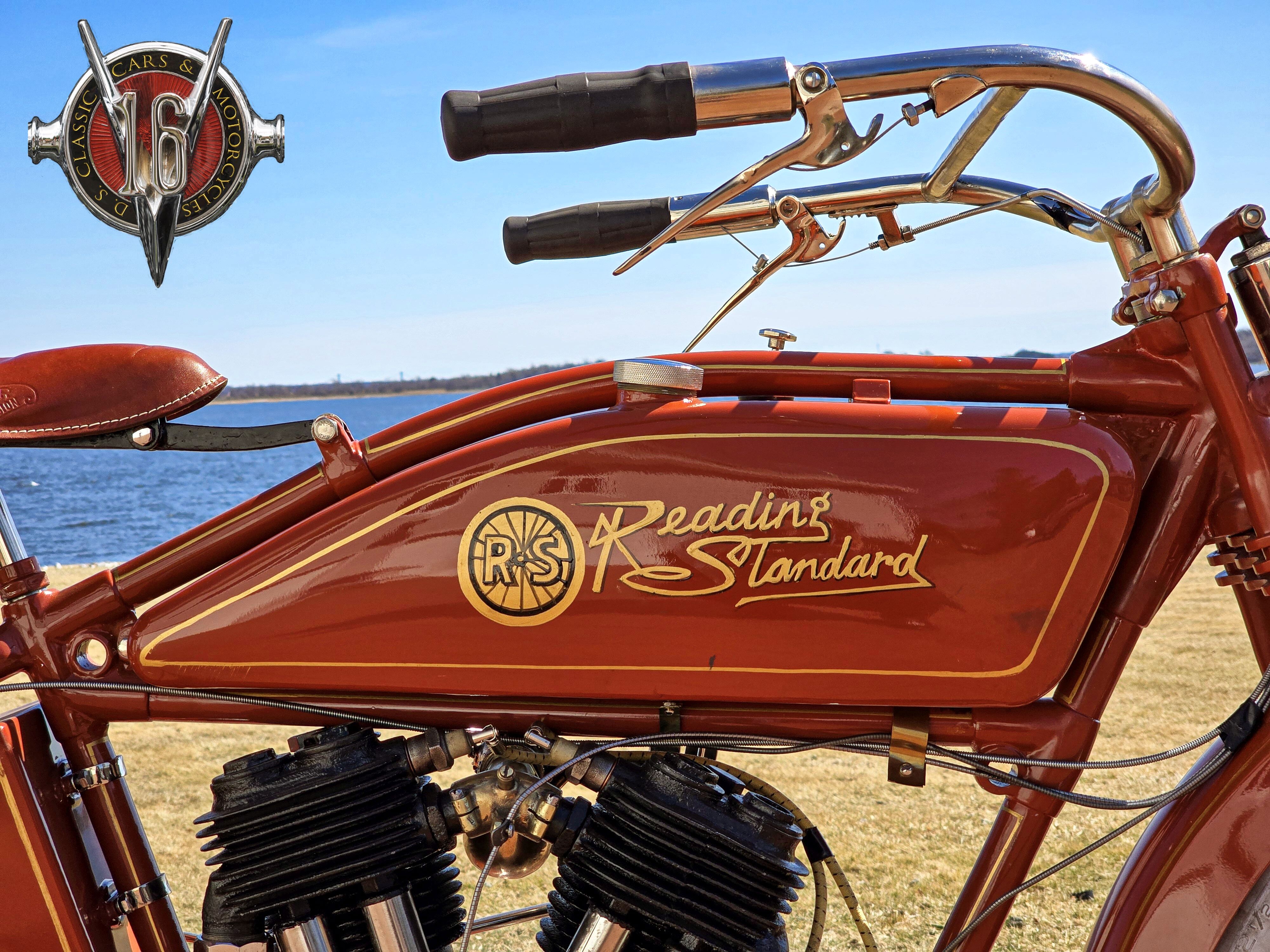
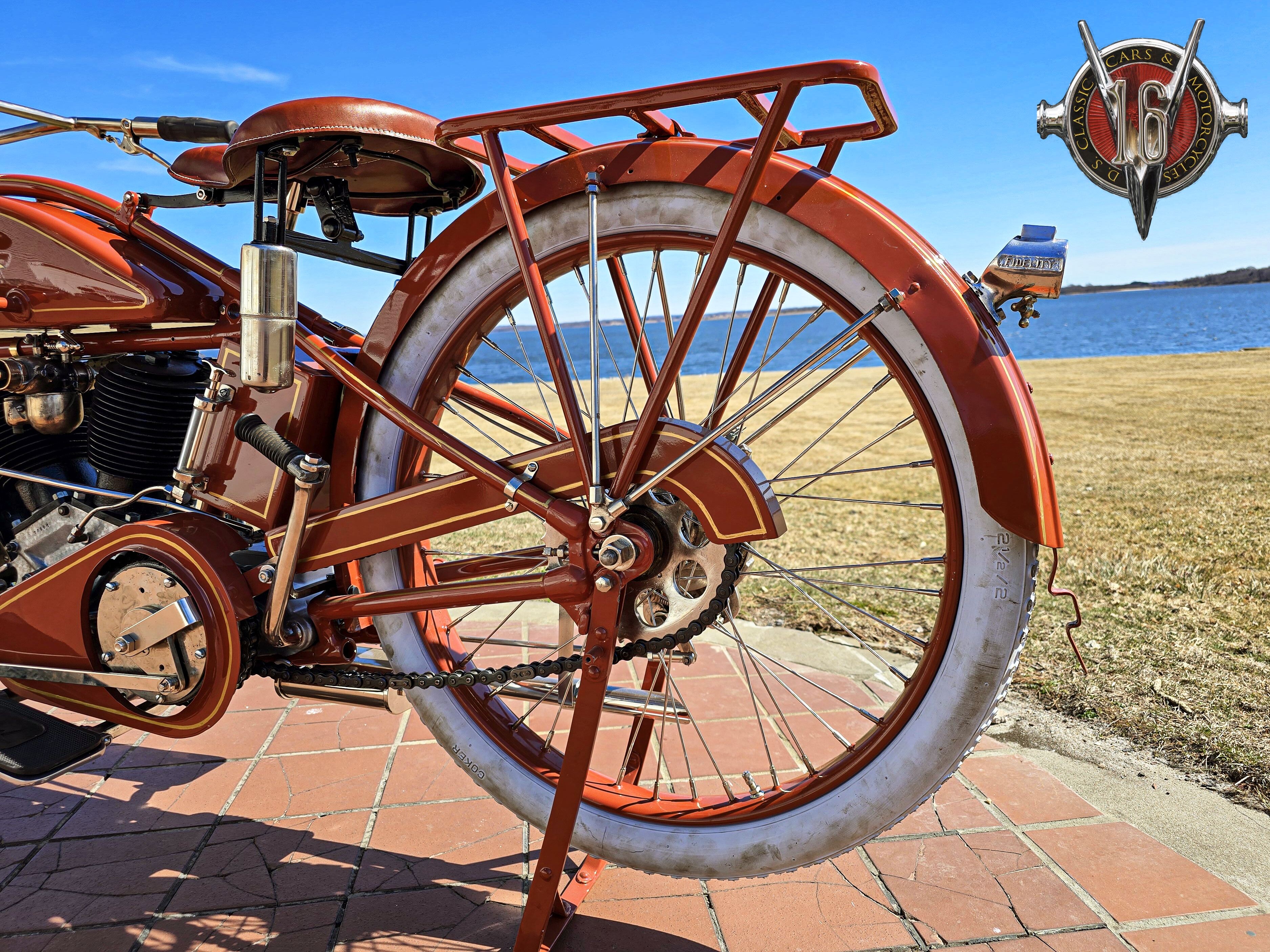
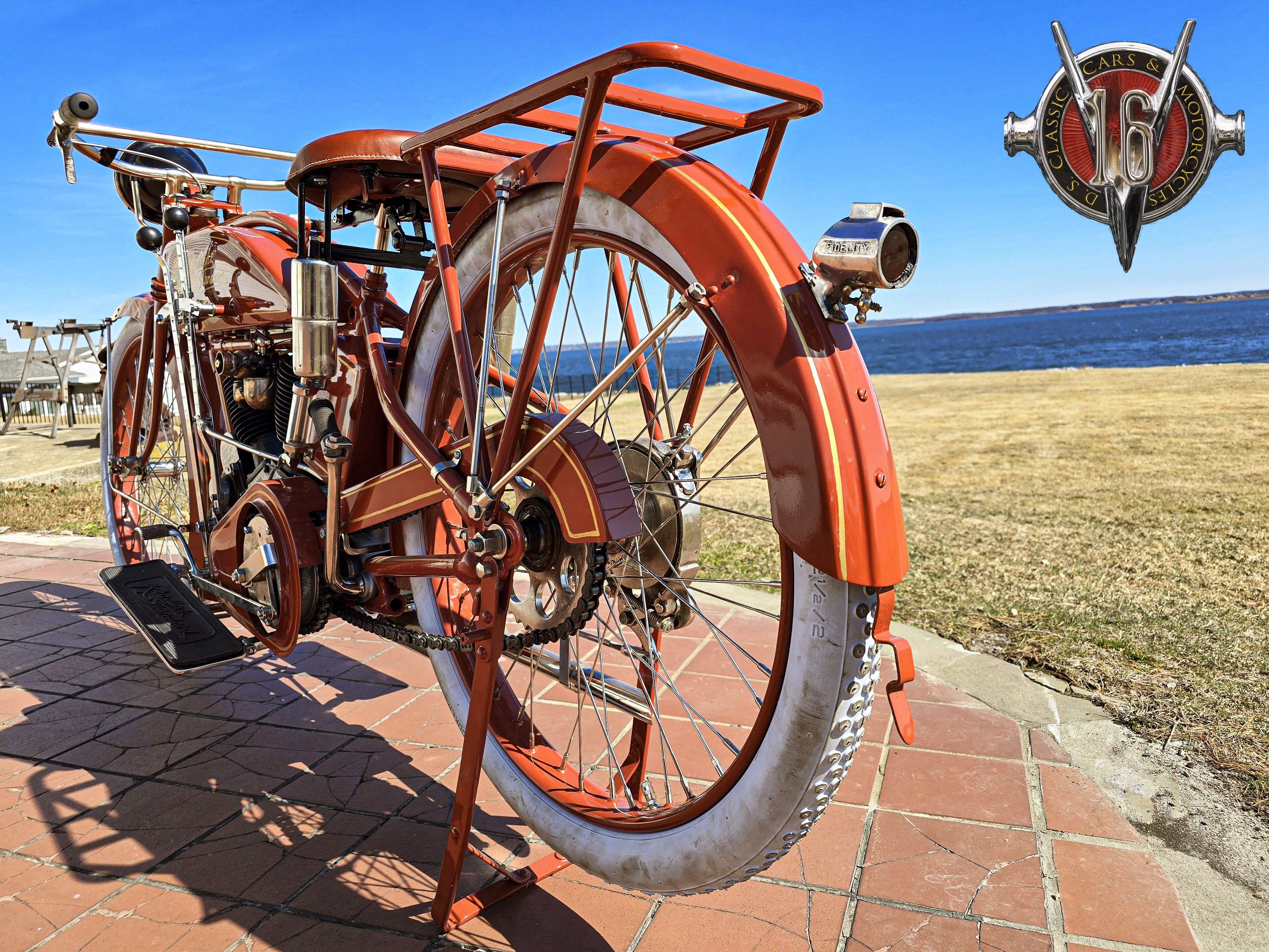
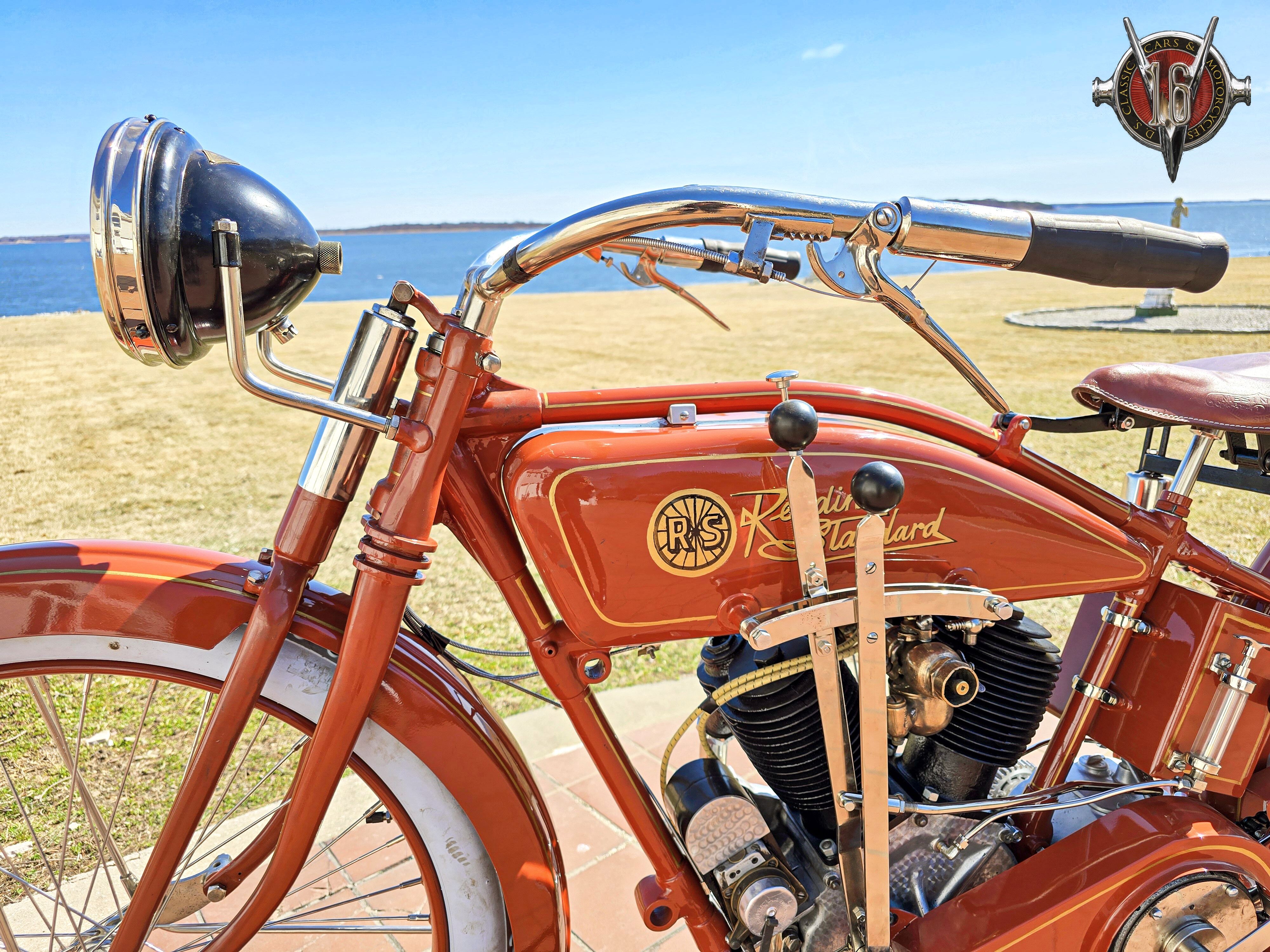
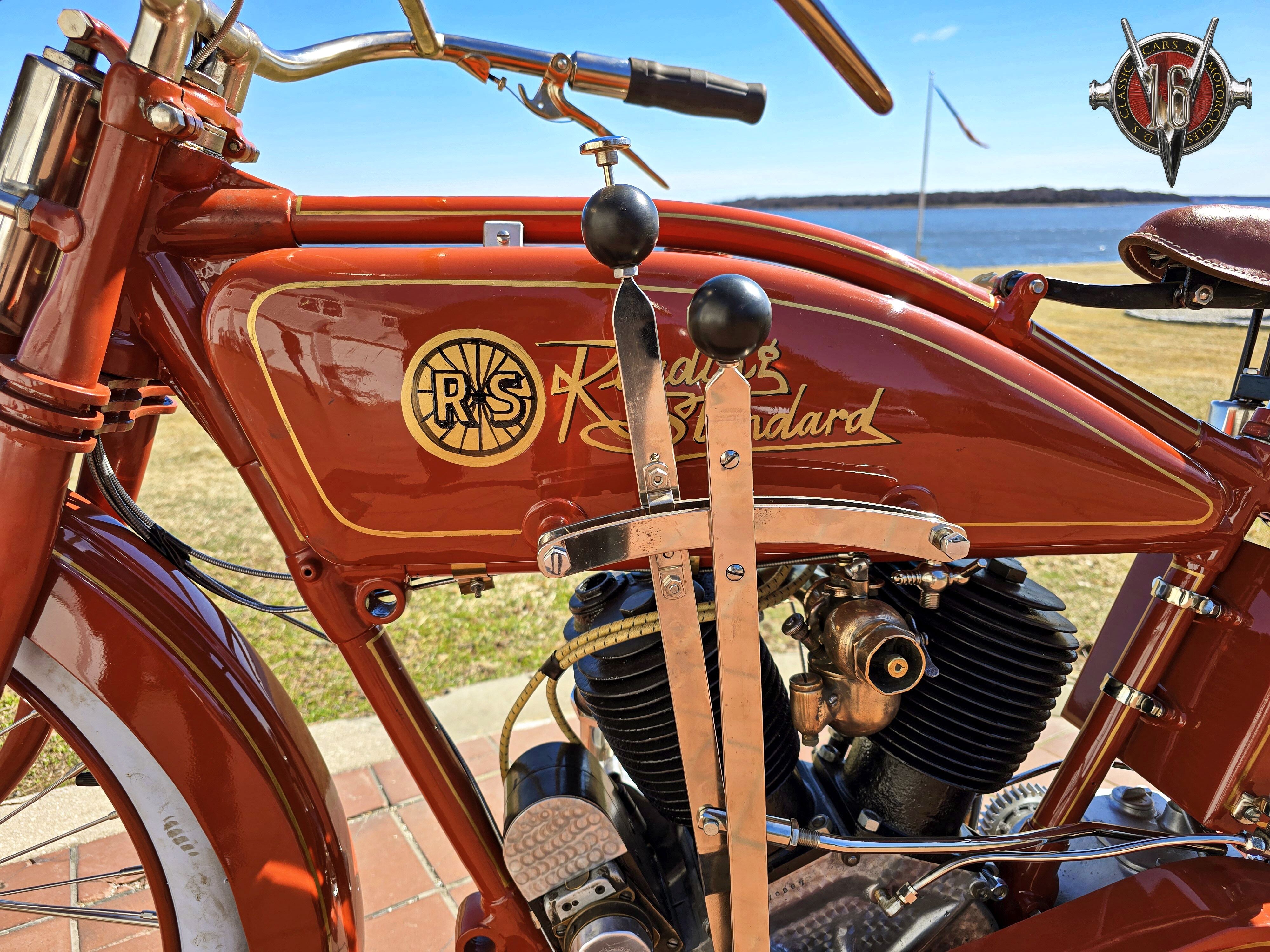
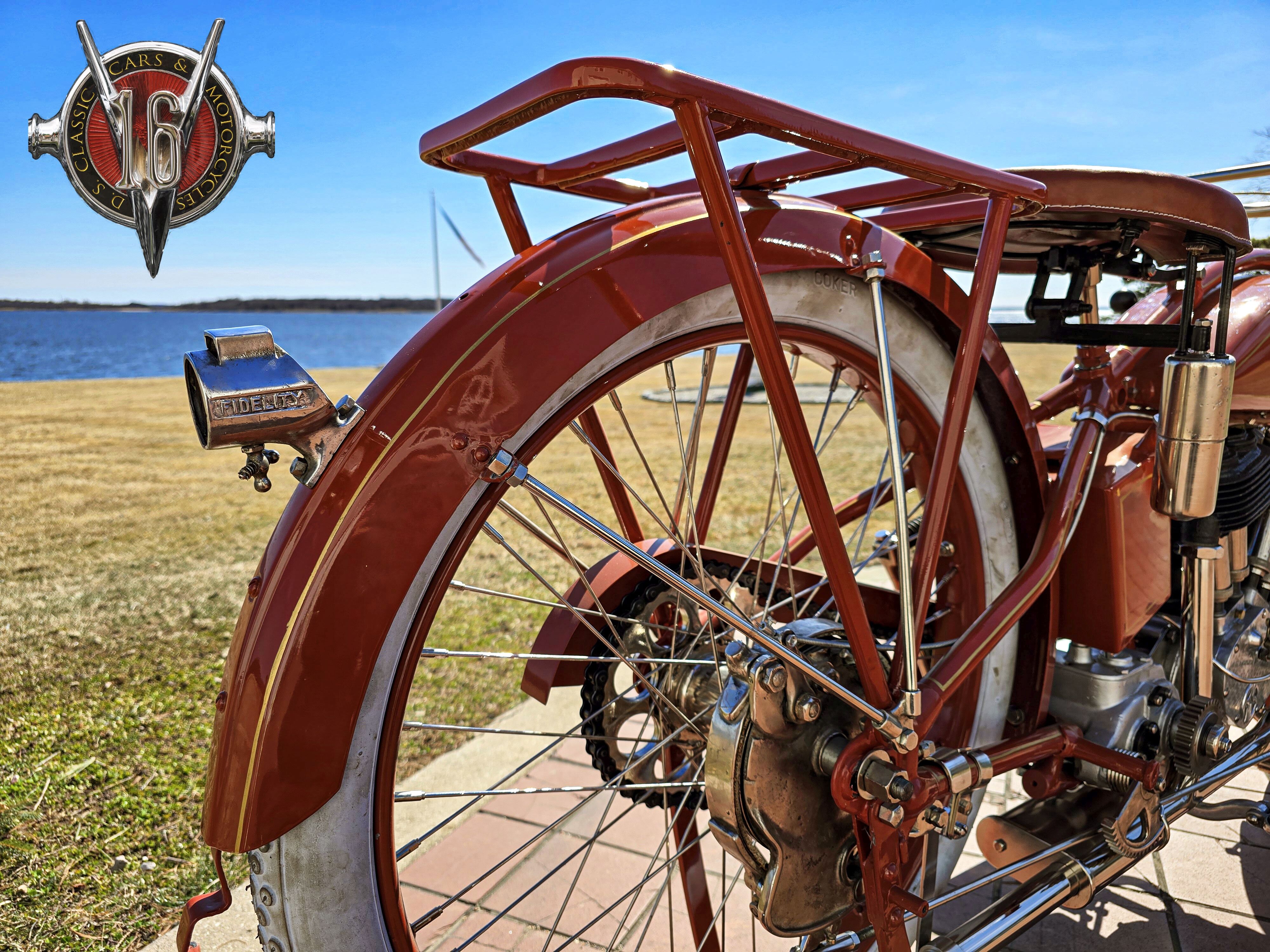
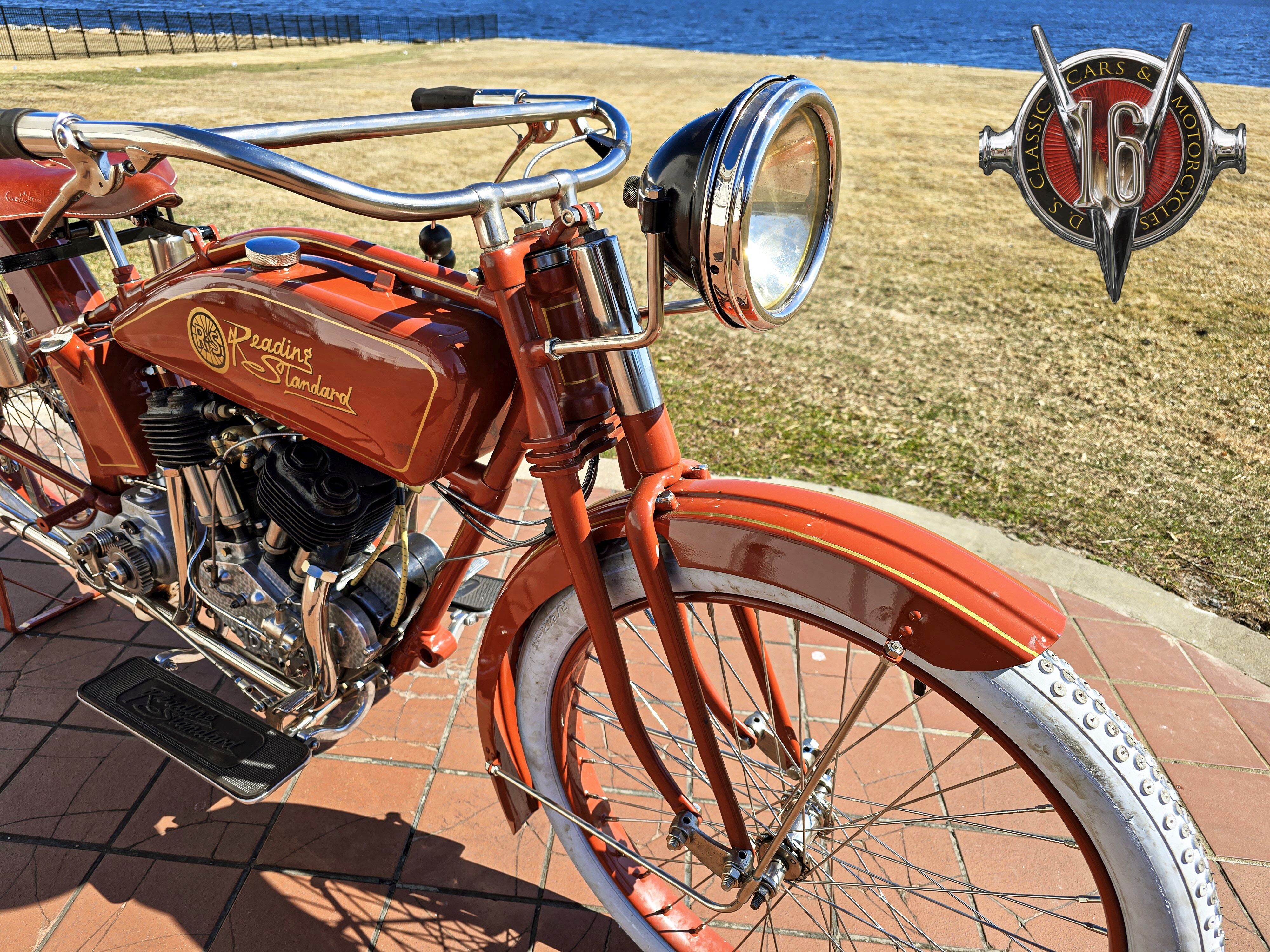
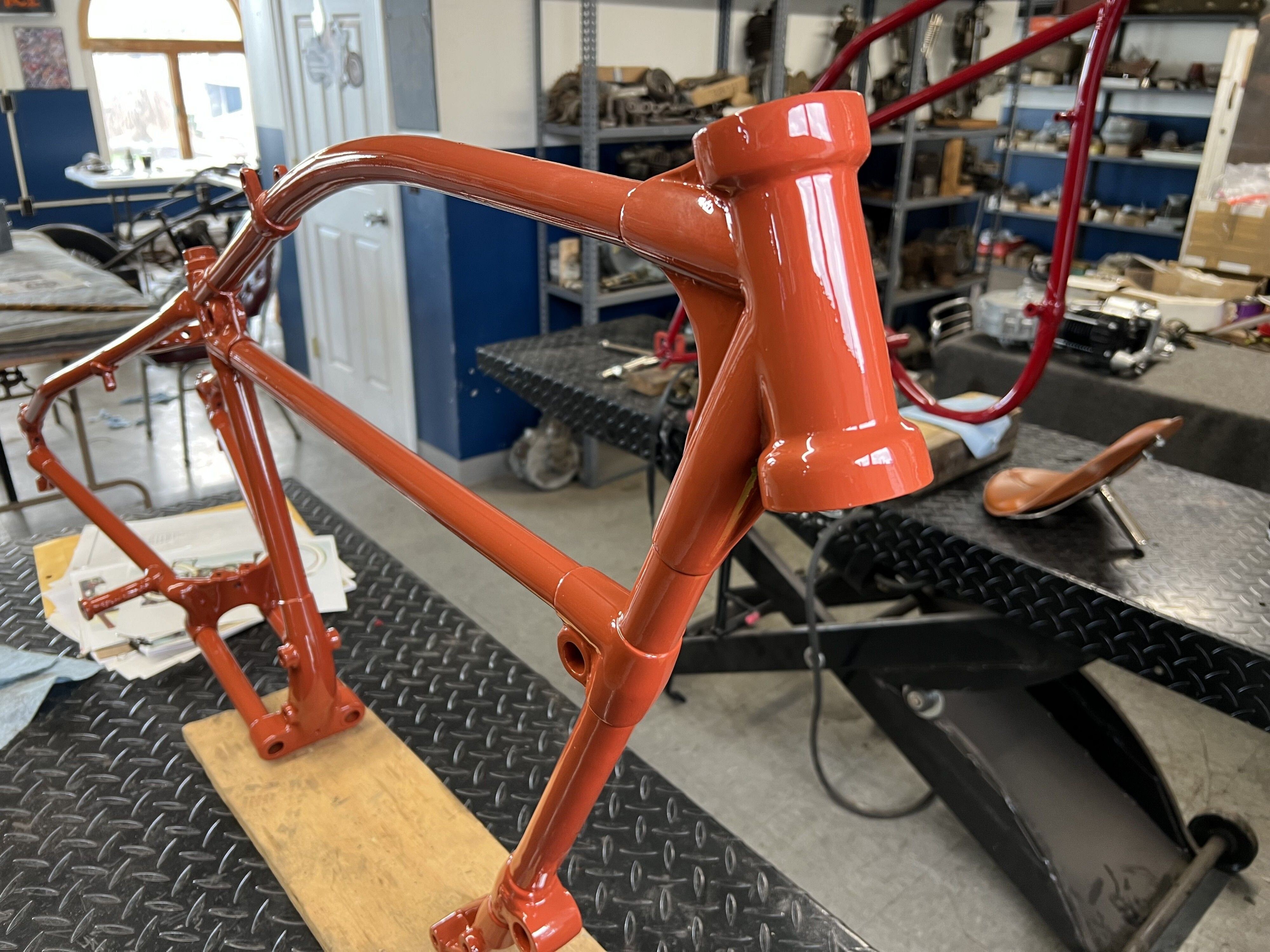
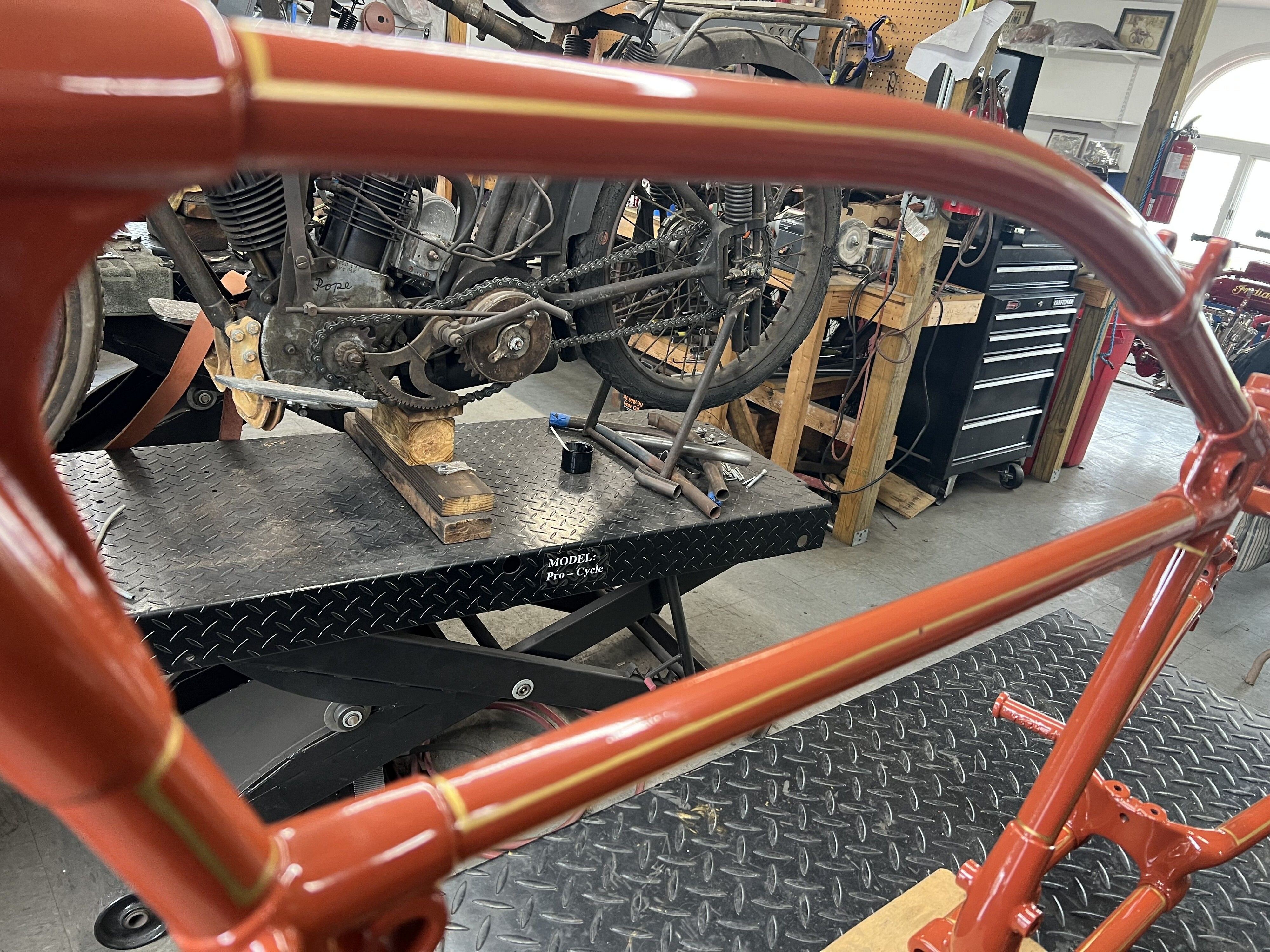
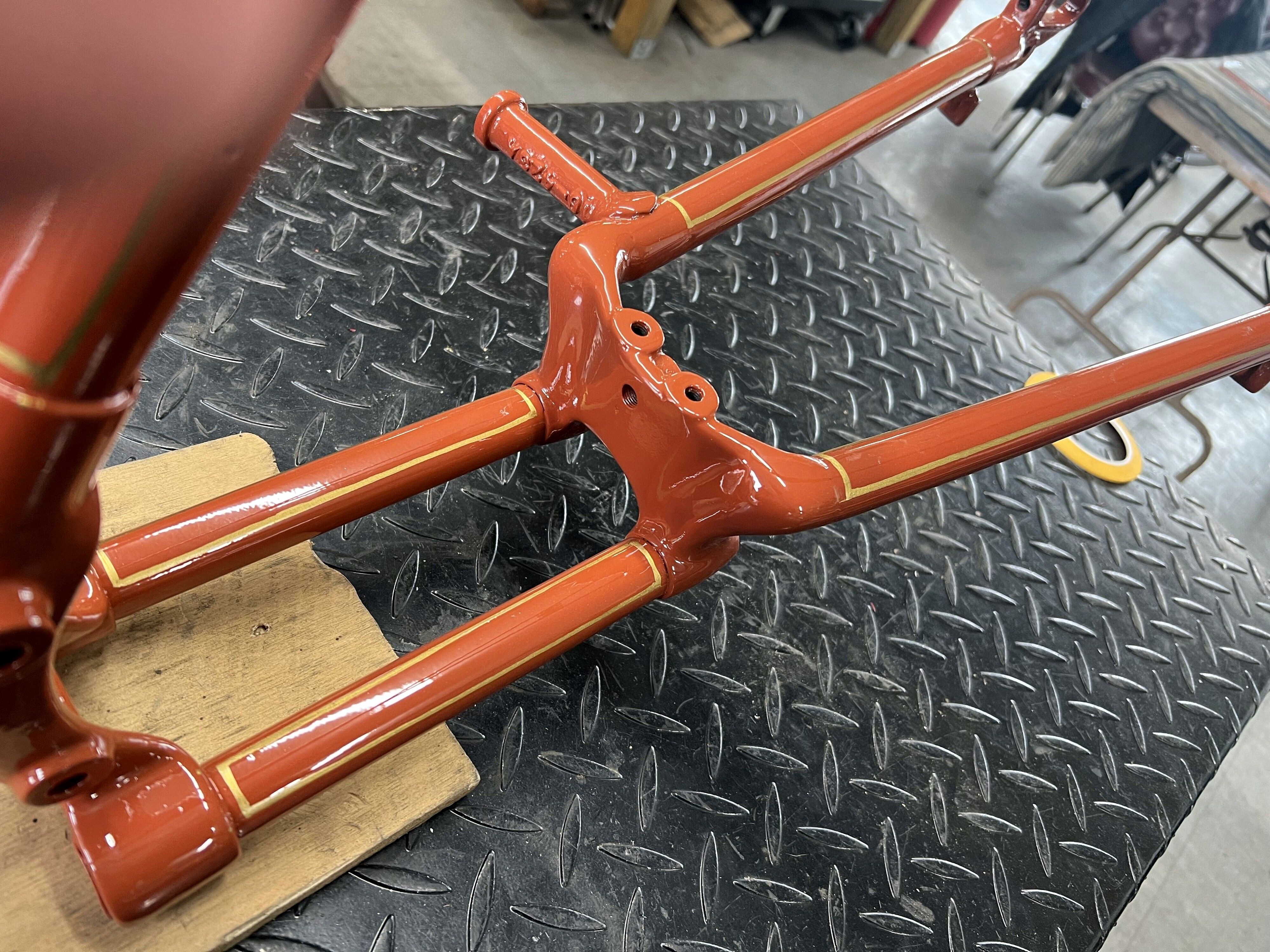
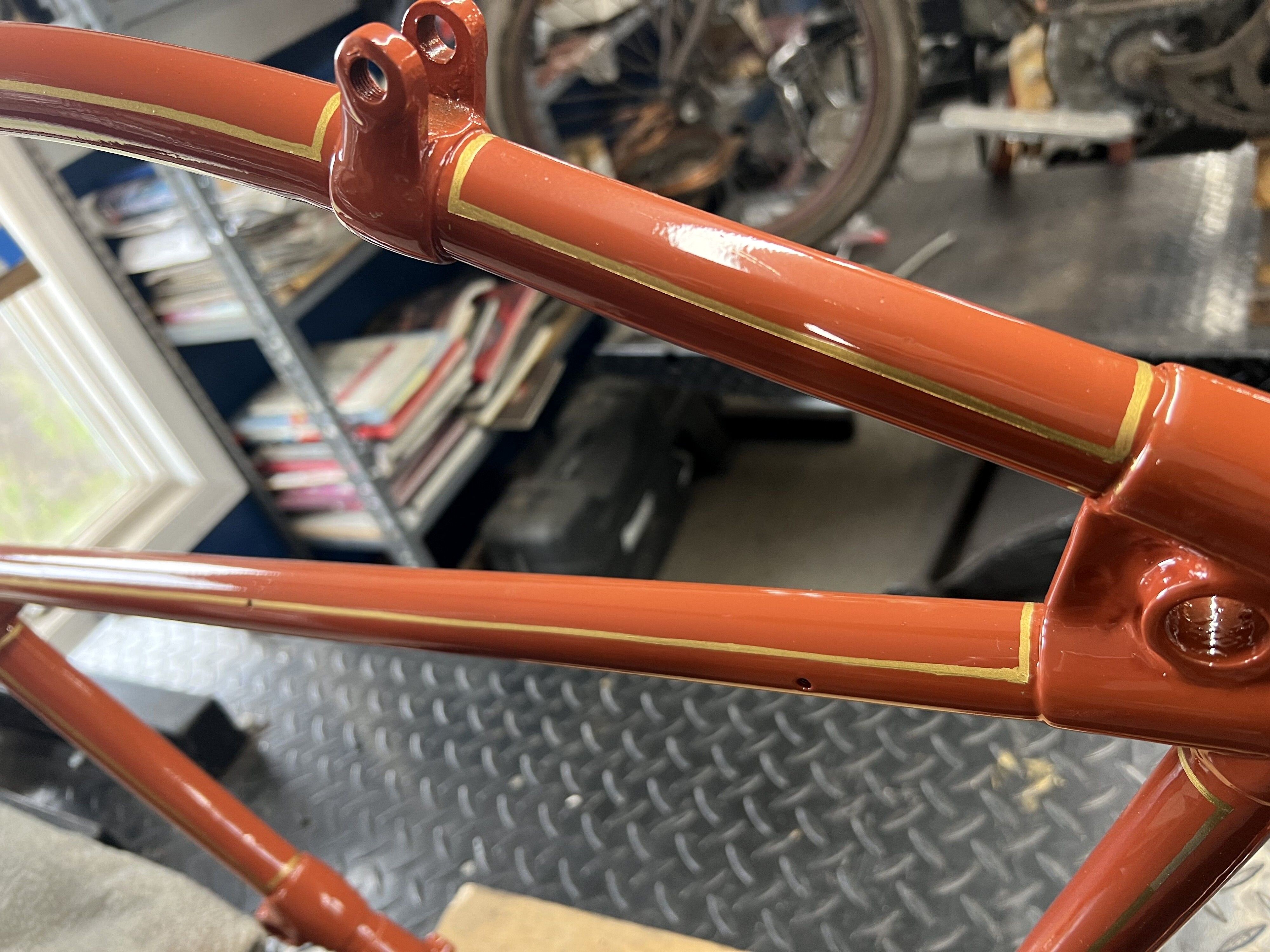
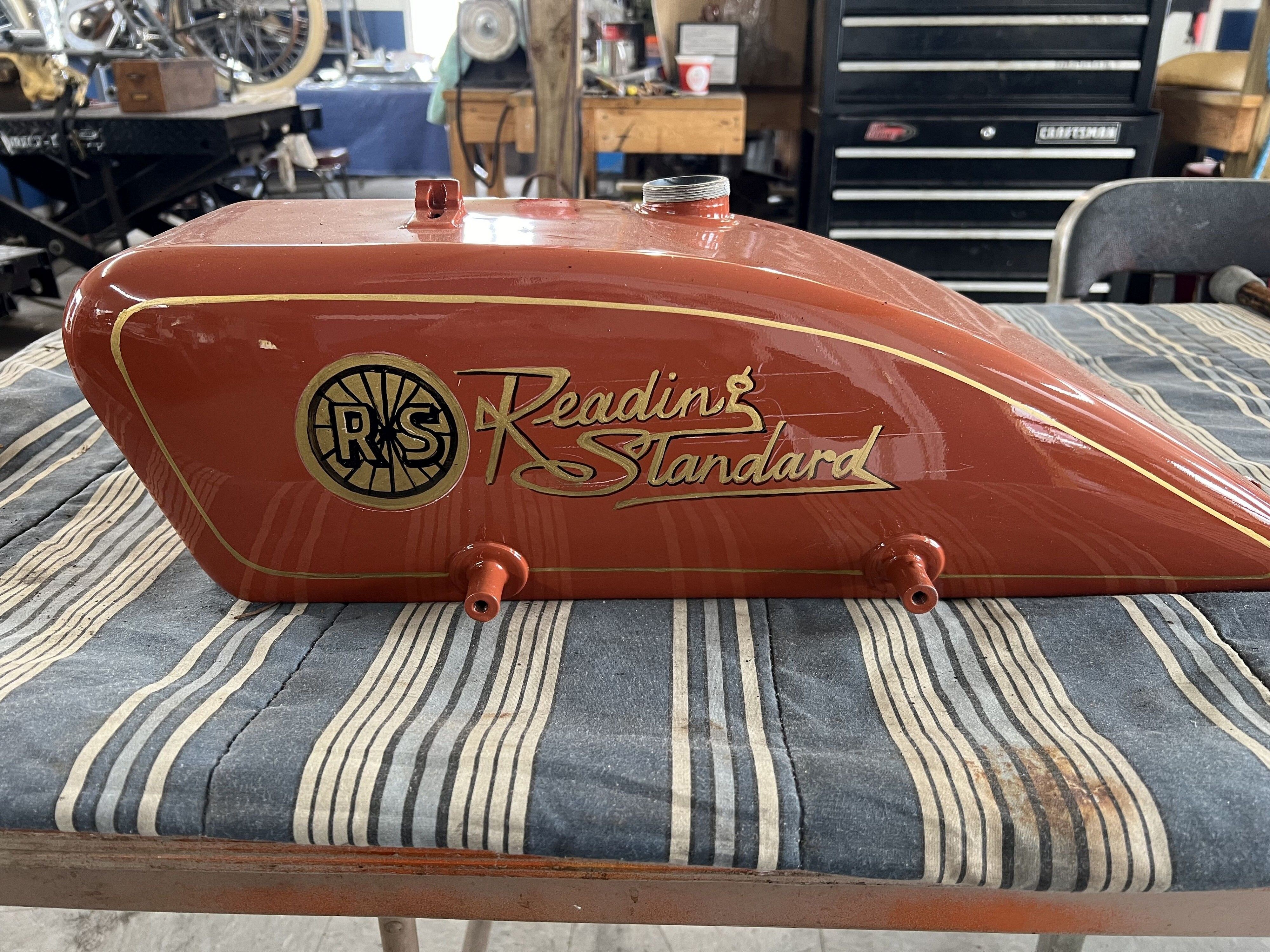
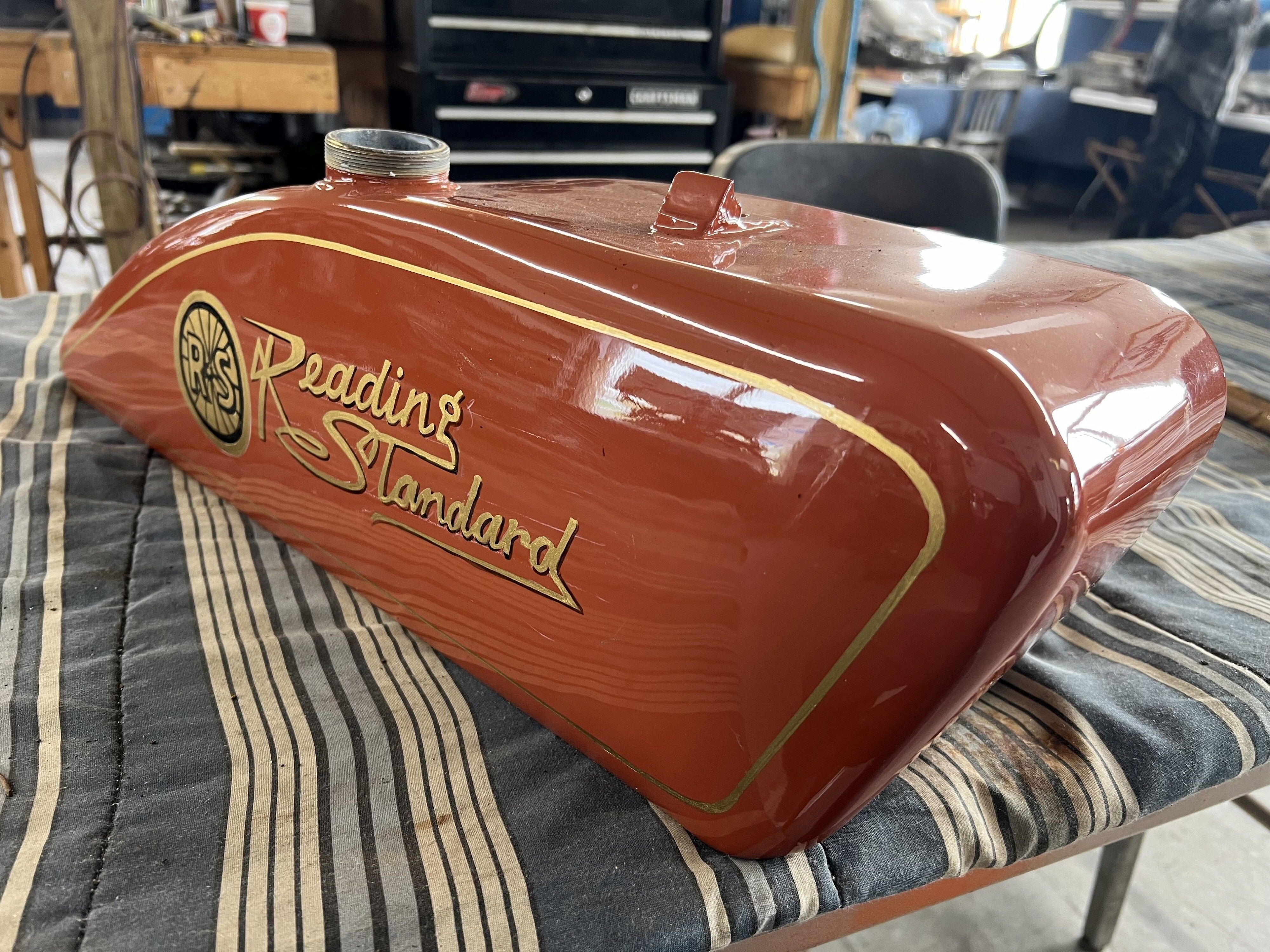
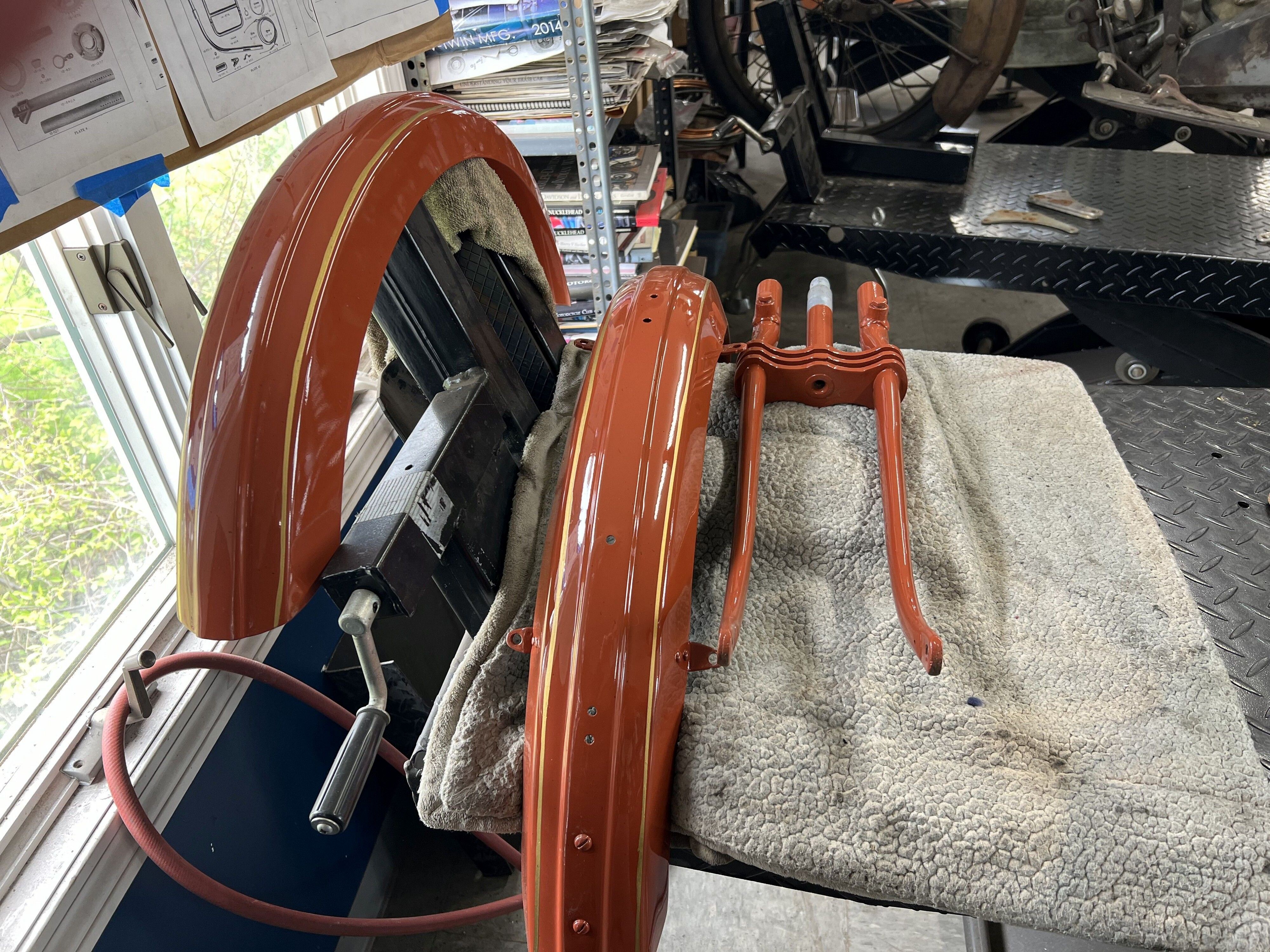
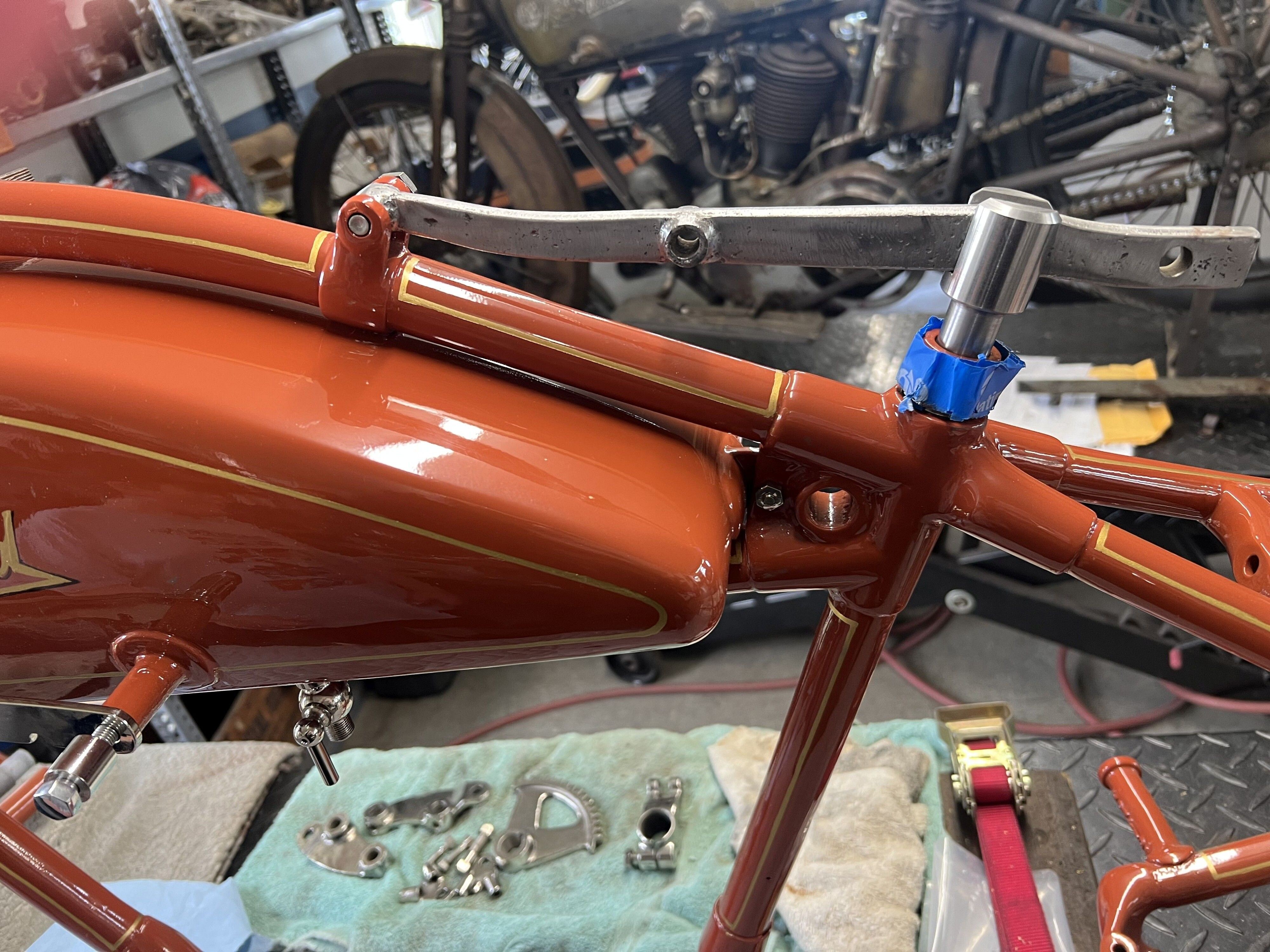
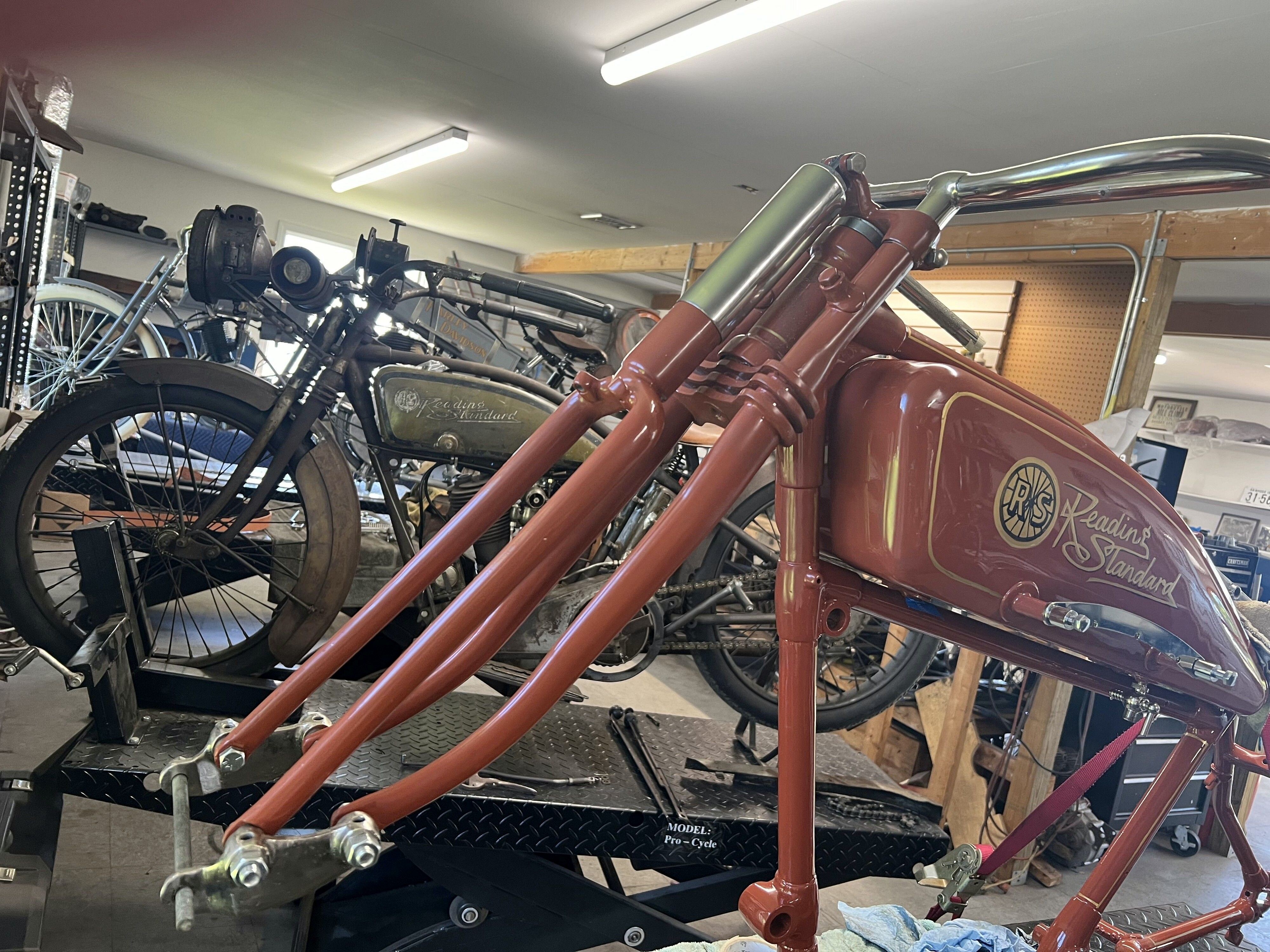
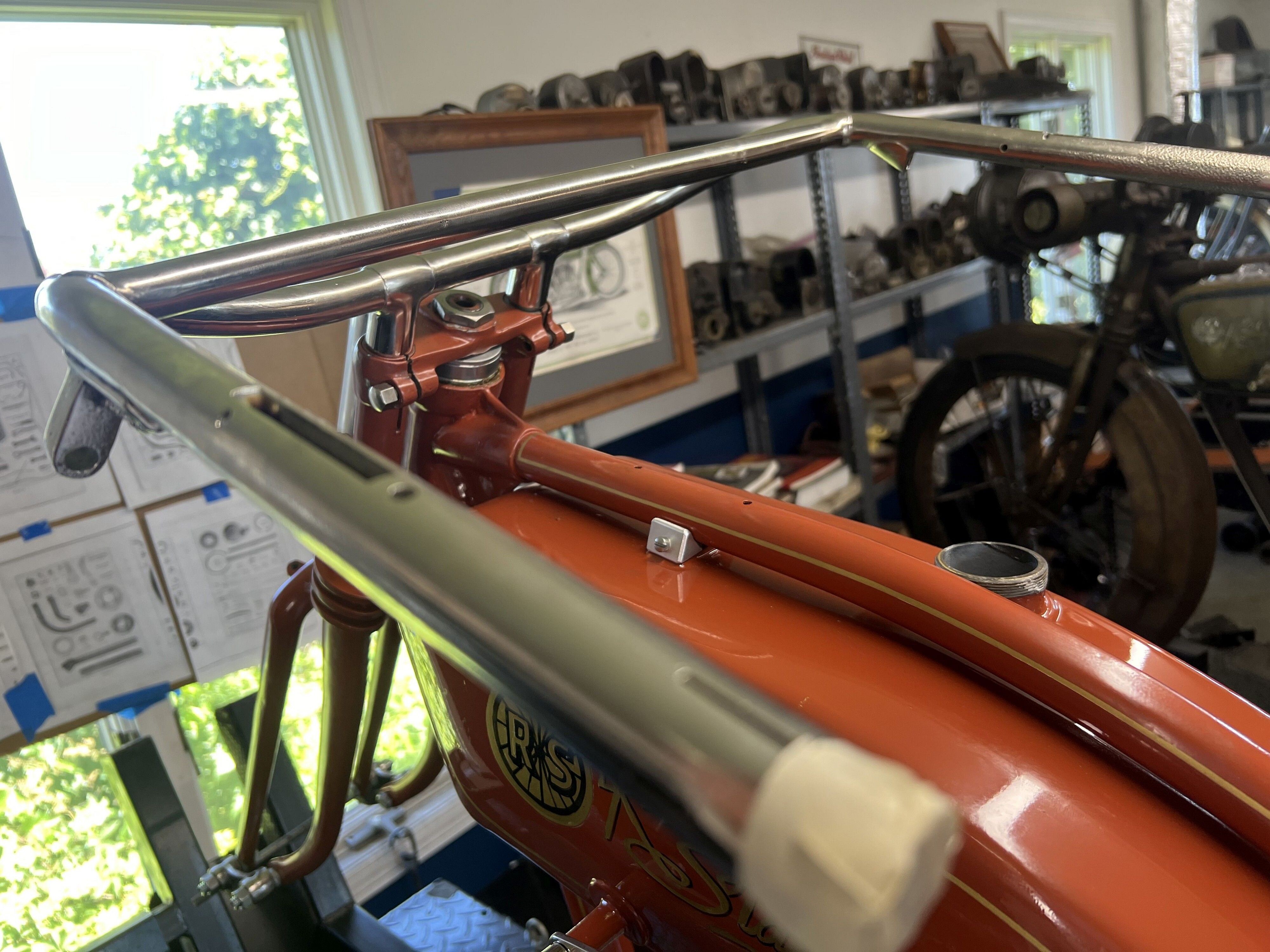
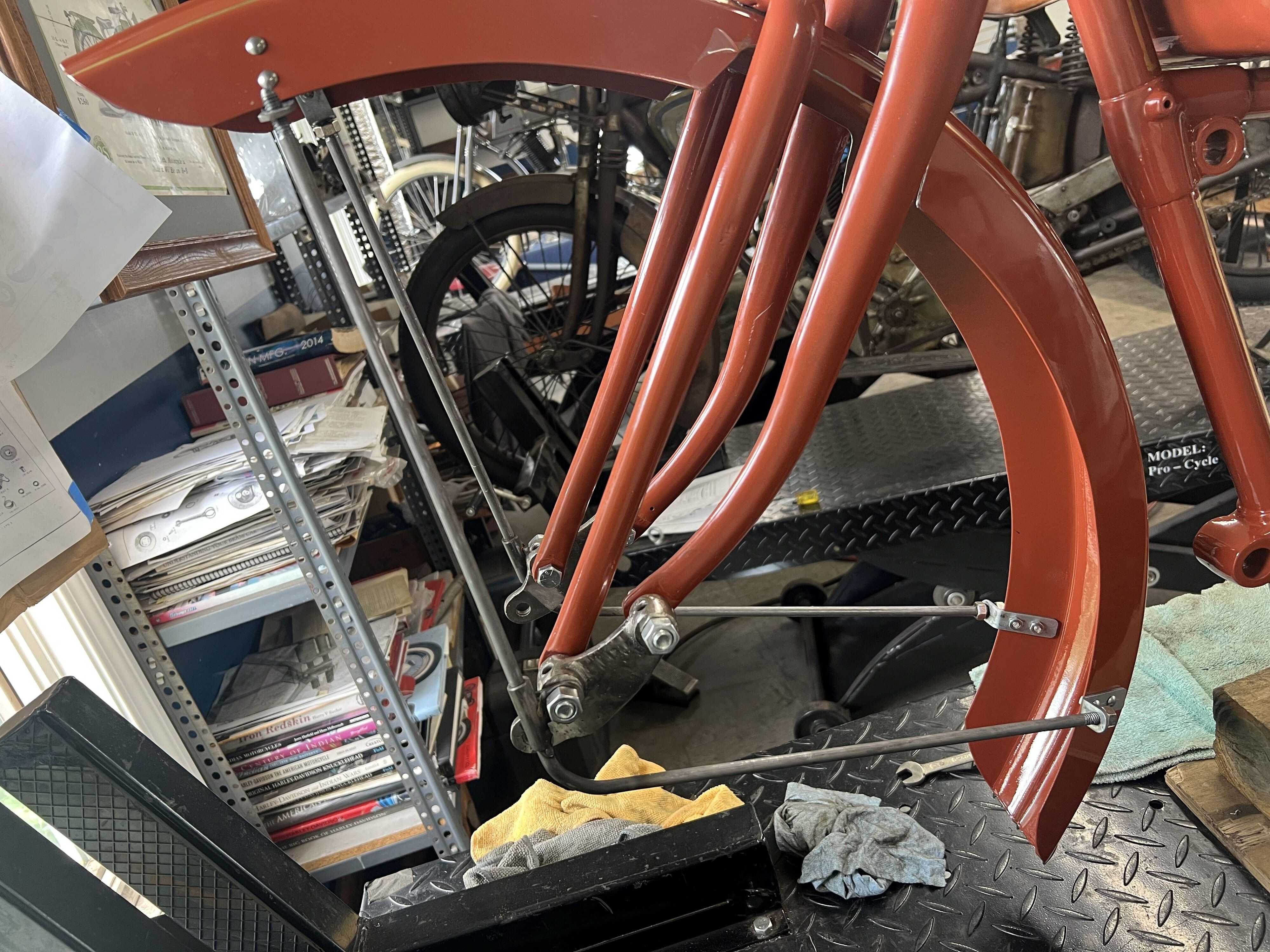
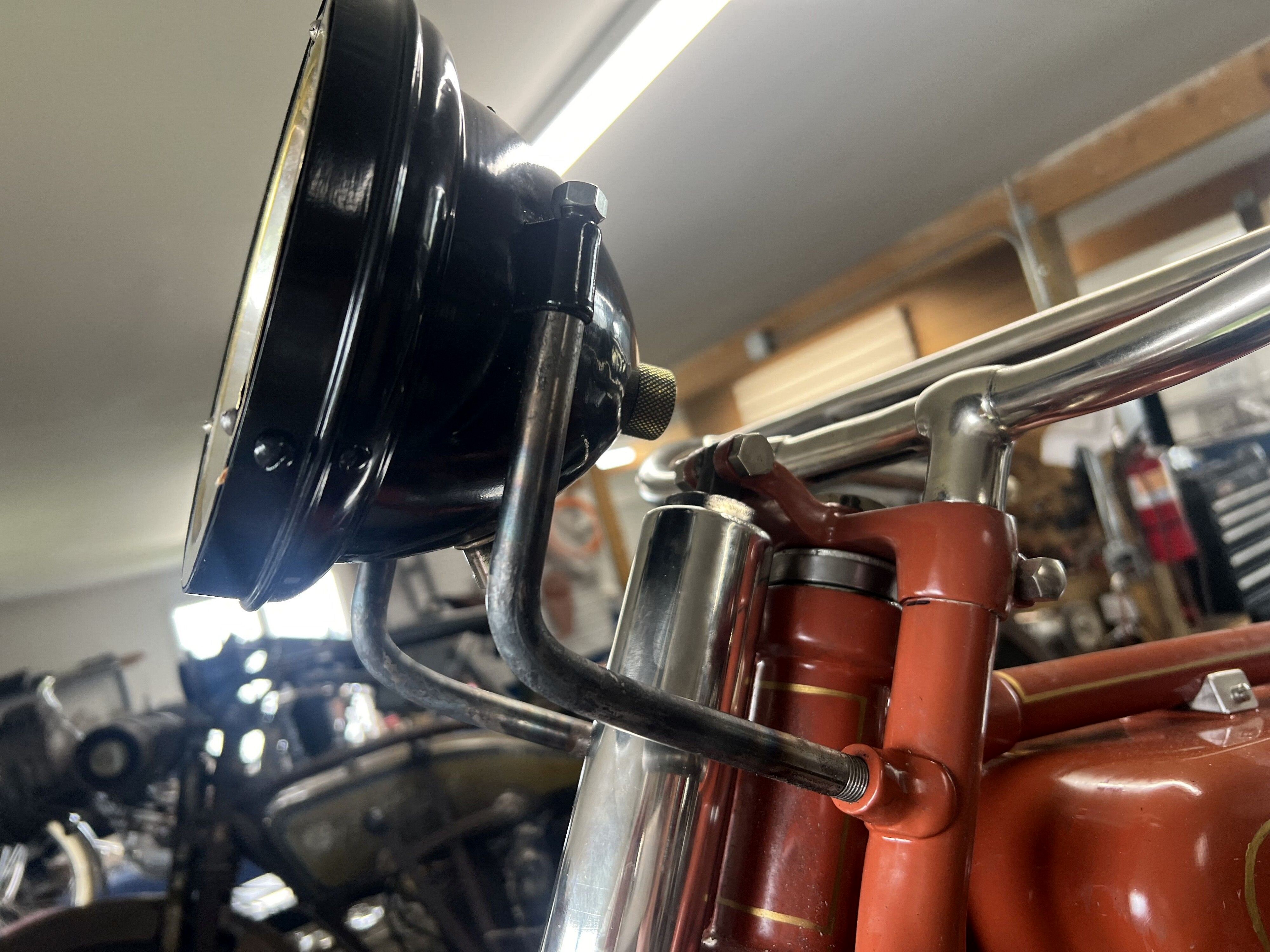
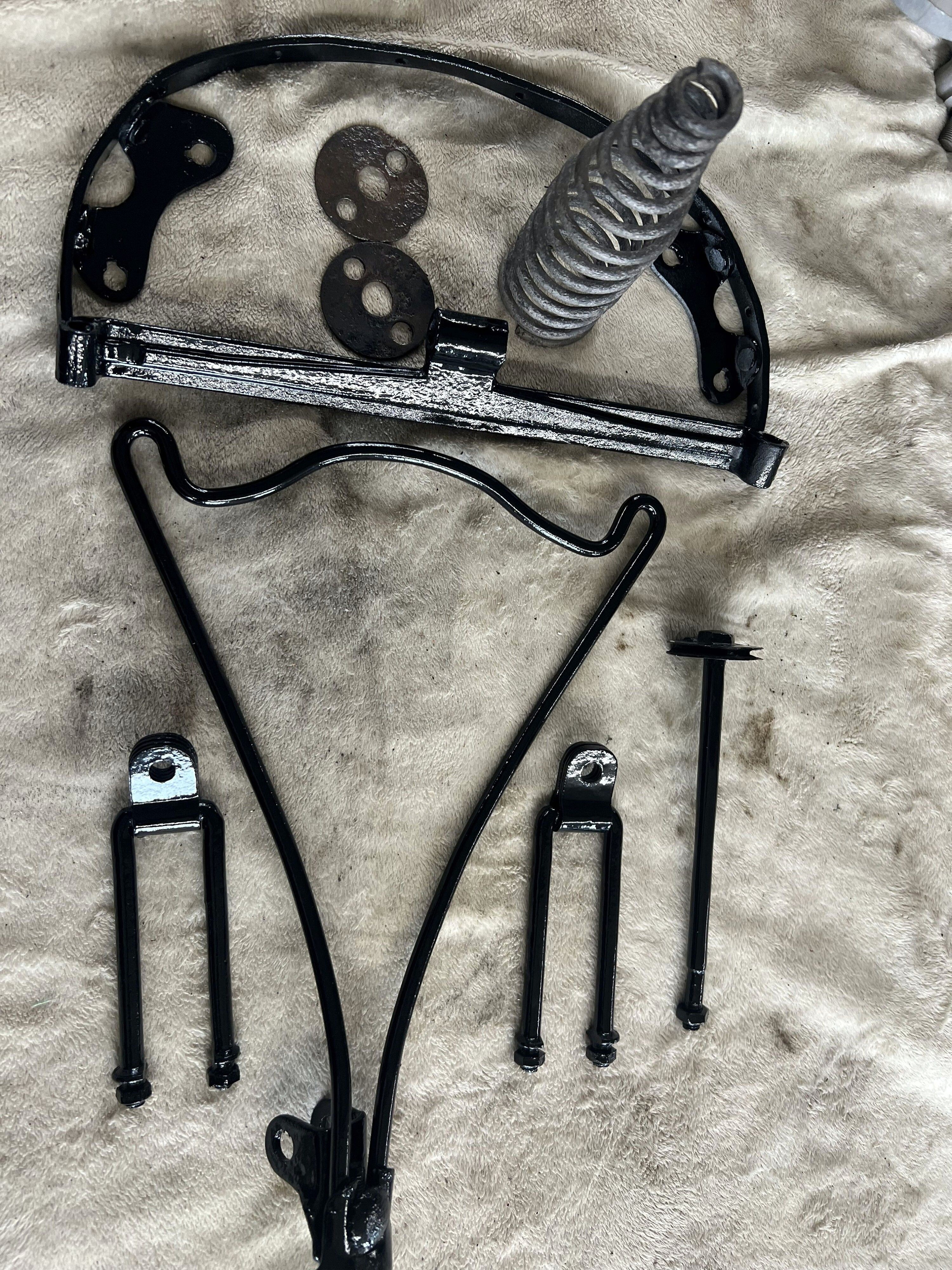
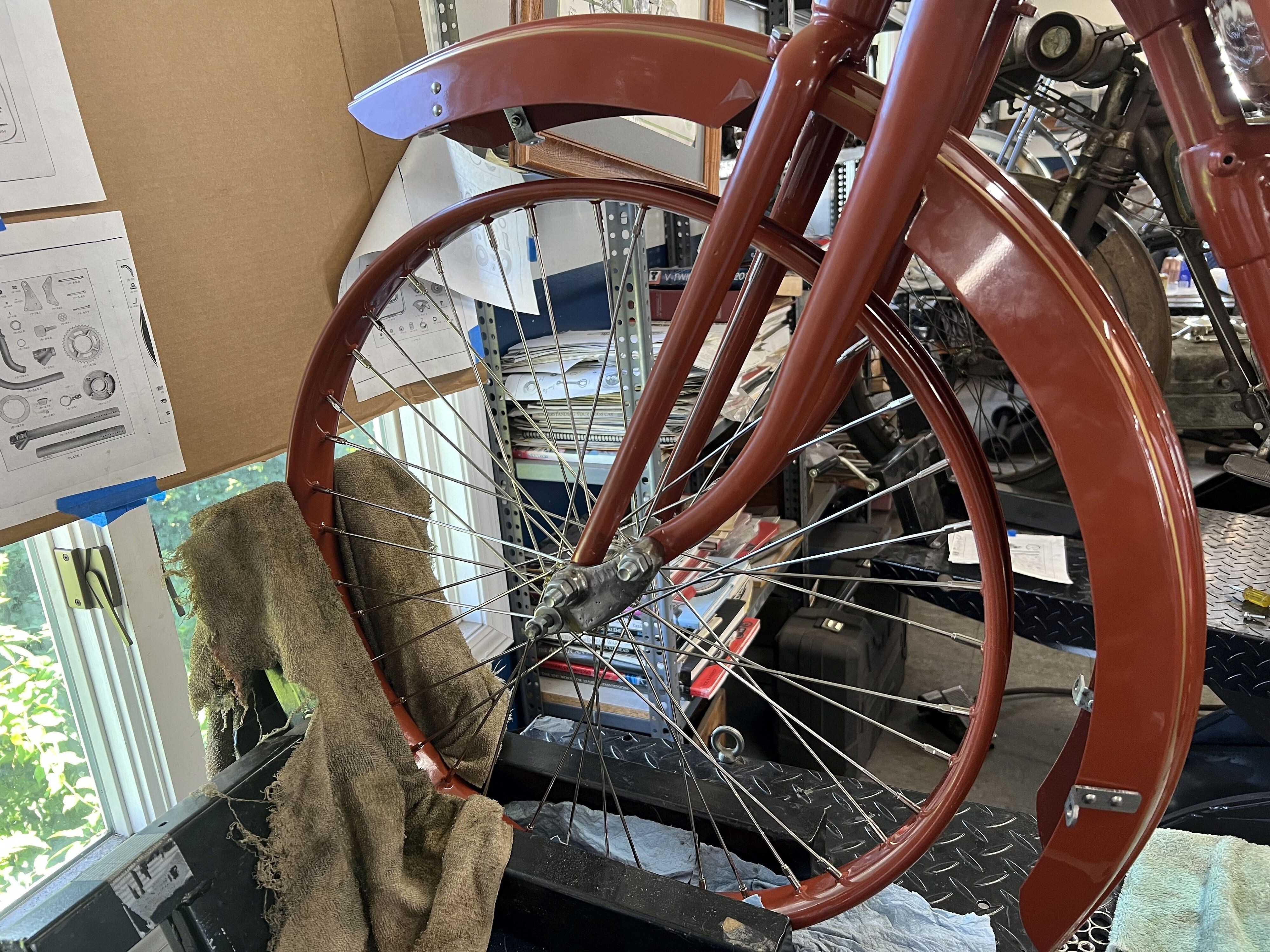
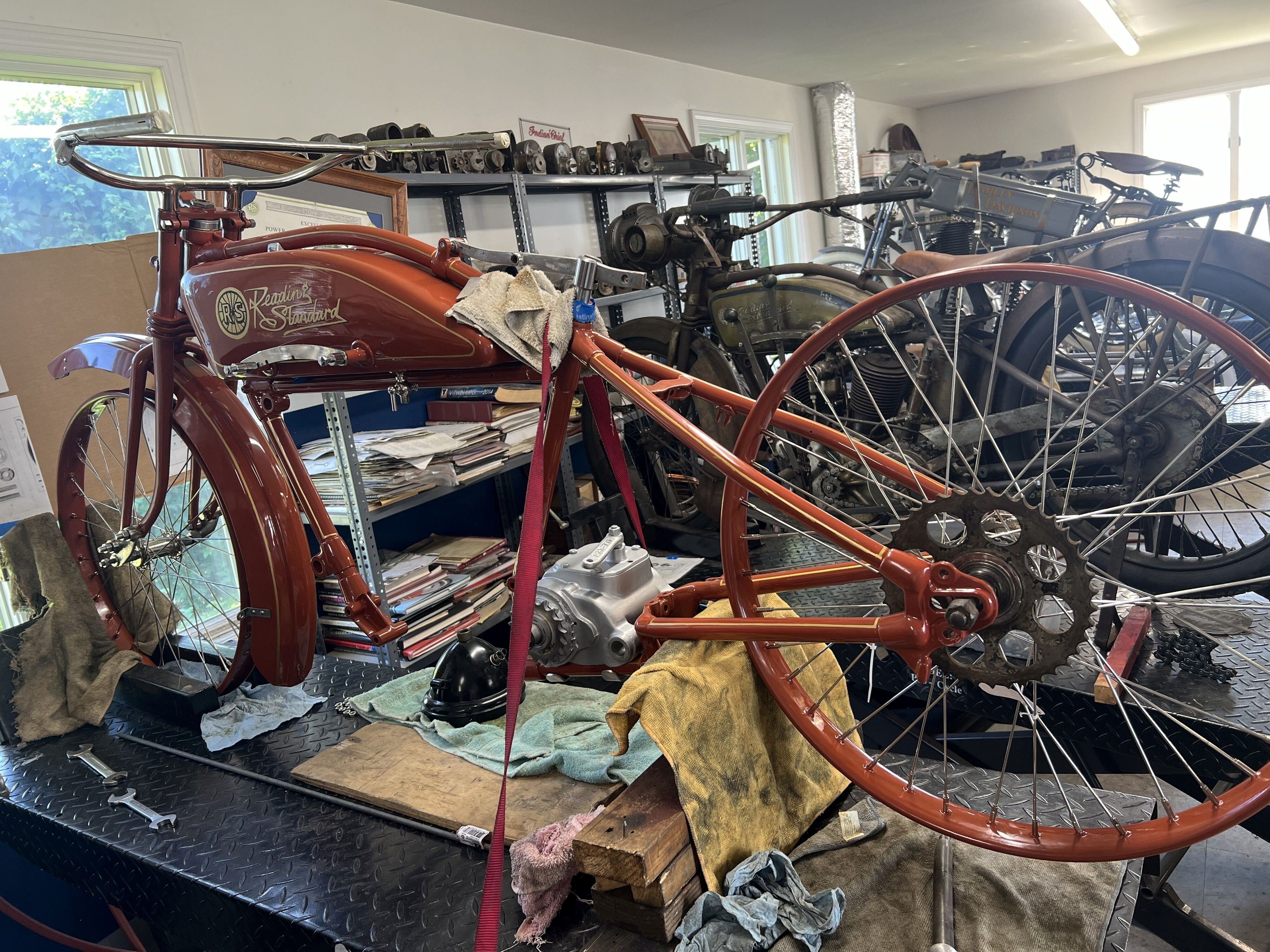
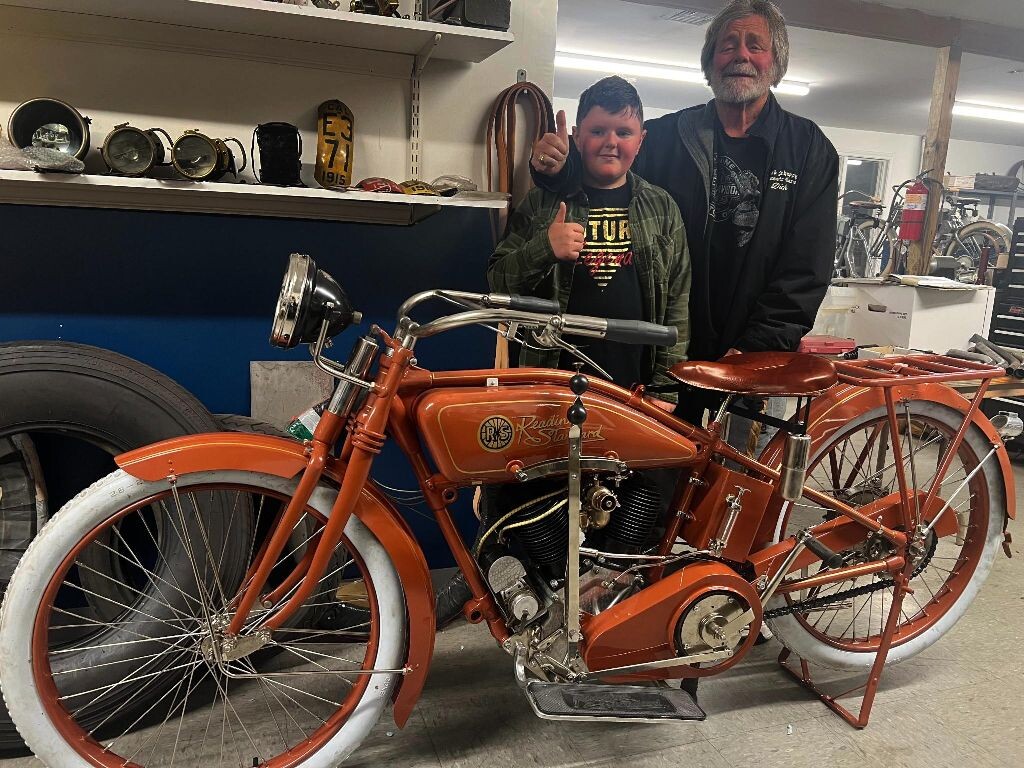
1917 Reading Standard Model T-E 12 HP Twin
Inventory Number: 5090
$95,000
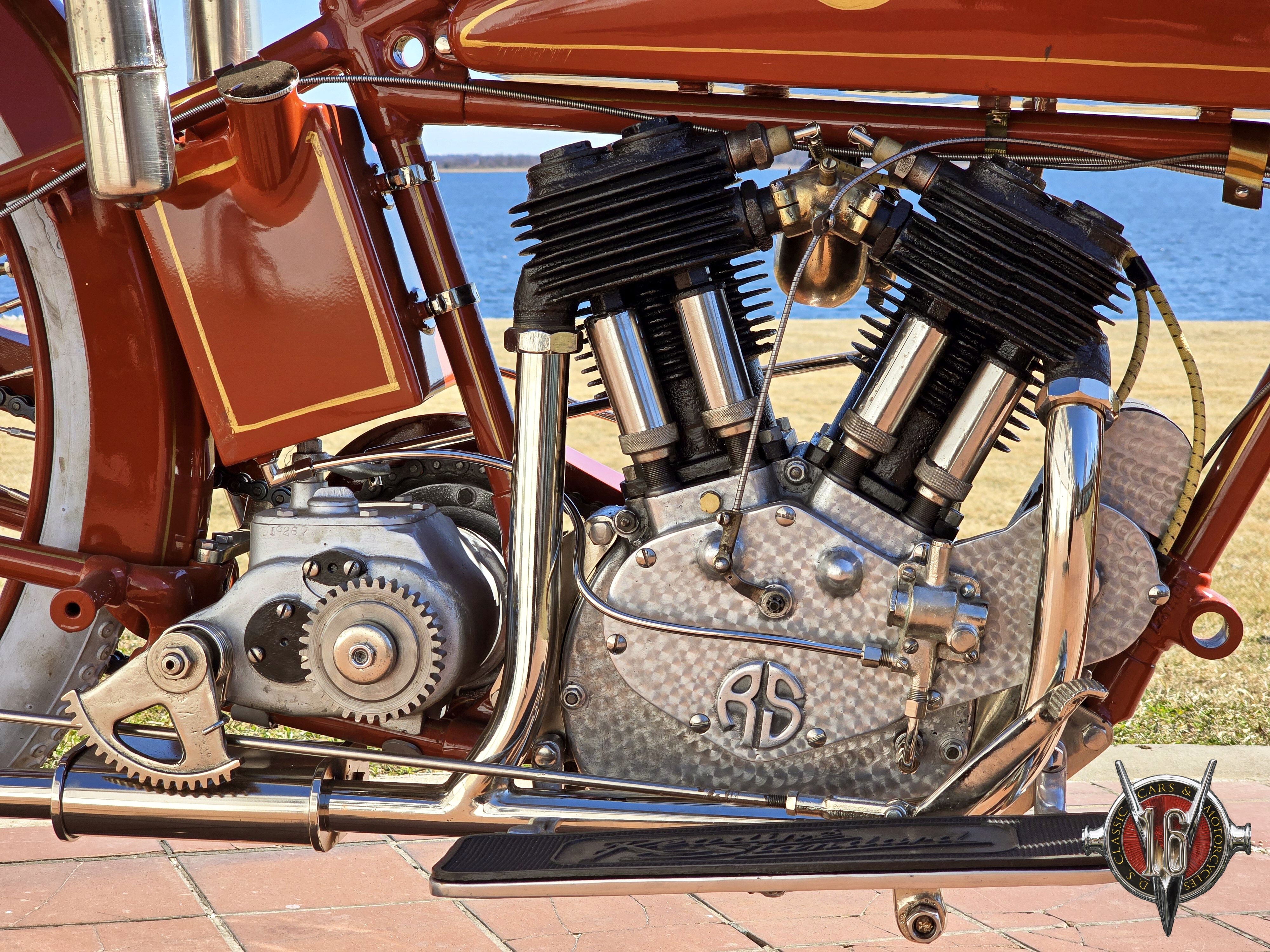
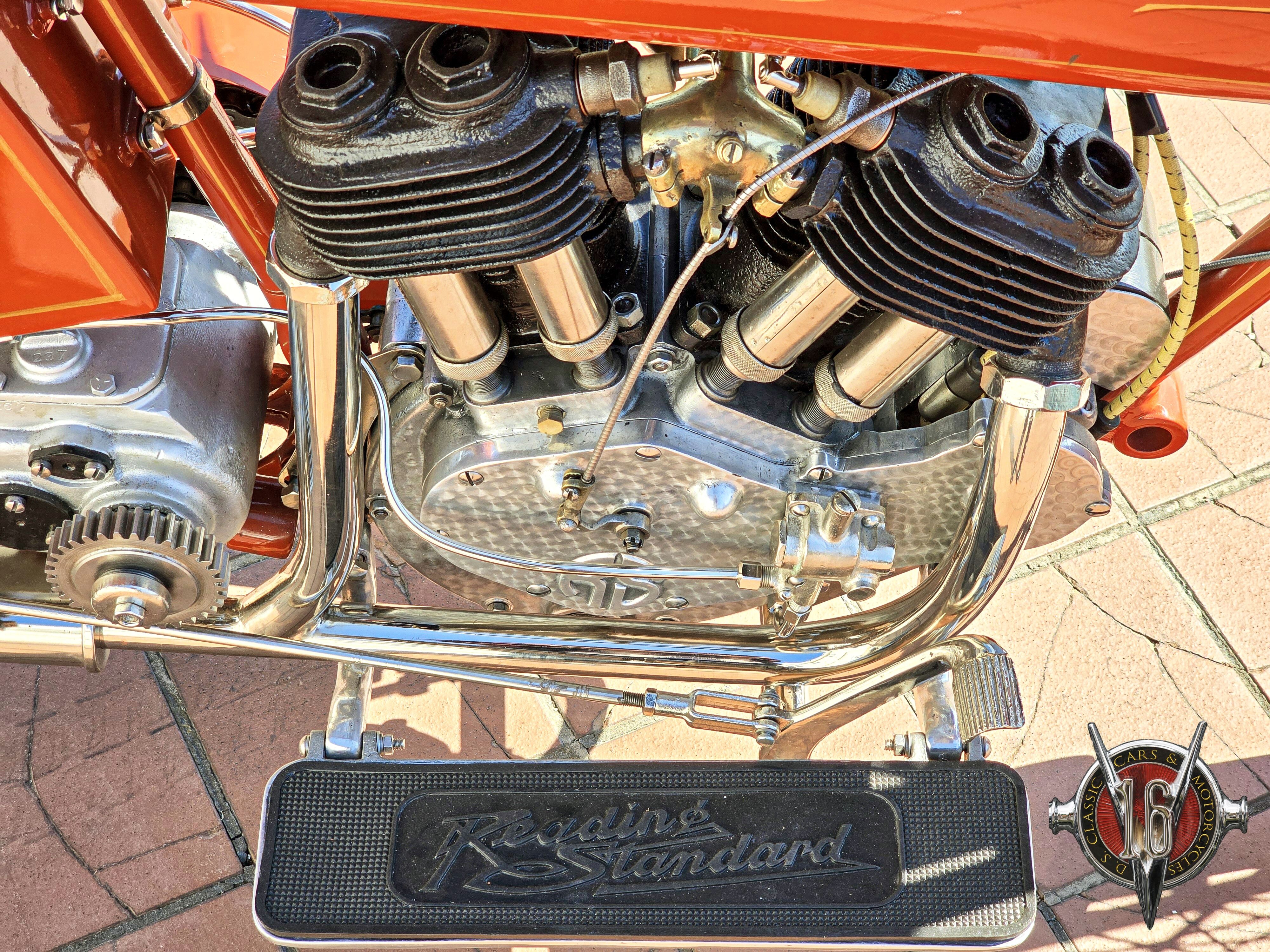
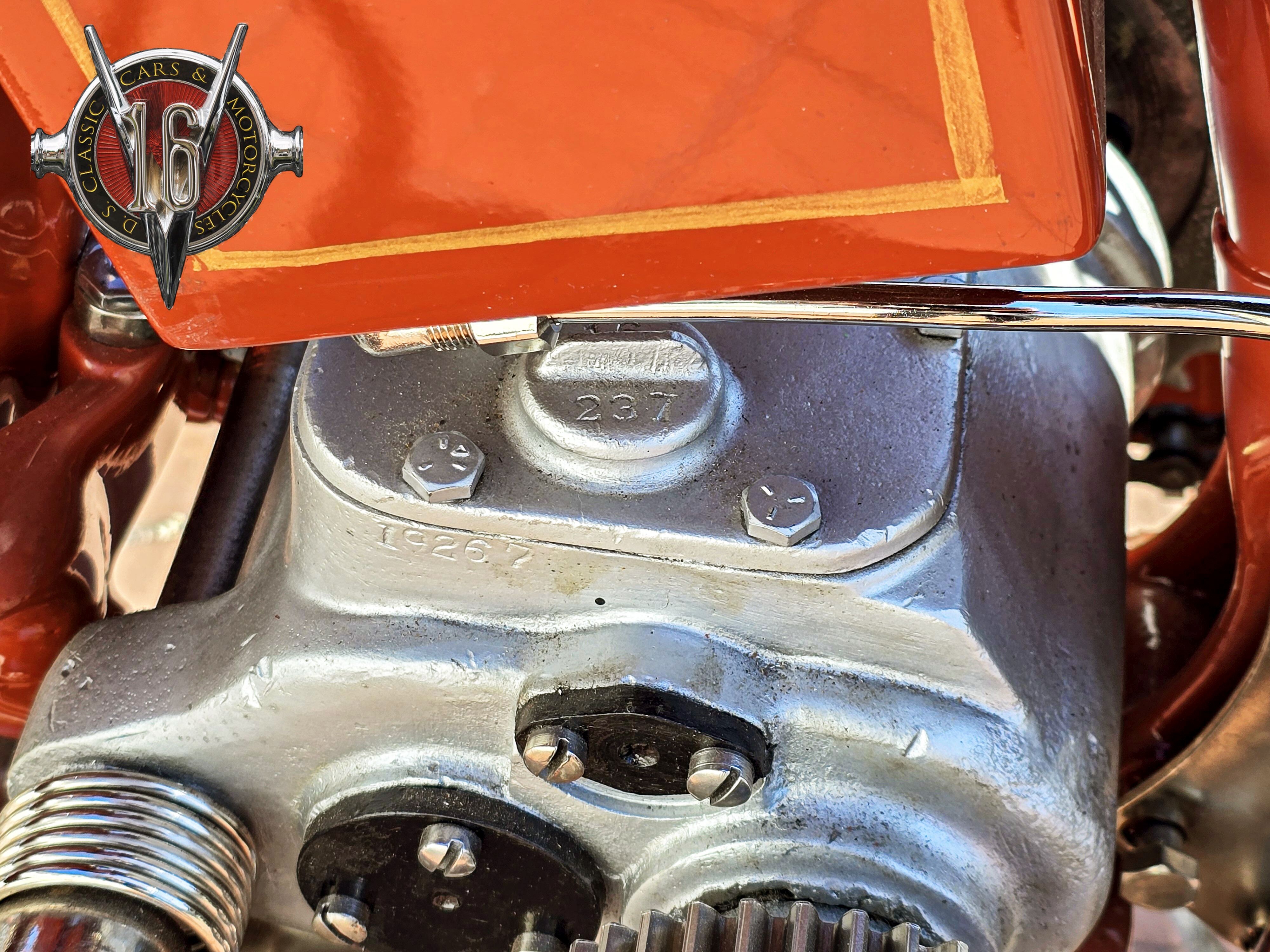
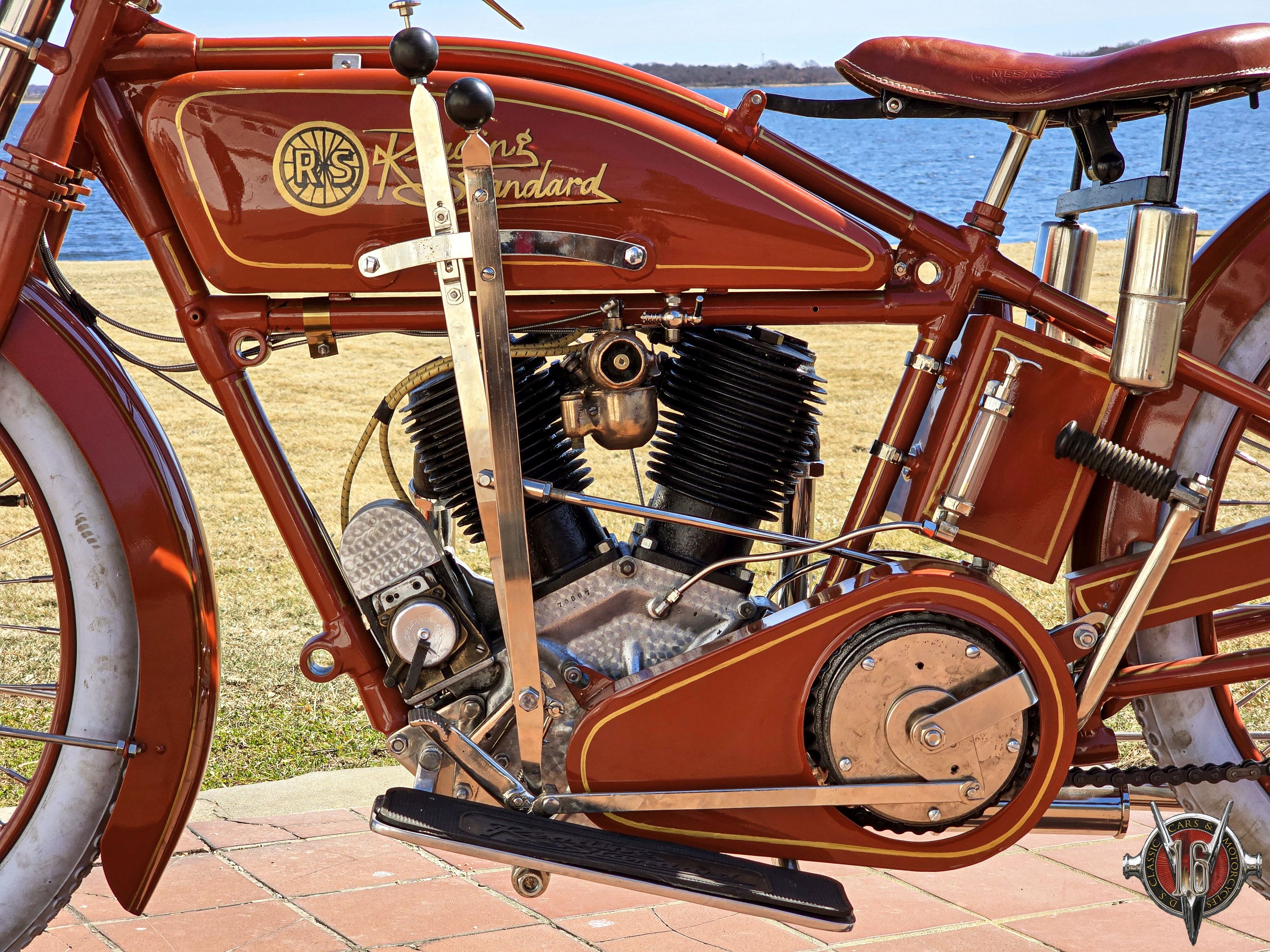
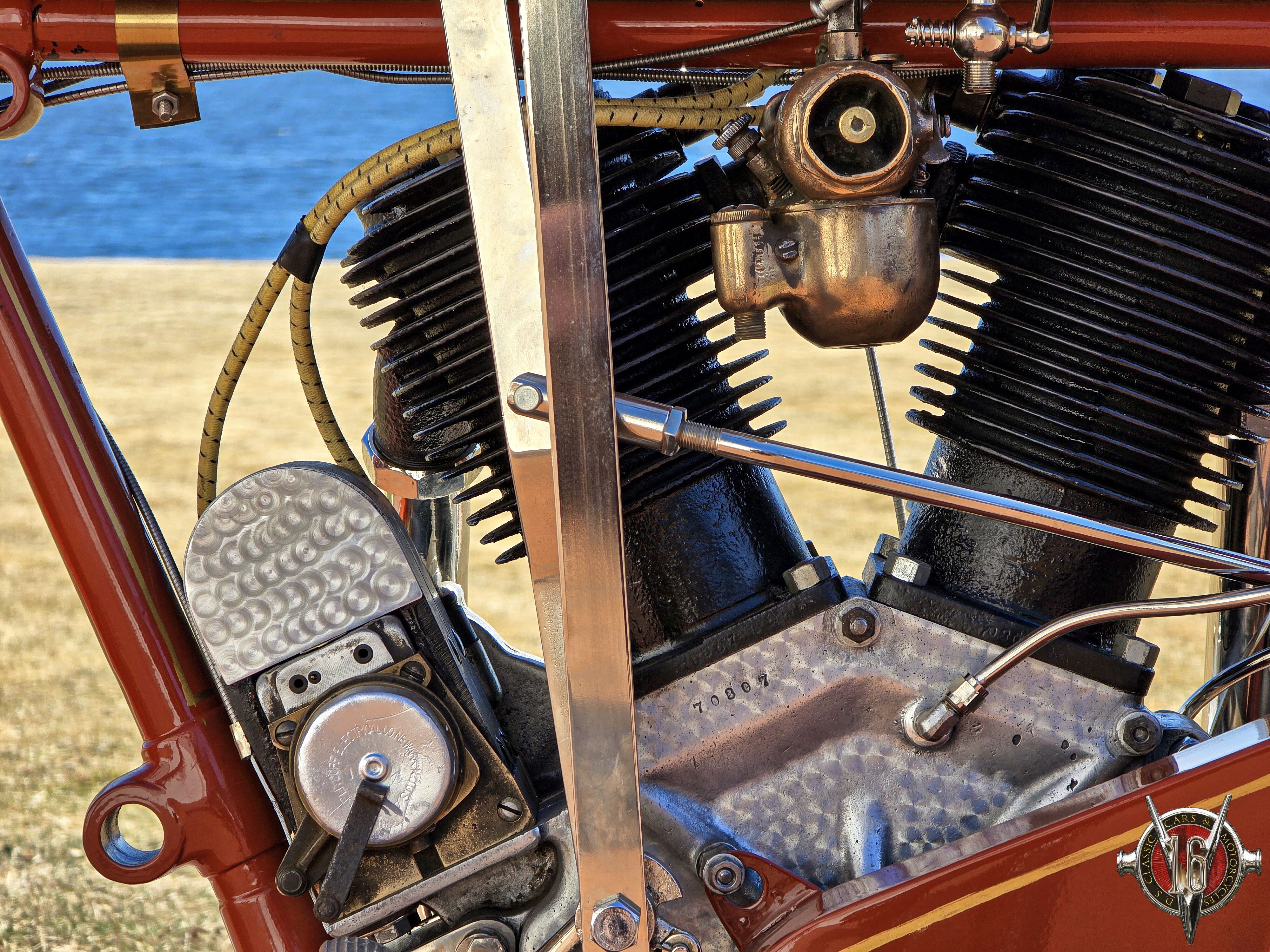
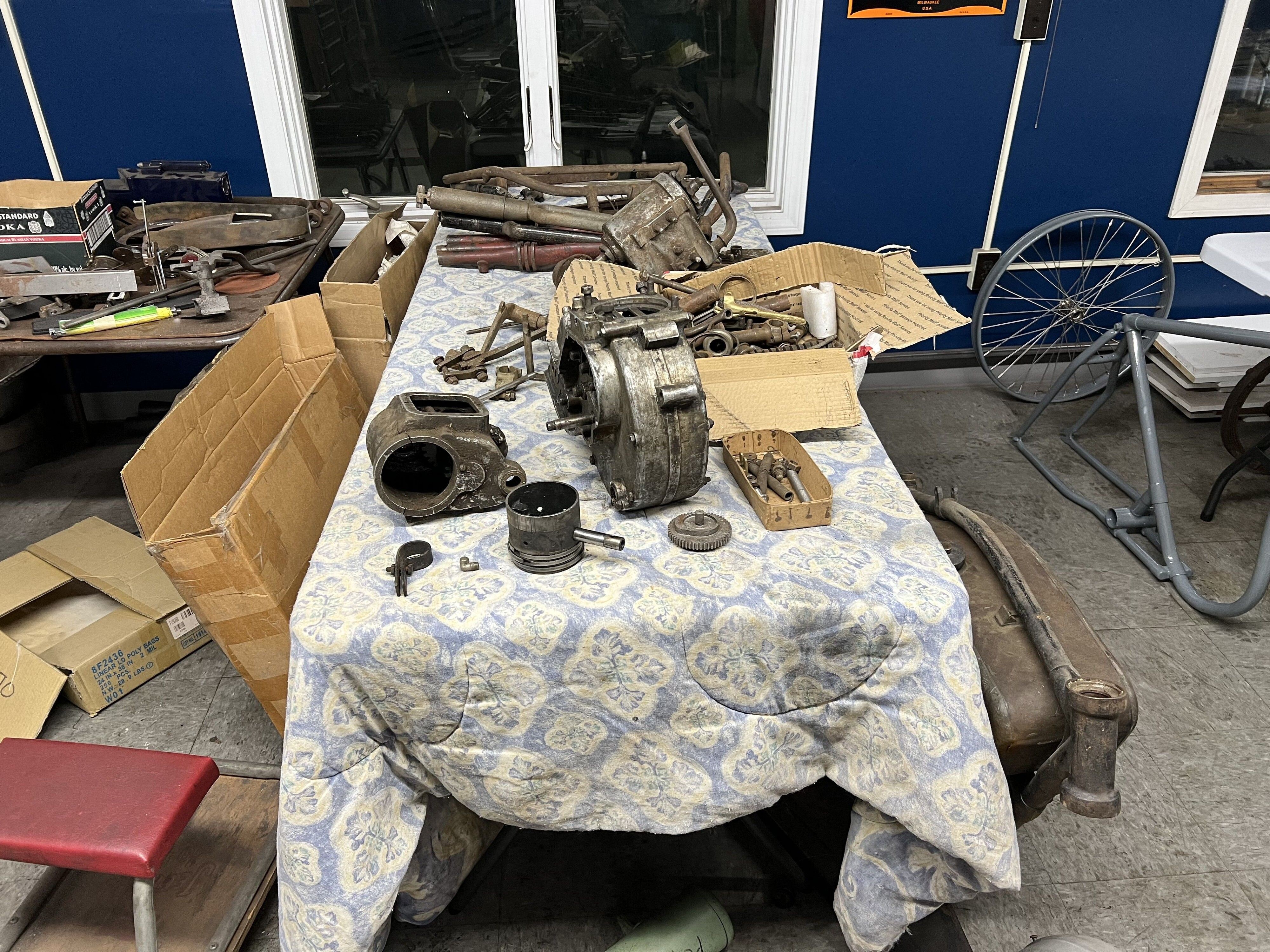
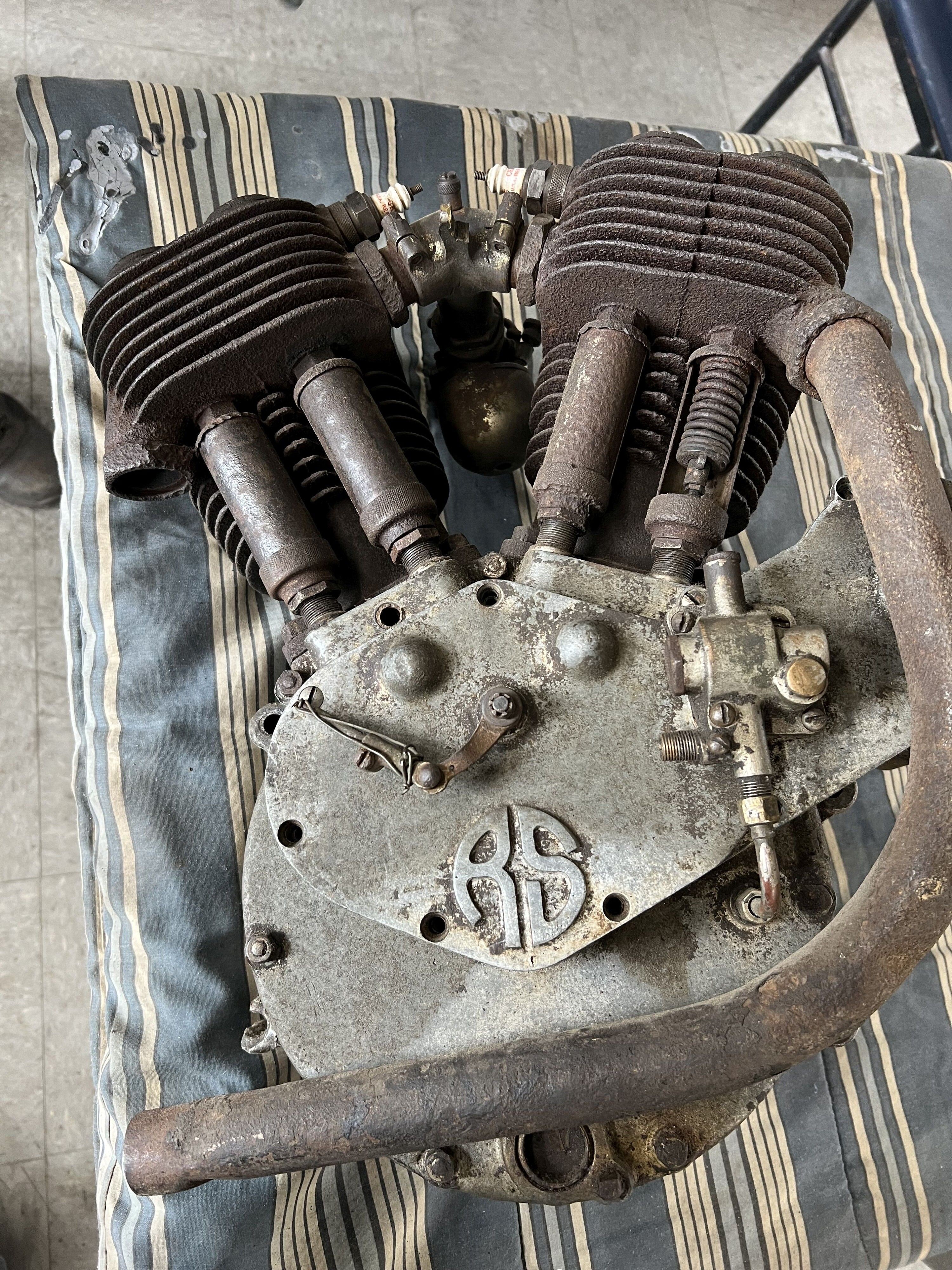
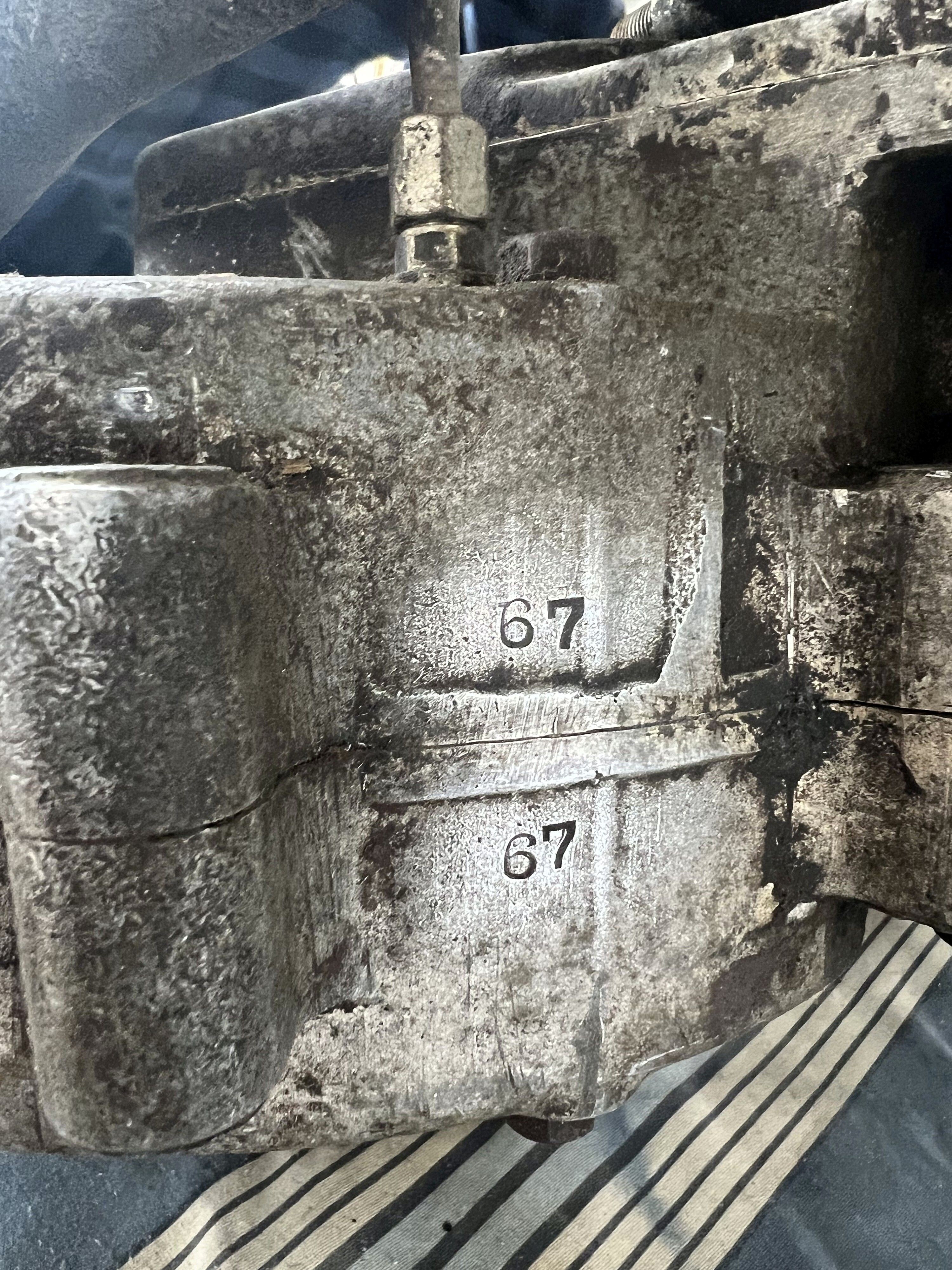
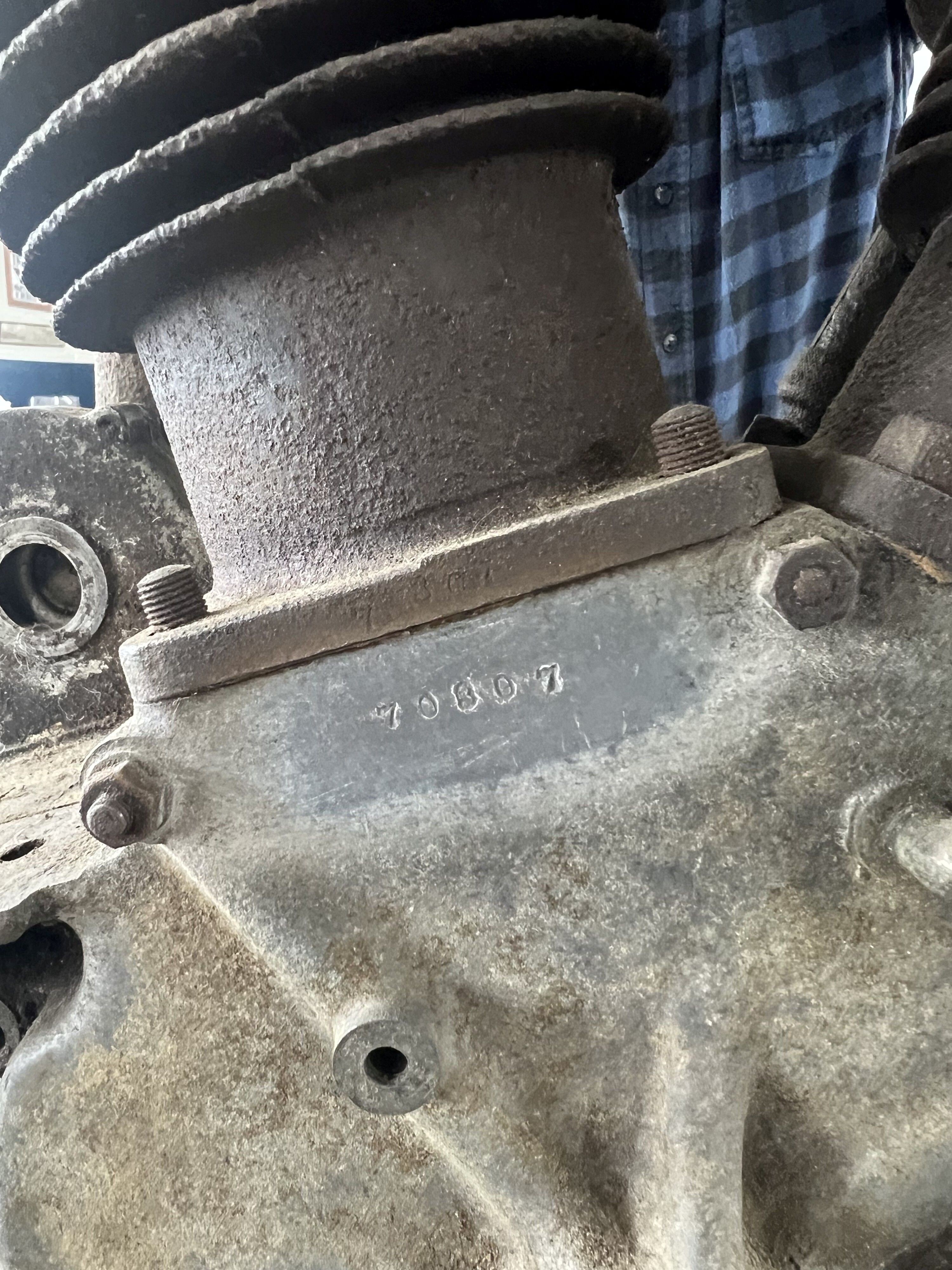
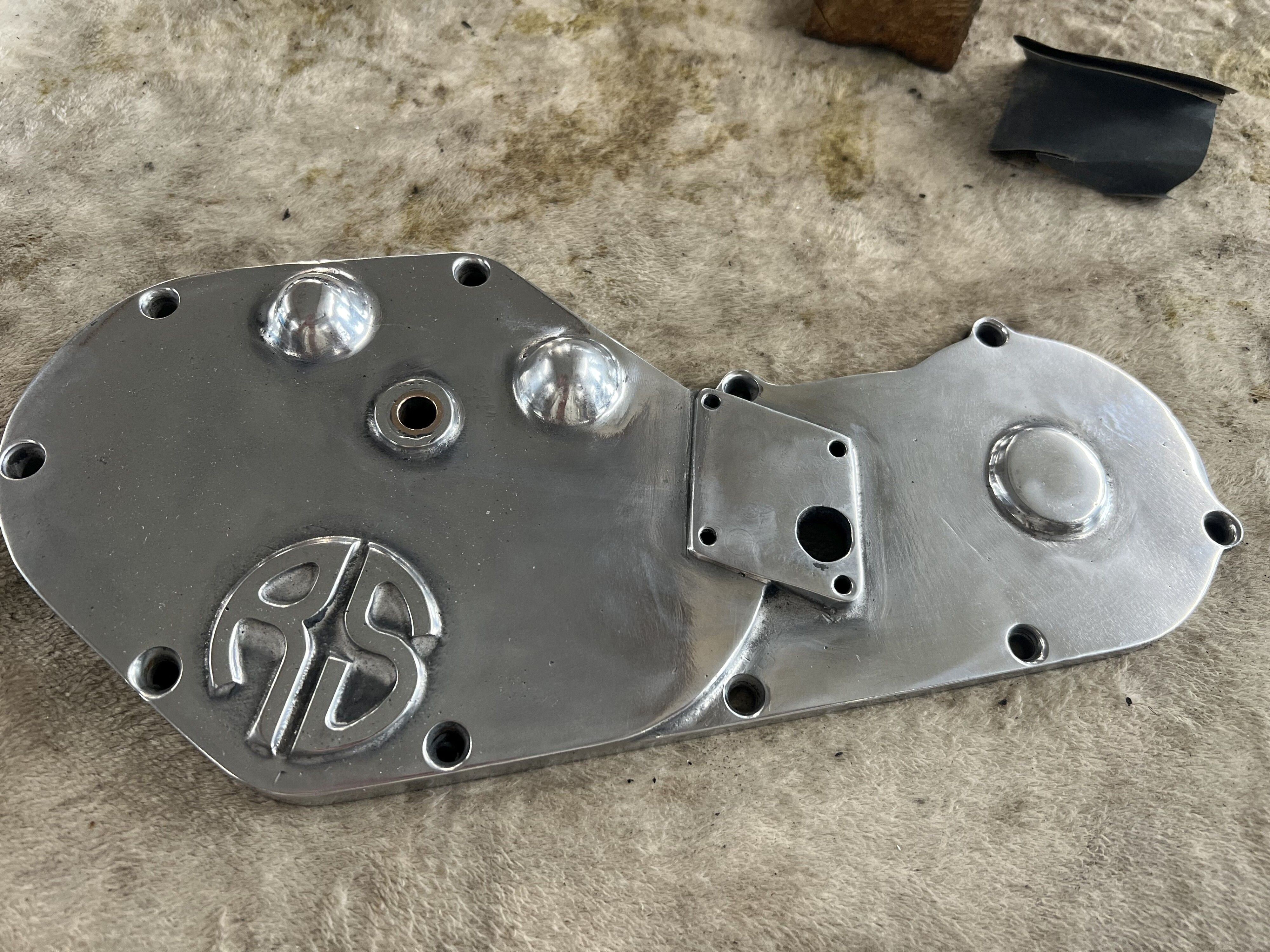
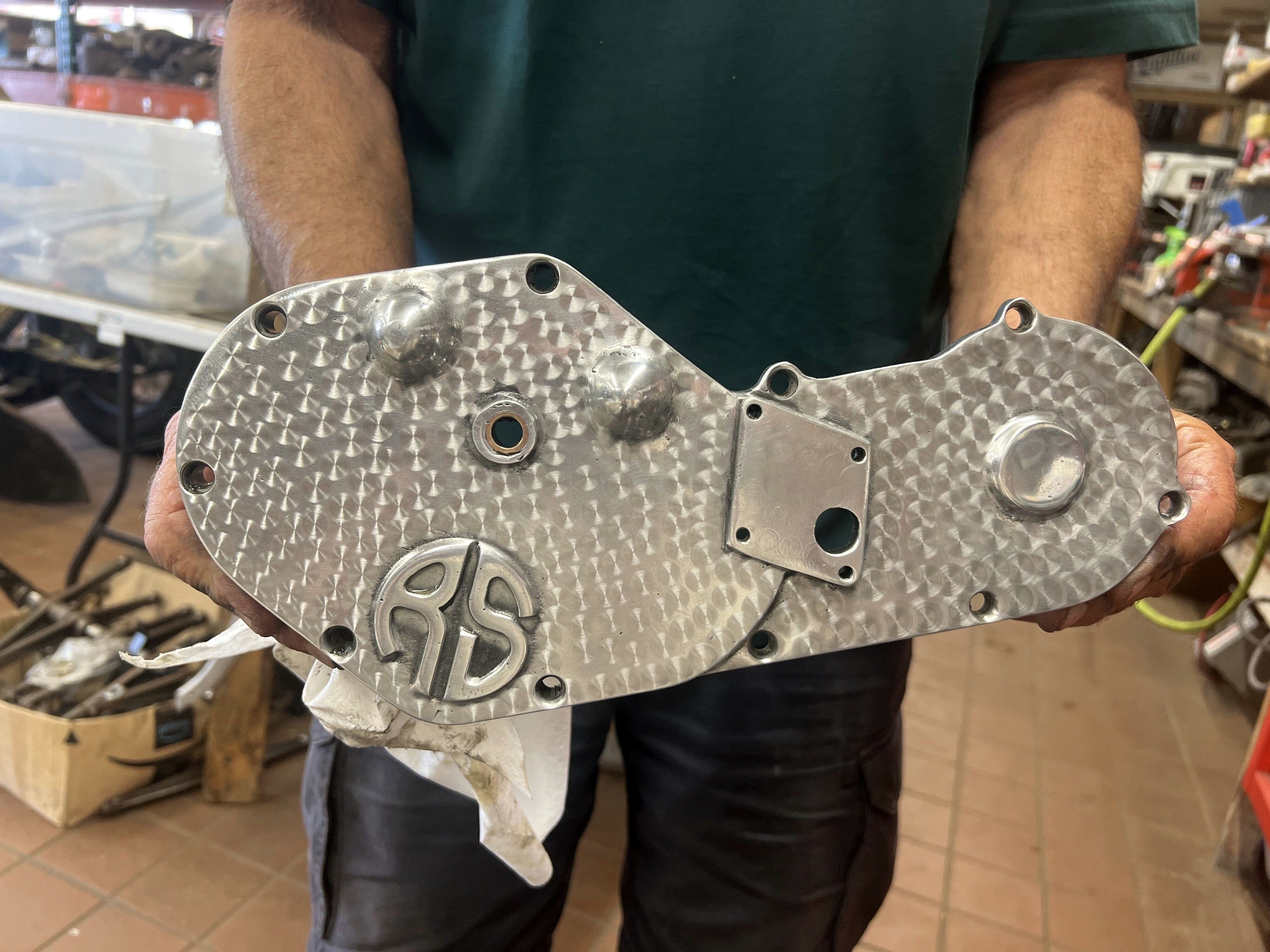
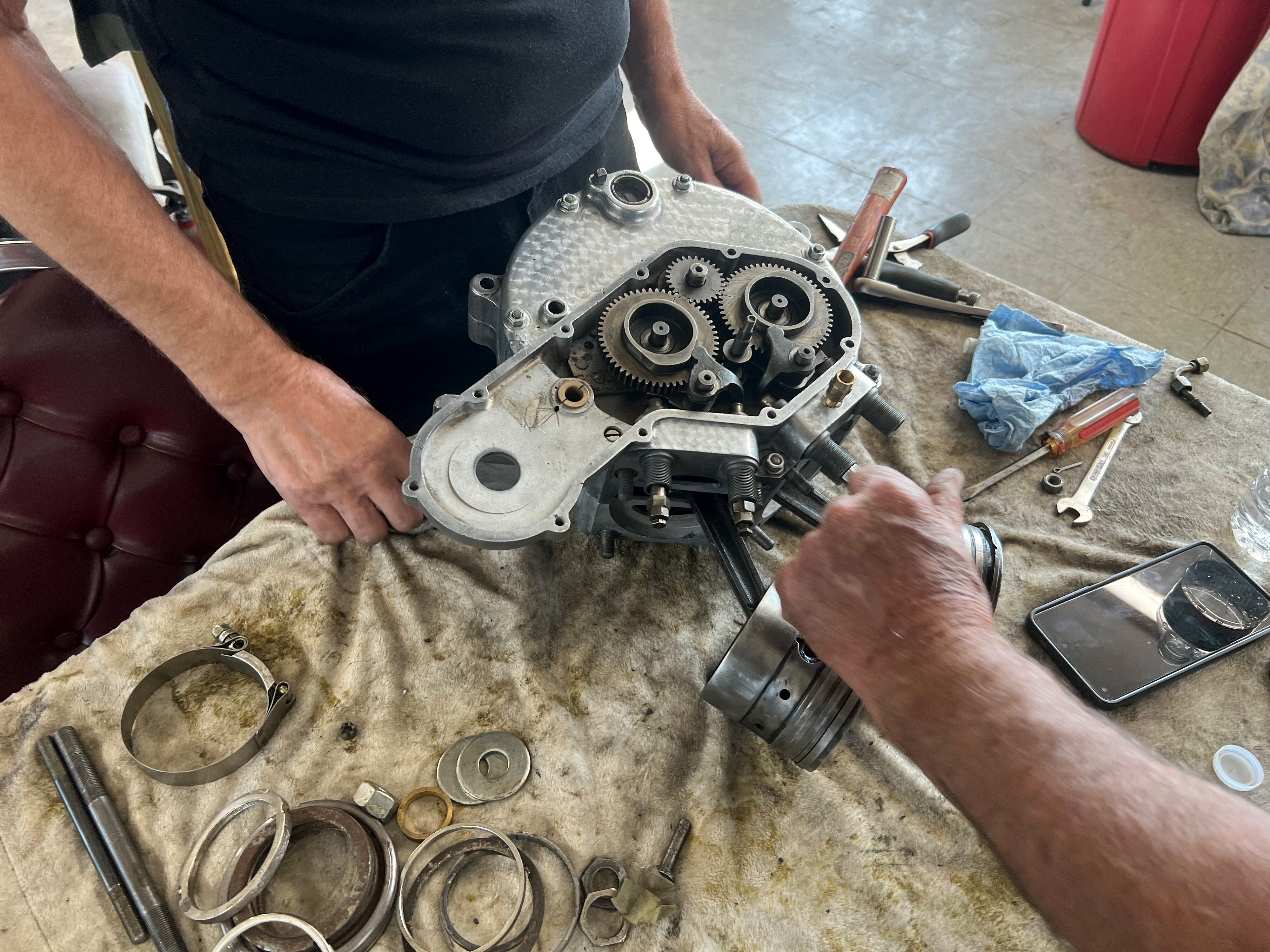
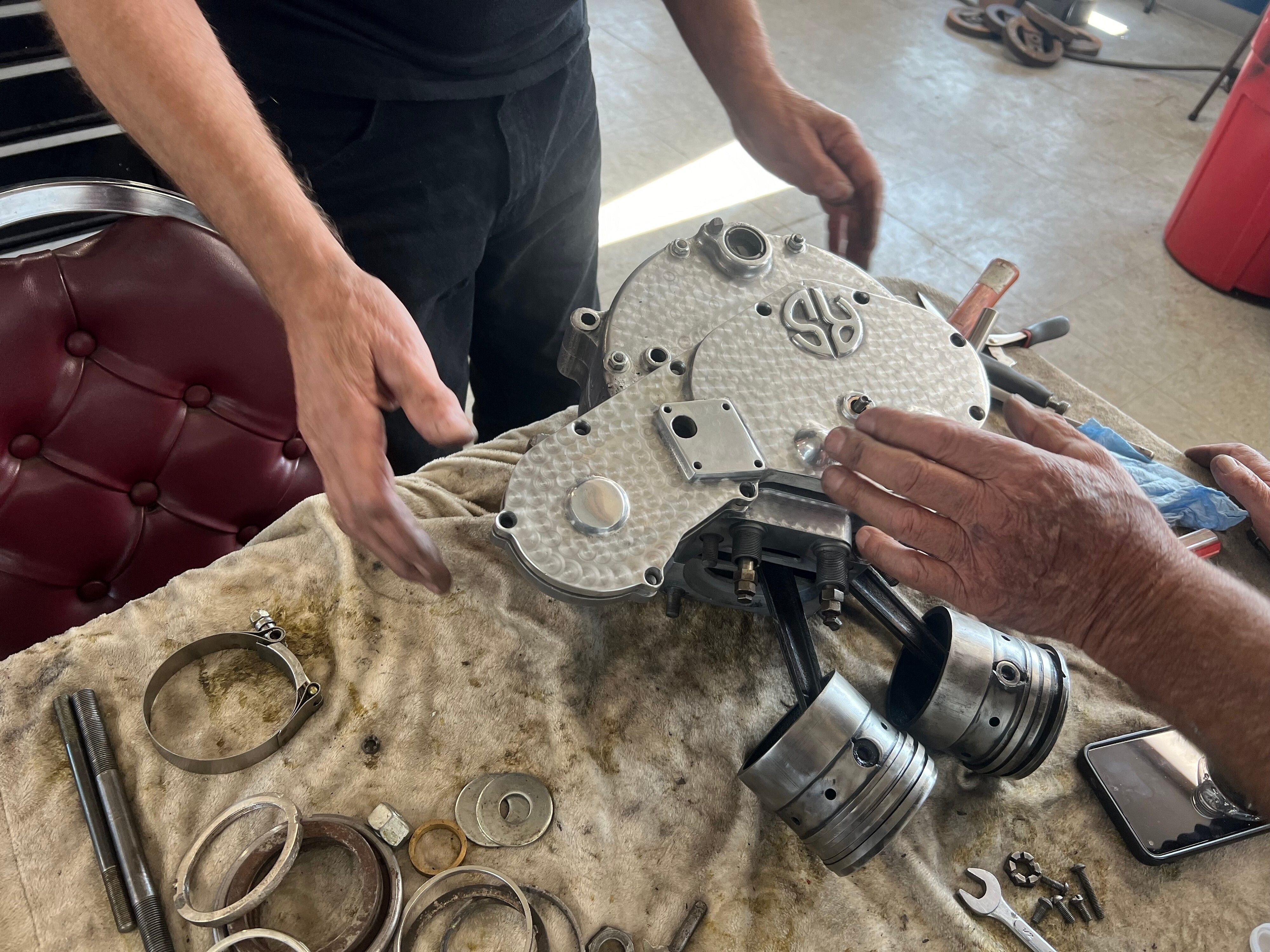
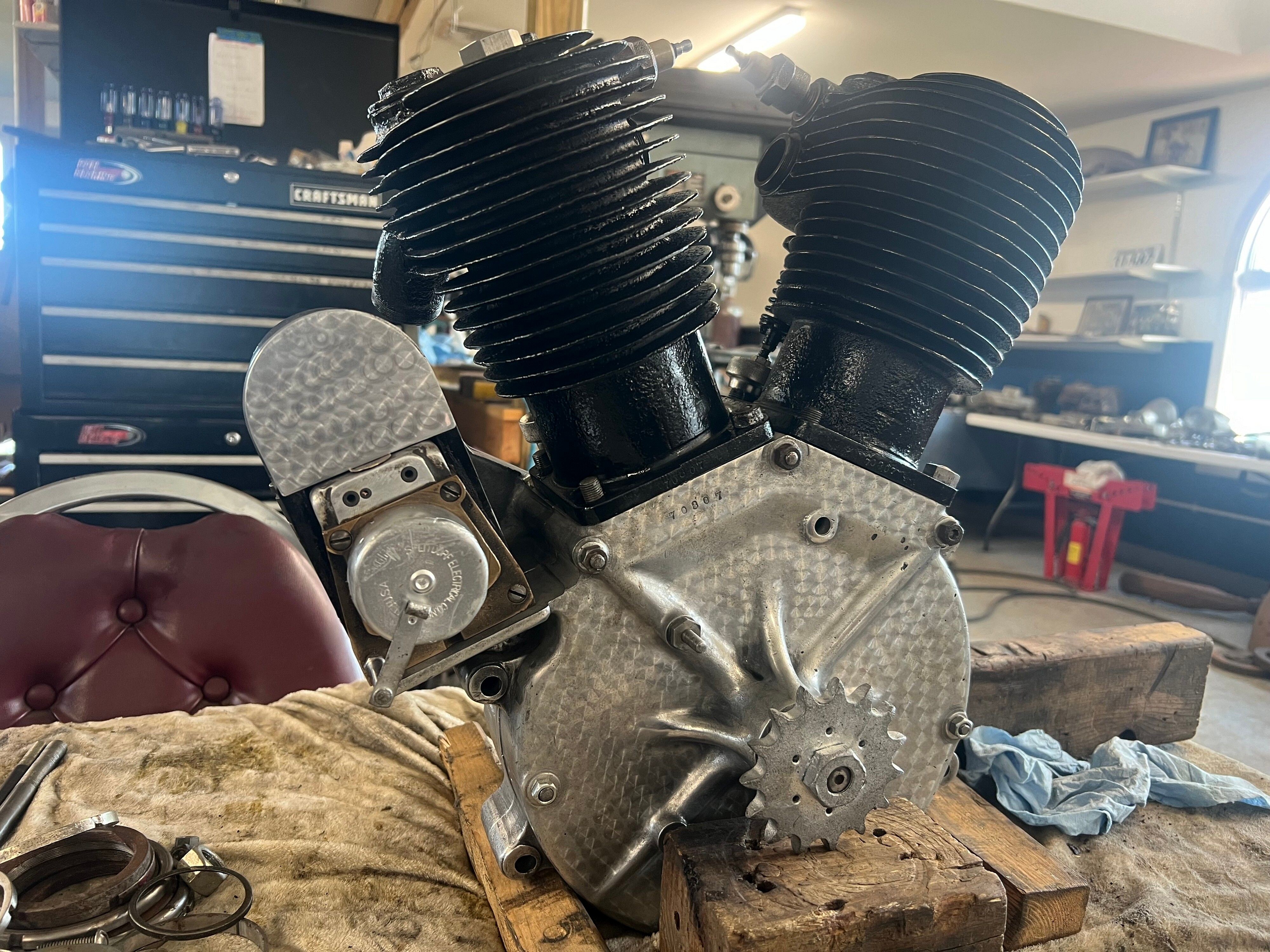
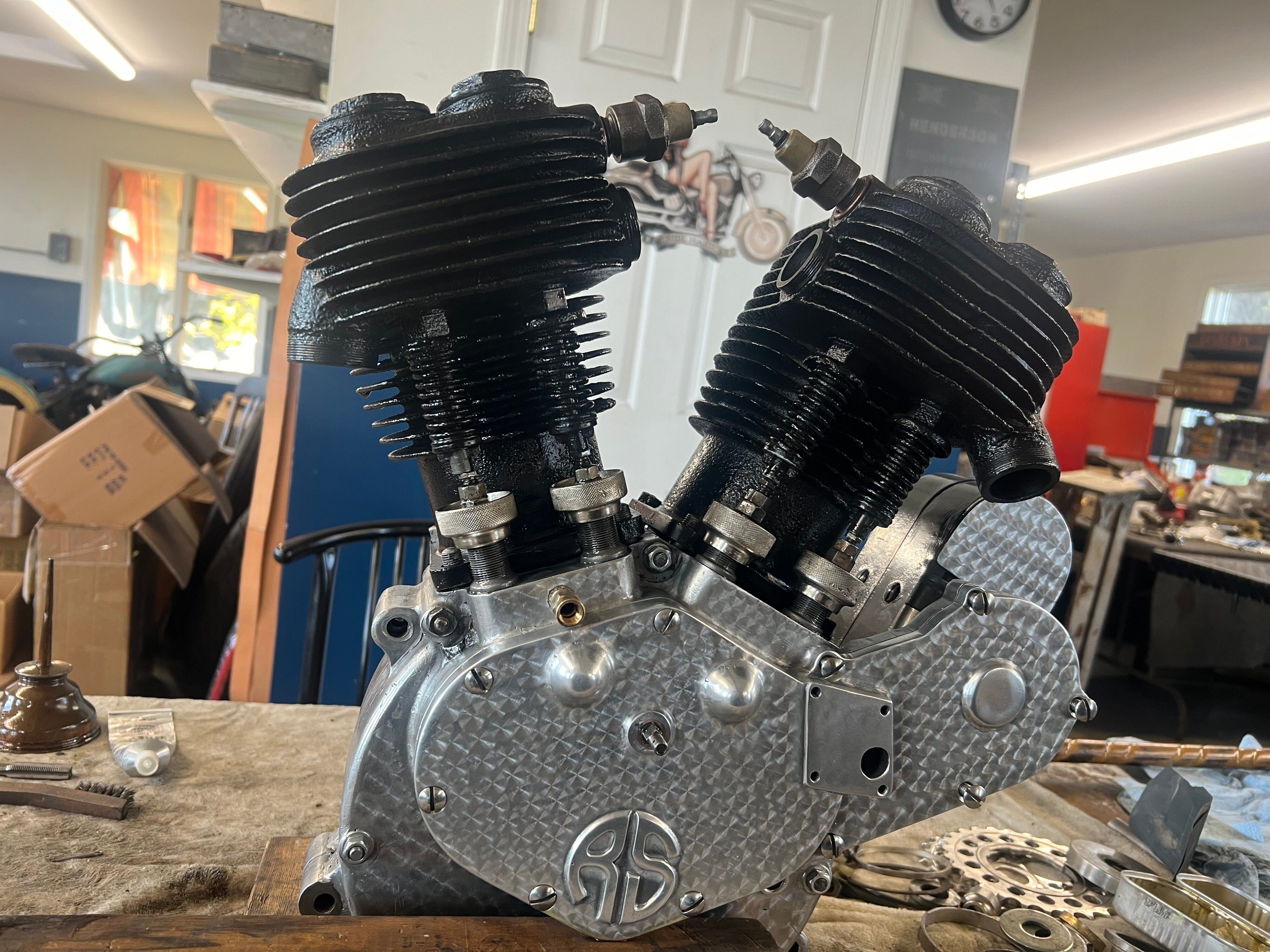
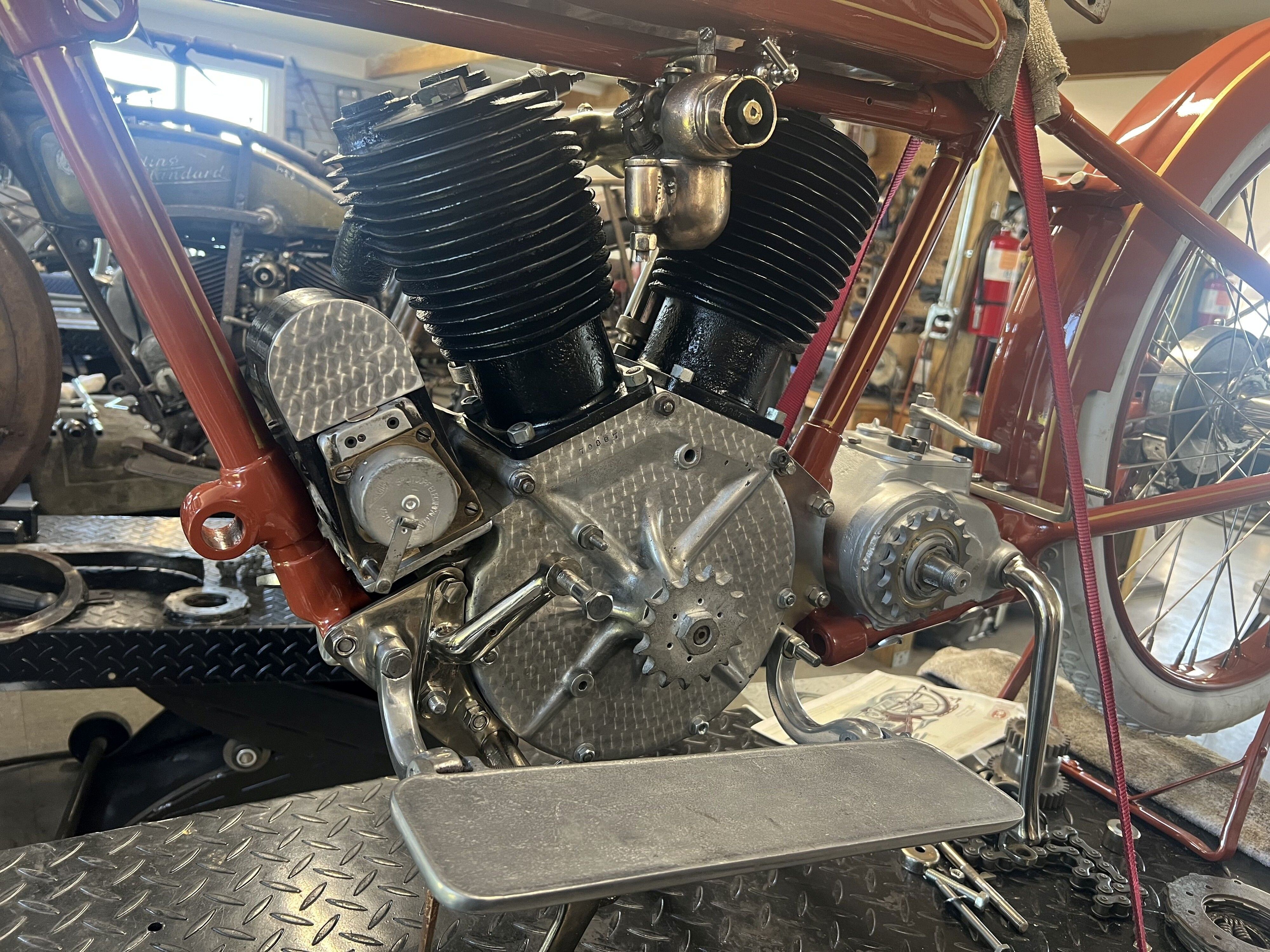
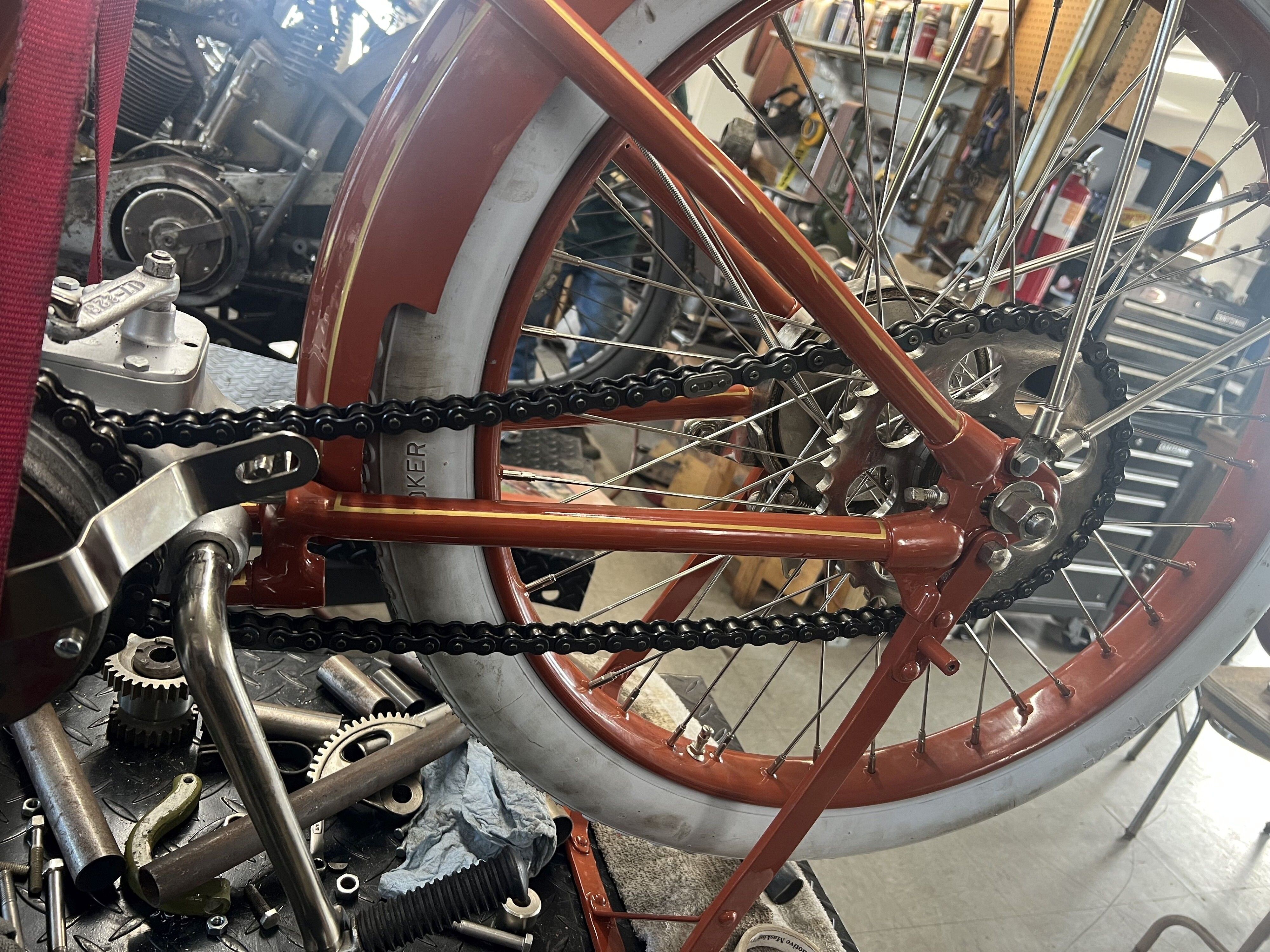
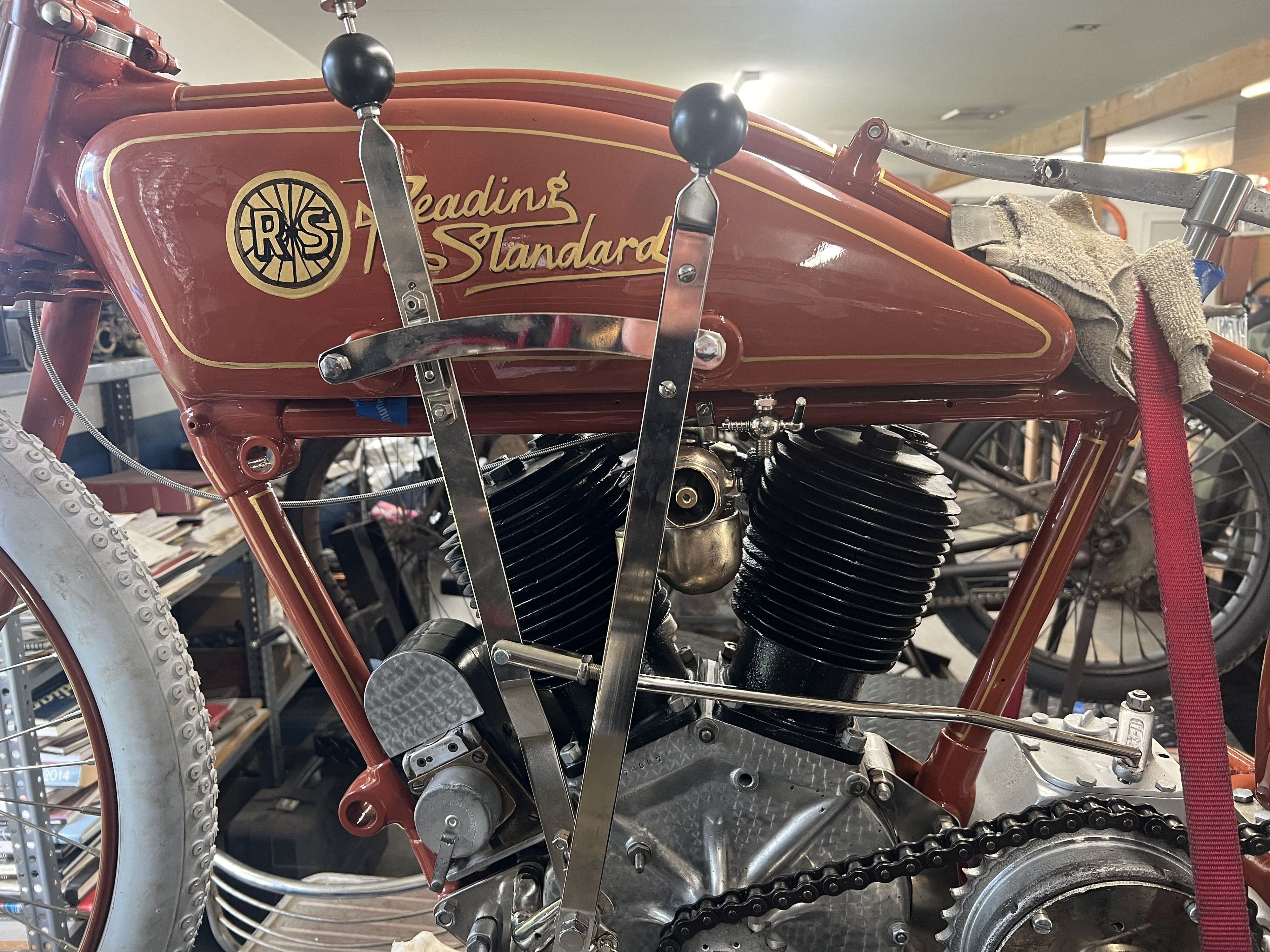
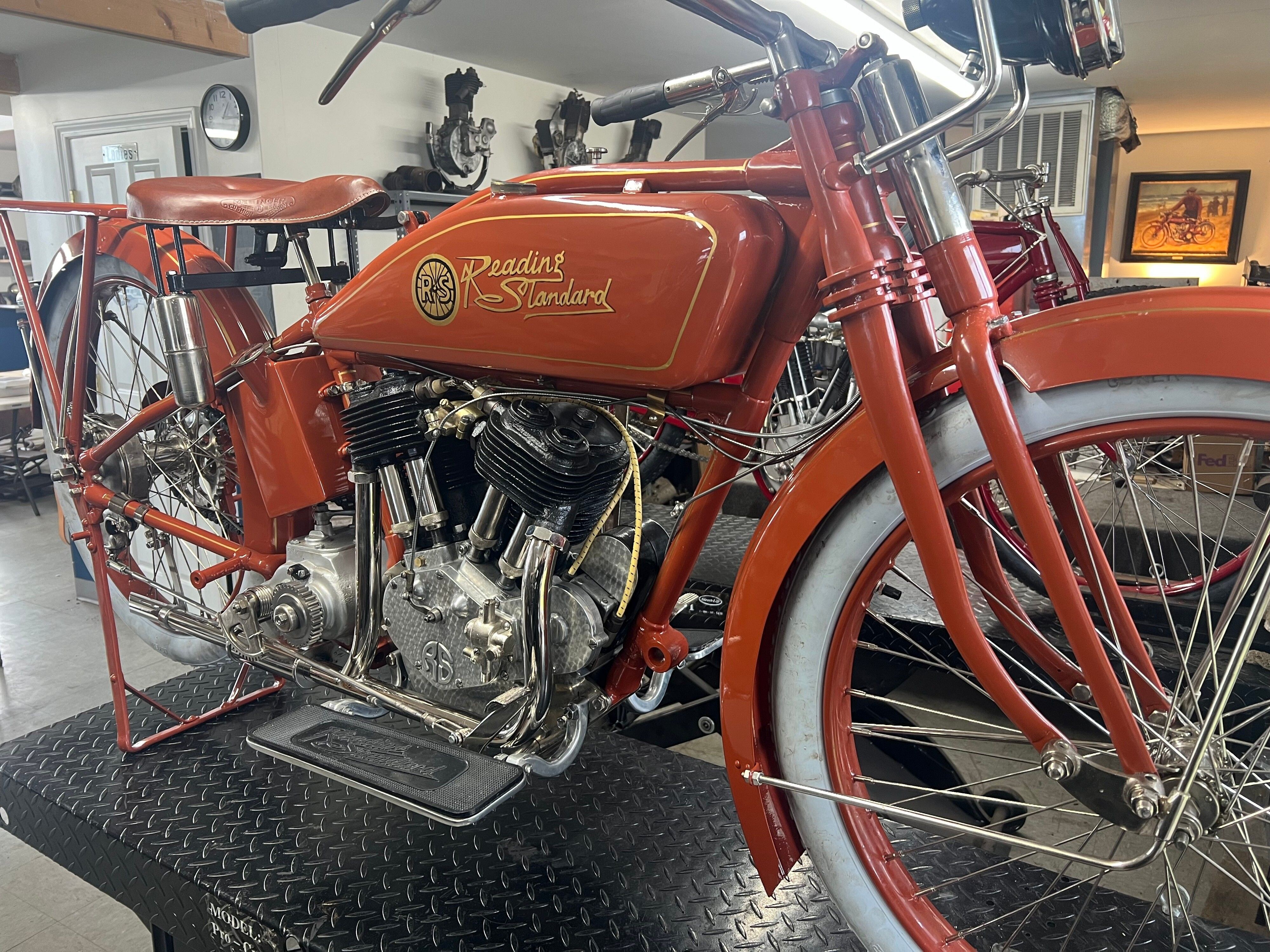
Complete, show-quality, no expense spared restoration with all real parts. Engine has been rebuilt with matching “67”
on both belly pan cases and “70807” on both the case and jugs.
The “R-S” Motor is the key to power. Power that conquers road conditions and opens every highway in the world to the “R-S” owners. Power in the maximum degree for every ounce of fuel consumed. The “R-S” mechanically operated side by side valve motor - the “Key to Power” - is built on acknowledged right principles, and “R-S” Engineers have carried these to the farthest point yet attained.
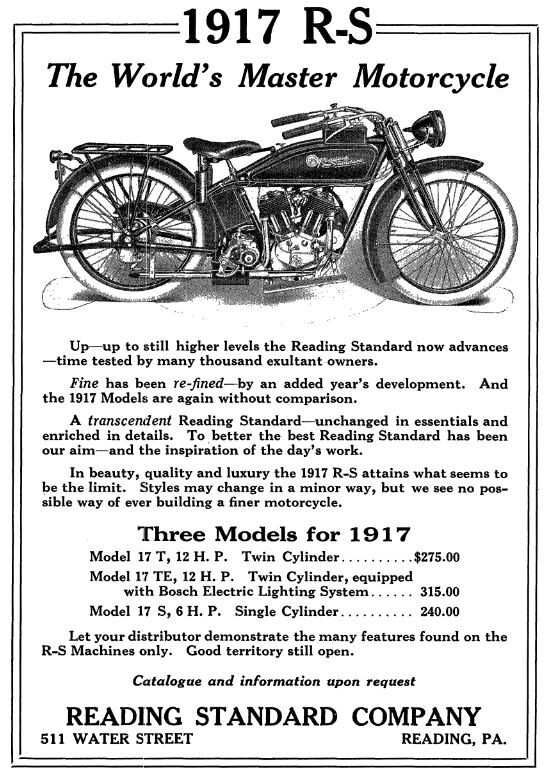
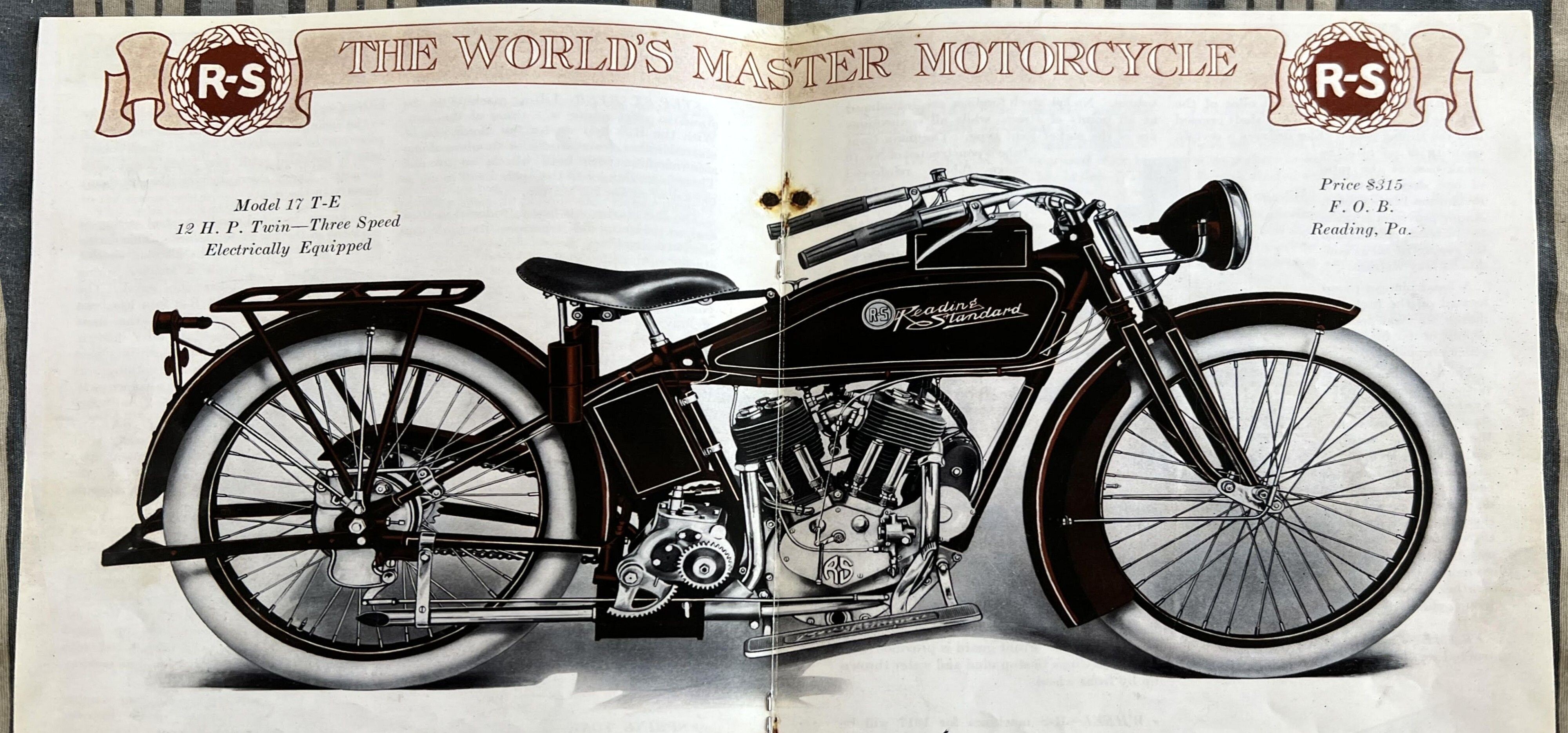
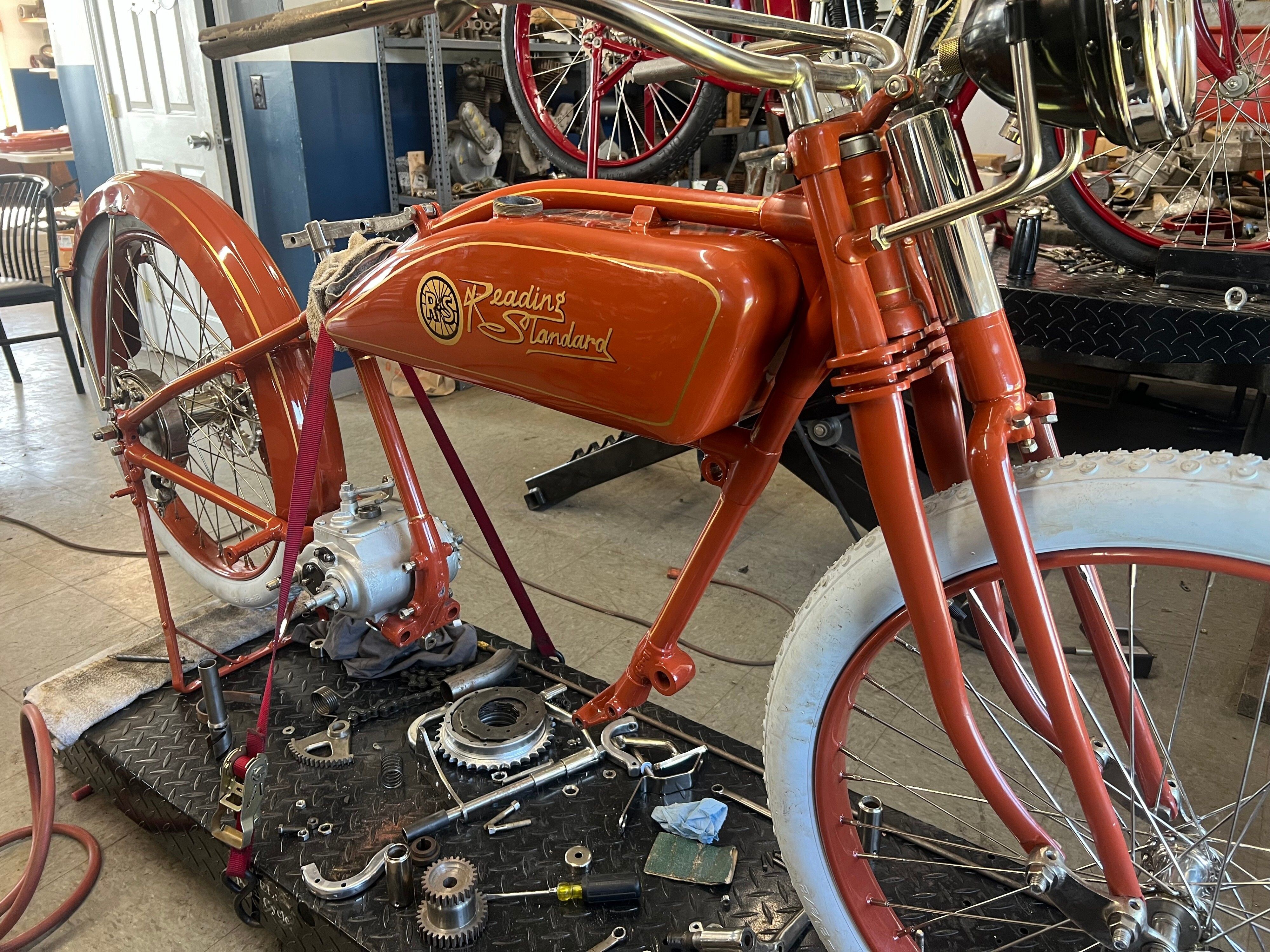
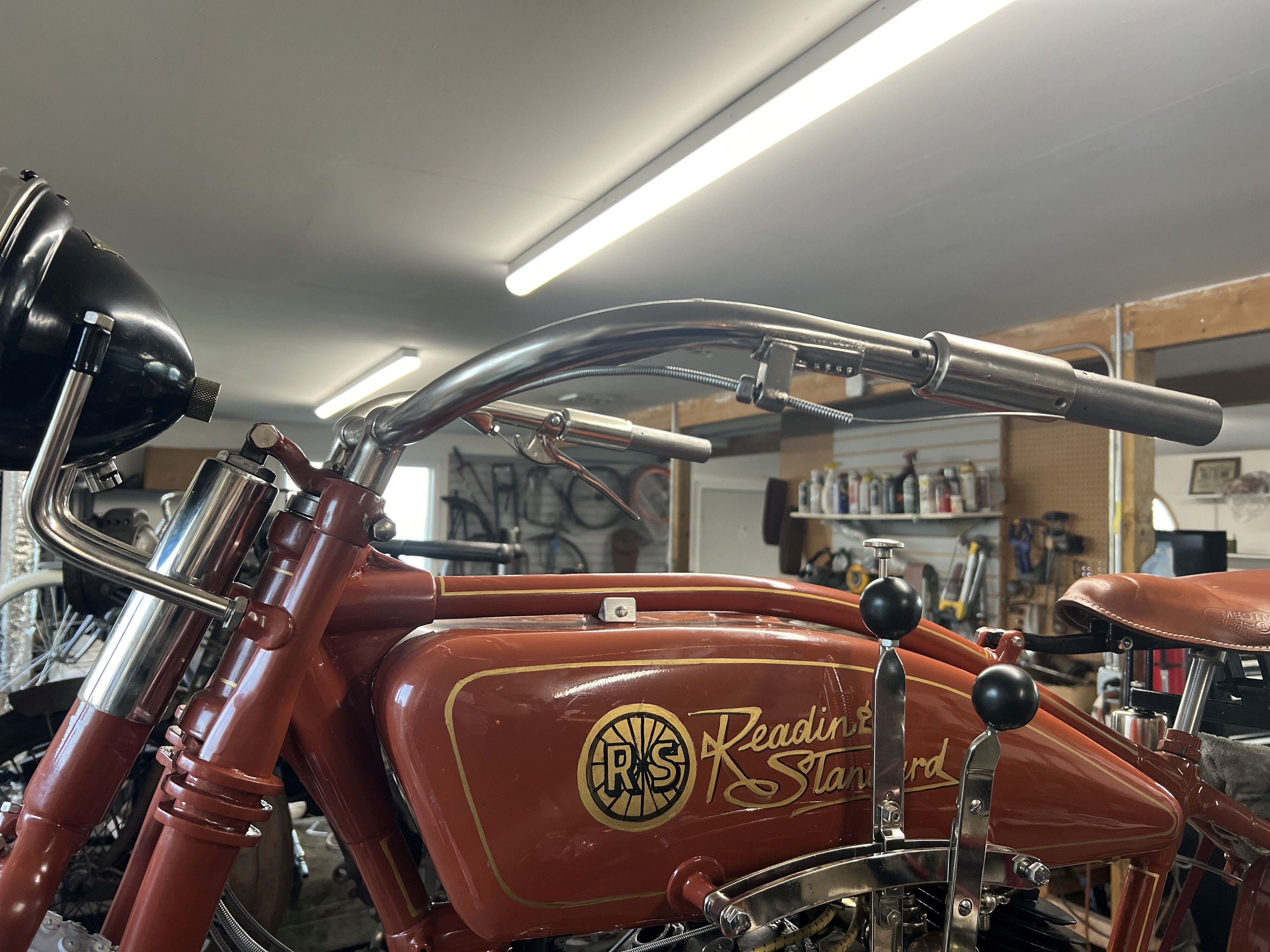
The 1917 Reading Standard is a sturdy, powerful machine of luxurious comfort. Comment on its handsome and impressive lines is not necessary. The illustration tells the story. It has always been the aim of the R-S Company to produce a high-grade Motorcycle, using only such steels and materials as are suited to withstand every conceivable strain and shock incident to the roughest use.
The R-S has a distinguished appearance. Its lines are strong and bold, but dignified, and are dictated by the strength of the mechanical parts. They suggest a machine that has done something and made good for years. There is nothing feeble in it to give way.
The R-S differs in design from other Motorcycles. It has not followed passing fads in design, but it has been itself and stayed itself.
The R-S mechanically operated side by side valve motor is of our own special design. It is completely manufactured and thoroughly tested by us. The superiority of the mechanically operated valve motor for Motorcycle use, first introduced by us, is no longer questioned, but is confirmed by its adoption by other Motorcycle manufacturers, who heretofore had adhered to the overhead valve motor.
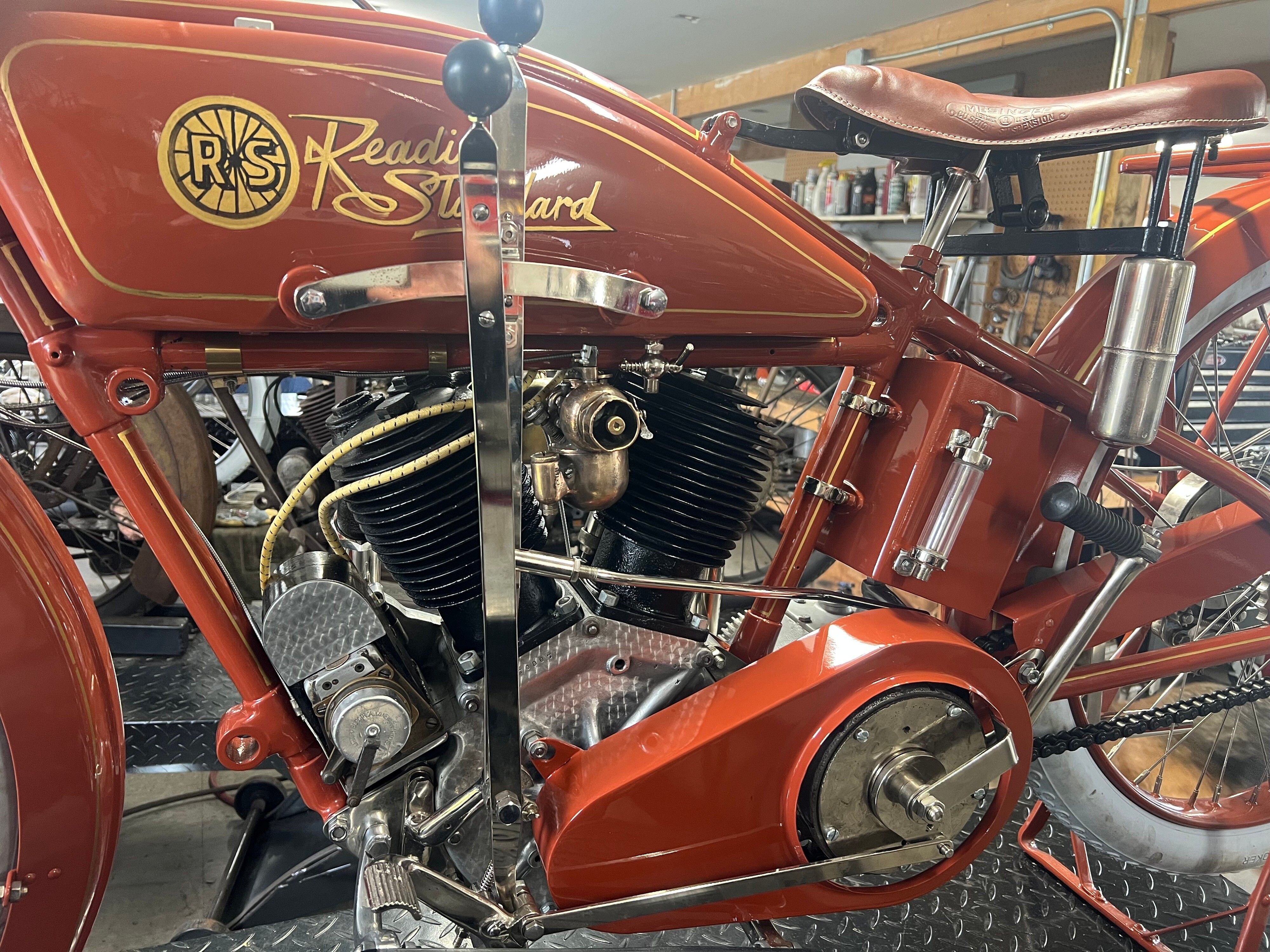
MOTOR - The R-S motor is of the high speed, long strong, four cycle type having a 3 ¾-inch stroke, cylinder bore 3 ⅛-inch, with a piston displacement of 67.09 inches, developing twelve actual horsepower.
CYLINDERS - Extraordinary accuracy and precision is demanded in the making of the cylinders. In order to insure smooth action, they must be absolutely correct. They are constructed from a superfine grade of close-grained grey iron, cast in one piece with double pocket valve chambers. Extremely wide and evenly spaced cooling fins assure ample cooling of cylinders. Exhaust ports allow pipes to shoot straight downward, thereby eliminating undue back-pressure.
PISTONS - Special formula close-grained grey iron, exceptionally light and fitted with oil grooves. Pistons are ground tot he proper degree to allow for the necessary expansion under the most severe conditions.
PISTON RINGS - Each piston is fitted with three eccentric rings hand lapped into its respective cylinder until a glossy finish is attained. These rings positively resist leakage, even after months of grueling service.
PISTON PINS - Wrist pins are of special grade steel, heat treated and accurately ground. Pins are supported in Phosphor Bronze Bushings fitted with oil grooves.
GEARS - In the R-S Motor two cam gears are used. Intake and exhaust cams are integral with each gear. This assures a longer lived cam than in most motors where only one cam gear is used, since each valve is operated by its respective cam.
Cams and timing gears are made of high grade nickel steel properly treated. Timing gears are stamped with timing marks, thus enabling them to be easily replaced in their respective position, should it become necessary at any time to remove same.
CONNECTING RODS AND BEARINGS - All connecting rods are of the I-beam Construction made from Vanadium steel forgings. Rods are light and rigid, and insure unusual and lasting service. The fork rod of the Twin motor is reinforced by a tie piece at the bottom to prevent the fork from spreading. Top and bottom of rods are fitted with phosphor bronze bushings, fitted with oil grooves. In addition, the bottom of rods are fitted with large steel roller bearings running in hardened steel bushings, and securely locked at each end with hardened steel thrust plates to prevent wear and shifting.
CRANK SHAFT Construction - The structural design of the R-S crank shaft and flywheel is responsible for the remarkable power and wearing qualities of the R-S motor. The crank shaft is made of high-grade steel subjected to a special treatment to give it further strength.
Flywheels are 9 inches in diameter, weighing approximately 27 pounds. The heavy weight accounts for the enormous reserve power of the R-S motor at very low speed.
The drive and pinion shafts are properly machined and securely fastened by Woodruff Keys, while the crank shaft is a taper fit. All shafts are held in position by large nuts securely fastened by a locking device. R-S shafts have never been known to loosen accidentally.
VALVES - R-S valves are the final result of scientific development. They are of our special formula and design. They will not pit or corrode from the action of burnt gas, nor will they warp under the highest temperature attained by the motor.
Intake and Exhaust Valves are 1 ⅛-inch diameter, with 45 degree seats. Both valves are interchangeable and ground in on their seats by hand.
VALVE OPERATING MECHANISM - All parts entering into the Construction of the valve mechanism are made of nickel steel, heat treated. Valves are easily removable by unscrewing peep caps in cylinder. Cam gears and lift levers are of nickel steel, heat treated.
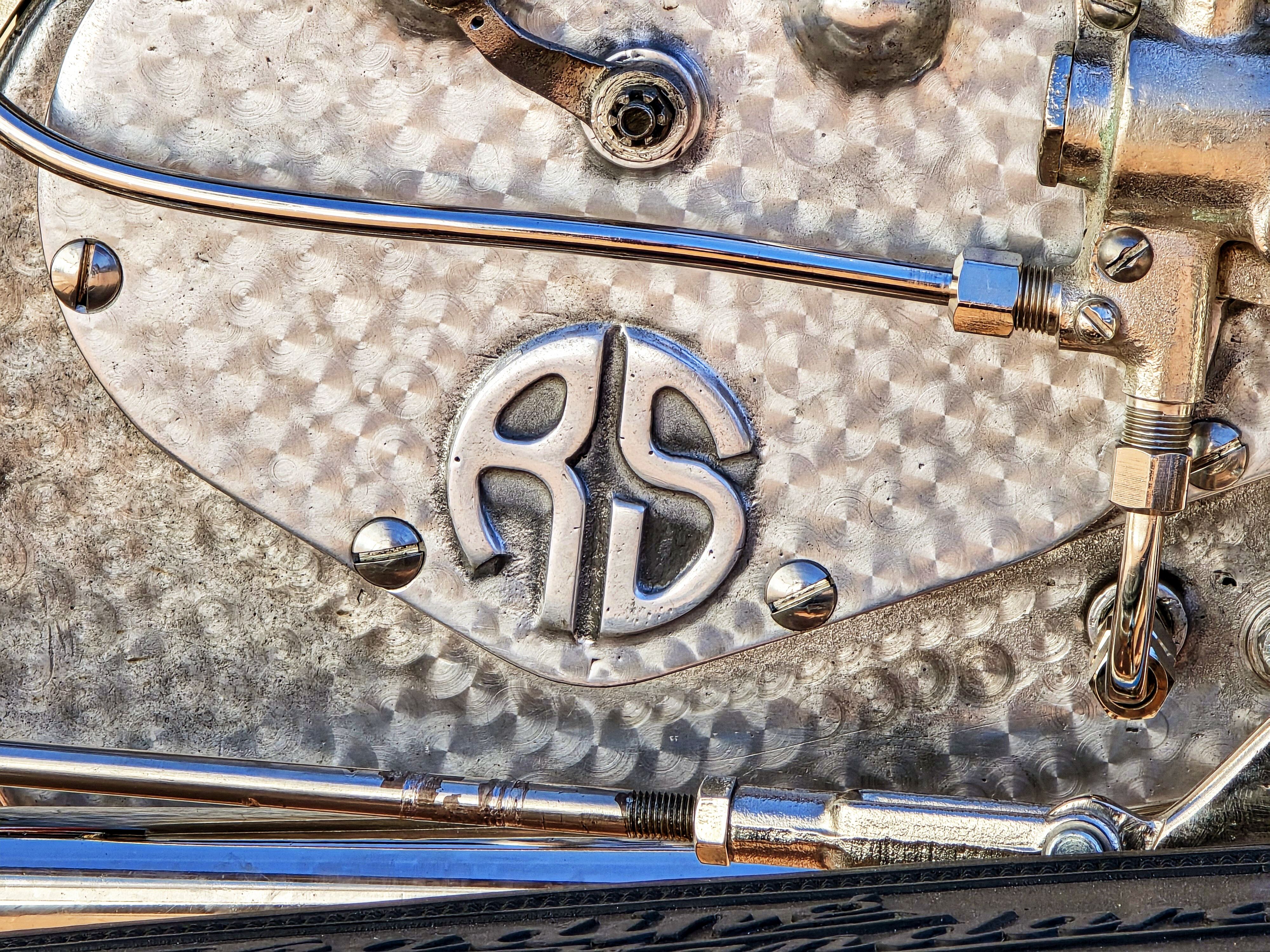
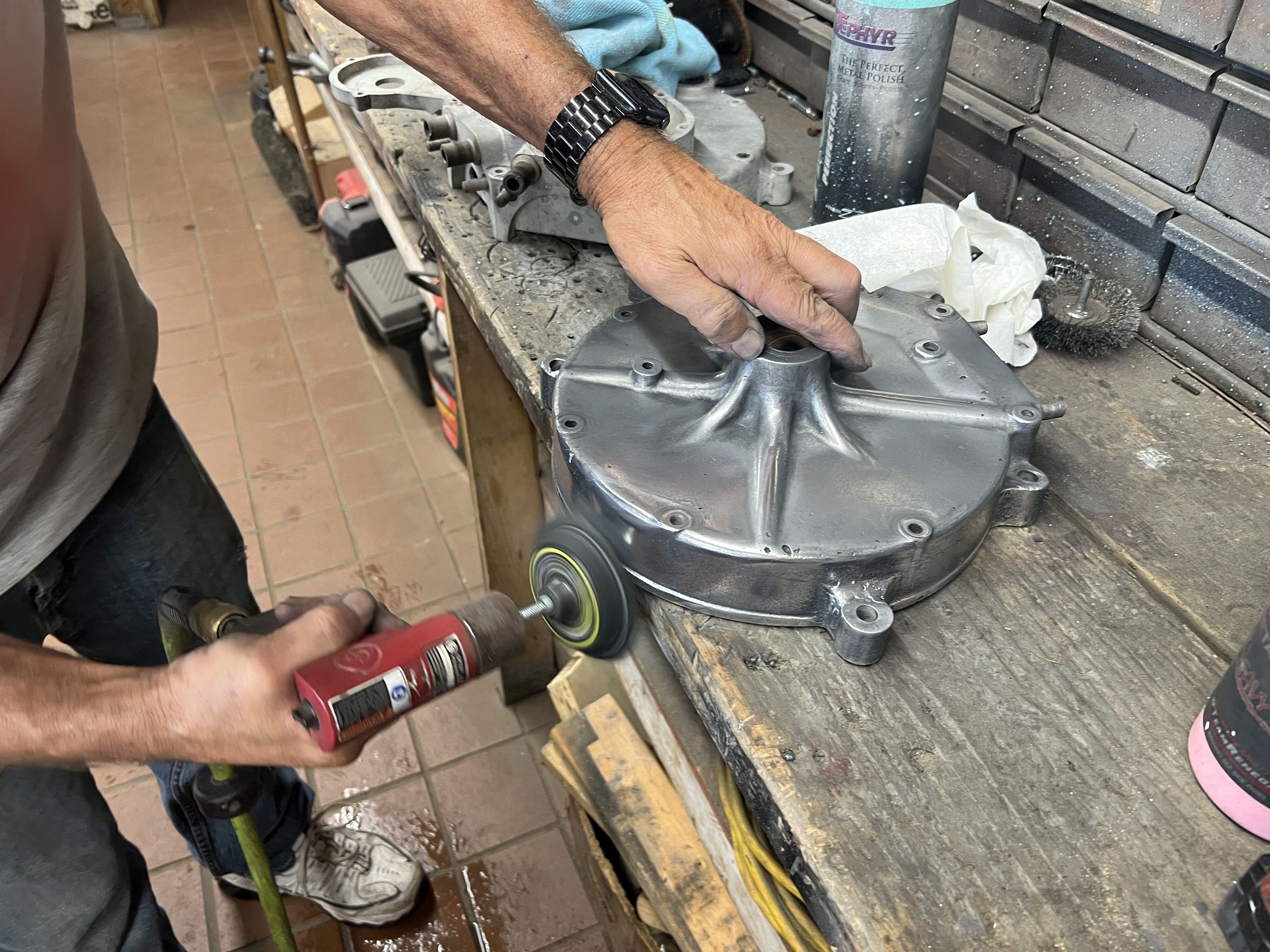
CRANK CASE - High-grade aluminum, accurately machined and sealed to prevent oil leakage. Cases are highly polished and spotted.
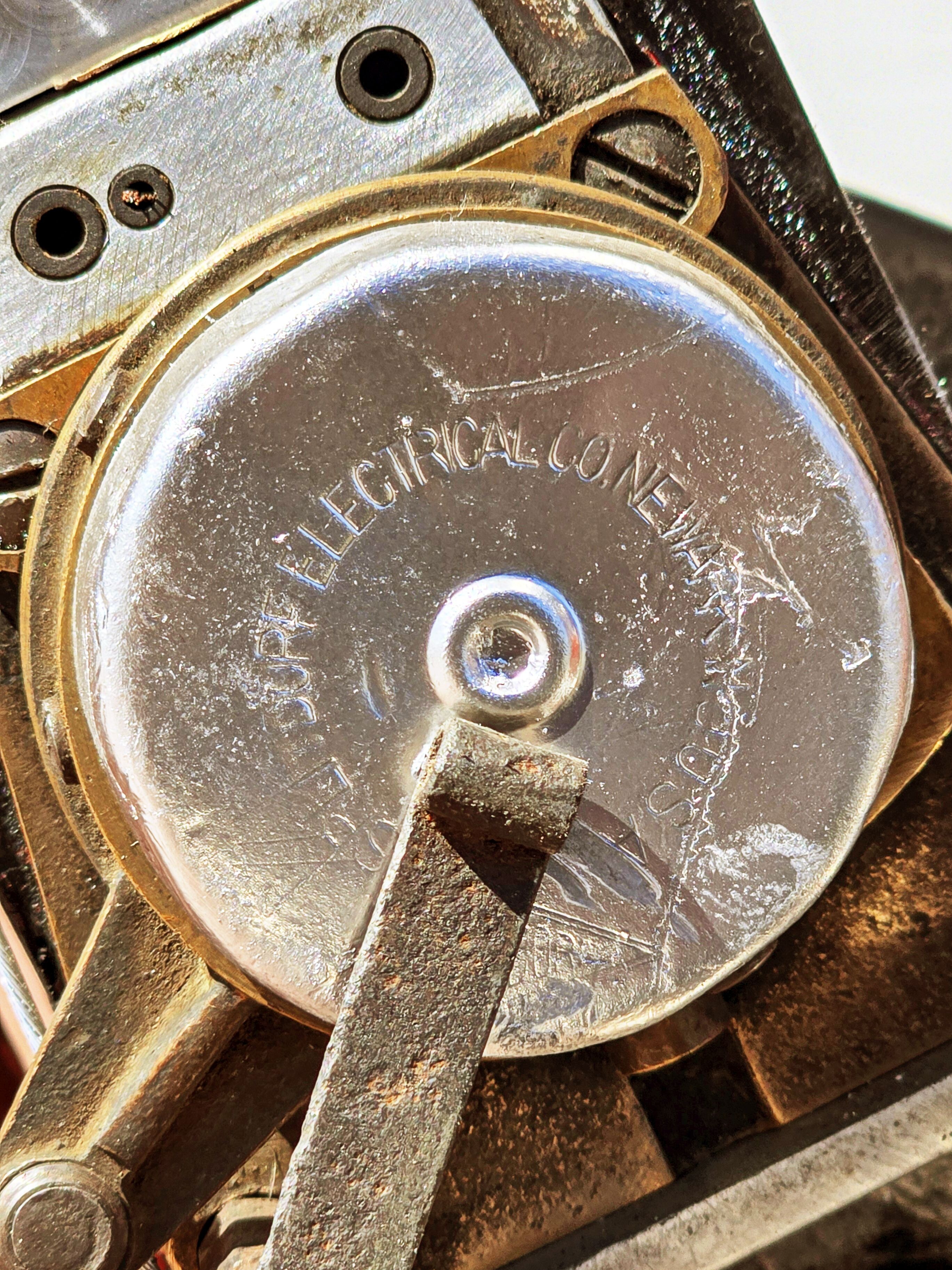
MAGNETO - A high tension armored type water-proof magneto is mounted on a platform to the front of the motor. Magneto is driven by a chain of gears operated in connection with the pinion gear and running in a film of oil. Provision is made for the adoption of Mag-Dynamo should rider desire, at some future time, to change to electric lighting equipment.
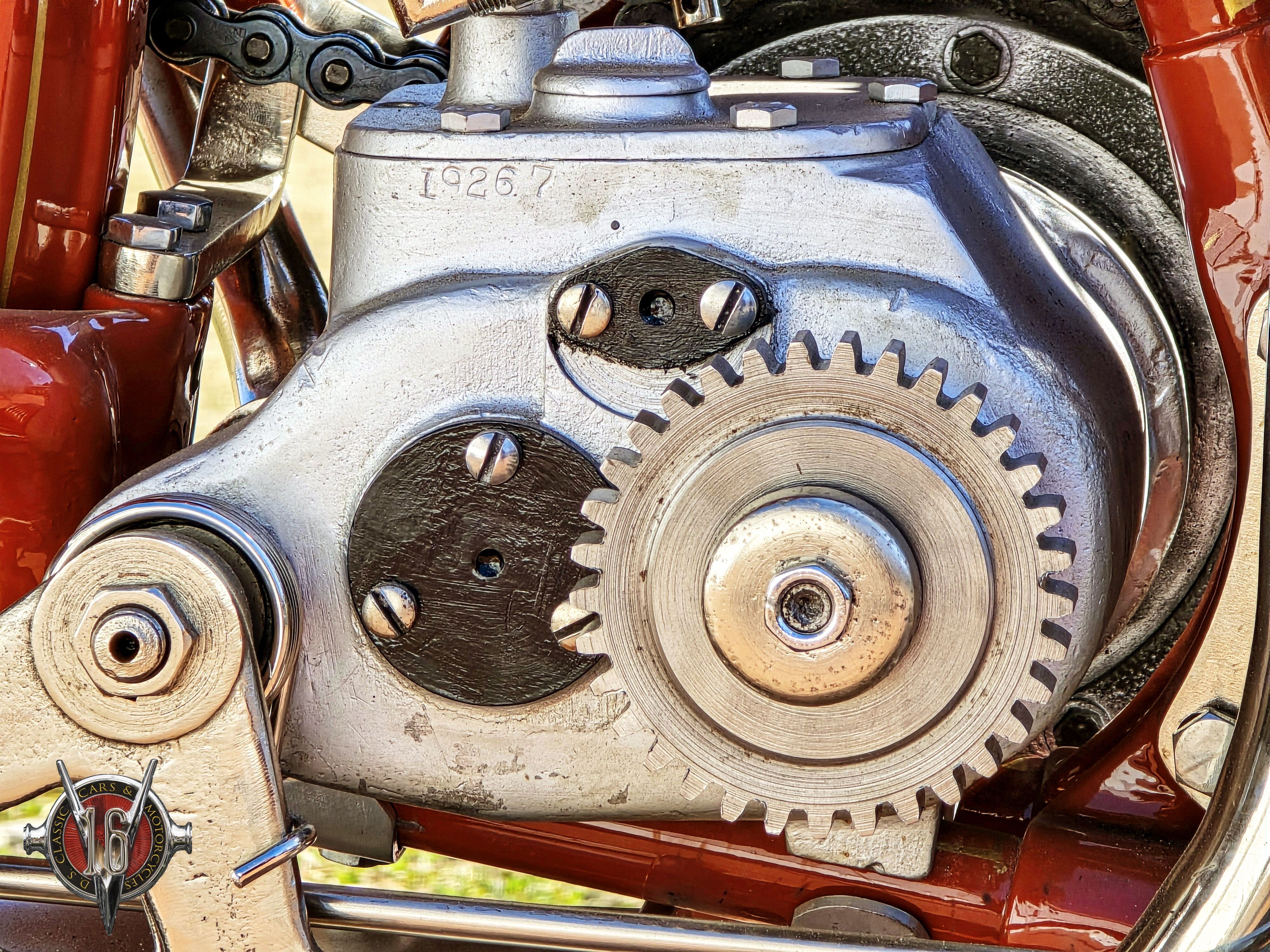
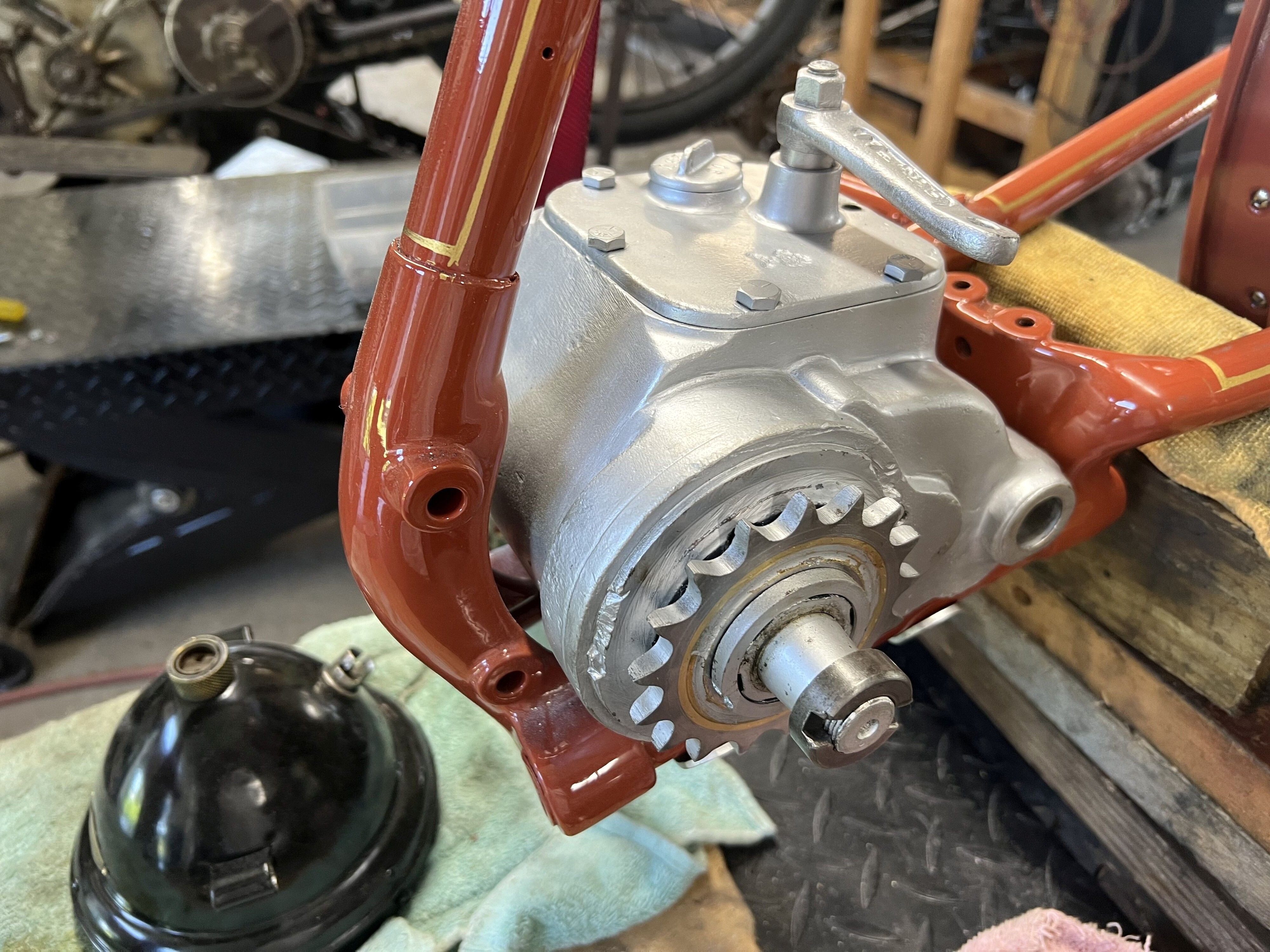
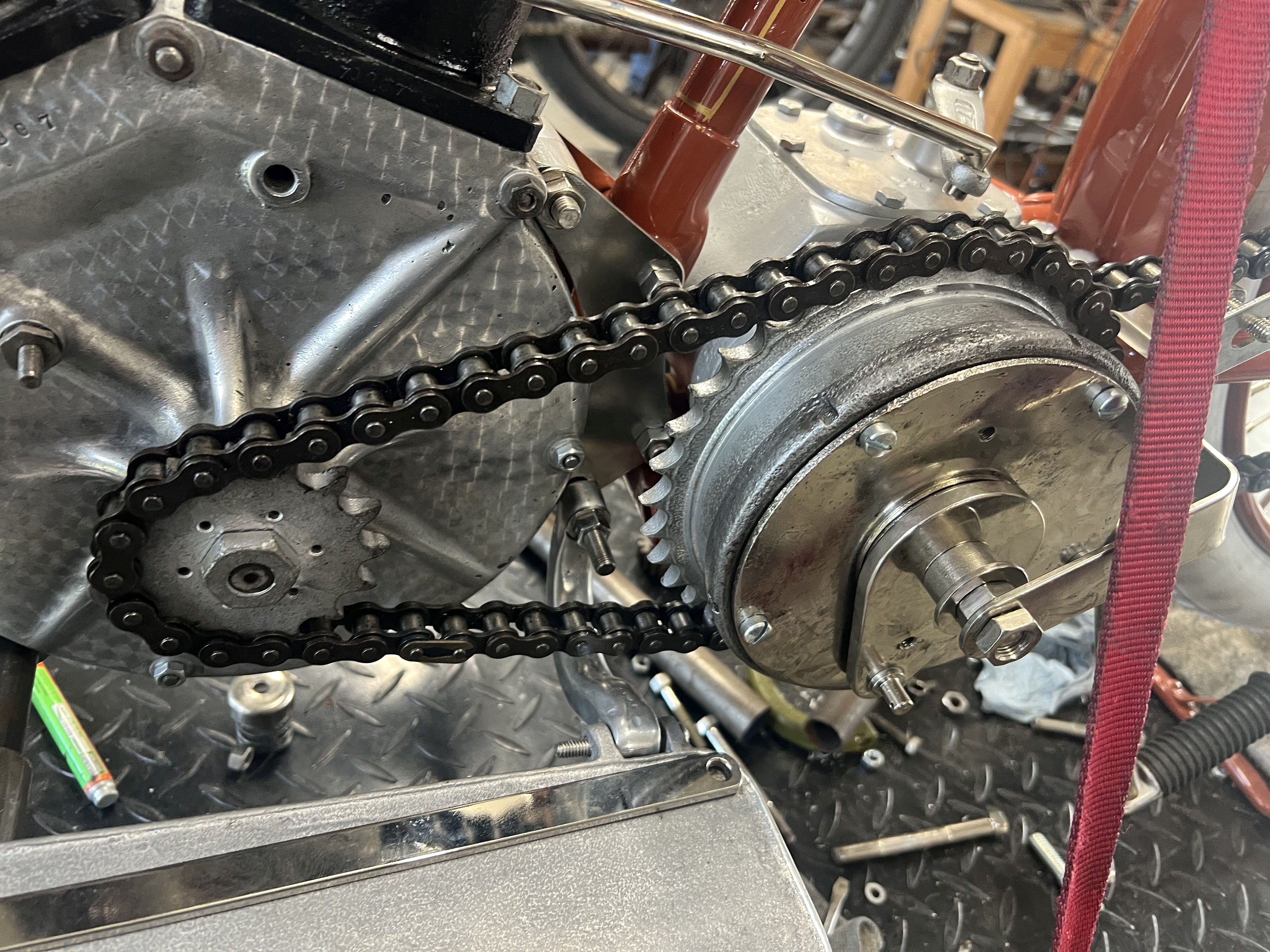
R-S THREE-SPEED - Possibly no part of a Motorcycle is more delicate than the transmission. This must be absolutely correct if the machine is built to last. For the season of 1917, all R-S machines will be fitted with a three-speed sliding gear transmission located to the rear of motor.
The entire case and cover are made of heavy aluminum securely anchored by tie piece to the rear fork tubes. All shafts and gears entering into said Construction are made of Chrome Nickel Steel, properly hardened. The intermediate gears have chamfered teeth, enabling them to slide freely. The main shaft is carried by large ball bearings. The secondary gear shaft is a one-piece drop forging, all gears being integral with same. A forged steel shift fork is located on a shift bar fitted with spring controlled detents which stop the sliding gears at proper position. The standard driving ratio on high gear is 3.91 to 1, which allows a high speed for good roads, the intermediate reduction of 6 to 1 meets the requirements for all normal grades, while the low gear of 9.20 to 1 enables the rider to travel in congested traffic and over bad roads at a slow speed with an overabundance of power.
Gears are shifted by lever attached to left side of machine, working on a notched quadrant, fastened to the tank. Disengagement of clutch Automatically releases gear shift lock, enabling gears to be shifted. Engagement of clutch again locks gears in position rider may desire. A safety cam located on clutch control makes it impossible to shift gears before releasing clutch, thus avoiding stripping of gears.
Several refinements will be noticed on the 1917 three-speed, among them being the driving sprocket which is broached, effecting a tight fit. This method eliminates stripping of threads, which is a common occurrence with screwed sprocket. Ratchet pinion is held in position with a key, making it easily removable. The main ball bearing housing is permanently locked by a headless set screw, and a corresponding series of notches are cut around the entire circumference of housing.
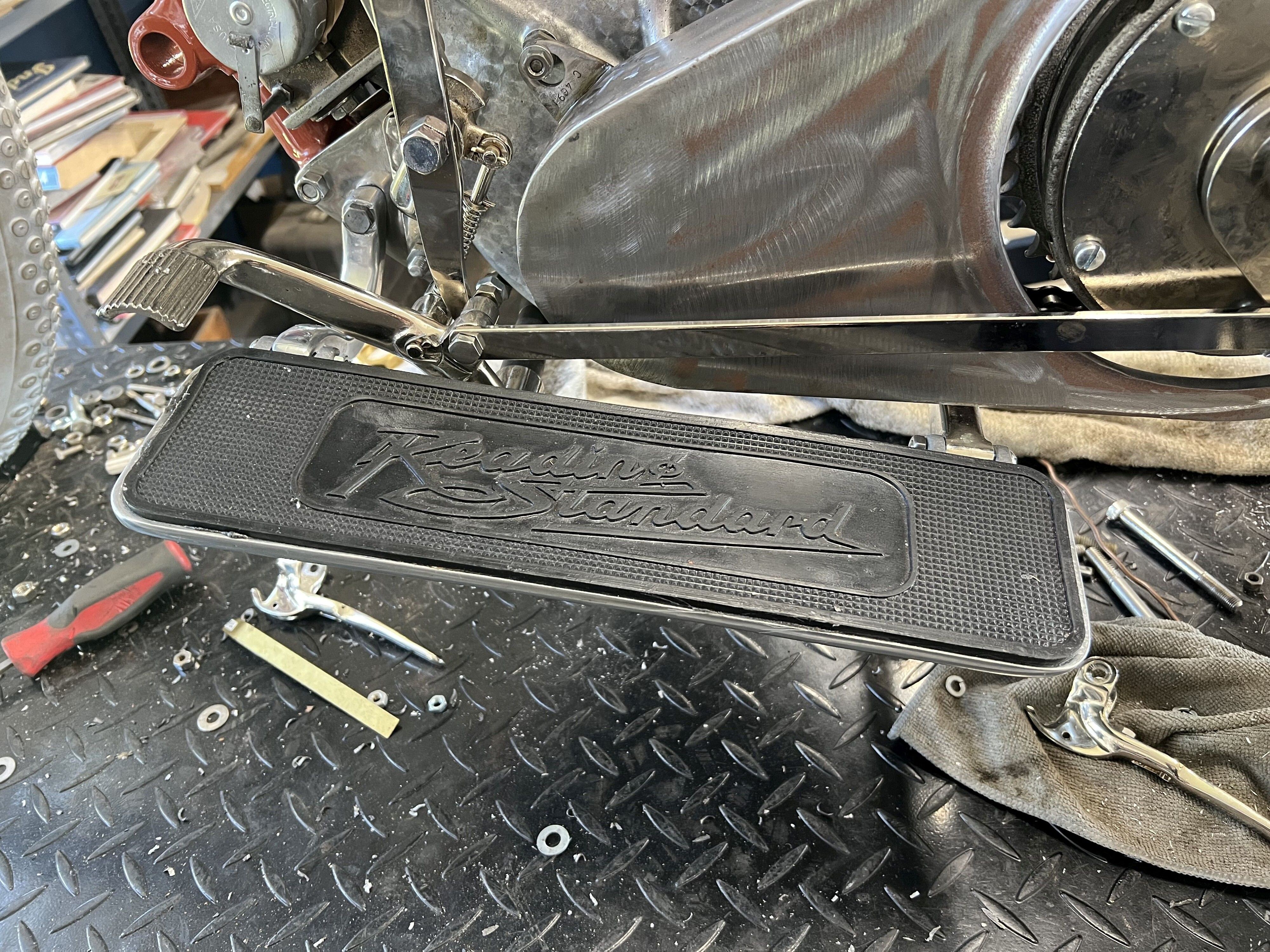
STEP STARTER - Lifting machine on the stand to start motor is a thing of the past. With the R-S step starter the motor can be started either from saddle or standing alongside machine with both wheels on ground. There is no danger to the operator or machine in case of motor back-firing. The R-S starter was first introduced in 1915, and so perfectly did it perform its work that all 1916 machines were starter equipped. There will be no marked improvements for 1917 beyond the Strengthening of lugs which carry the starter shaft.
All parts entering into said Construction are of the best material procurable. The starter crank shaft, gear and sector, are nickel steel forgings. Starter is of the gear and sector type, operated by means of a pedal to the left of machine. Pedal is of the folding type and folds within frame line of machine, thus protecting it from breakage in case of falls. The pedal is integral with transfer shaft, to which is attached the sector gear on opposite side. This gear engages with ratchet gear on main shaft of three-speed. One thrust of starting pedal gives the motor three or four revolutions.
- ENGINE NO.: 70307
- TRANSMISSION: Three-speed
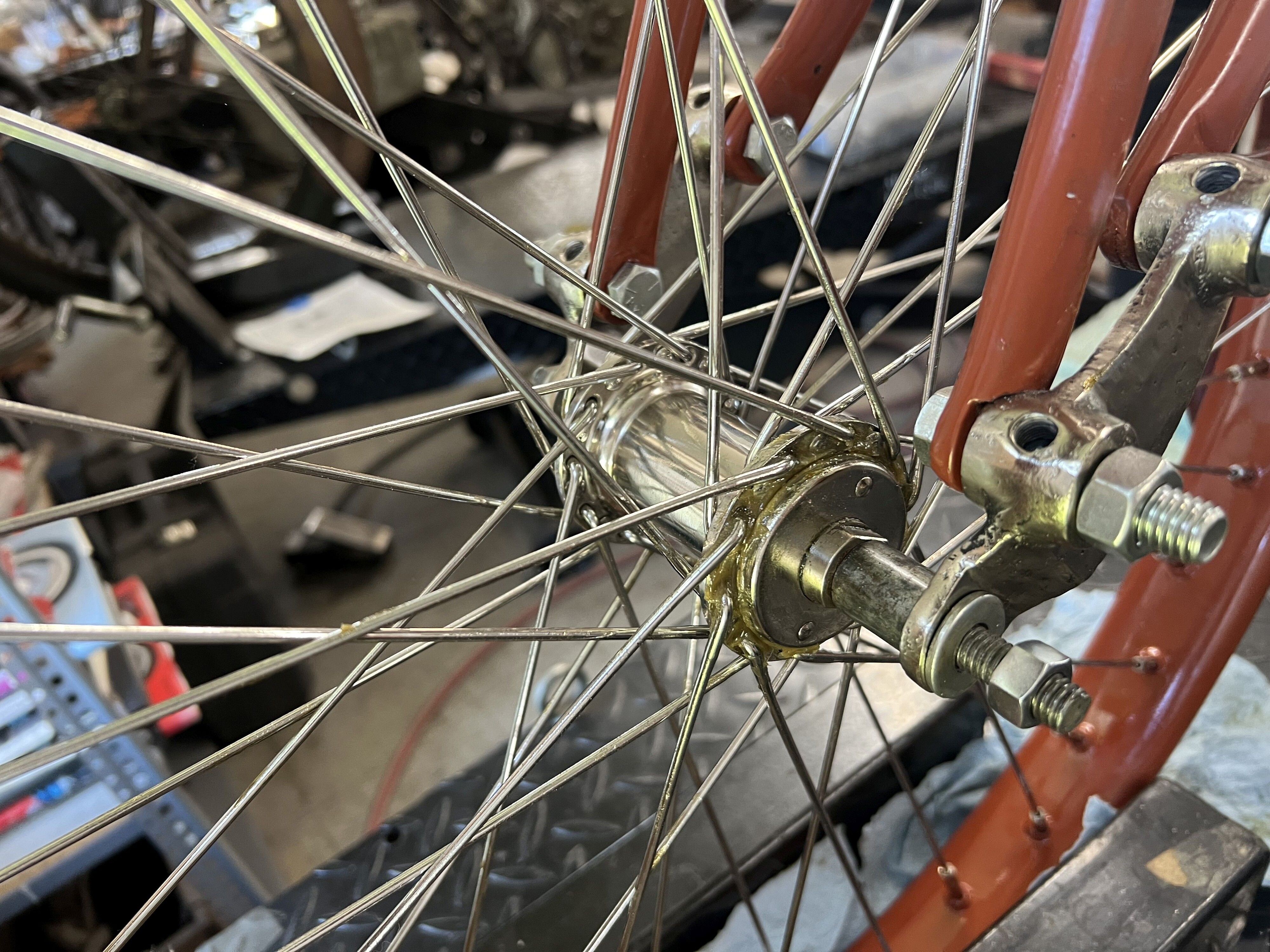
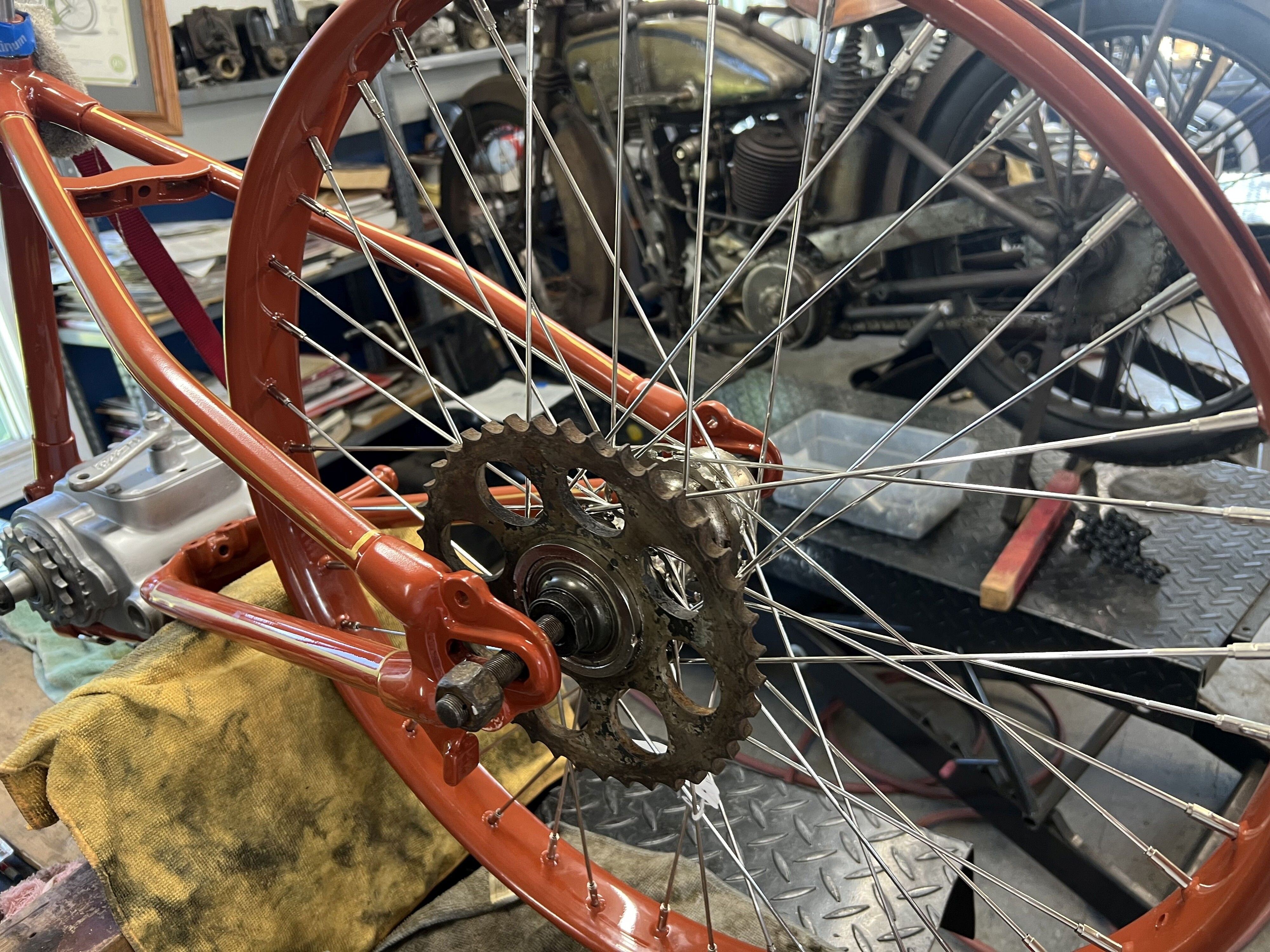
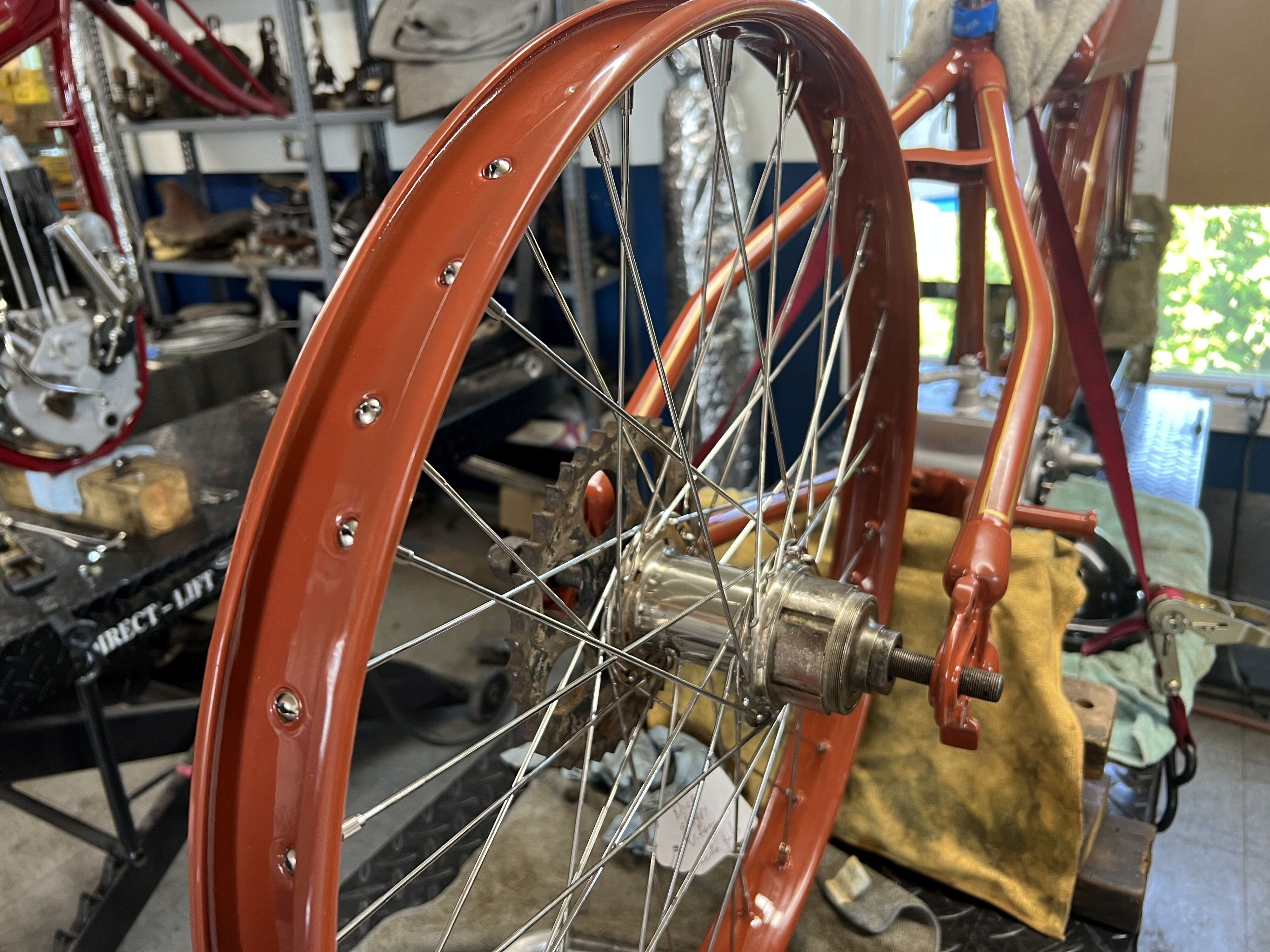
- WHEELS: 40-Spoke
- TIRES: 28x2/2.5
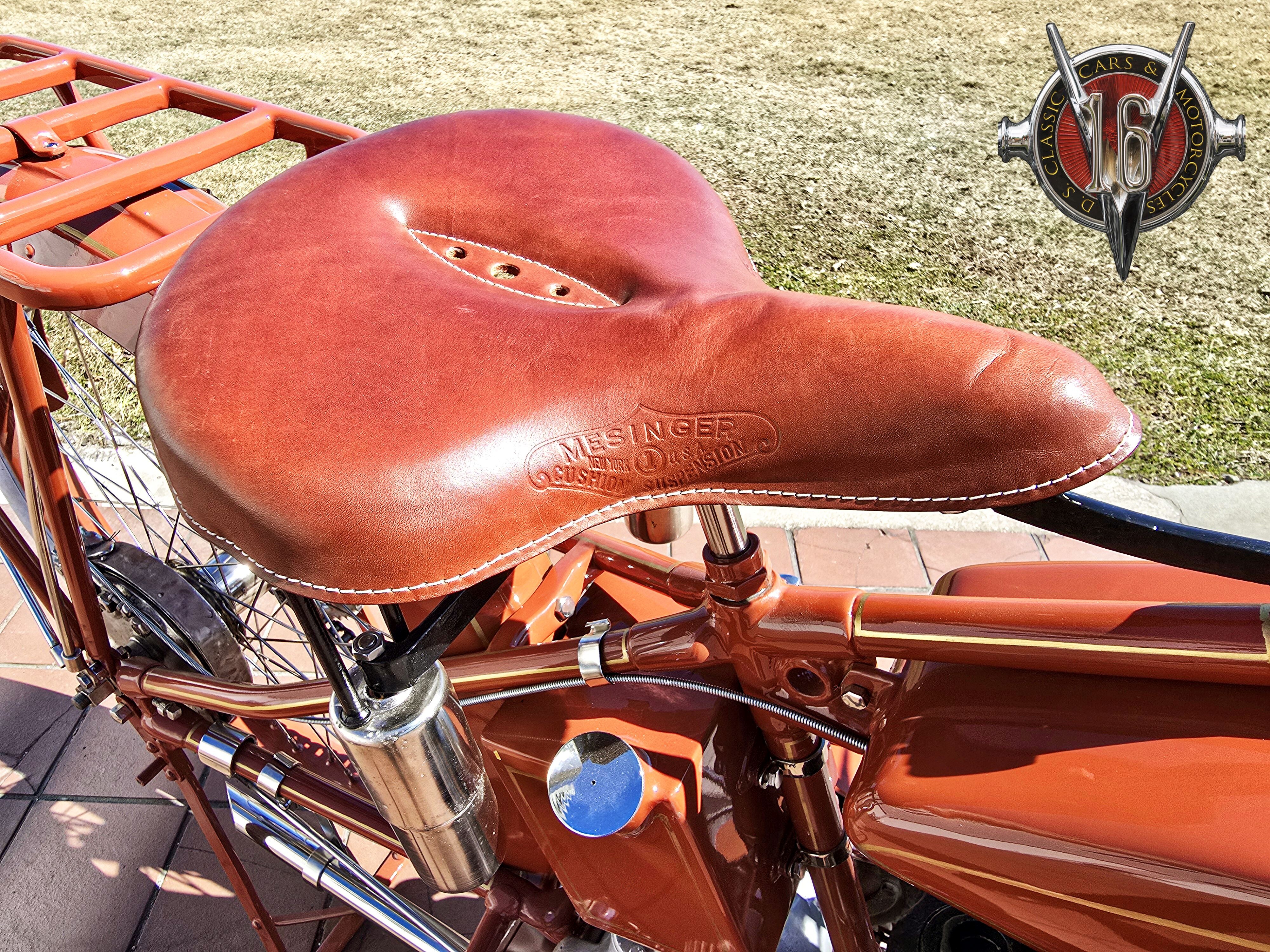
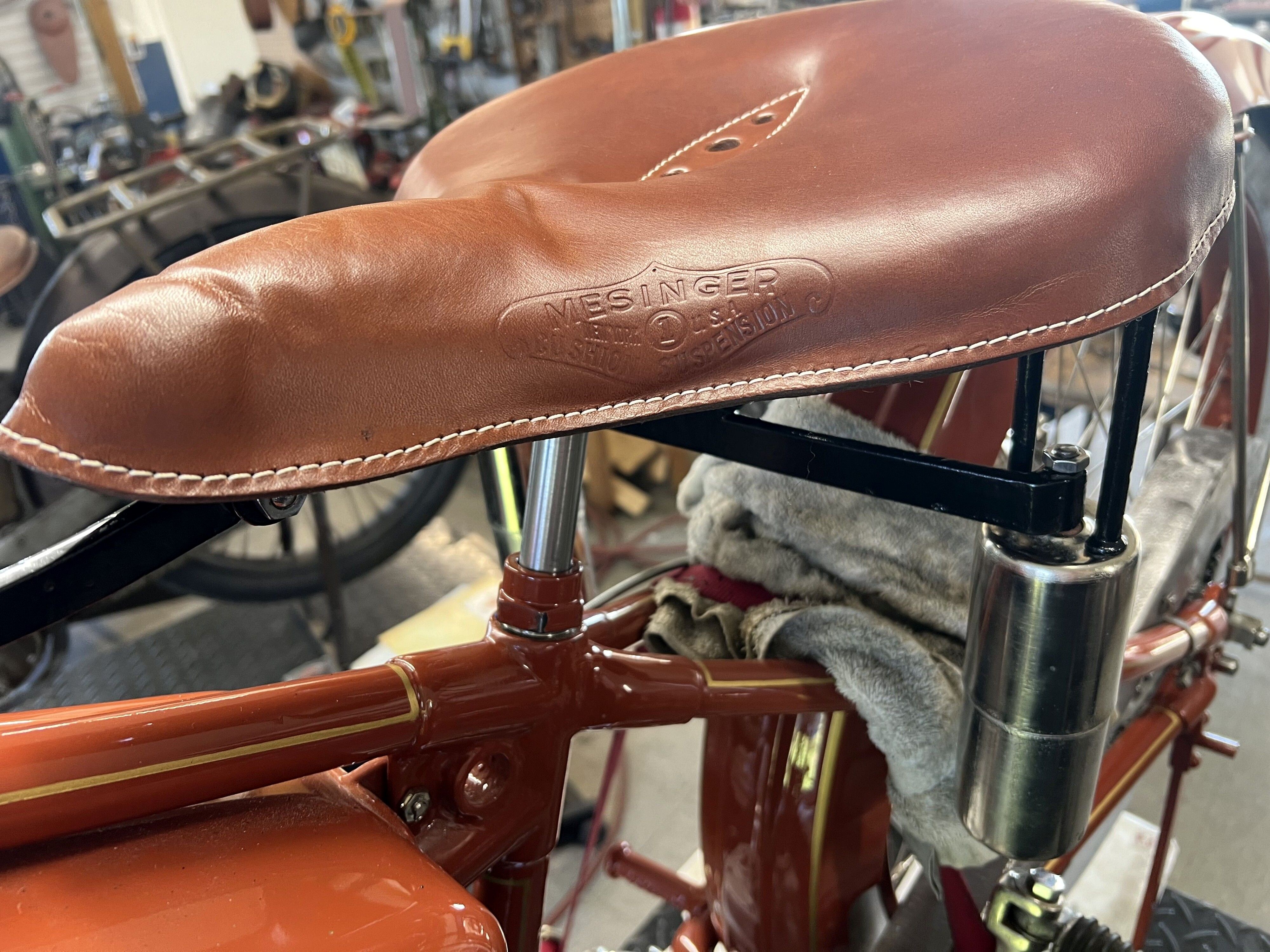
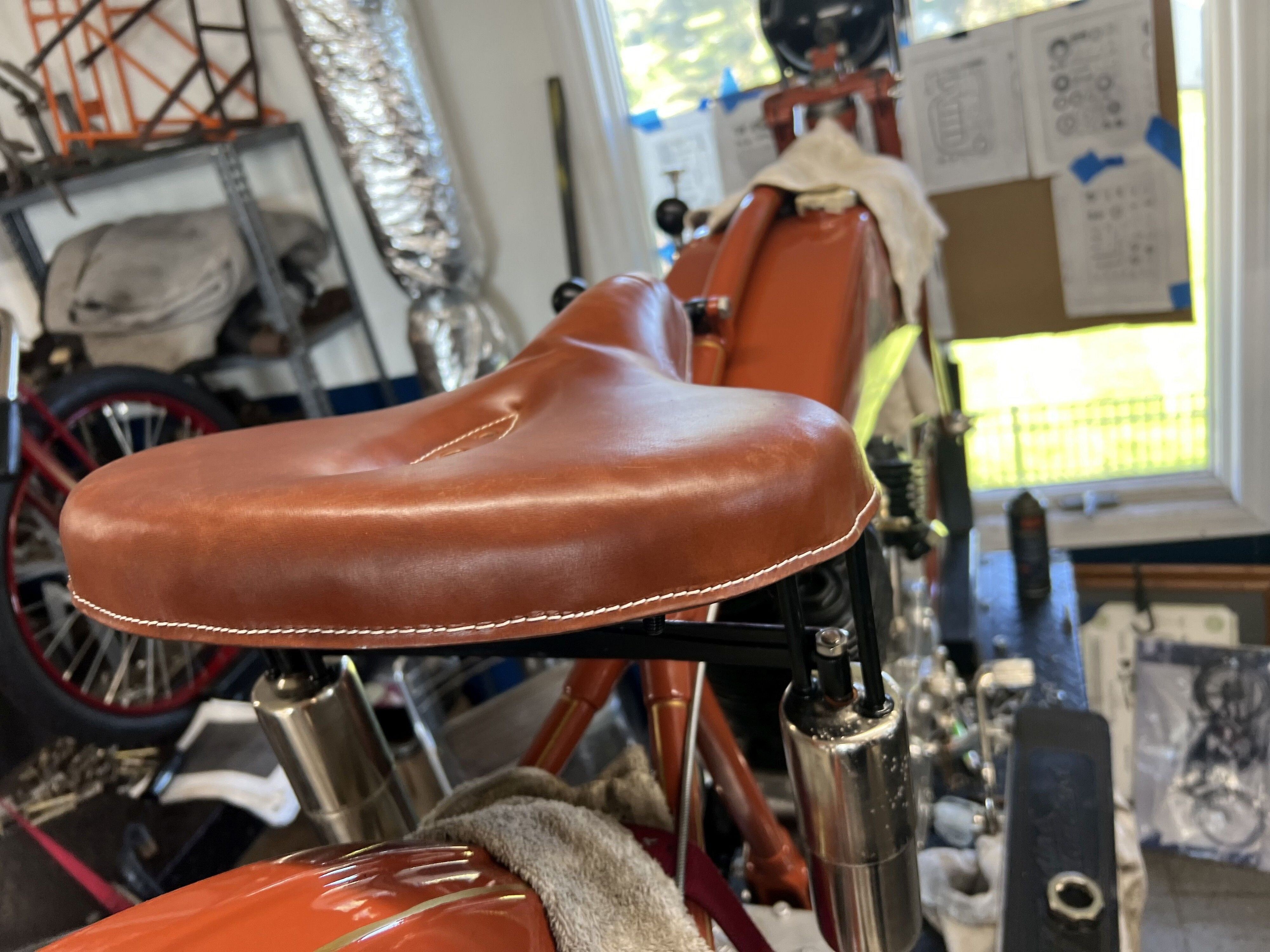
- SEAT: Mesinger, New York, USA
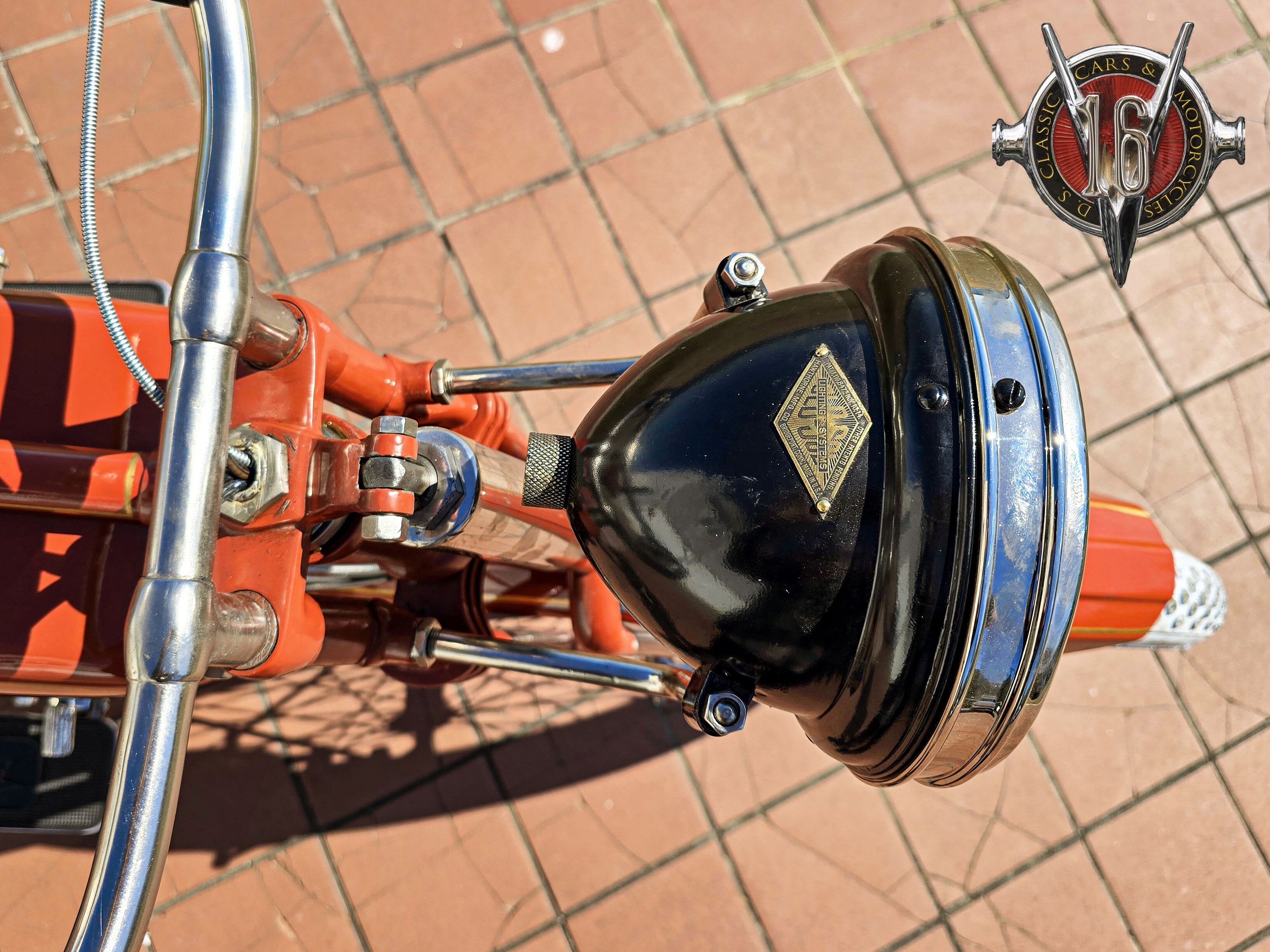
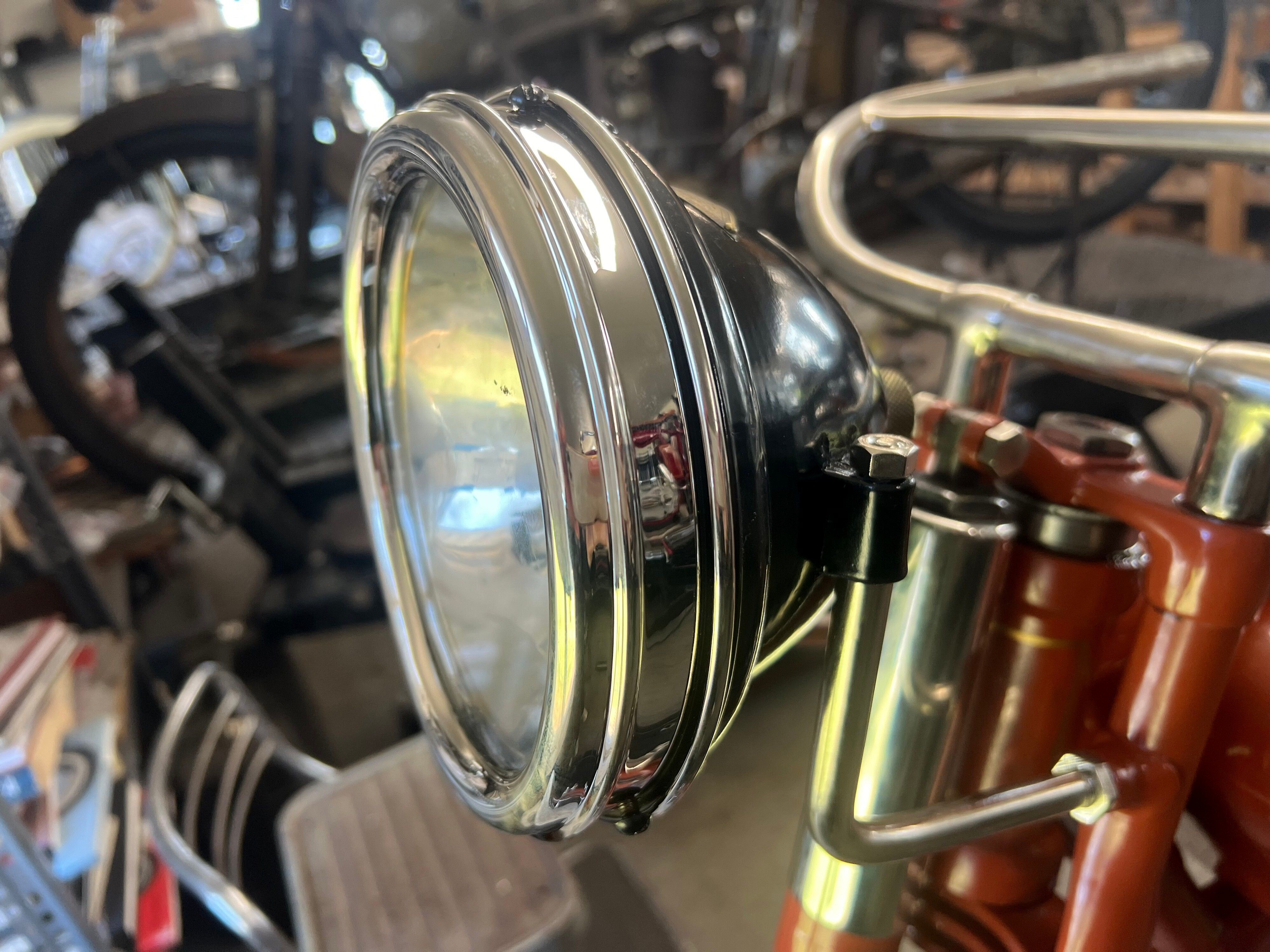
- HEADLIGHT: Hawthorne Mfg. Co., Bridgeport, CT, USA
- TAIL LIGHT: Fidelity
- MANUFACTURED: Reading Standard Company, 511 Water Street, Reading, PA, USA
1917 Reading Standard Brochure “America’s Best Motorcycle”
INTRODUCTION Almost from the doors of the “R-S” factory, the rugged sides of old Mt. Penn and Neversink Mountain tower upwards toward the sky. Their slopes and grades are the testing grounds of the “R-S” Motorcycle. Weak points are found, of course - and equally, of course, corrected. One after another, improvements are suggested and accomplished. Forging ` gs and various parts have been made better - sometimes lighter - but always stronger. Power has been multiplied in generation and application, and vibrations overcome. Durability has been secured, beauty of design perfected, and speed to satisfy the most ambitious has been attained.The “R-S” Motor is the key to power. Power that conquers road conditions and opens every highway in the world to the “R-S” owners. Power in the maximum degree for every ounce of fuel consumed. The “R-S” mechanically operated side by side valve motor - the “Key to Power” - is built on acknowledged right principles, and “R-S” Engineers have carried these to the farthest point yet attained.
The 1917 Reading Standard is a sturdy, powerful machine of luxurious comfort. Comment on its handsome and impressive lines is not necessary. The illustration tells the story. It has always been the aim of the R-S Company to produce a high-grade Motorcycle, using only such steels and materials as are suited to withstand every conceivable strain and shock incident to the roughest use.
The R-S has a distinguished appearance. Its lines are strong and bold, but dignified, and are dictated by the strength of the mechanical parts. They suggest a machine that has done something and made good for years. There is nothing feeble in it to give way.
The R-S differs in design from other Motorcycles. It has not followed passing fads in design, but it has been itself and stayed itself.
The R-S mechanically operated side by side valve motor is of our own special design. It is completely manufactured and thoroughly tested by us. The superiority of the mechanically operated valve motor for Motorcycle use, first introduced by us, is no longer questioned, but is confirmed by its adoption by other Motorcycle manufacturers, who heretofore had adhered to the overhead valve motor.
MOTOR - The R-S motor is of the high speed, long strong, four cycle type having a 3 ¾-inch stroke, cylinder bore 3 ⅛-inch, with a piston displacement of 67.09 inches, developing twelve actual horsepower.
CYLINDERS - Extraordinary accuracy and precision is demanded in the making of the cylinders. In order to insure smooth action, they must be absolutely correct. They are constructed from a superfine grade of close-grained grey iron, cast in one piece with double pocket valve chambers. Extremely wide and evenly spaced cooling fins assure ample cooling of cylinders. Exhaust ports allow pipes to shoot straight downward, thereby eliminating undue back-pressure.
PISTONS - Special formula close-grained grey iron, exceptionally light and fitted with oil grooves. Pistons are ground tot he proper degree to allow for the necessary expansion under the most severe conditions.
PISTON RINGS - Each piston is fitted with three eccentric rings hand lapped into its respective cylinder until a glossy finish is attained. These rings positively resist leakage, even after months of grueling service.
PISTON PINS - Wrist pins are of special grade steel, heat treated and accurately ground. Pins are supported in Phosphor Bronze Bushings fitted with oil grooves.
GEARS - In the R-S Motor two cam gears are used. Intake and exhaust cams are integral with each gear. This assures a longer lived cam than in most motors where only one cam gear is used, since each valve is operated by its respective cam.
Cams and timing gears are made of high grade nickel steel properly treated. Timing gears are stamped with timing marks, thus enabling them to be easily replaced in their respective position, should it become necessary at any time to remove same.
CONNECTING RODS AND BEARINGS - All connecting rods are of the I-beam Construction made from Vanadium steel forgings. Rods are light and rigid, and insure unusual and lasting service. The fork rod of the Twin motor is reinforced by a tie piece at the bottom to prevent the fork from spreading. Top and bottom of rods are fitted with phosphor bronze bushings, fitted with oil grooves. In addition, the bottom of rods are fitted with large steel roller bearings running in hardened steel bushings, and securely locked at each end with hardened steel thrust plates to prevent wear and shifting.
CRANK SHAFT Construction - The structural design of the R-S crank shaft and flywheel is responsible for the remarkable power and wearing qualities of the R-S motor. The crank shaft is made of high-grade steel subjected to a special treatment to give it further strength.
Flywheels are 9 inches in diameter, weighing approximately 27 pounds. The heavy weight accounts for the enormous reserve power of the R-S motor at very low speed.
The drive and pinion shafts are properly machined and securely fastened by Woodruff Keys, while the crank shaft is a taper fit. All shafts are held in position by large nuts securely fastened by a locking device. R-S shafts have never been known to loosen accidentally.
VALVES - R-S valves are the final result of scientific development. They are of our special formula and design. They will not pit or corrode from the action of burnt gas, nor will they warp under the highest temperature attained by the motor.
Intake and Exhaust Valves are 1 ⅛-inch diameter, with 45 degree seats. Both valves are interchangeable and ground in on their seats by hand.
VALVE OPERATING MECHANISM - All parts entering into the Construction of the valve mechanism are made of nickel steel, heat treated. Valves are easily removable by unscrewing peep caps in cylinder. Cam gears and lift levers are of nickel steel, heat treated.
CRANK CASE - High-grade aluminum, accurately machined and sealed to prevent oil leakage. Cases are highly polished and spotted.
MAGNETO - A high tension armored type water-proof magneto is mounted on a platform to the front of the motor. Magneto is driven by a chain of gears operated in connection with the pinion gear and running in a film of oil. Provision is made for the adoption of Mag-Dynamo should rider desire, at some future time, to change to electric lighting equipment.
R-S THREE-SPEED - Possibly no part of a Motorcycle is more delicate than the transmission. This must be absolutely correct if the machine is built to last. For the season of 1917, all R-S machines will be fitted with a three-speed sliding gear transmission located to the rear of motor.
The entire case and cover are made of heavy aluminum securely anchored by tie piece to the rear fork tubes. All shafts and gears entering into said Construction are made of Chrome Nickel Steel, properly hardened. The intermediate gears have chamfered teeth, enabling them to slide freely. The main shaft is carried by large ball bearings. The secondary gear shaft is a one-piece drop forging, all gears being integral with same. A forged steel shift fork is located on a shift bar fitted with spring controlled detents which stop the sliding gears at proper position. The standard driving ratio on high gear is 3.91 to 1, which allows a high speed for good roads, the intermediate reduction of 6 to 1 meets the requirements for all normal grades, while the low gear of 9.20 to 1 enables the rider to travel in congested traffic and over bad roads at a slow speed with an overabundance of power.
Gears are shifted by lever attached to left side of machine, working on a notched quadrant, fastened to the tank. Disengagement of clutch Automatically releases gear shift lock, enabling gears to be shifted. Engagement of clutch again locks gears in position rider may desire. A safety cam located on clutch control makes it impossible to shift gears before releasing clutch, thus avoiding stripping of gears.
Several refinements will be noticed on the 1917 three-speed, among them being the driving sprocket which is broached, effecting a tight fit. This method eliminates stripping of threads, which is a common occurrence with screwed sprocket. Ratchet pinion is held in position with a key, making it easily removable. The main ball bearing housing is permanently locked by a headless set screw, and a corresponding series of notches are cut around the entire circumference of housing.
STEP STARTER - Lifting machine on the stand to start motor is a thing of the past. With the R-S step starter the motor can be started either from saddle or standing alongside machine with both wheels on ground. There is no danger to the operator or machine in case of motor back-firing. The R-S starter was first introduced in 1915, and so perfectly did it perform its work that all 1916 machines were starter equipped. There will be no marked improvements for 1917 beyond the Strengthening of lugs which carry the starter shaft.
All parts entering into said Construction are of the best material procurable. The starter crank shaft, gear and sector, are nickel steel forgings. Starter is of the gear and sector type, operated by means of a pedal to the left of machine. Pedal is of the folding type and folds within frame line of machine, thus protecting it from breakage in case of falls. The pedal is integral with transfer shaft, to which is attached the sector gear on opposite side. This gear engages with ratchet gear on main shaft of three-speed. One thrust of starting pedal gives the motor three or four revolutions.