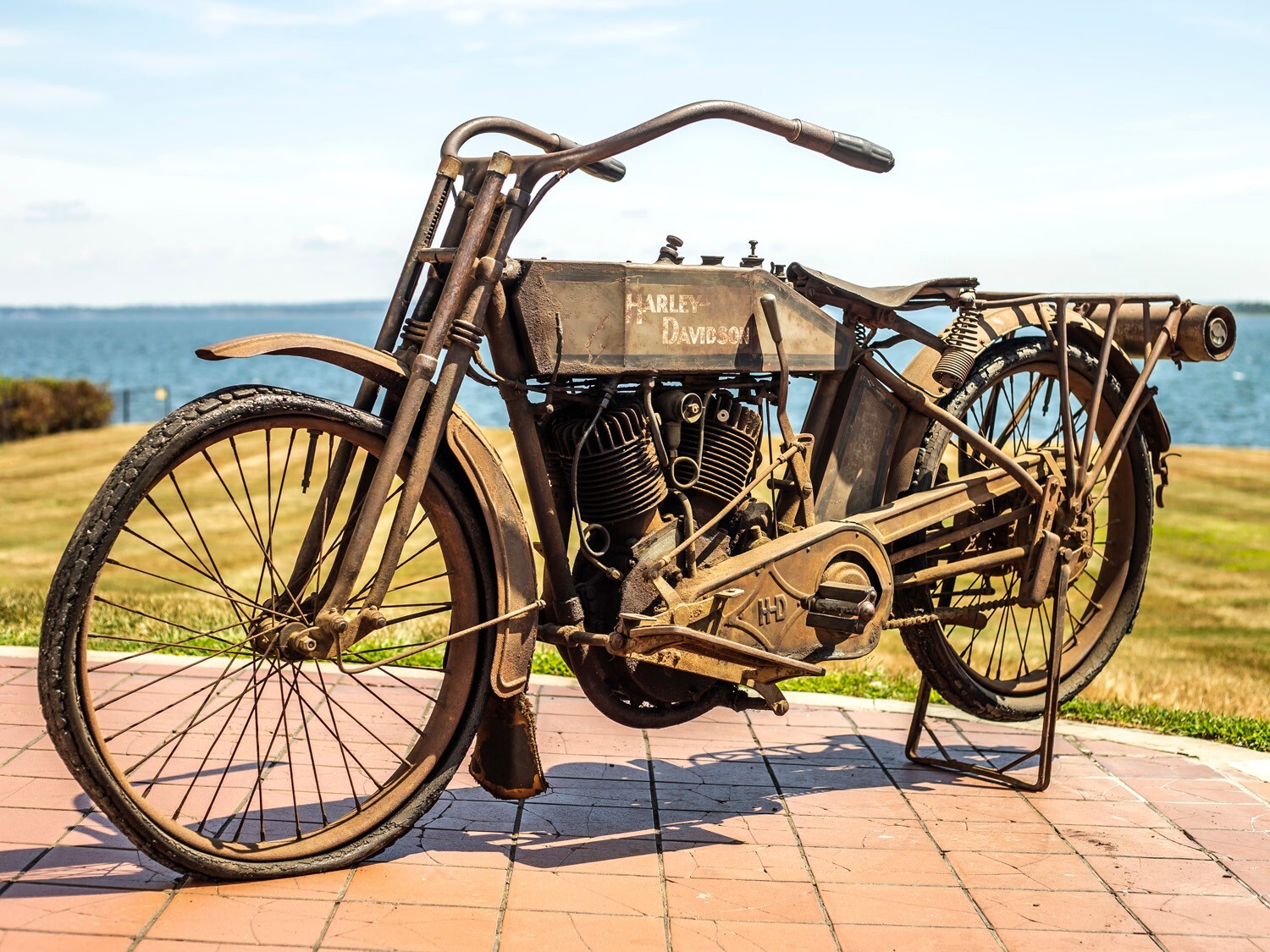







1915 Harley-Davidson Model 11K Twin 3 Speed Engine #6676K
Inventory Number: 5039
$150,000
- ENGINE NO: 6676K
- PAINT: Original Renault Grey
- ENGINE: 61 cu. in.
- CONDITION: Original
Harley-Davidson was late entering championship racing, falling behind Indian, Excelsior, and other manufacturers, but hired engineer William Ottaway from rival Thor Motorcycles in 1913 and formed the Harley-Davidson Racing Department. Bill started with a 1914 Model 10 production bike. He added new gear case covers with oil pumps cast into them to withstand the heat of racing, but at their first event in July 1914 at the 300-mile Coyote Classic in Dodge City, Kansas, only two of the six new racers made it through the race.
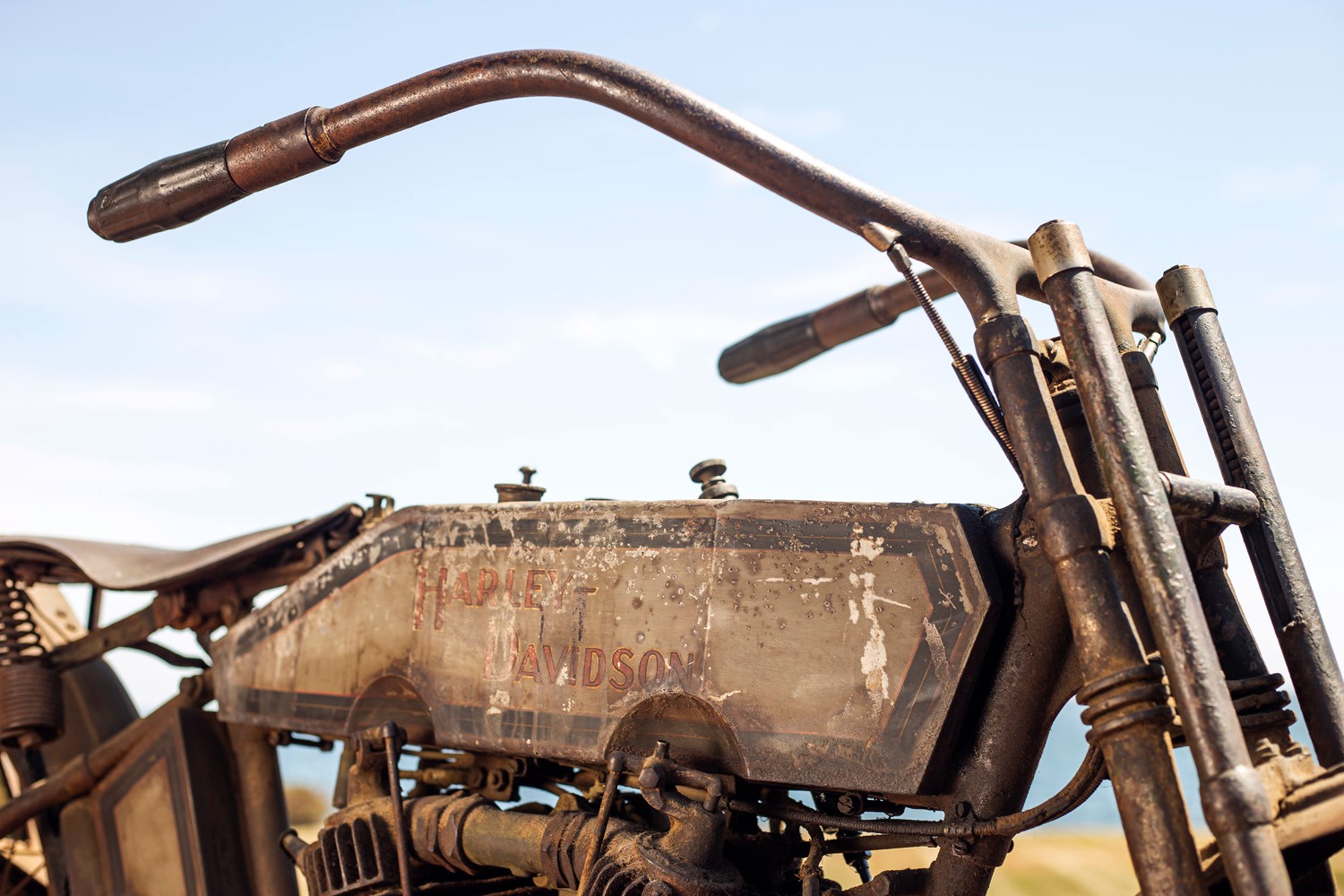
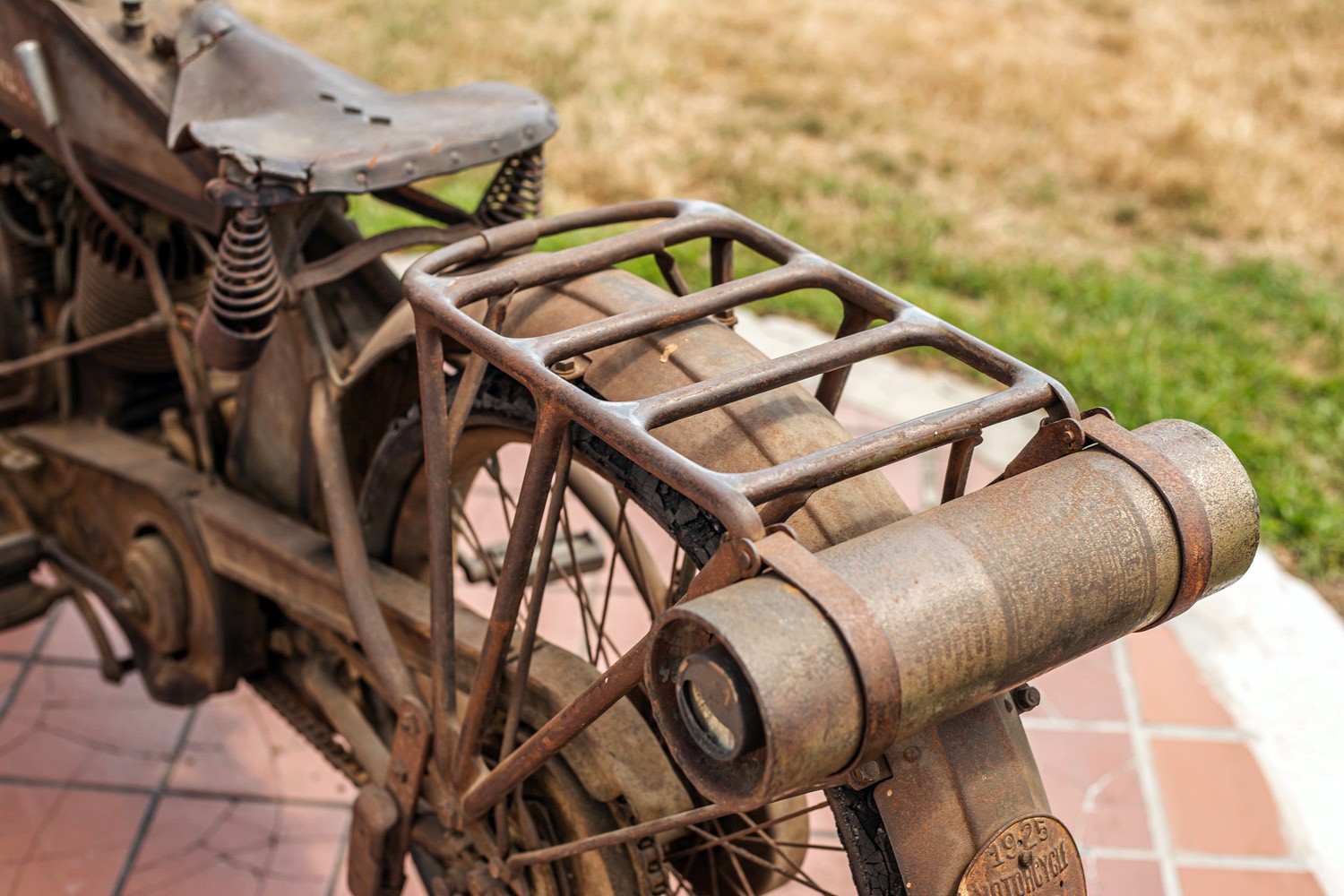
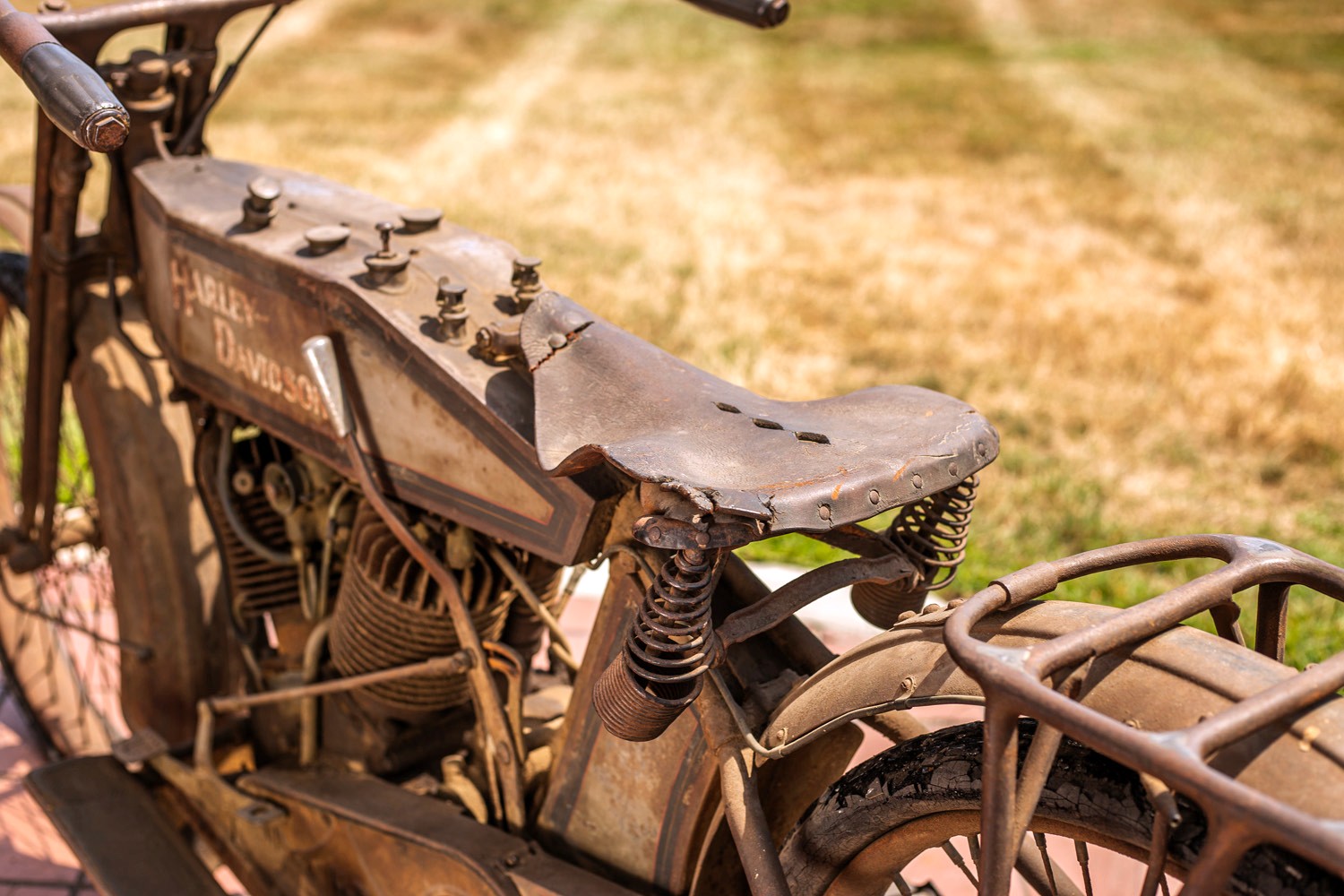
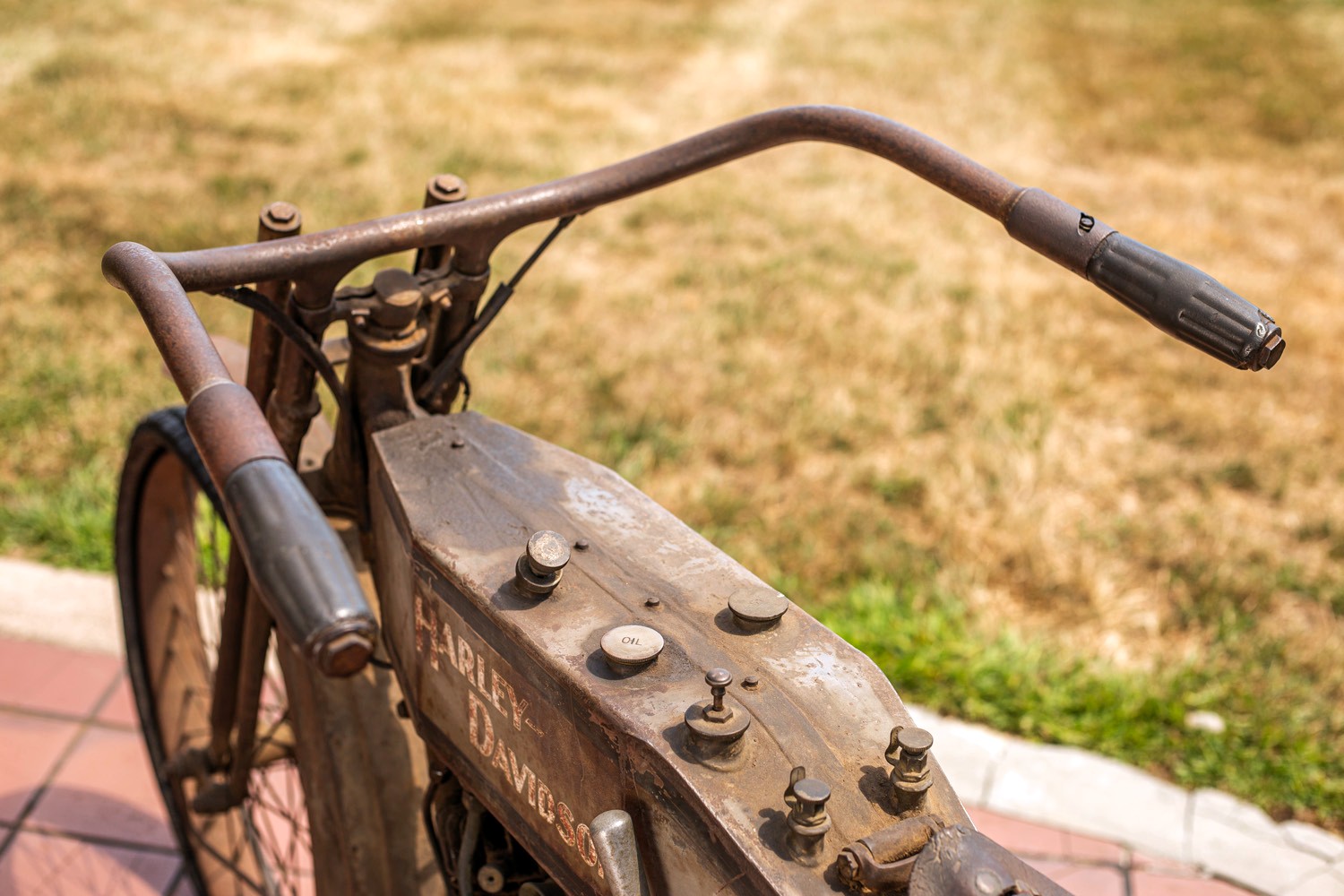
Ottaway would go on to produce the 1914 Model 11K Stripped Stock Racer and began touting its racing victories in advertisements, offering it in 1915 to both factory riders and select racers through its dealer network as the K Model. This Model 11K Twin is in remarkable original condition with original Renault Grey paint and pinstriping — an exceptional find for a century-old machine.
Harley-Davidson, Inc. needs no introduction as an iconic American Motorcycle manufacturer headquartered in Milwaukee, Wisconsin. In 1901, William S. Harley, Arthur Davidson, and brother Walter Davidson began work on their first Motorcycle engine. Their first attempt may have been a failure, but they founded Harley-Davidson in 1903 and became one of the largest Motorcycle manufacturers by 1920. They produced Motorcycles for the United States used in both World War I & II and were one of only two major Motorcycle manufacturers to survive the Great Depression. In fact, they’ve survived numerous changes to ownership and restructuring, intense global competition, charges of restrictive practices, claims of stock price manipulation, and a constantly evolving view of the company and bikers. Still, they are widely known for their loyal following and now manufacture in Pennsylvania, Wisconsin, Brazil, and Thailand. Their classic cruiser style, including high handlebars, low seats, and chrome parts, is easily recognizable. They’re also noted for their customizability, giving rise to the chopper style of Motorcycle, and for the distinct sound of HD’s powerful engines.
From Mecum Auctions:
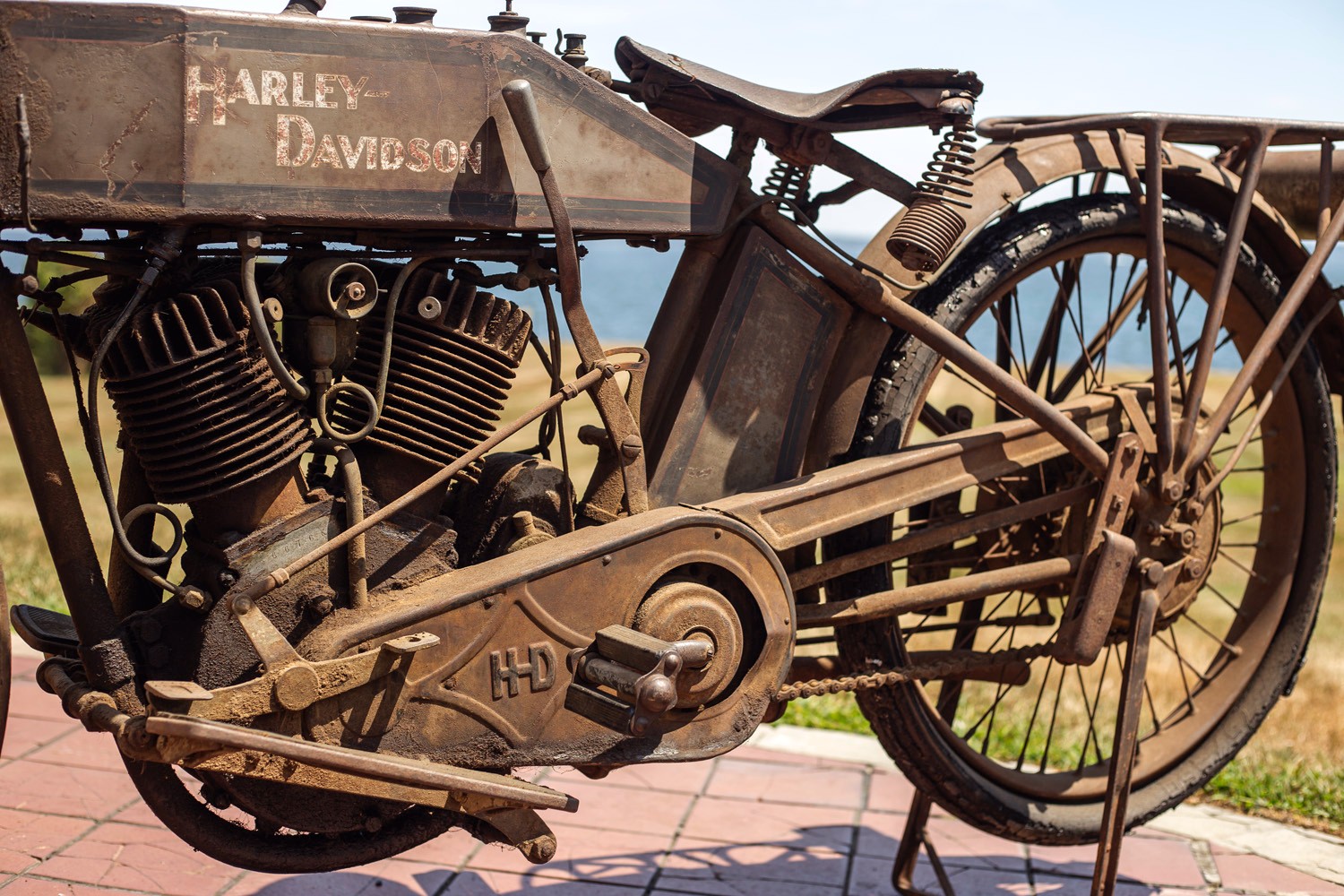
"In 1915, Harley-Davidson offered their 61 cu-in. twin with the option of either the old single-speed chain-drive, or the new three-speed gearbox and primary-case clutch. The new gearbox had nothing in common with the previous two-speeder, which was offered for only one year for the twin. Not everyone wanted, or trusted, a gearbox on their motorcycle, and the extra expense might not have seemed worth it if you had no large hills to climb, no great distance to travel, and no real roads over which to ride – a situation which defined quite a bit of the U.S. in 1915!
Another innovation for 1915 was an automatic oil pump, which supplanted 'visual' oil metering, i.e. counting drops of oil through a sight-glass in the oil line. The automatic pump removed a source of anxiety for the rider, and most never touched the new adjustable locknut which altered the oil flow to the motor. The oil tank was moved from the toolbox and into the left-side pannier tank which hugged the top tubes of the frame. The auxiliary hand-pump atop the gas tank, for that comforting extra dollop of oil, was retained, although the plunger now sported an 'ingenious locking device... to prevent meddlesome persons from amusing themselves by pumping the crank full of oil when the owner has left his machine standing...'
The 1915 twins had a 37 percent power increase over the 1914 models, by using larger inlet valves and both valve seats chamfered at 45 degrees (compared to 60 degrees previously). The intake manifold was larger, and to handle the significant increase in power, the crank-pin was increased to a one-inch diameter from the previous 7/8-inch, while its bearing surface was 3/8 of an inch wider than before, with all bearings now made by Harley-Davidson themselves. In the motor alone, H-D claimed 29 refinements in a single year. To allow the more efficient engine to breathe more easily, a new muffler was designed, with significantly less back pressure, while 'at the same time the exhaust is but little more than a whisper.'
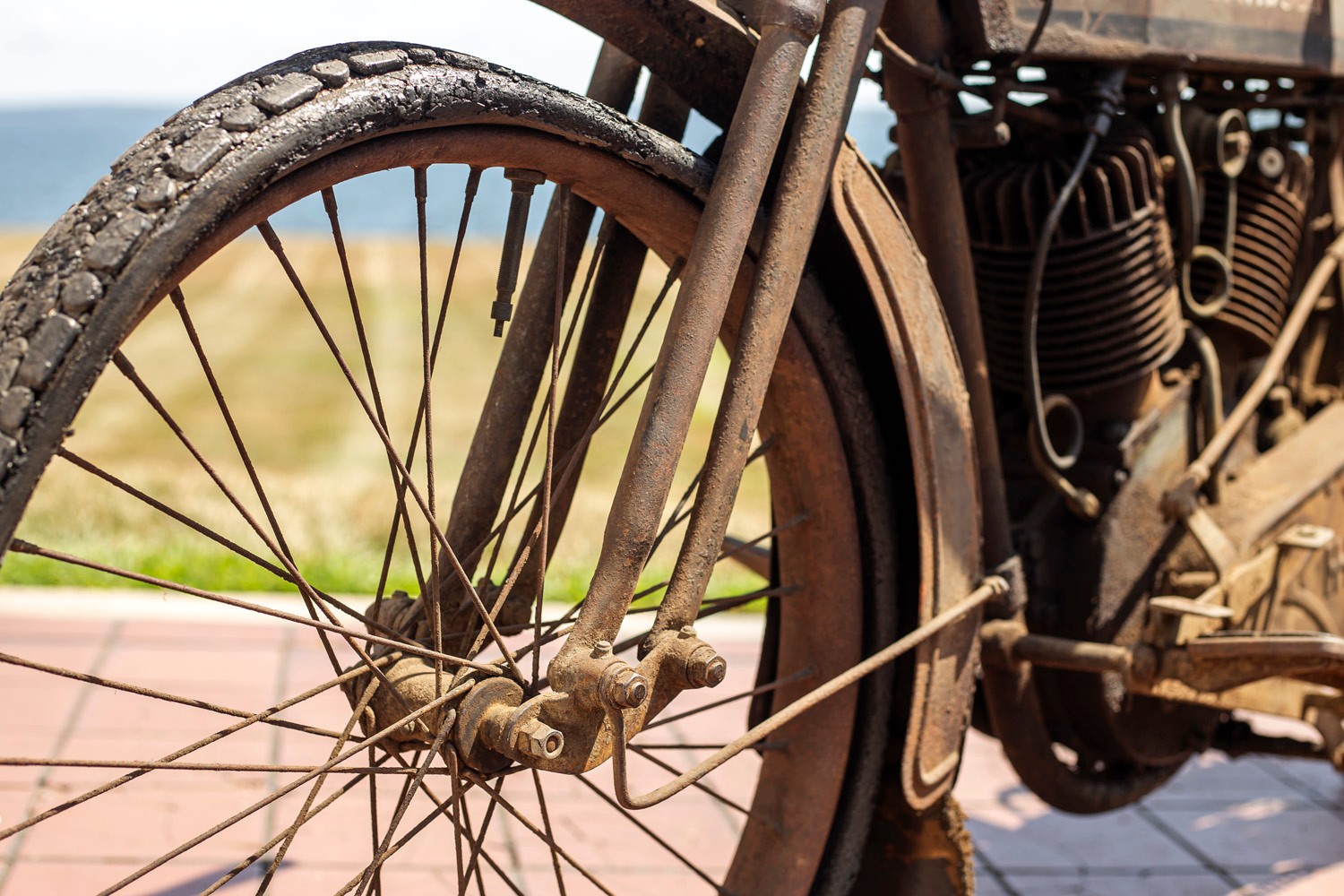
This 1915 twin-cylinder Harley-Davidson Model 11 is in remarkably original condition, including an enamel license plate from 1925. The original Renault Grey paint is still present, as is most of the original pinstriping, which is quite a find for a century-old machine."