


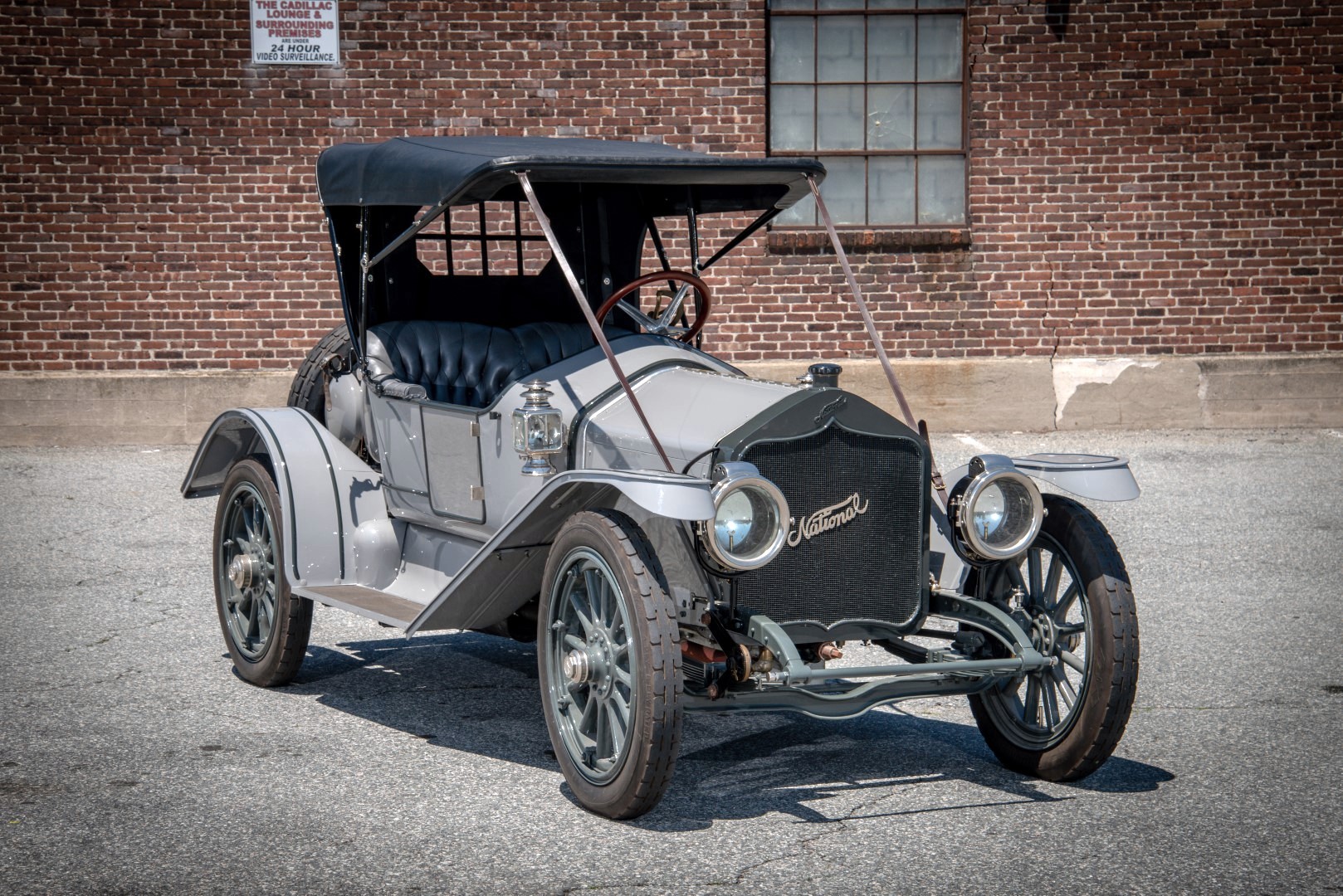














1912 National 40 Speedway Roadster Model V
Inventory Number: 3094
$450,000
- YEAR: 1912
- MAKE: National Motor Vehicle Co.
- MODEL: Speedway Roadster Model 40
- ENGINE: 448 cu. in. Model V 7.23-liter 4-cylinder T-head
- ENGINE NO: 8745
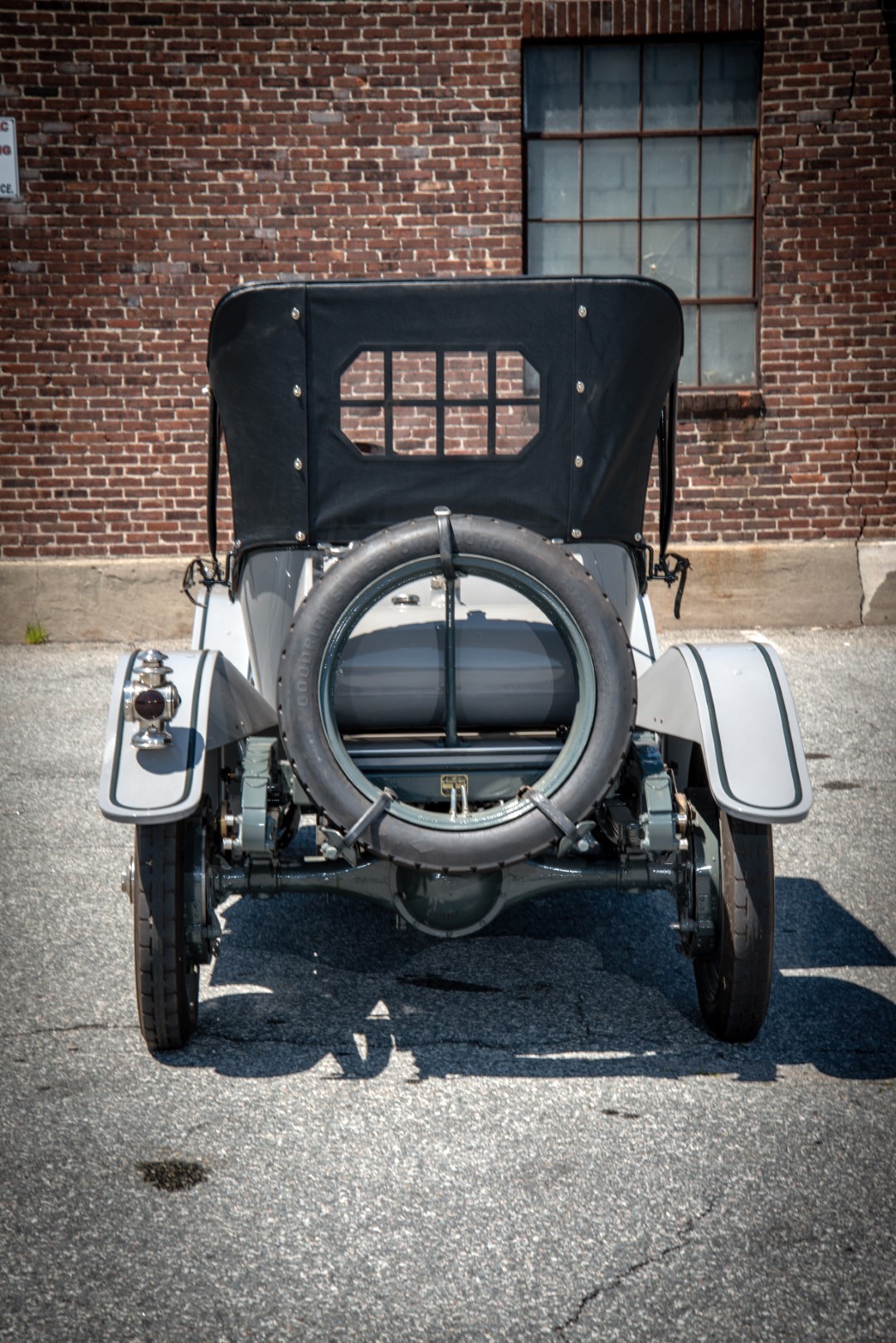
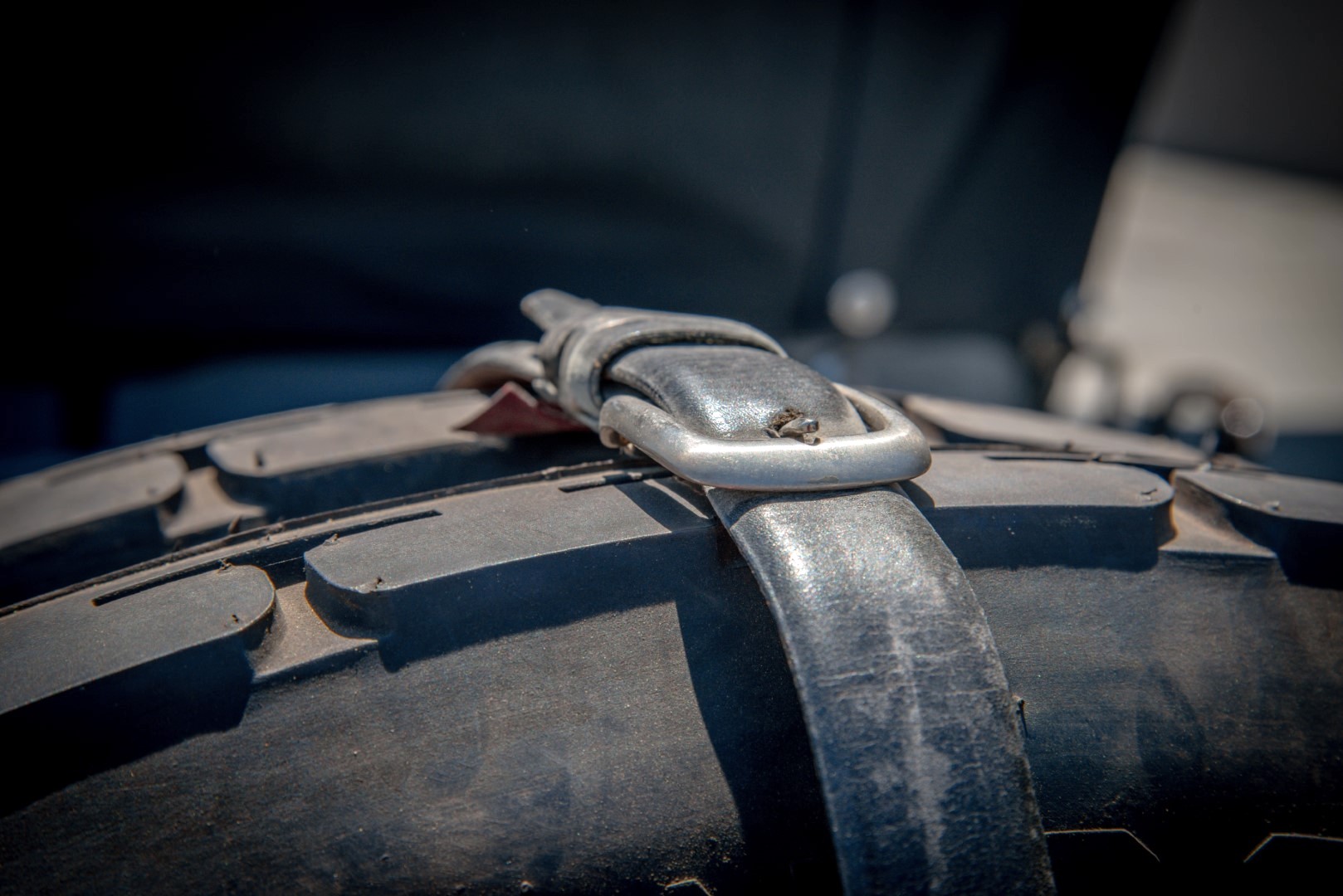
- FEATURES: Bosch dual coil ignition, Warner speedometer, two rear-mounted spares, triple-twist horn, removable top
The National 40 model, like this one here, was a dominant force in competitions, winning numerous road races, hill climbs, and speedway meets. In 1912, a National 40, piloted by Joe Dawson, famously won the 1912 Indianapolis 500 at an average speed of 78.7 mph. This is the only time a stock car has won the race, leading to the slogan, “Fastest stock car in the world.”
It features a powerful 7.23-liter 4-cylinder T-head engine with 40 horsepower, a high-cowl design, and a narrow body designed for both the road and the track. These cars were marketed as luxury automobiles featuring high-quality leather and comfortable seating.
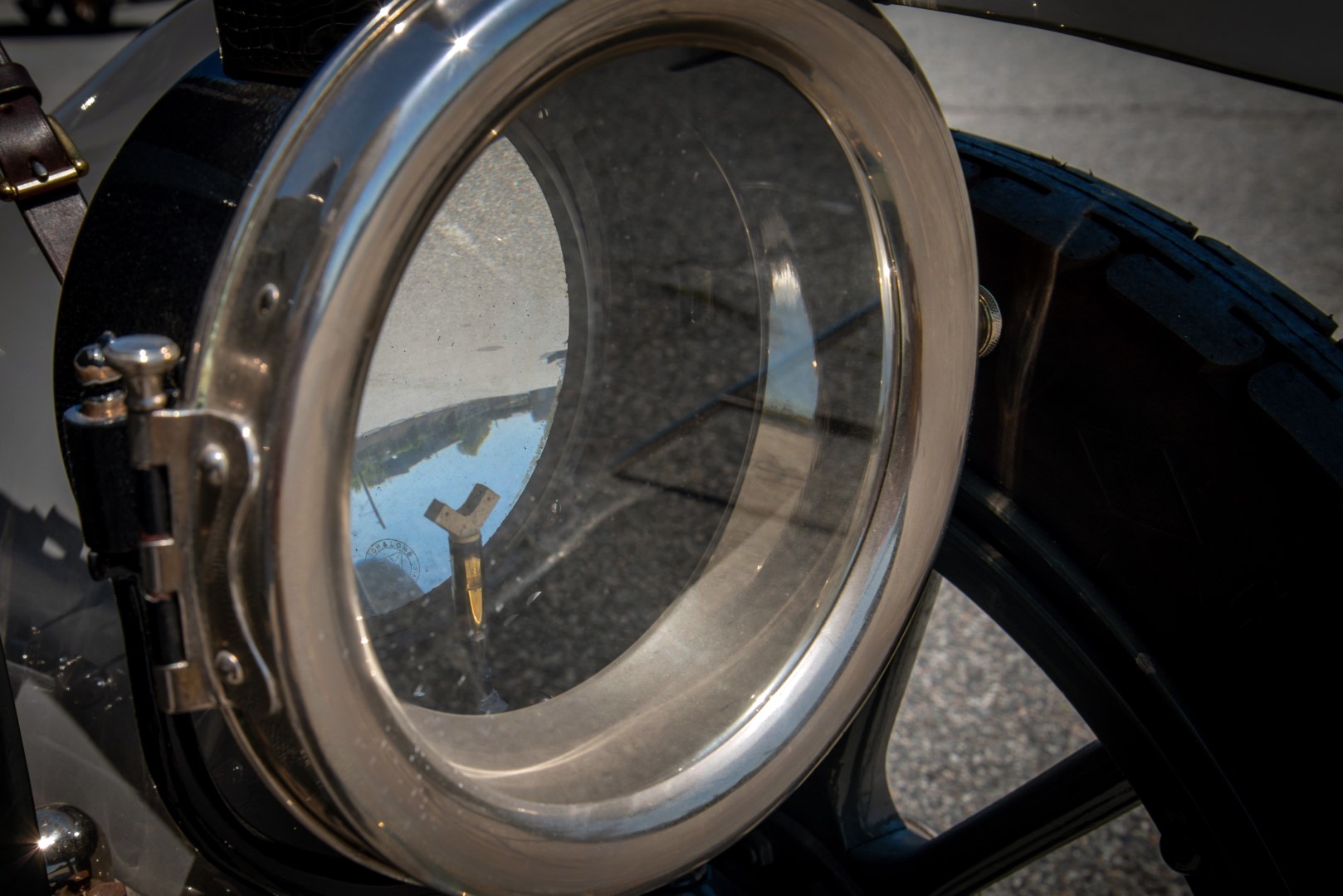
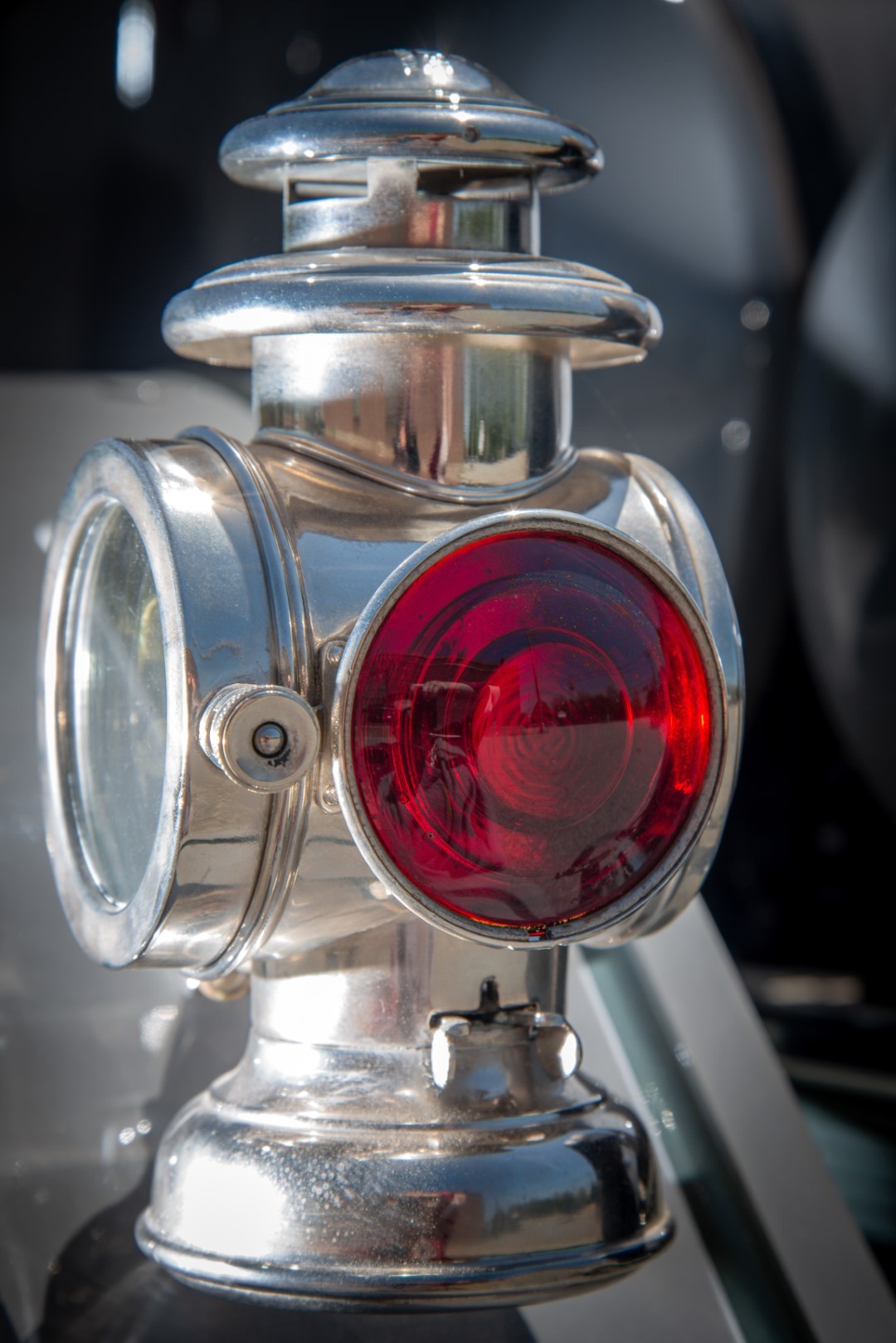
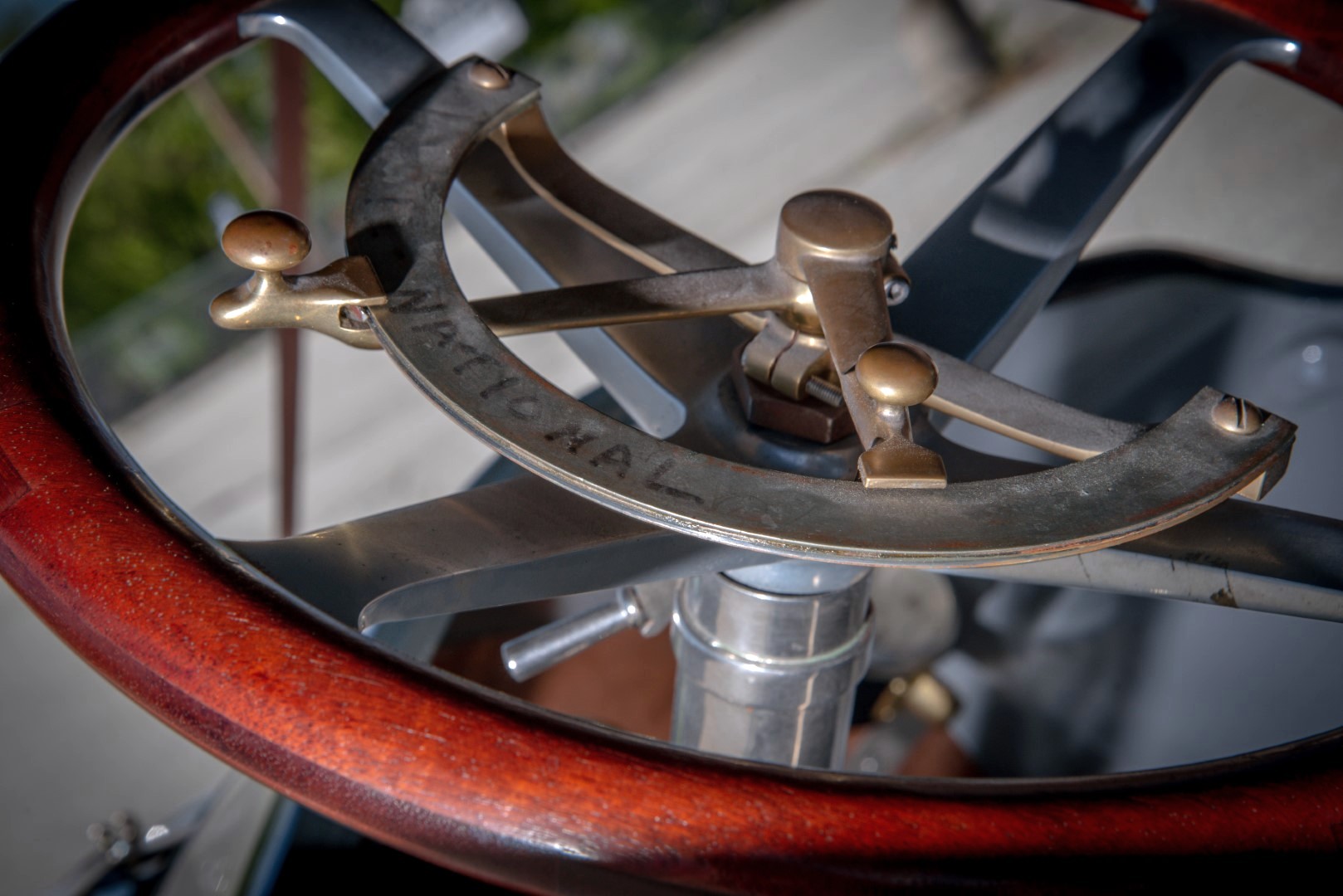
An eight-year, show-quality restoration has been completed on this very rare and beautiful automobile, which features a Bosch dual-coil ignition, Warner speedometer, two rear-mounted spares, triple-twist horn, removable top, and other luxury features.
FROM THE ARCHIVE:
“Who’s Who in Automobilia: National”
By W.O. MacIlvain
“National typifies Indianapolis. From its high peaked radiator to the low rumble of its exhaust, the car carries its proud name well. Somehow Indianapolis-made cars seem to average higher in glamour than those built in other motor cities. Perhaps it is the proximity to the nation’s greatest speedway (with National it’s a question of which came first, the hen or the egg)...
It is small wonder that National followed a racing career since its president and prime mover was A.C. Newby, one of the four Indianapolis business men who, in 1909, organized the Indianapolis Speedway. National’s reputation for performance antedated the Speedway, however. In November, 1905 a world’s record for a stock car, 1094 miles in 24 hours, was set and in 1909 stood undefeated. National went on to win many victories, among them the Elgin National Trophy Race; a road race for stock cars in 1911; the Illinois Trophy Race the same year; and set a world’s stock straightaway-mile record in 40.32 seconds (also in 1911). The 500 mile Indianapolis classic was won in 1912 by Joe Dawson at 78.7 m.p.h. There were other victories too numerous to mention.
With A.C. Newby when the National Automobile & Electric Company was incorporated in February, 1900, were Wililam E. Metzger and W. Guy Wall. Metzger was to go on to a diversified automotive career, helping to organize : - Cadillac in 1902; E.M.F. in 1908; Metzger Motor Co., and Columbia. W.G. Wall remained as National’s chief engineer throughout the company’s history.
The first motor vehicle to be produced by this firm was a far cry from its later products, being a small electric runabout that would go 25 miles on a battery charge. Electrics formed a part of the line through 1905, some of these resembling the gas car in appearance. The National Vehicle Company, as its name became in 1901, maintained a carriage department until the fall of 1902, when it was decided to discontinue it and concentrate on automobiles.
Under the direction of engineer Wall gasoline powered vehicles under experminentation since 1901 were brought out in 1903. Model A was a 4-cylinder on the European plan… A smaller Model B for 1904 would go 40 m.p.h. Model C was powered by four individual cylinders, L-head, developed 24 to 30 h.p. at a low r.p.m… For 1906 a six-cylinder National was added to the line, one of the earliest production sixes in this country… A National feature at this time was its braking system; both hand and foot brakes were internal expanding on concentric drums, one within the other, on the rear-wheels.
Engineer Wall was given free reign in engine design with the addition of an engine plant in 1907… A purchaser of a 1908 National was given his choice of round or straight line design. A new radiator was adopted using a shield as motif…
The ball bearing motor was given up in 1910 as attention as focused on a new National Forty at $2500, although the sixes could be had on special order. The 40 had double ignition, and rear springs were changed to three-quearter elliptic. A four-door model was added in 911 and a mechanically shifted self-starter was added the following year. The forty had a 5 x 5-11/16 inch bore and stroke. With this model the maker won many honors on road and speedway.
The Series V appeared in February, 1912, as a 40 h.p. four or a 60 h.p. six having such advanced features as long stroke motor (4-⅞ by 6), left drive with center control of rear and brake levers and self-starter. Body design showed high cowl lines. Stripped down semi-racing roadsters were available on short wheelbase chassis. Series V had electric lights in 1913 and pressure lubrication, even to the engine cylinders…
The National Motor Vehicle Co. was purchased by a New York concern in 1916 and renamed National Motor Car & Vehicle Corporation.”
National, before the cessation of production in 1924, was also known as the National Motor Vehicle Company, Associated Motor Industries, and finally the National Motors Coporation through various mergers. After WWI, National had been forced to increase prices due to inflation, but failing to compete in a more expensive range, production slowed after 1915 until 1924.
Please refer to our Projects page to see detailed photos of this restoration.