1910 Wisconsin Special Speedster
Inventory Number: 3143
$159,000
- YEAR: 1910
- MODEL: Special Speedster
- MILEAGE: 300 Miles on Odometer (TMU)
- BODYWORK: Custom Roadster
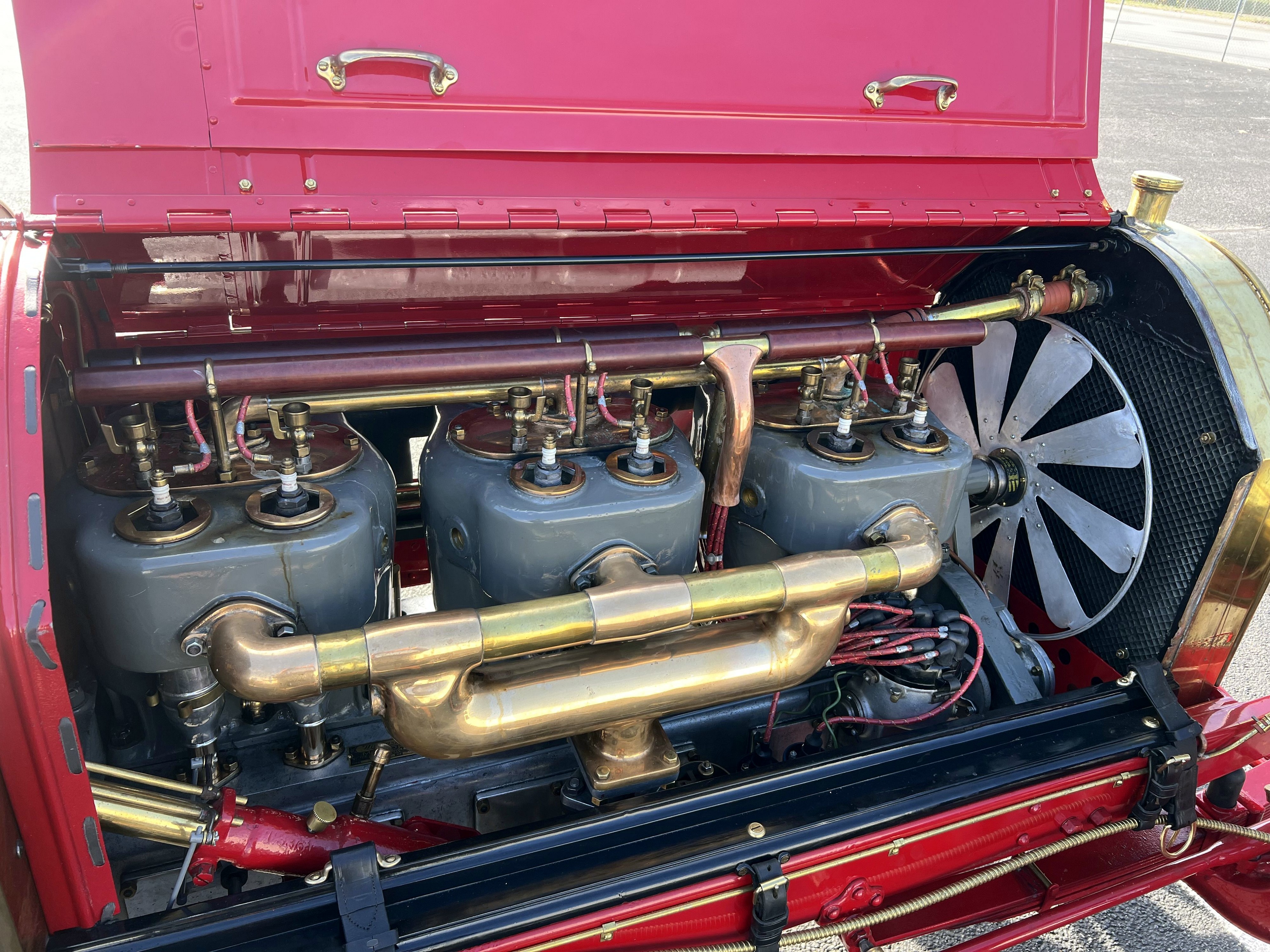
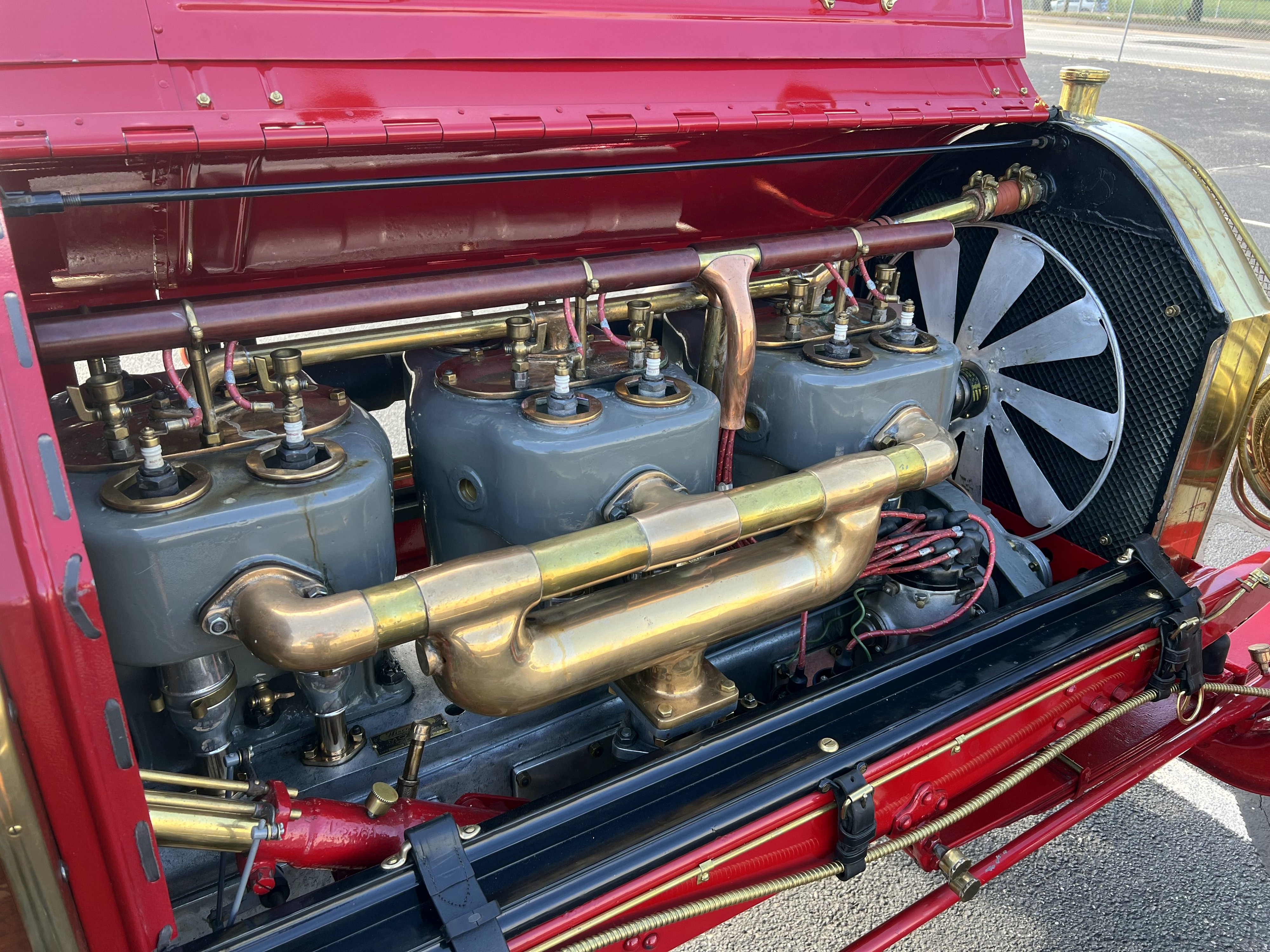
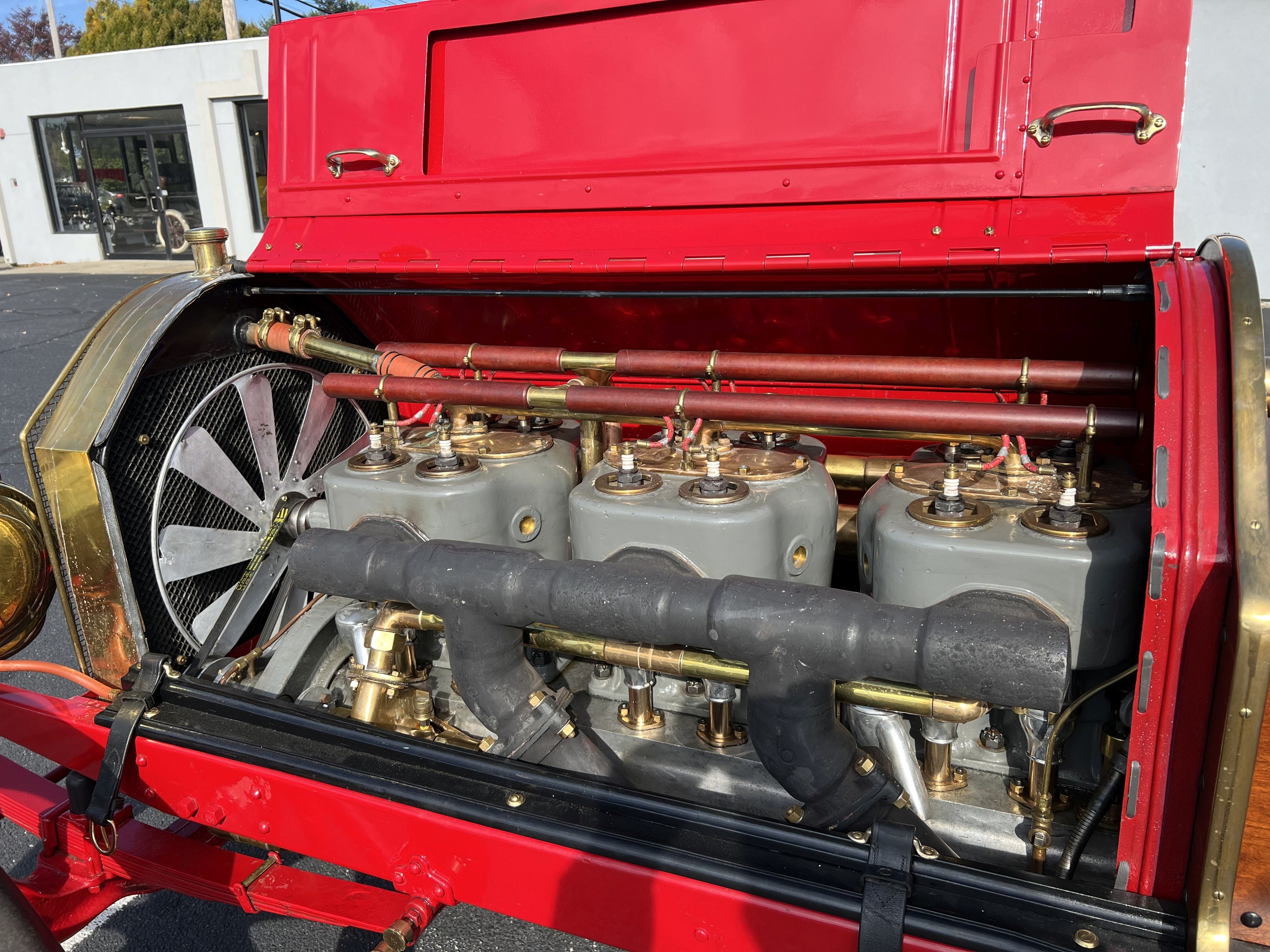
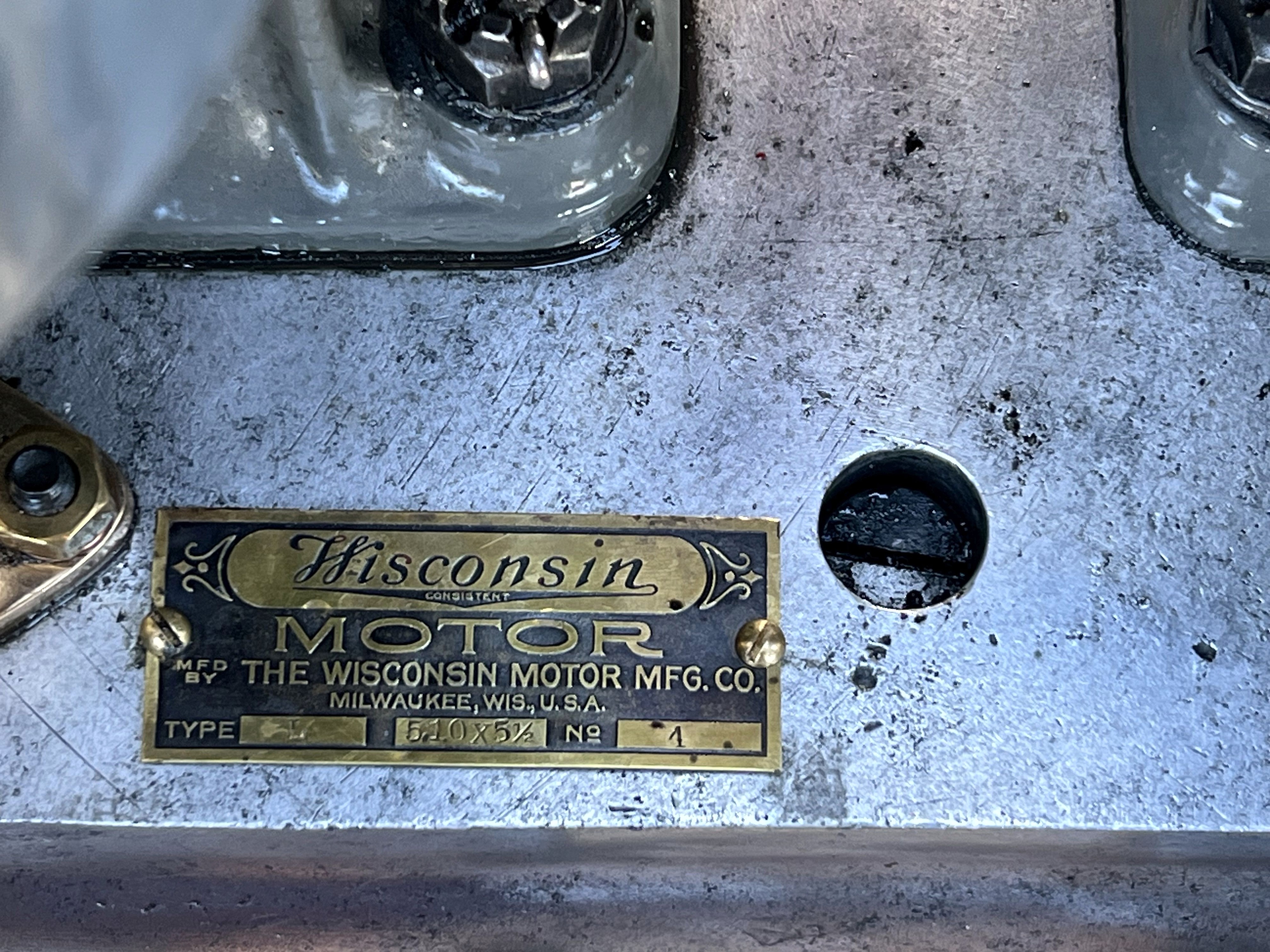
- ENGINE: 674 cu. in. T-Head Inline-Six with Dual Spark Plugs per Cylinder with new Pistons and Stainless Steel Valves
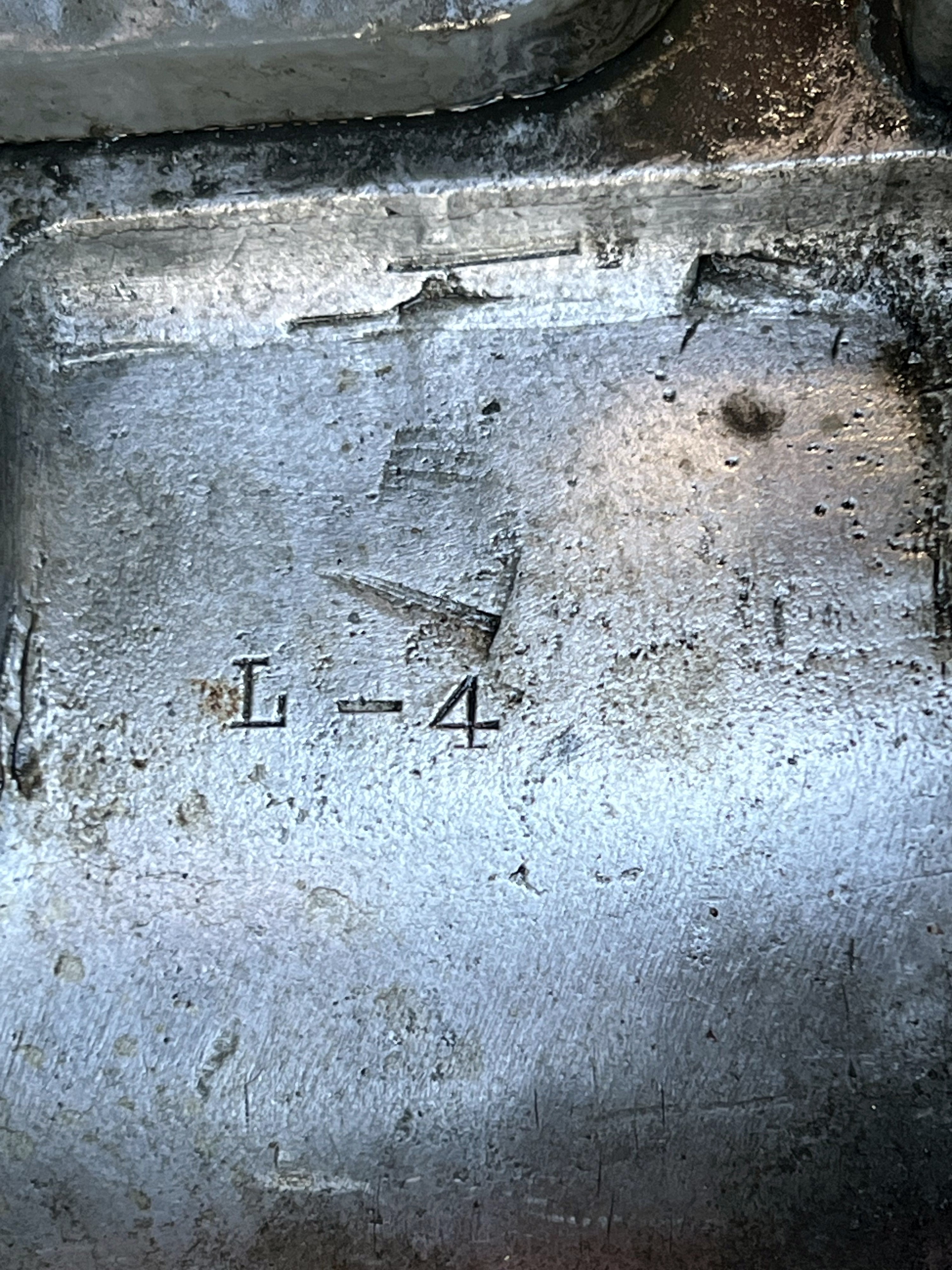
- ENGINE NO: L-4
- CHASSIS: Based on a Model S
- CHASSIS NO: S12315
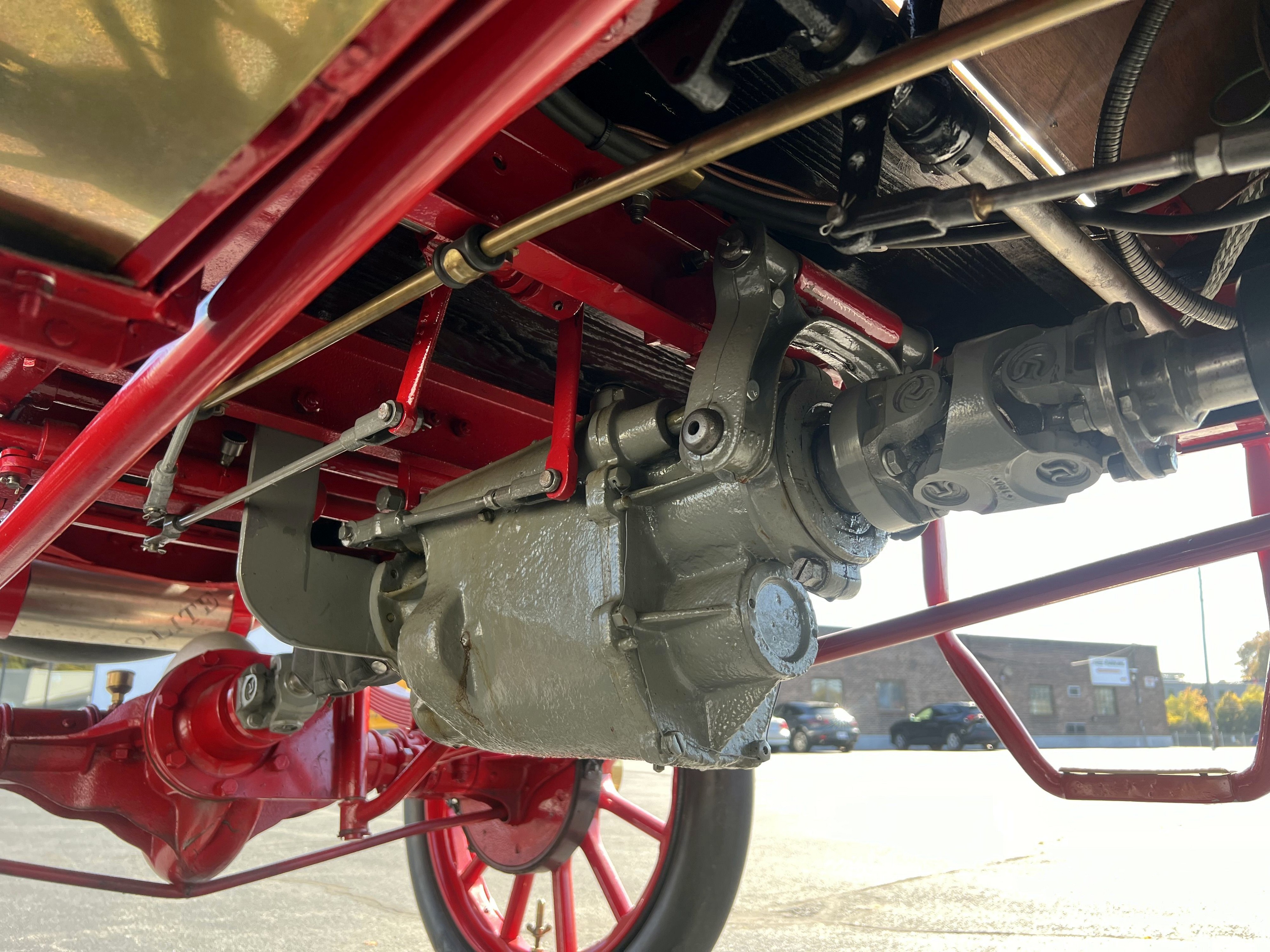
- TRANSMISSION: Three-Speed Manual
- CLUTCH: Hele-Shaw
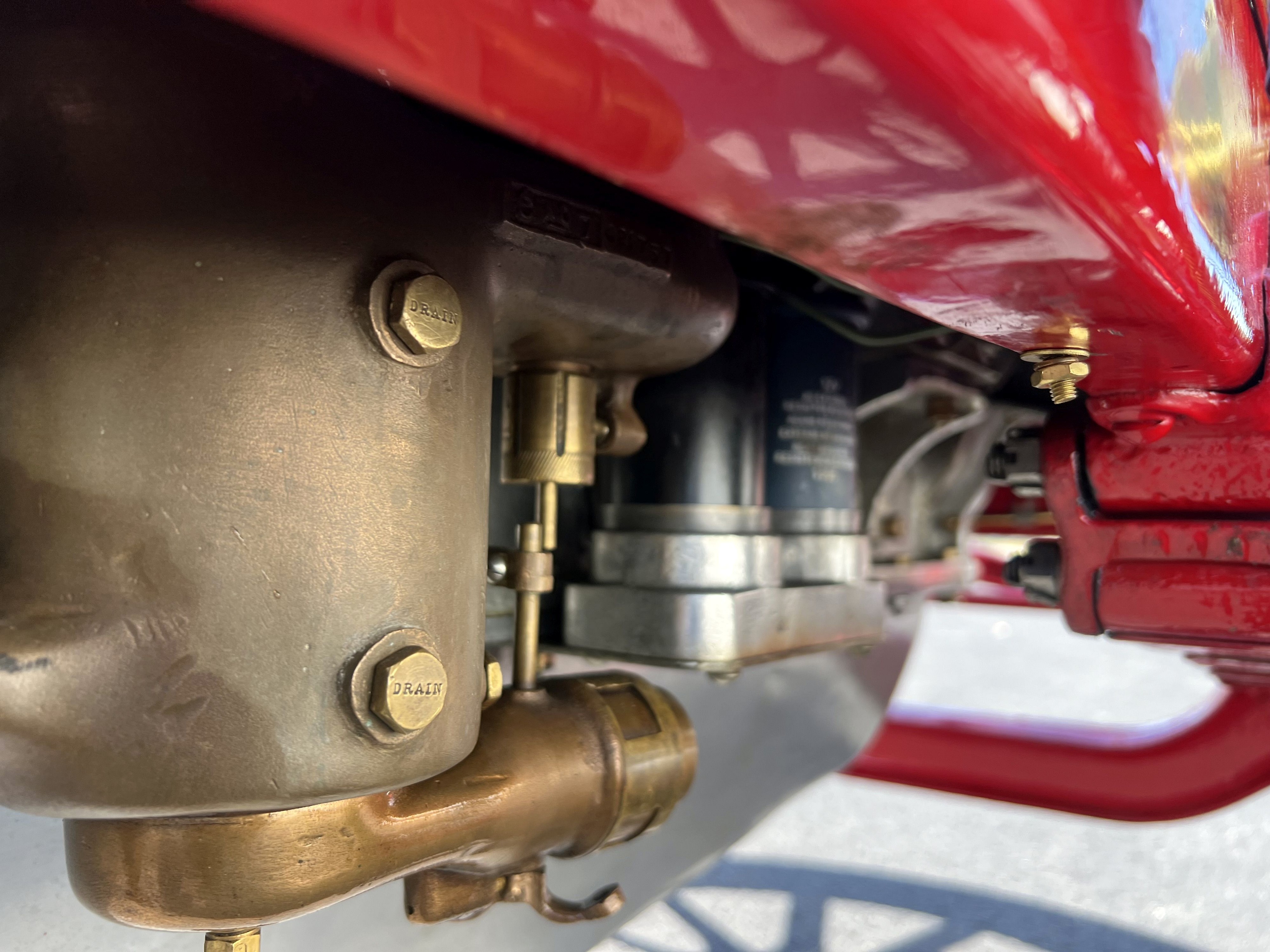
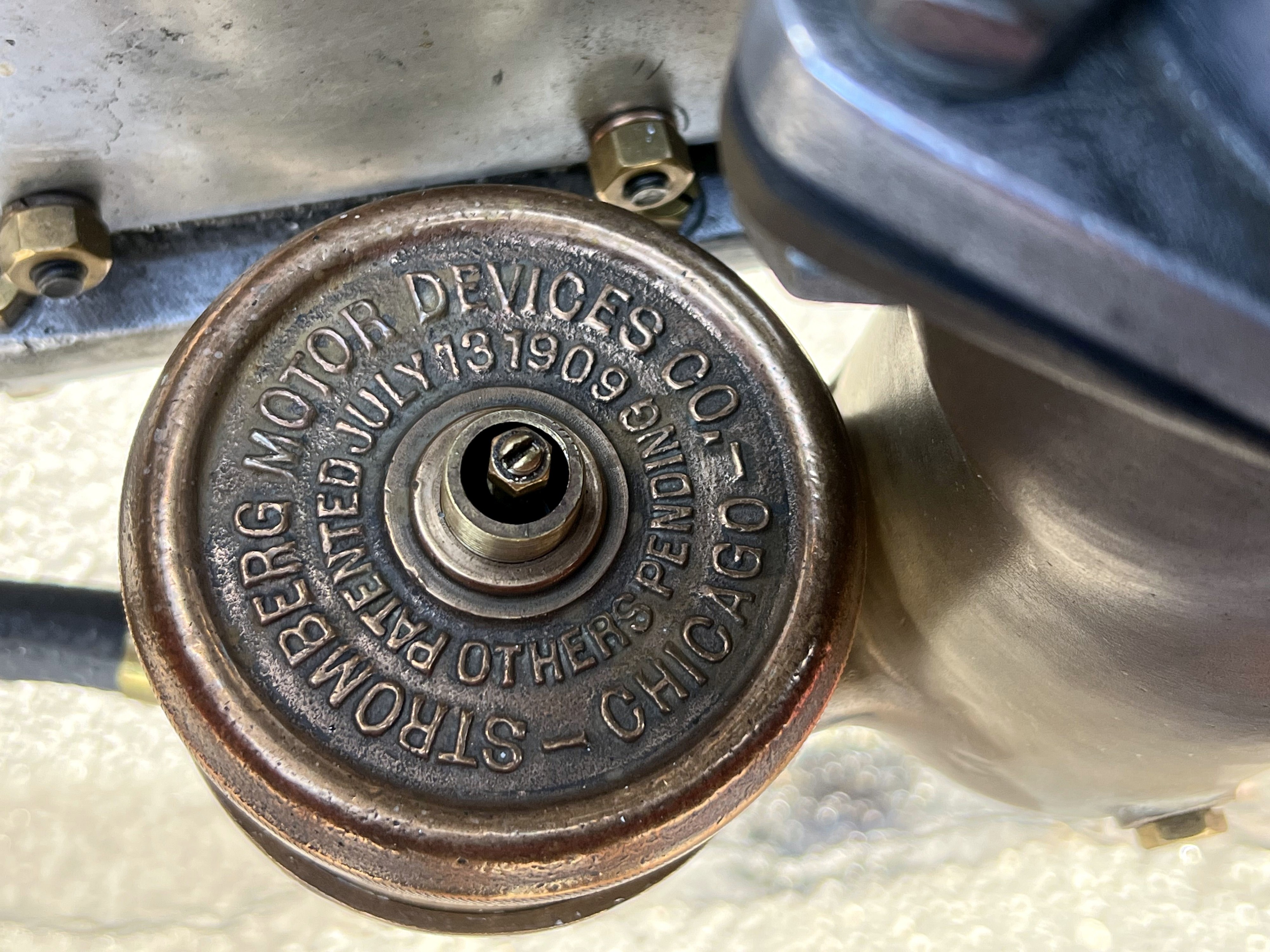
- CARBURETOR: Stromberg A-3 Updraft
- IGNITION: Dual-Plug
- STARTER: Electric
- DISTRIBUTOR: Hentschel
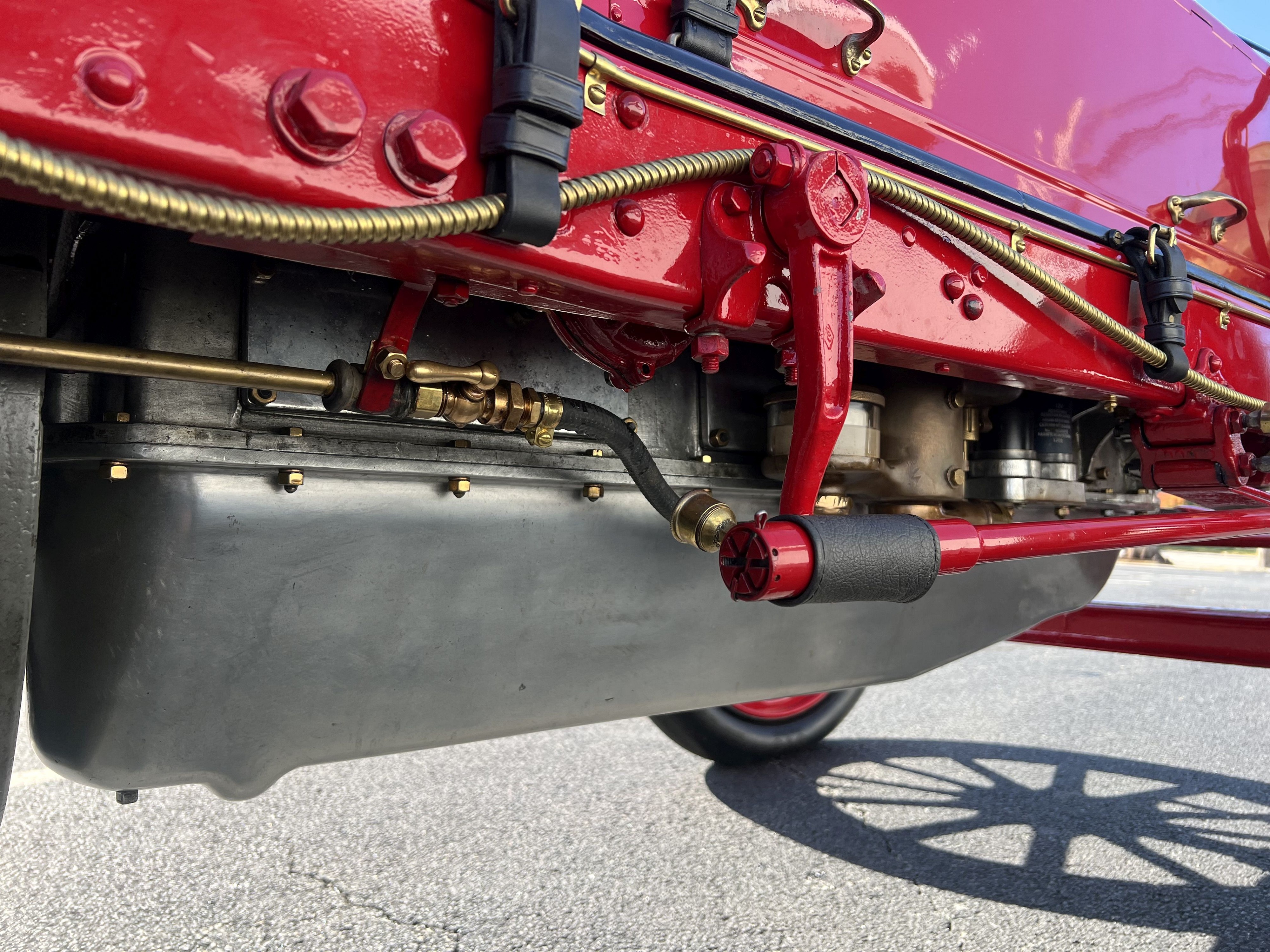
- EXHAUST SYSTEM: An Exposed Manifold that leads to Side-Exit Pipes located below the Engine Bay
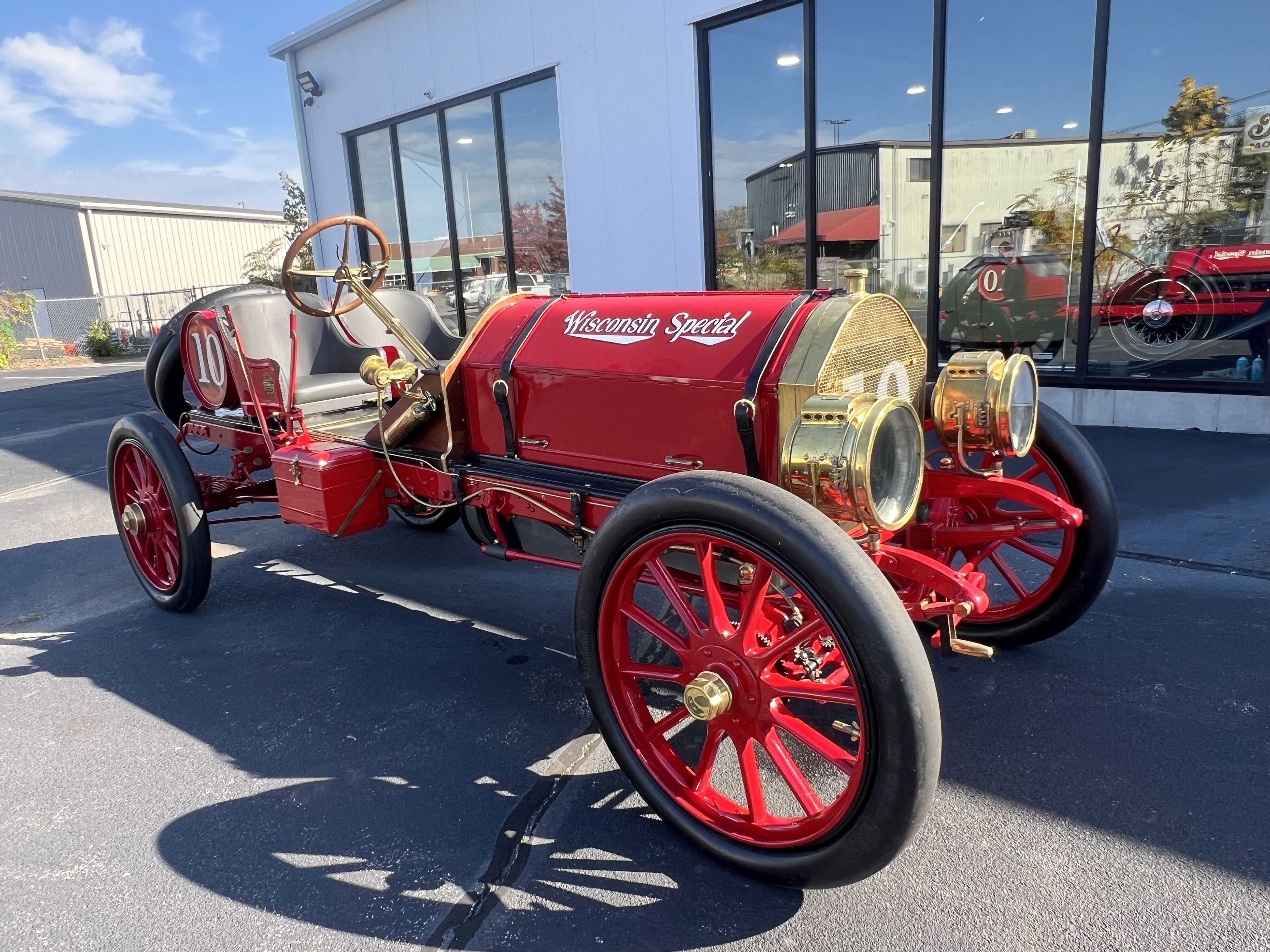
- FEATURES: Brass Radiator Shell, Brass-Fitted Dashboard, Barrel-back Seats, Leather Hood Straps, Frame-Mounted Storage Box
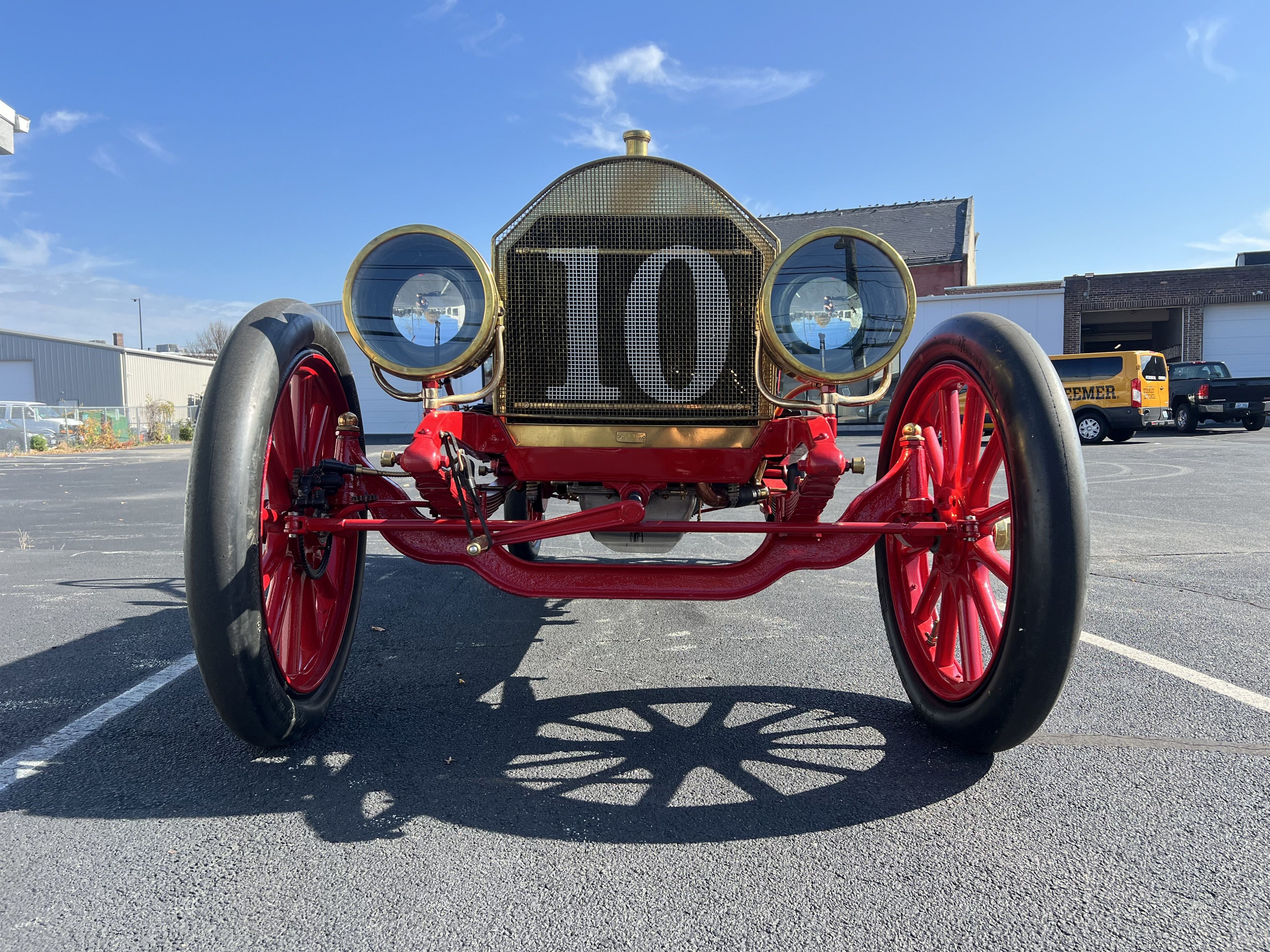
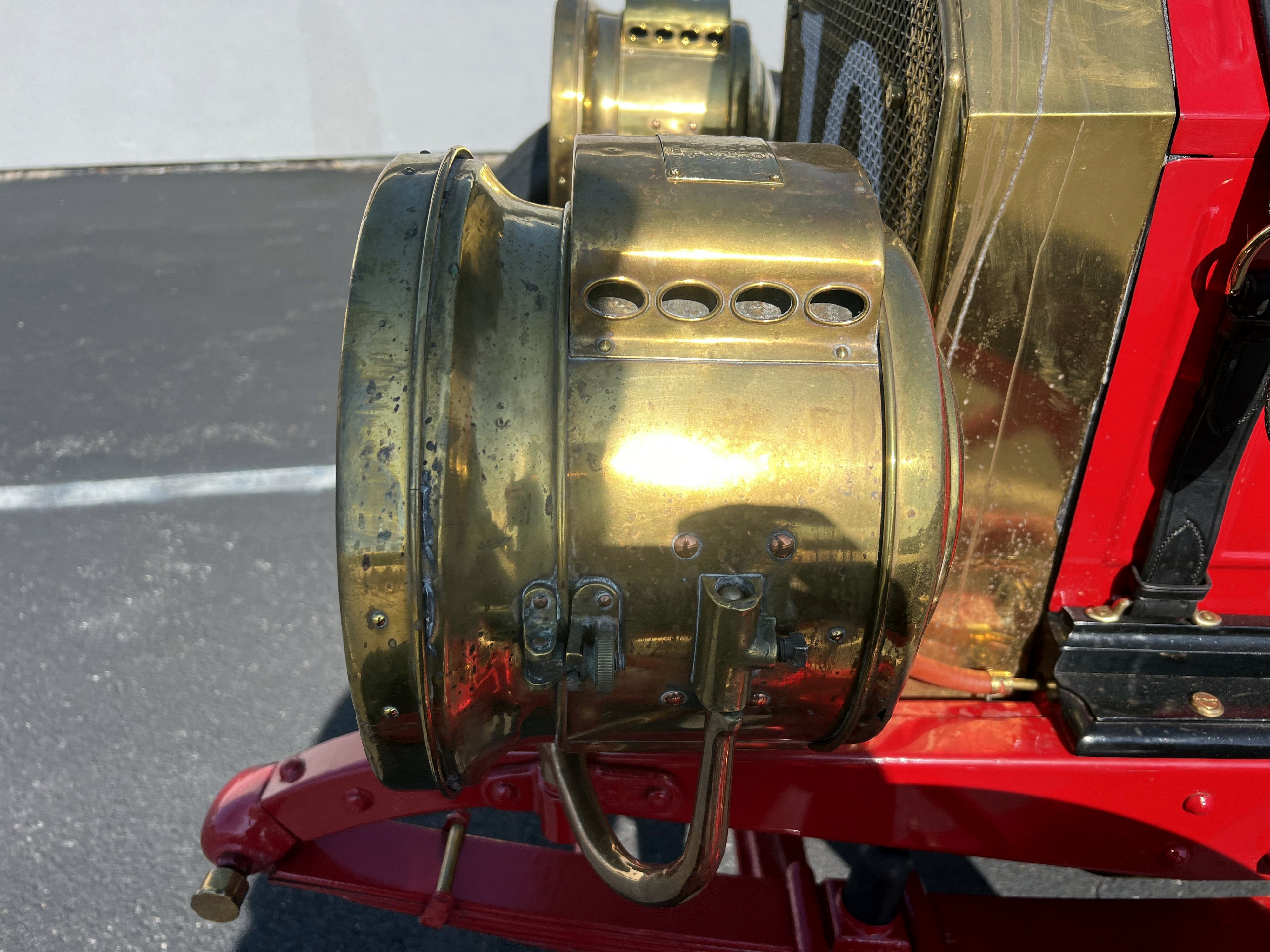
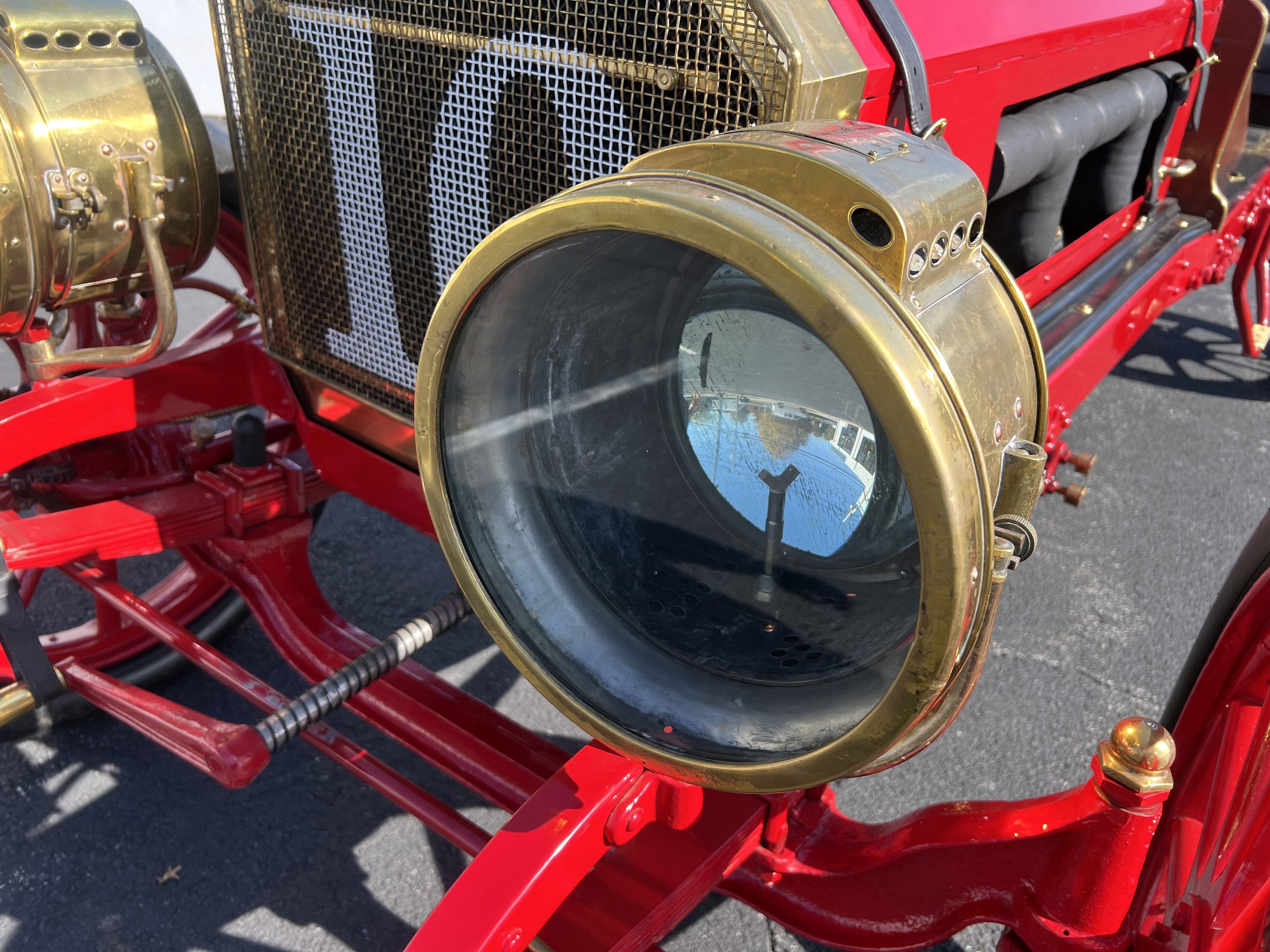
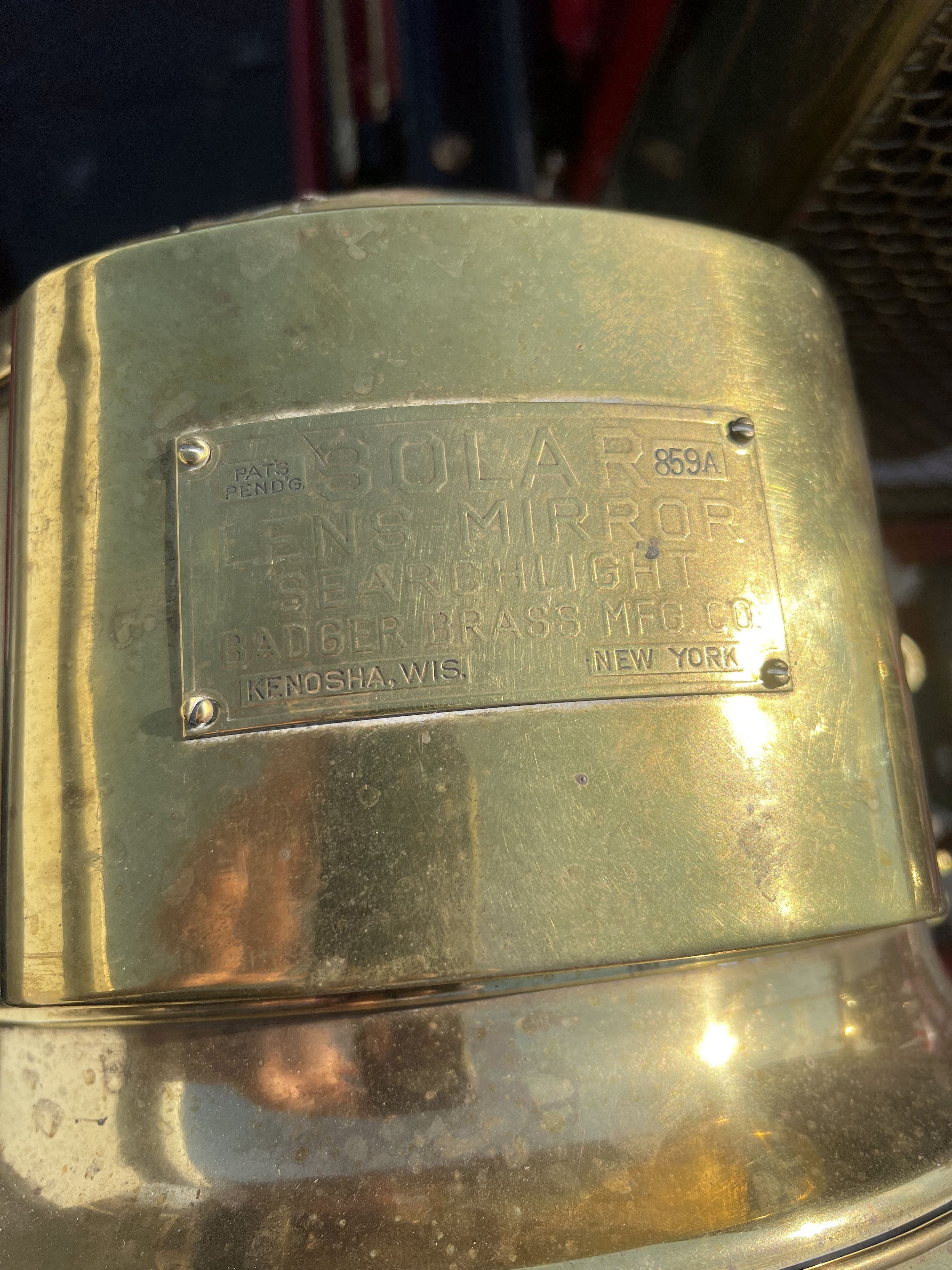
- HEADLIGHTS: Solar Brass Acetylene from the Badger Brass Manufacturing Company in Kenosha, Wisconsin
- SPEEDOMETER: Jones 60-MPH
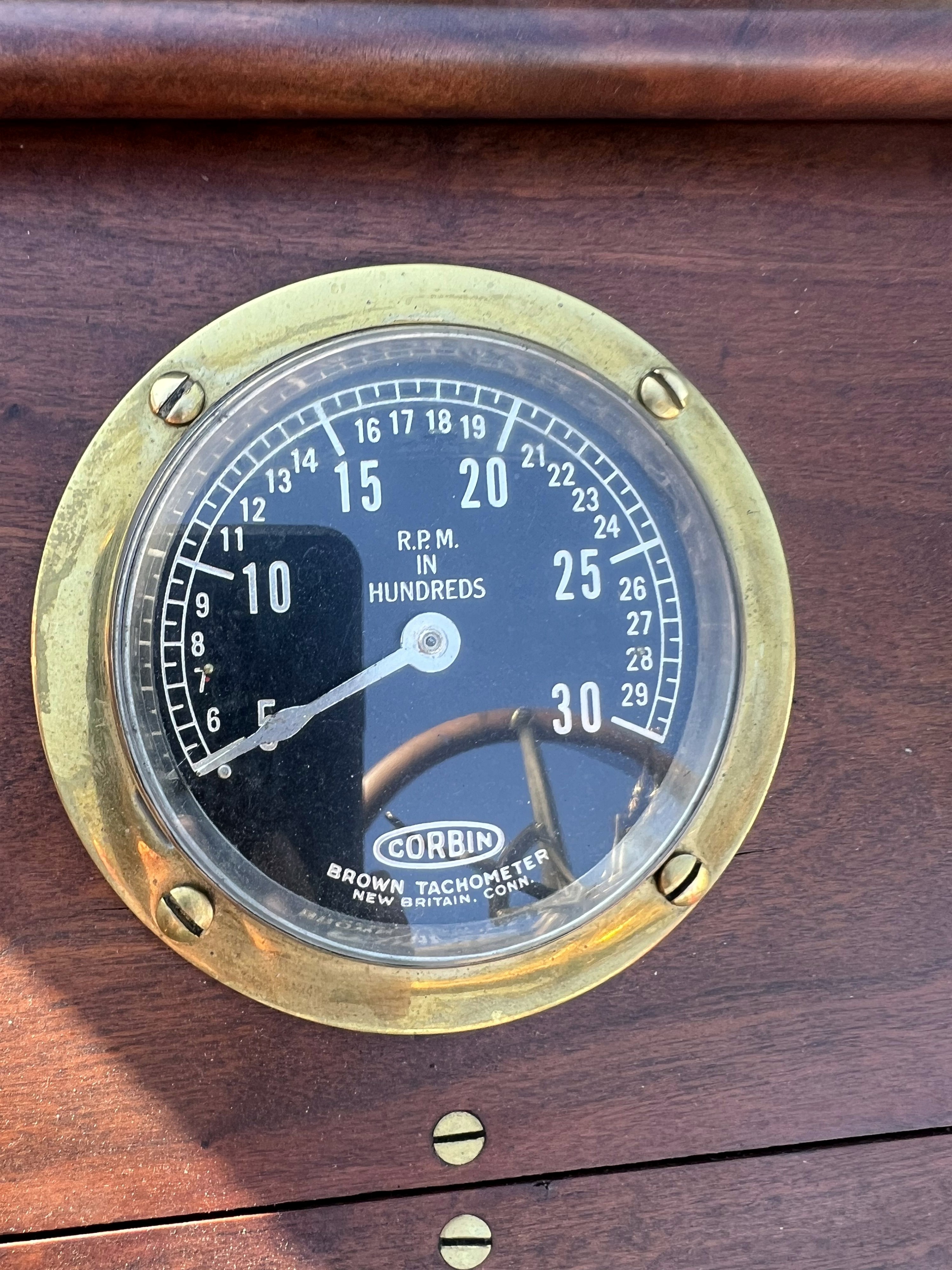
- TACHOMETER: Corbin-Brown
- CLOCK: Jos. W. Jones
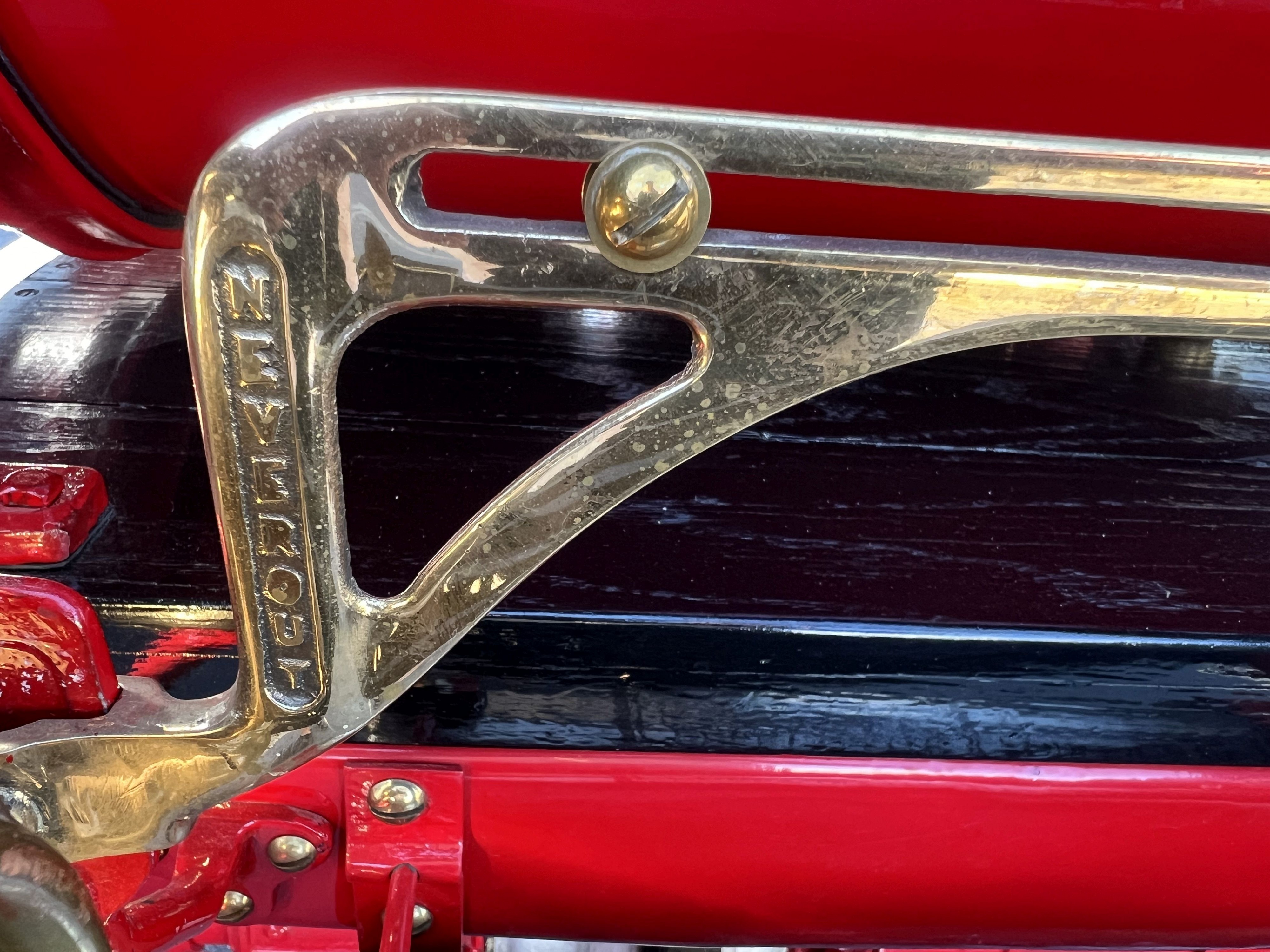
- TAIL LAMP: Neverout Kerosene
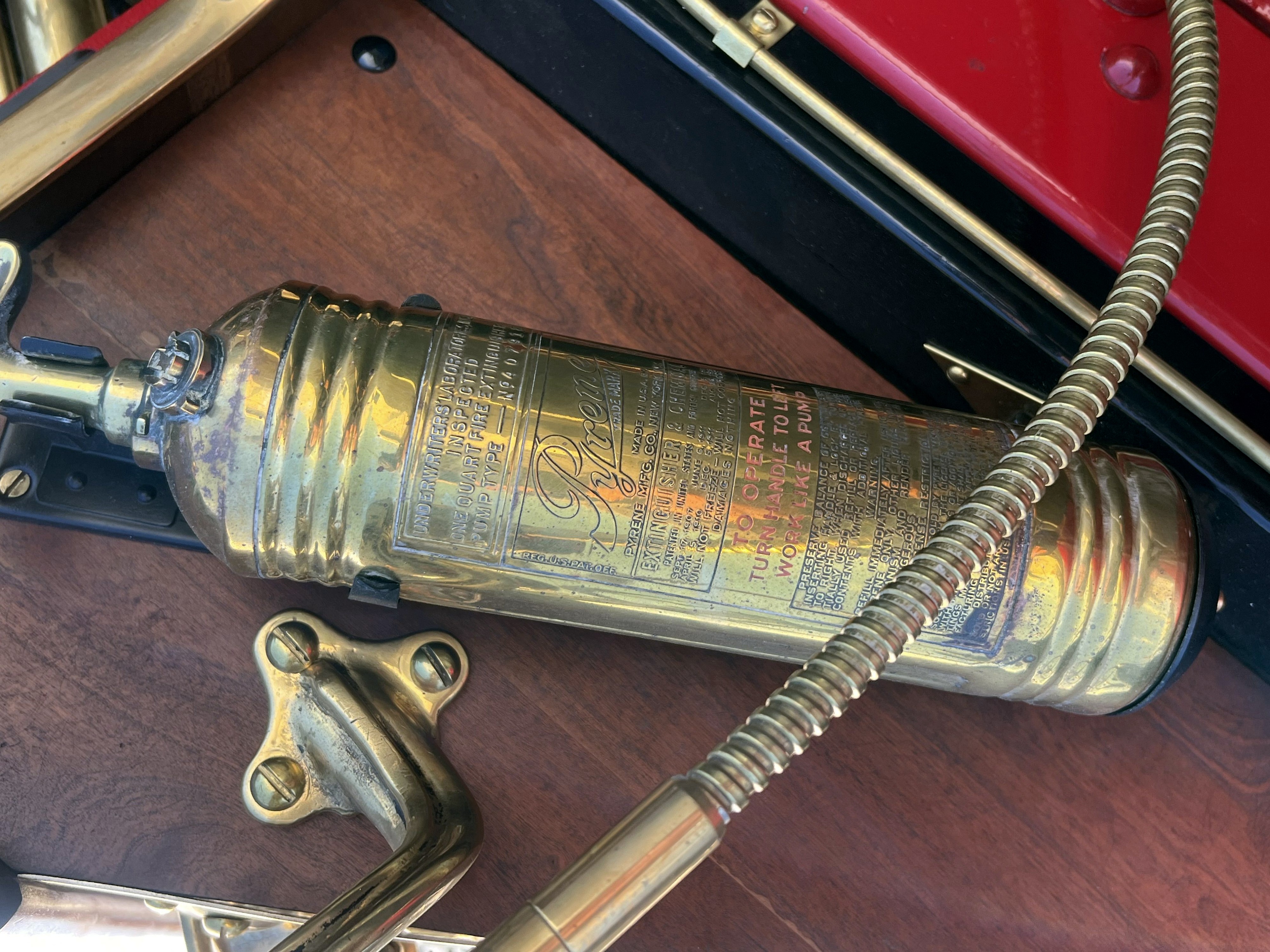
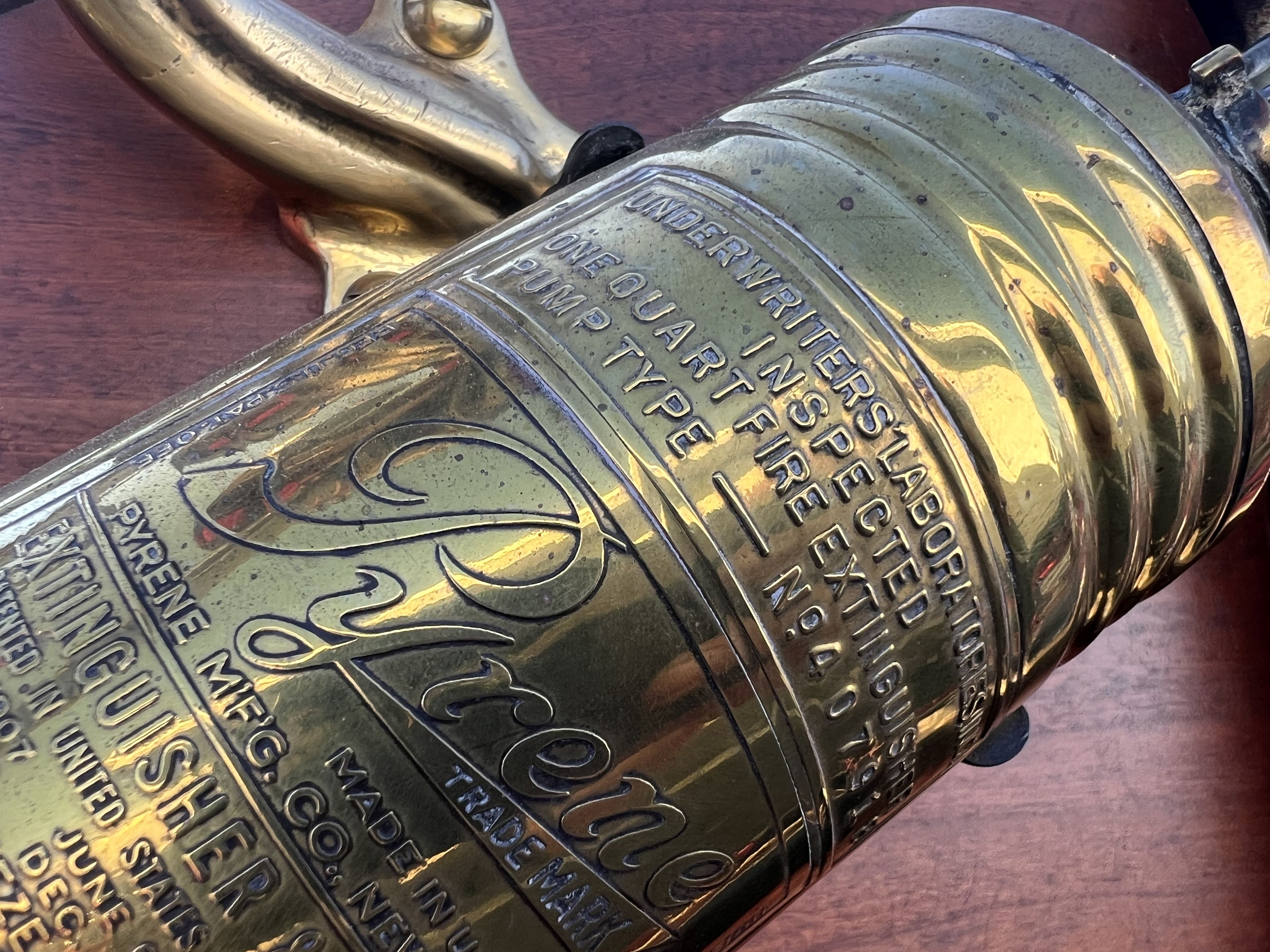
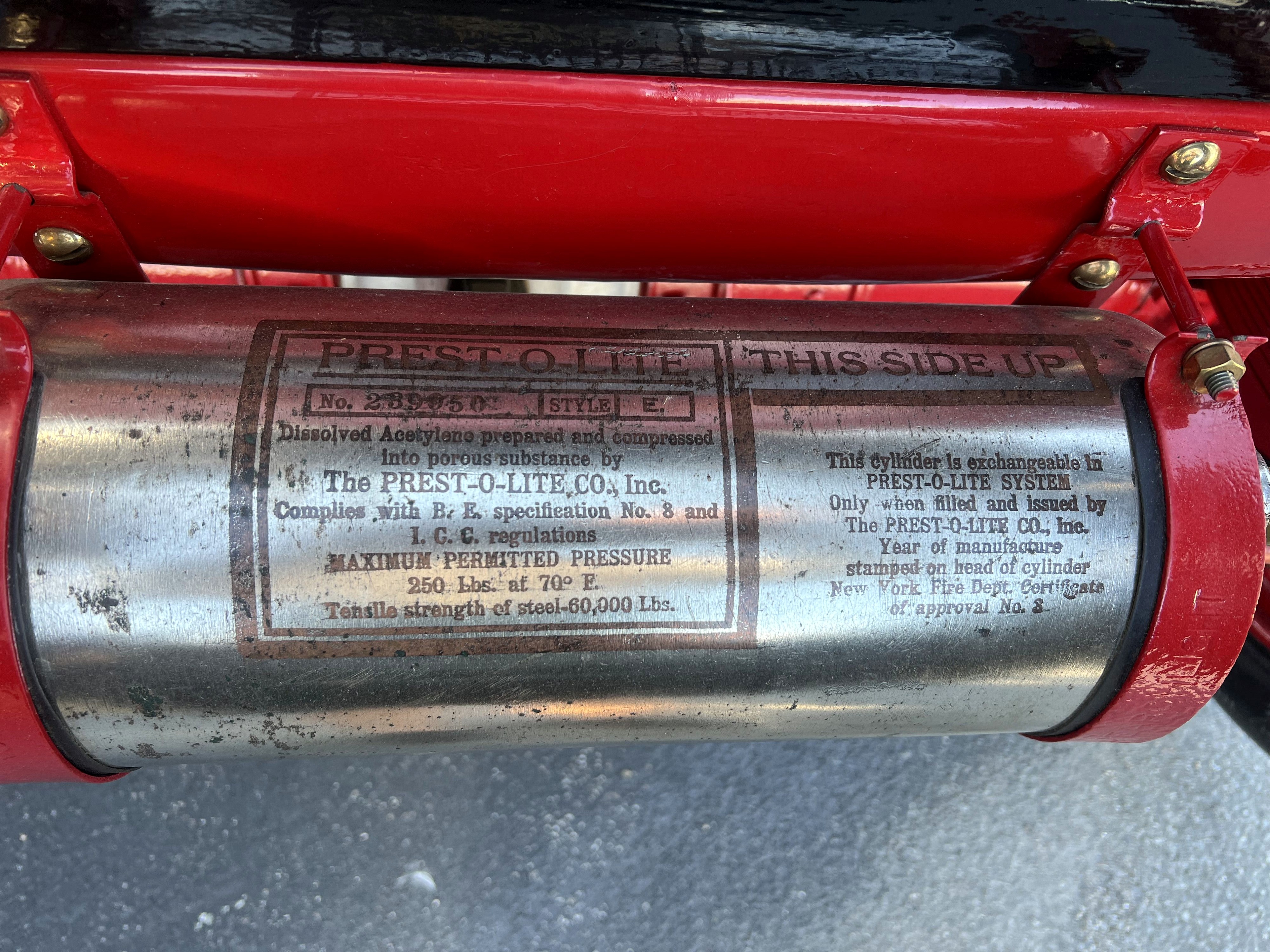
- FIRE EXTINGUISHER: Pyrene
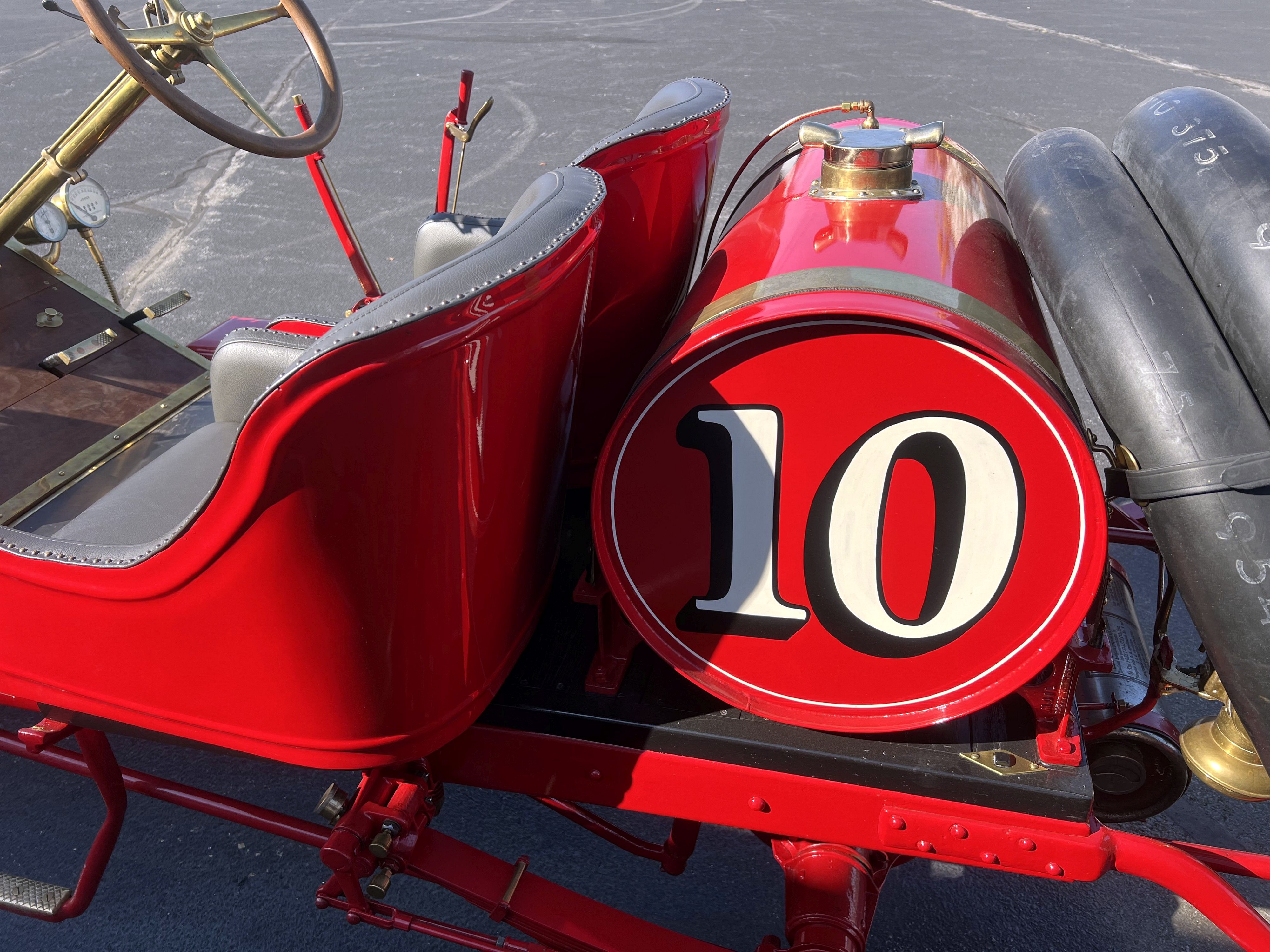
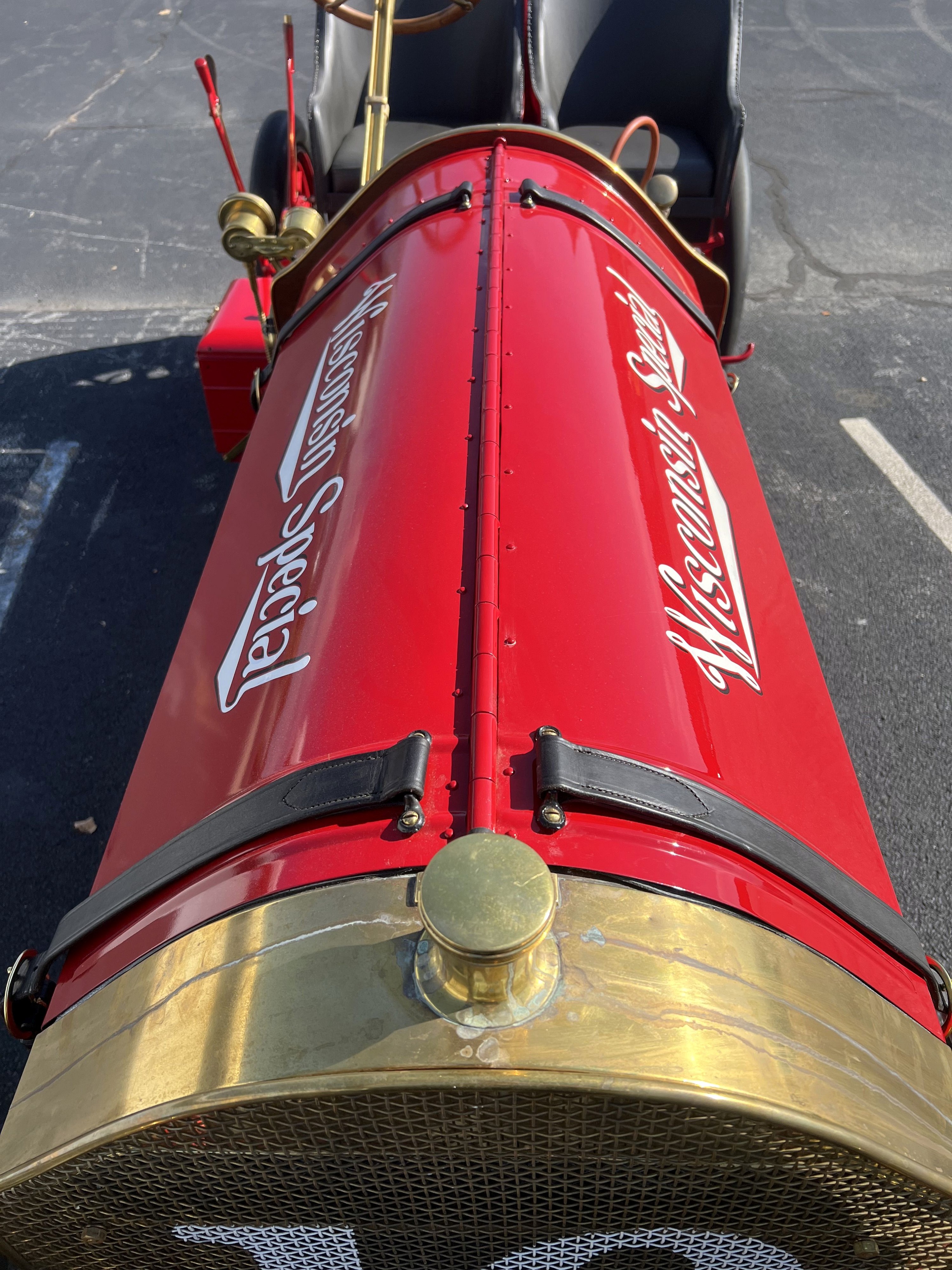
- PAINT: Red with “Wisconsin Special” Script and the number “10”
- UPHOLSTERY: Gray Leather Bucket Seats
- ACCENTS: Brass
- WHEELS: 26” Wood-Spoke Artillery
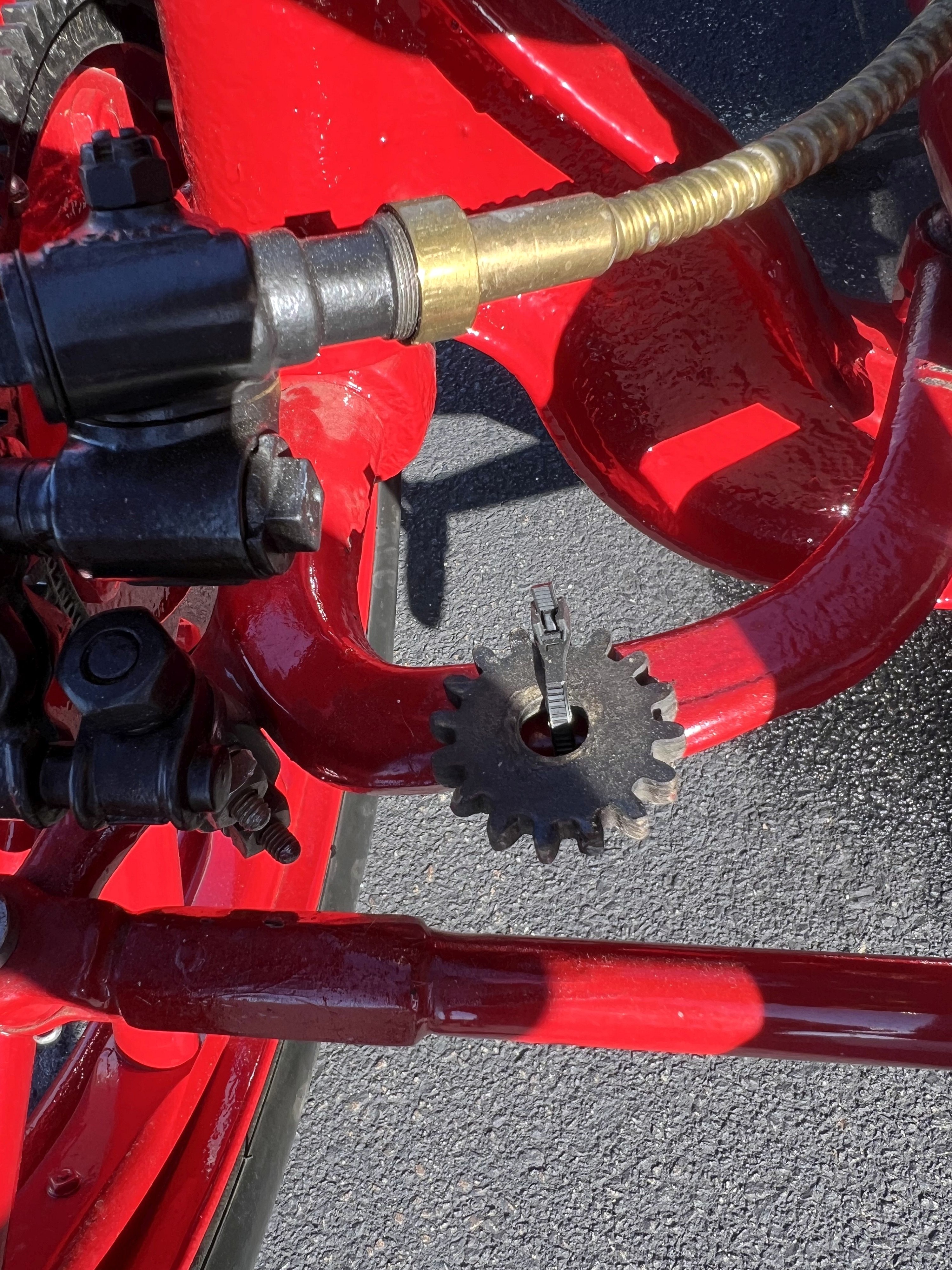
- BRAKES: Rear Drum
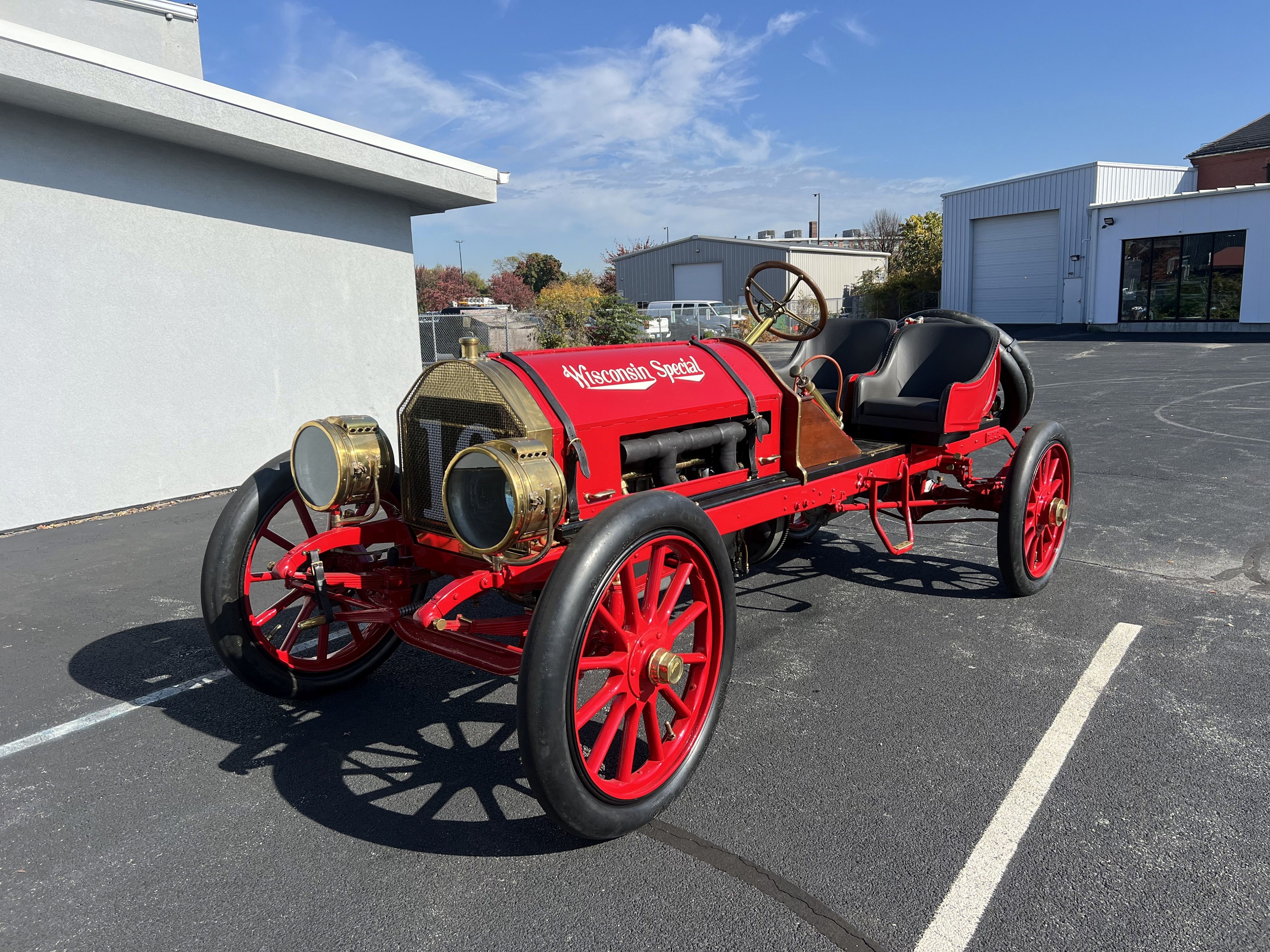
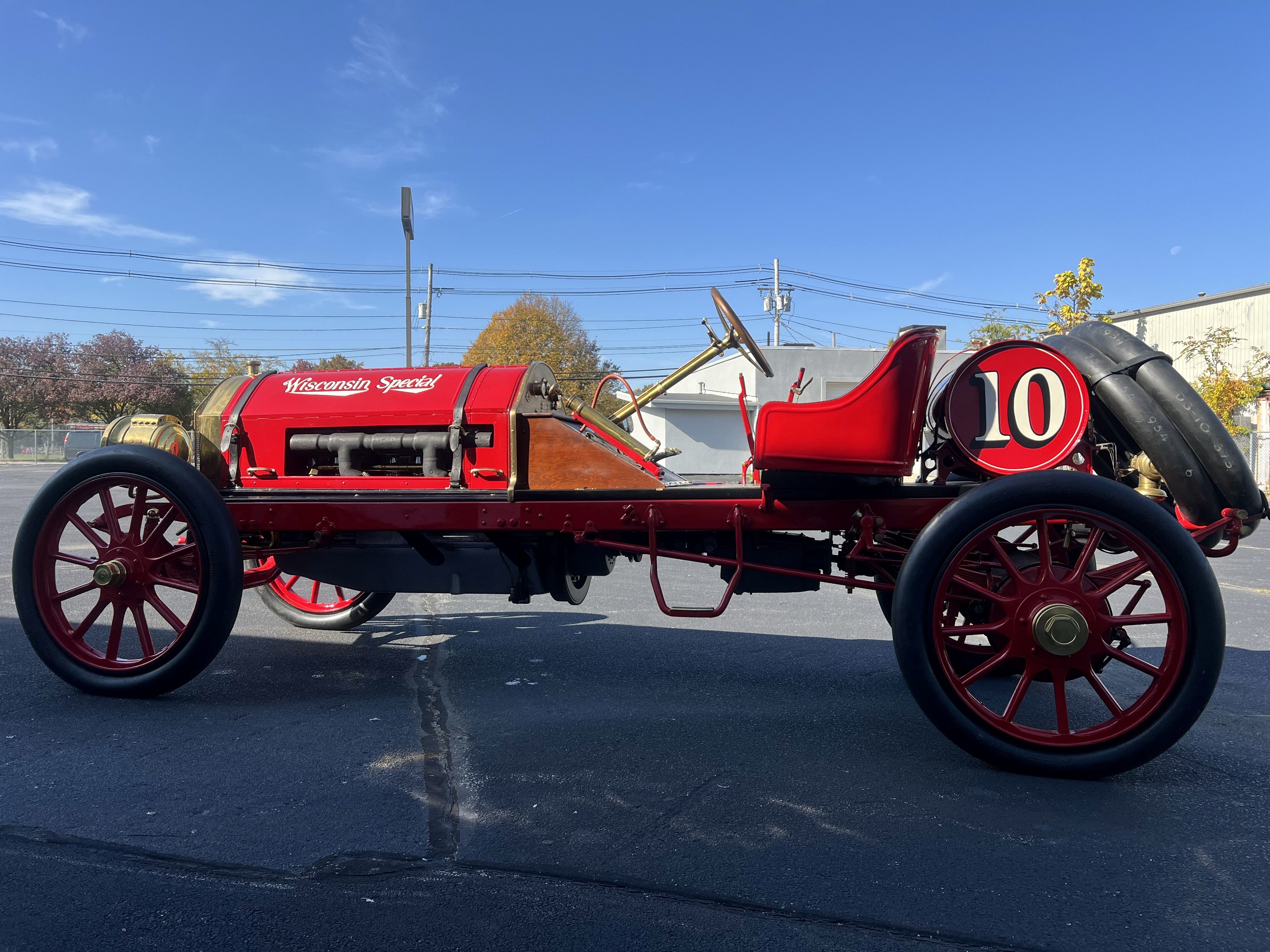
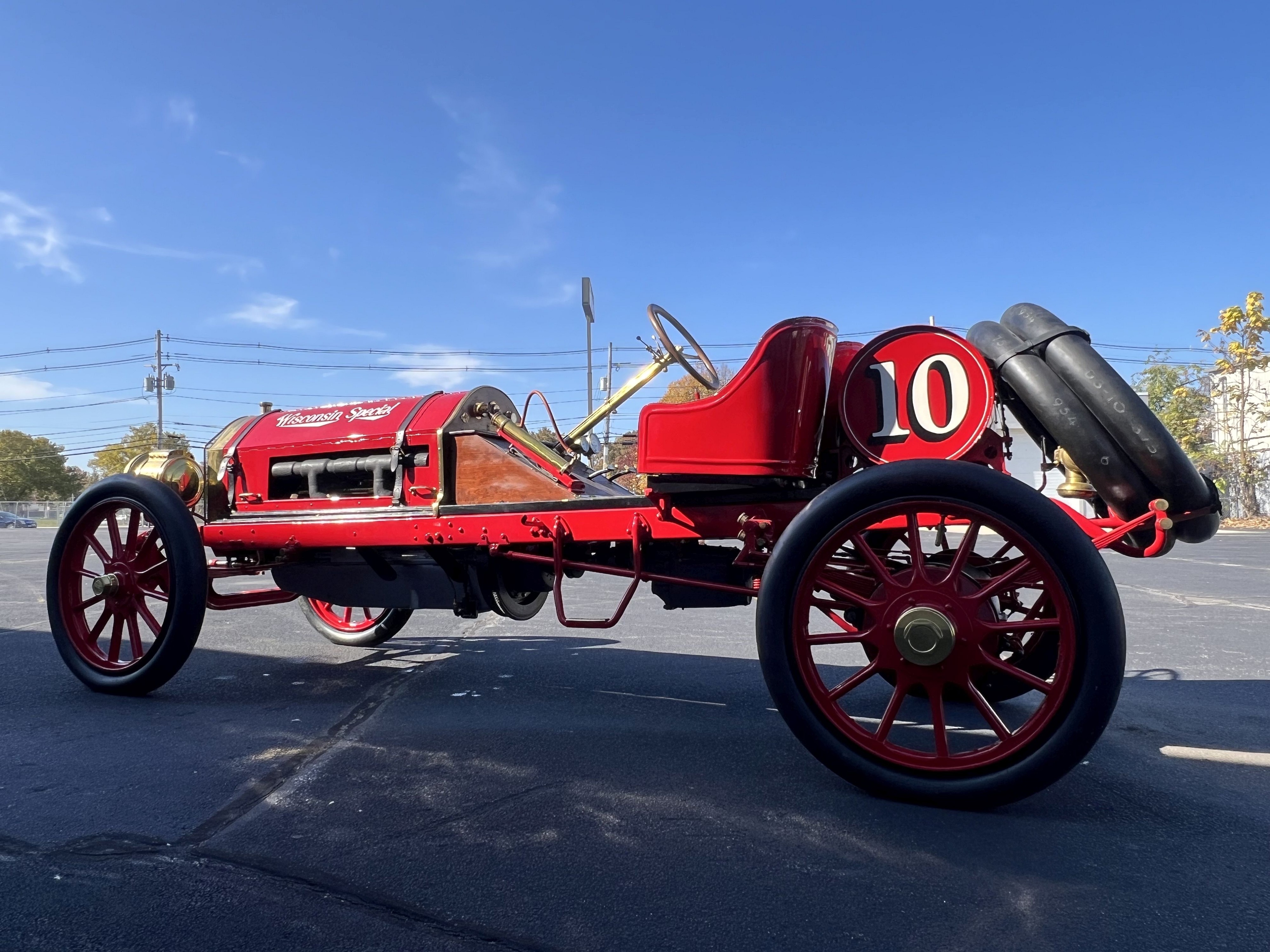
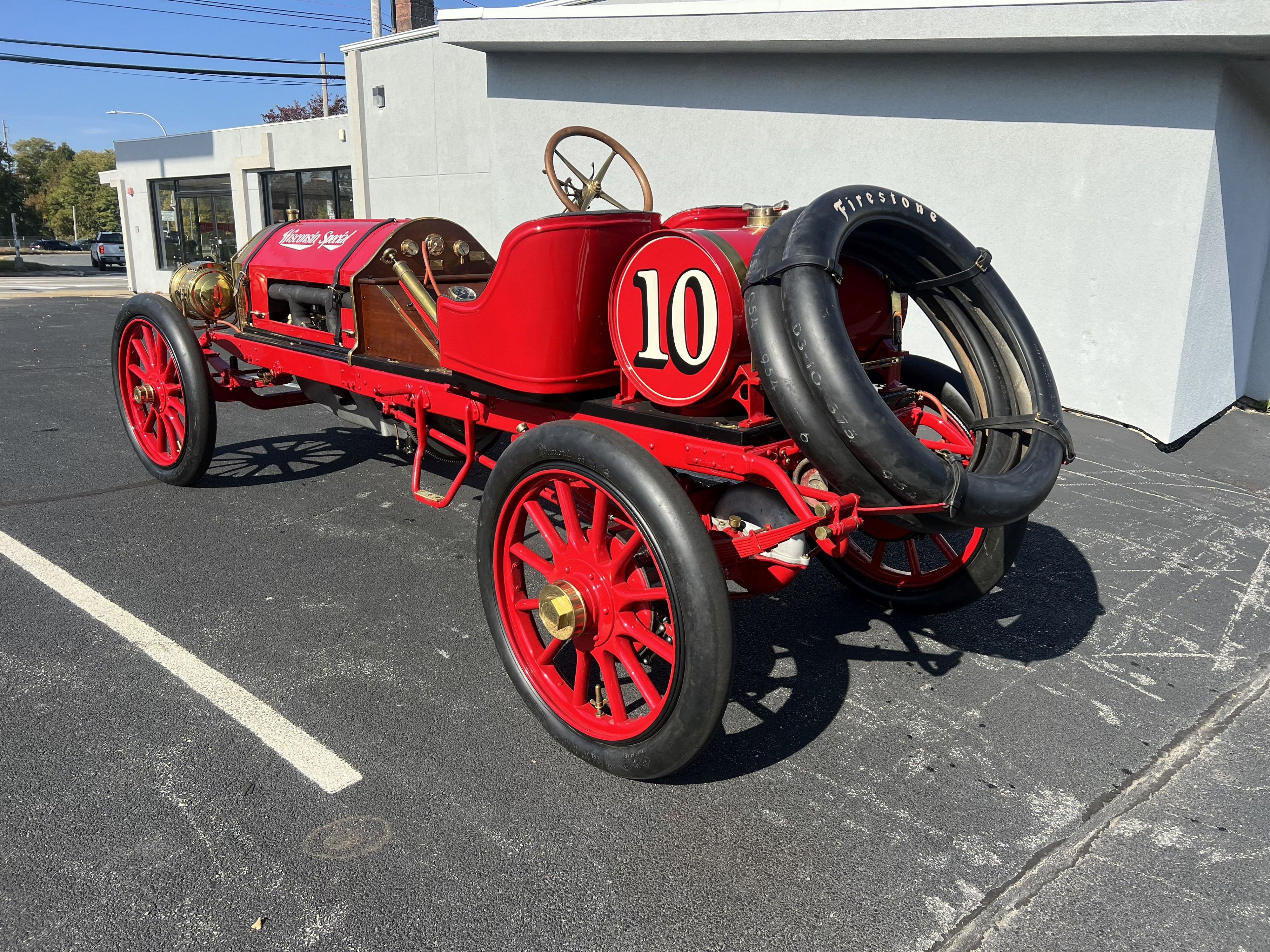
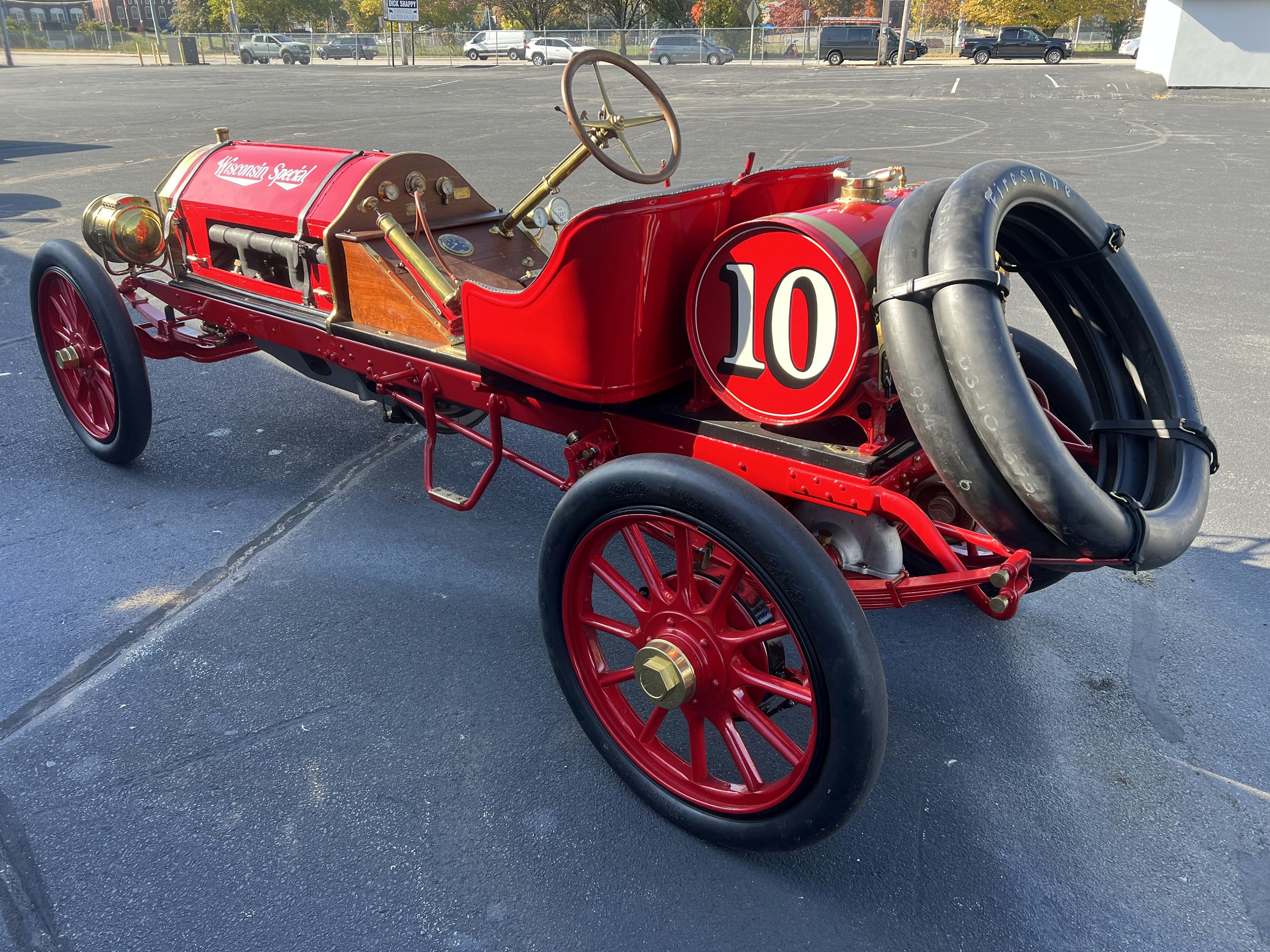
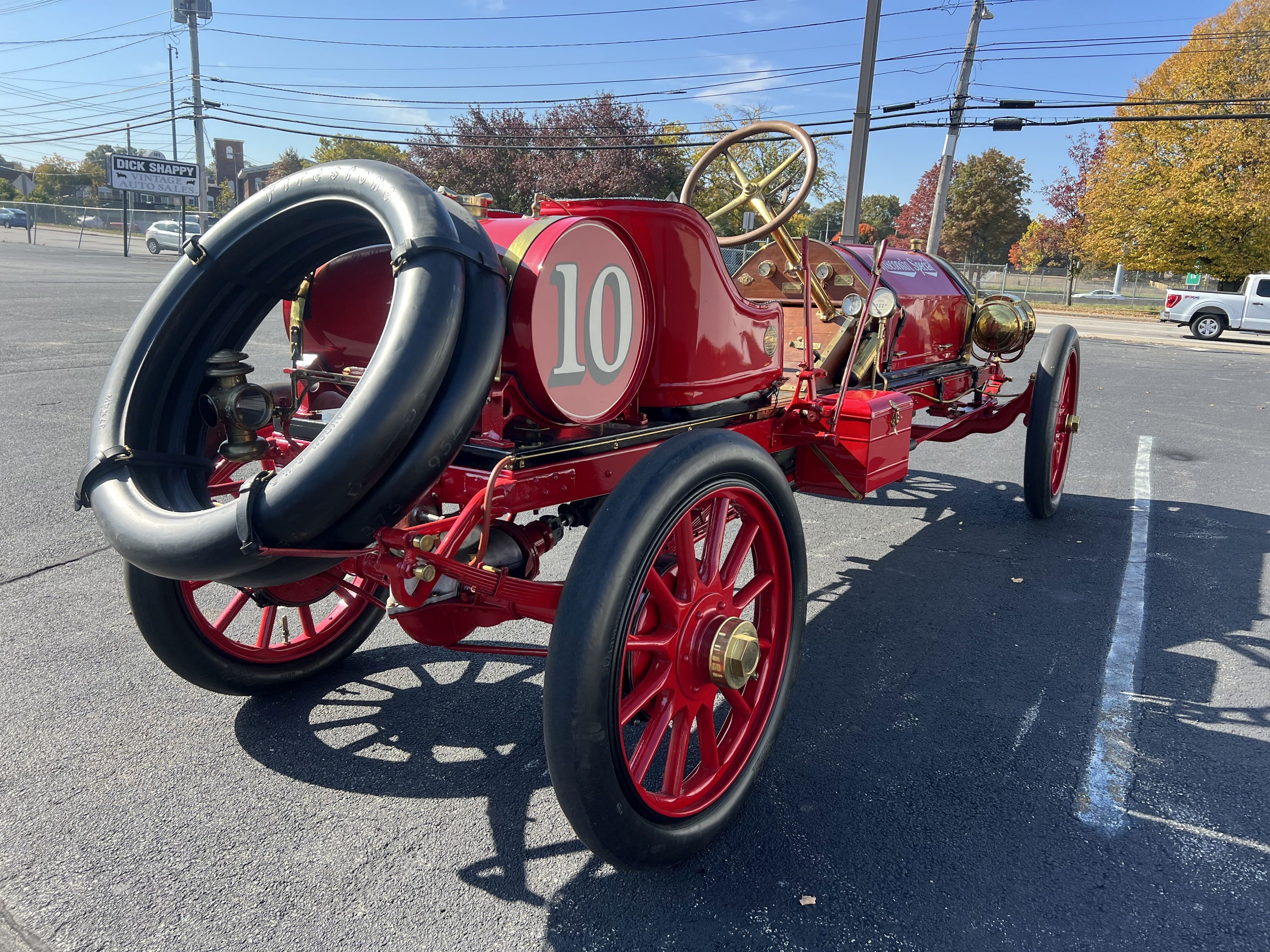
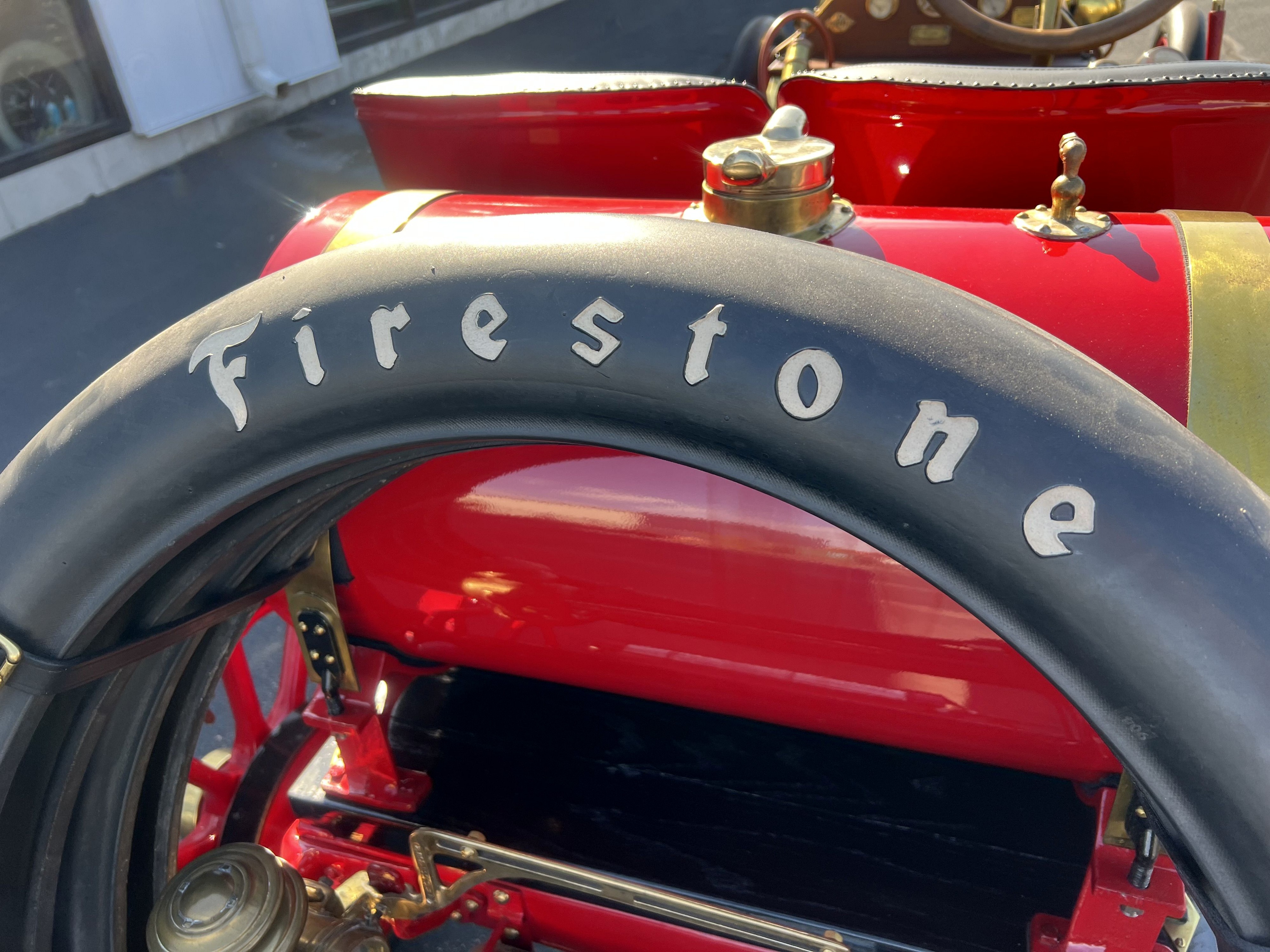
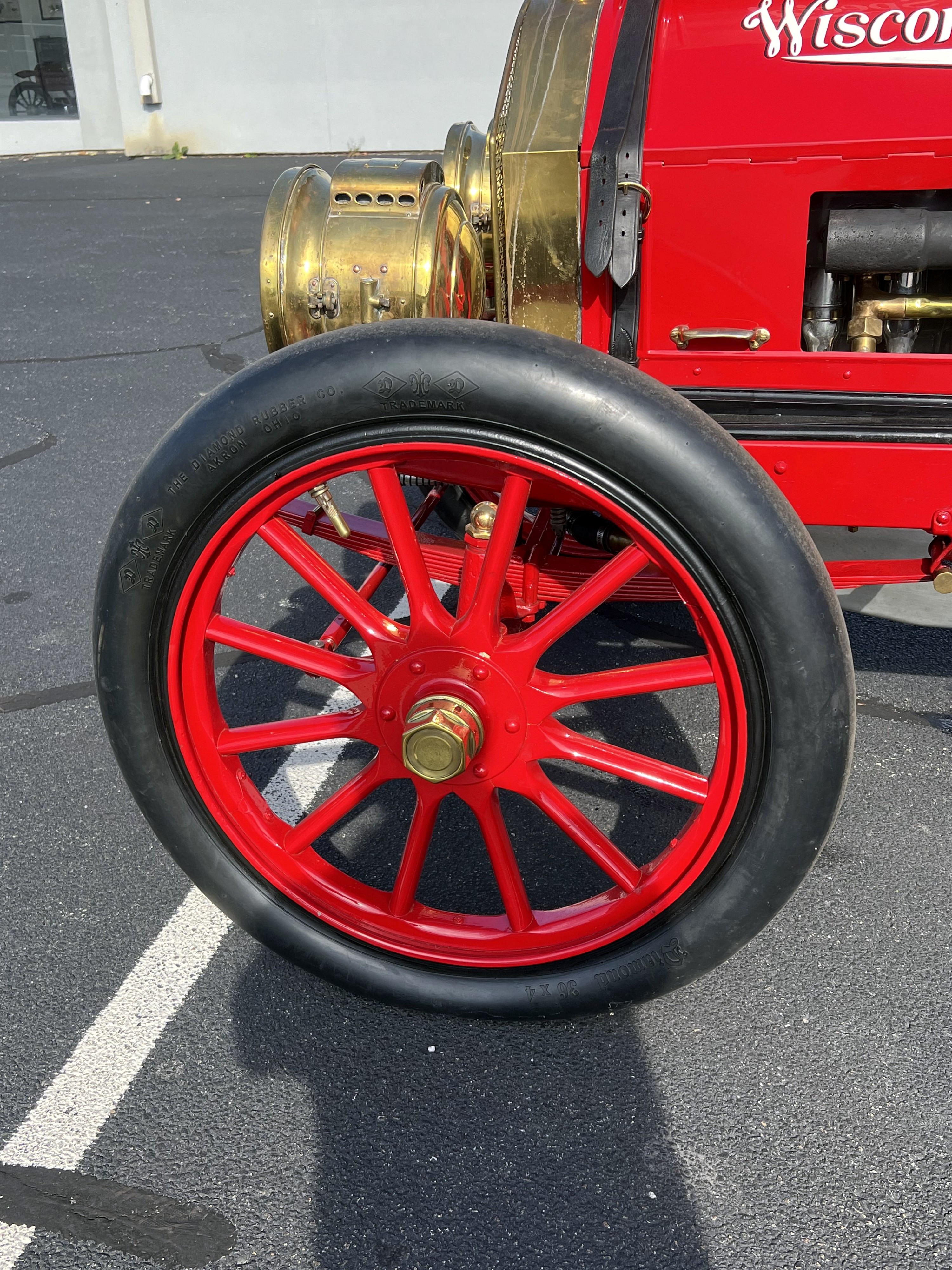
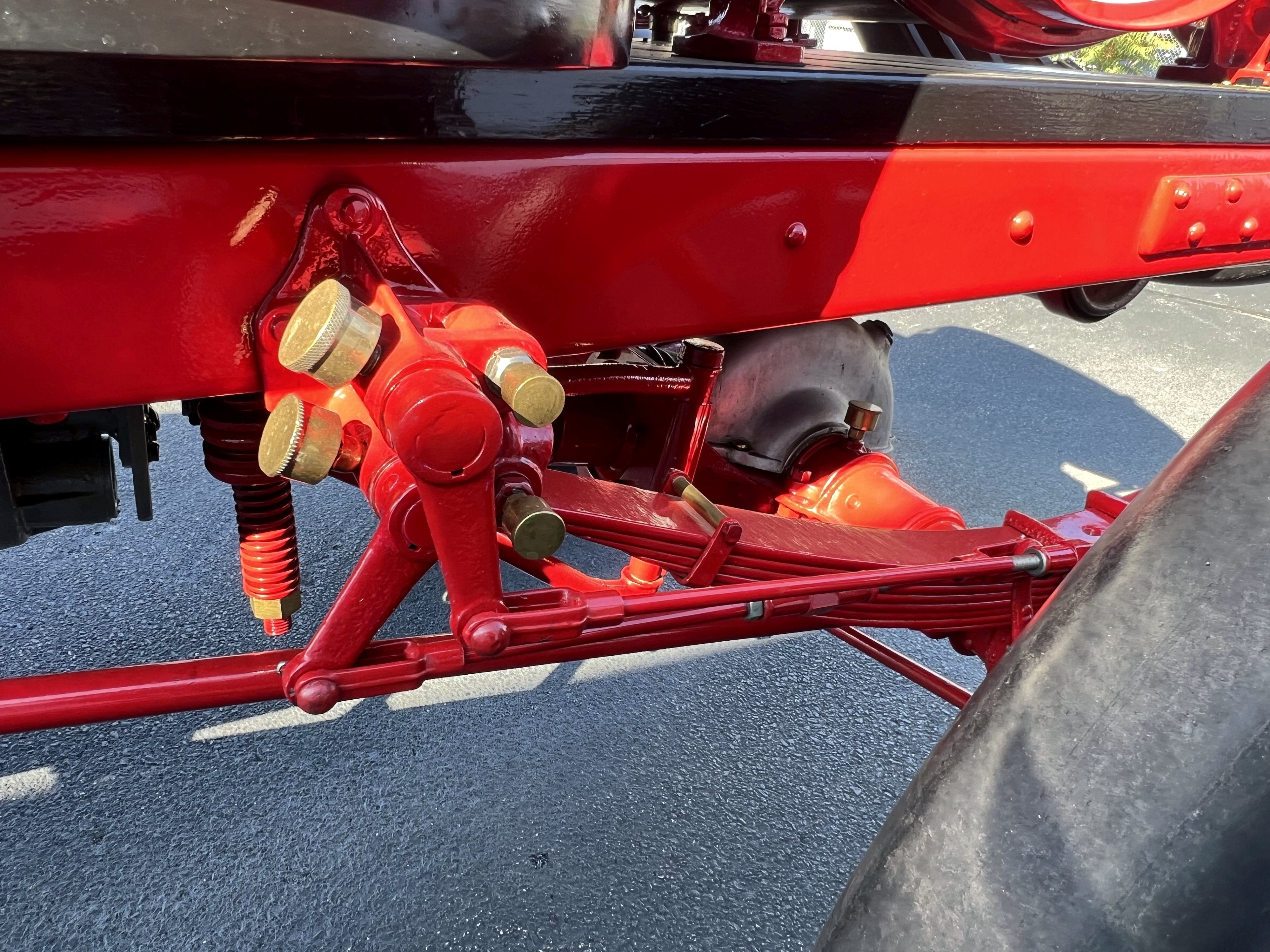
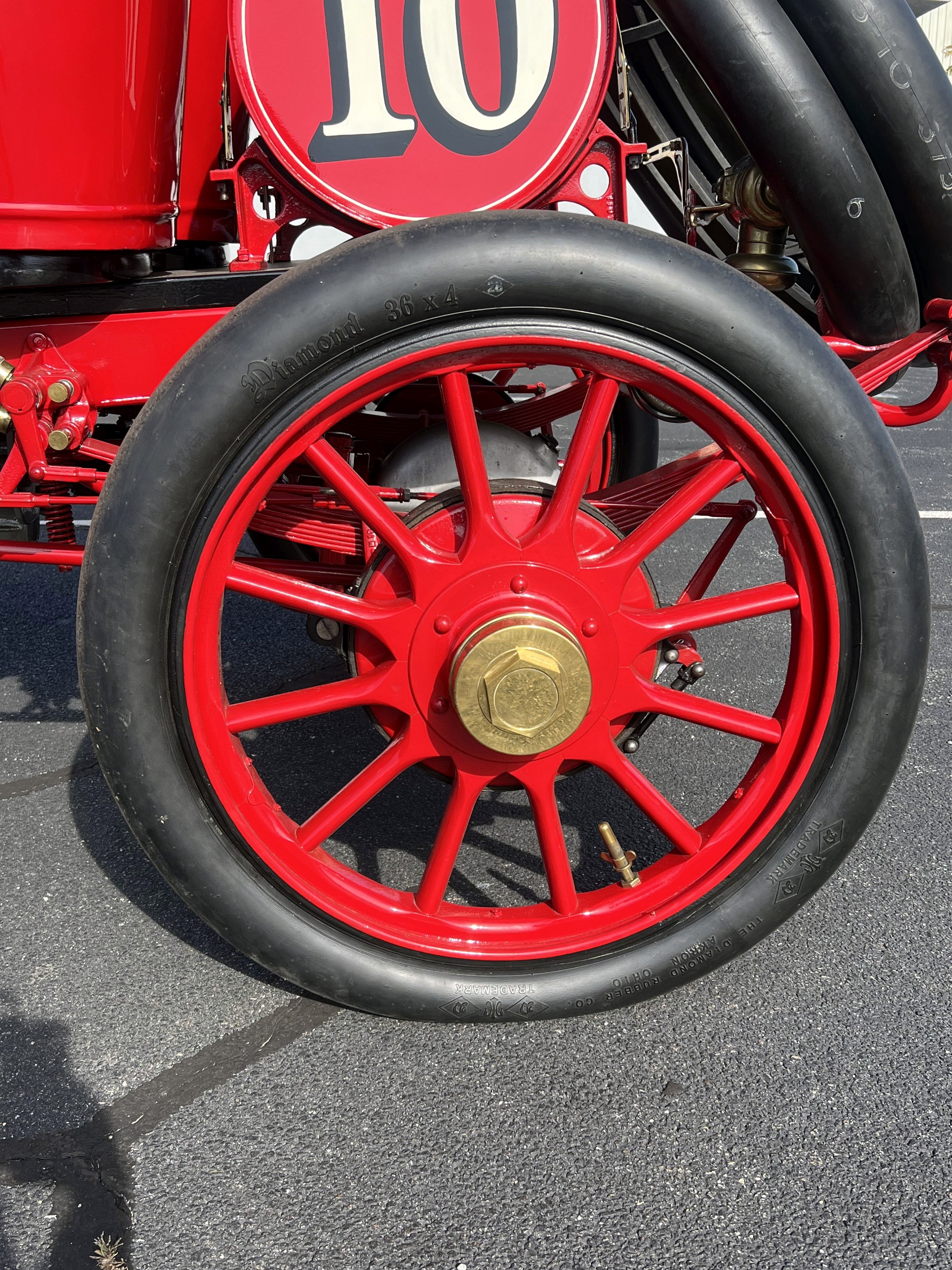
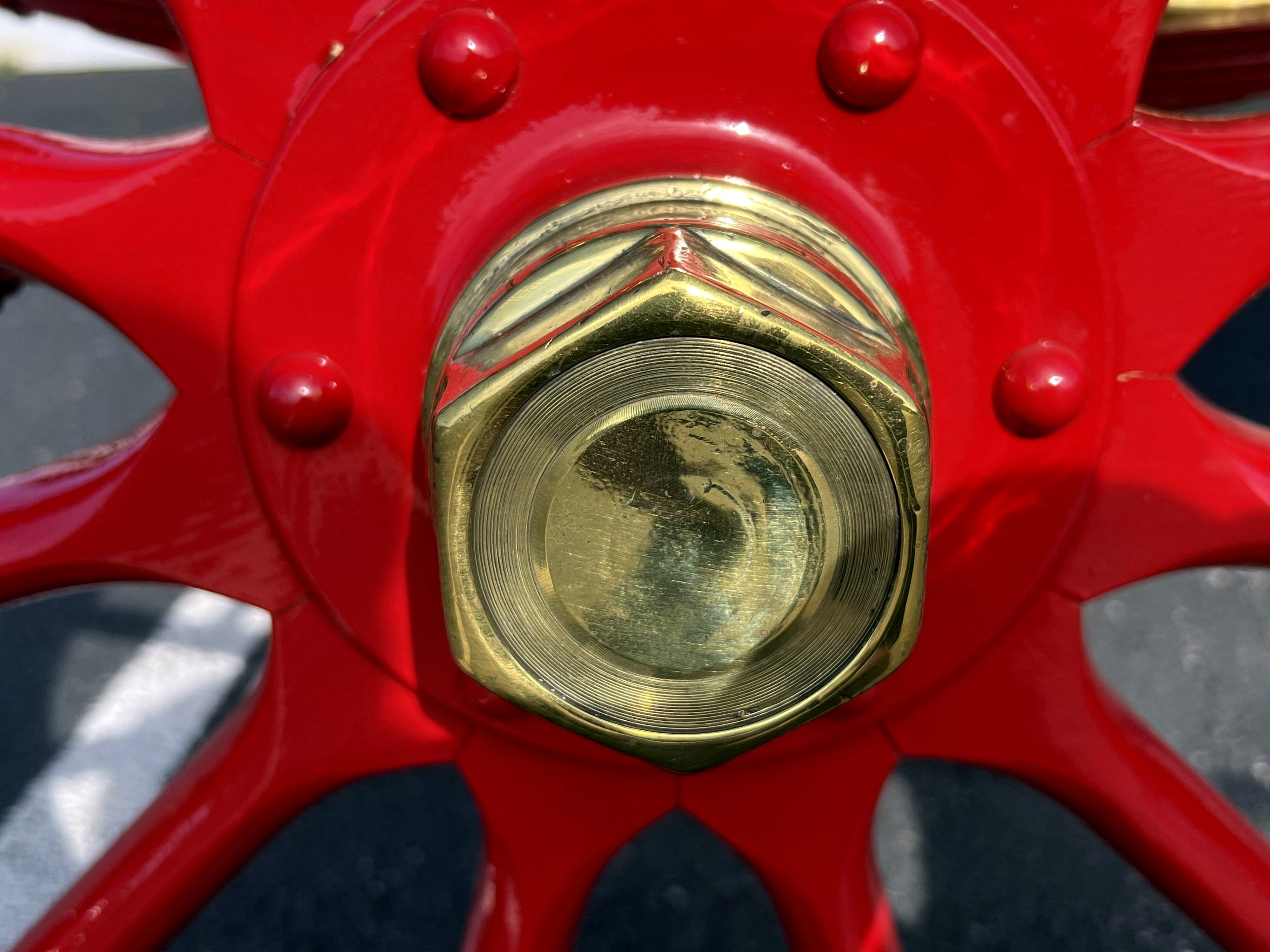
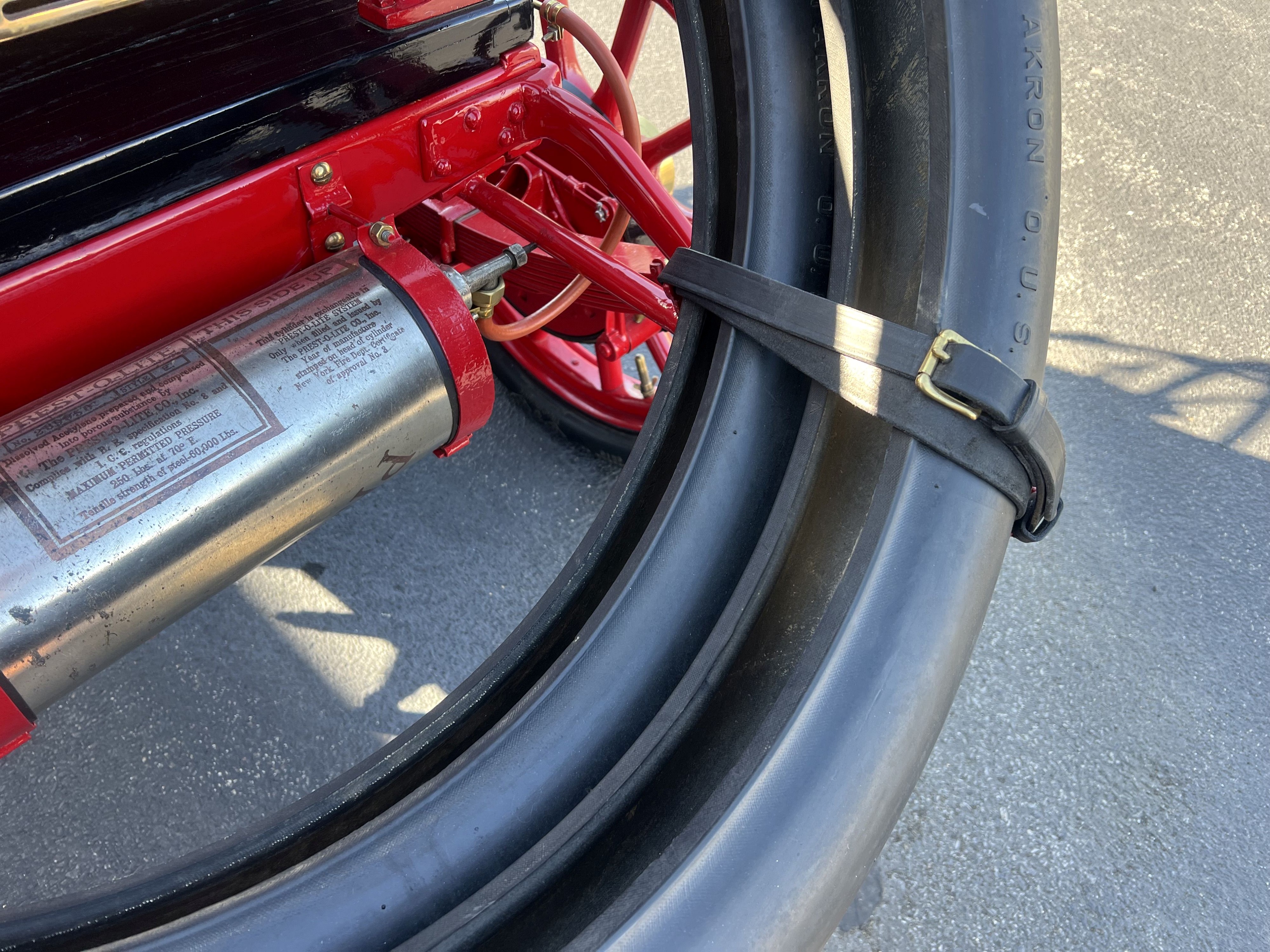
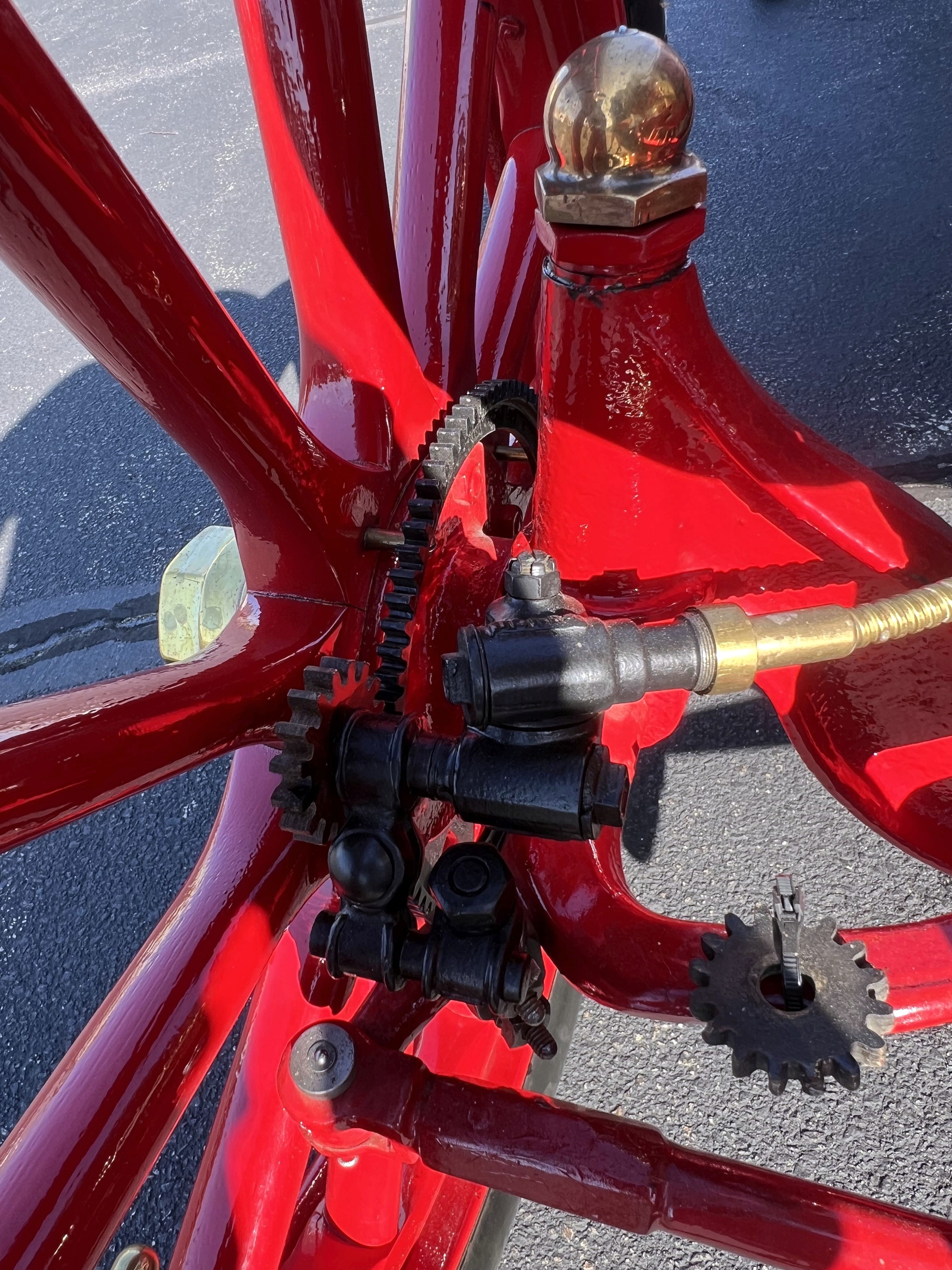
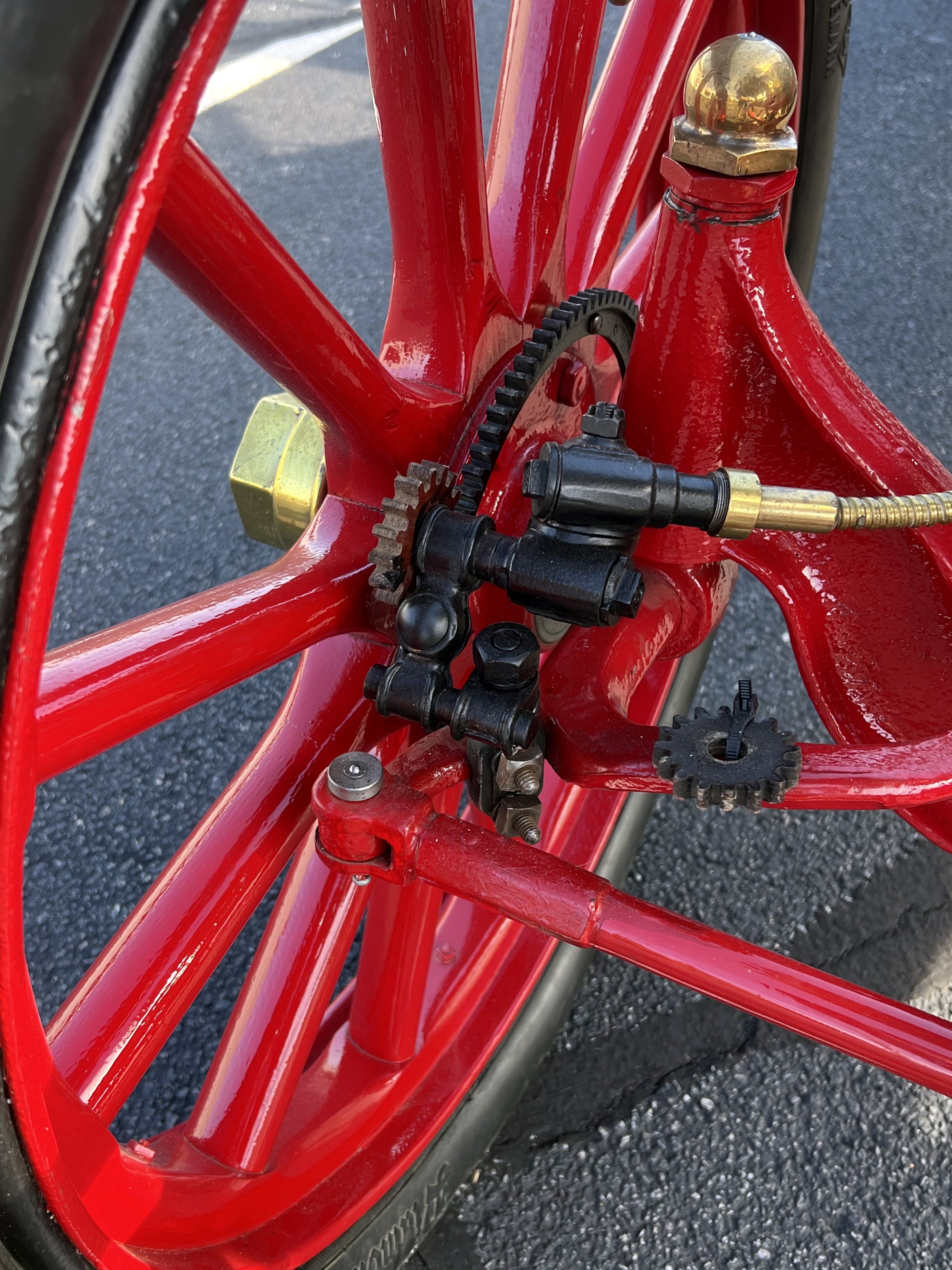
Power is sent to the rear wheels via a three-speed manual transmission and a Hele-Shaw clutch. An exposed exhaust manifold leads to side-exit pipes located below the engine bay. Stopping is handled by rear drums with both internally expanding shoes and externally contracting bands. Suspension incorporates a solid axle and semi-elliptical leaf springs at the front and rear. Red-painted wood-spoke artillery wheels are wrapped in 36×4 Diamond tires, while a pair of spare tires are secured to the rear of the car.
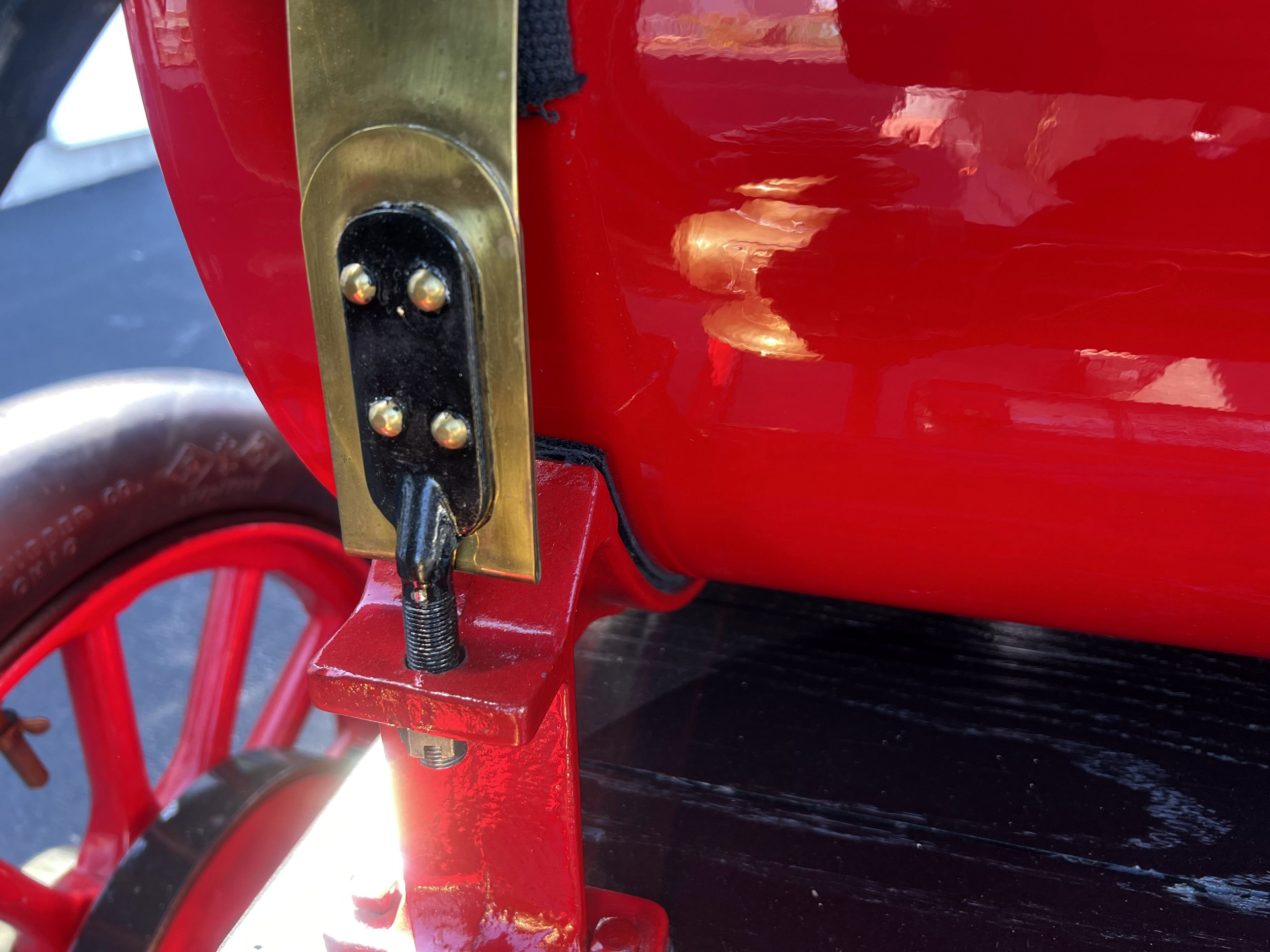
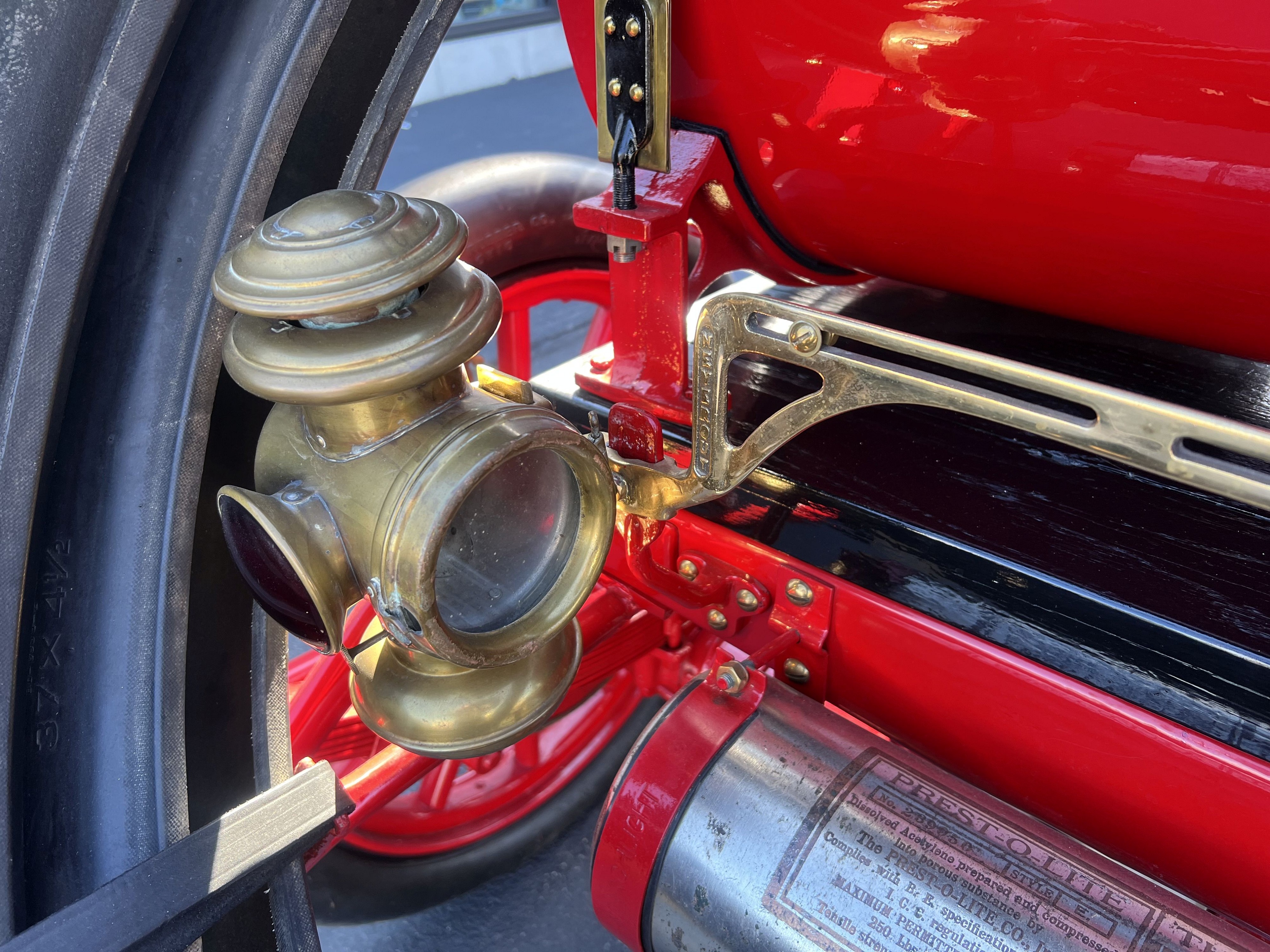
Based on a Mitchell Model S chassis, it features custom speedster bodywork finished in red with brass accents. The frame and bodywork are finished in red with “Wisconsin Special” script on each side of the hood as well as No. 10 graphics on the cylindrical fuel tank and the radiator stone guard. It also features a brass radiator shell, acetylene headlights, leather hood straps, a frame-mounted storage box, and a Neverout kerosene tail lamp.
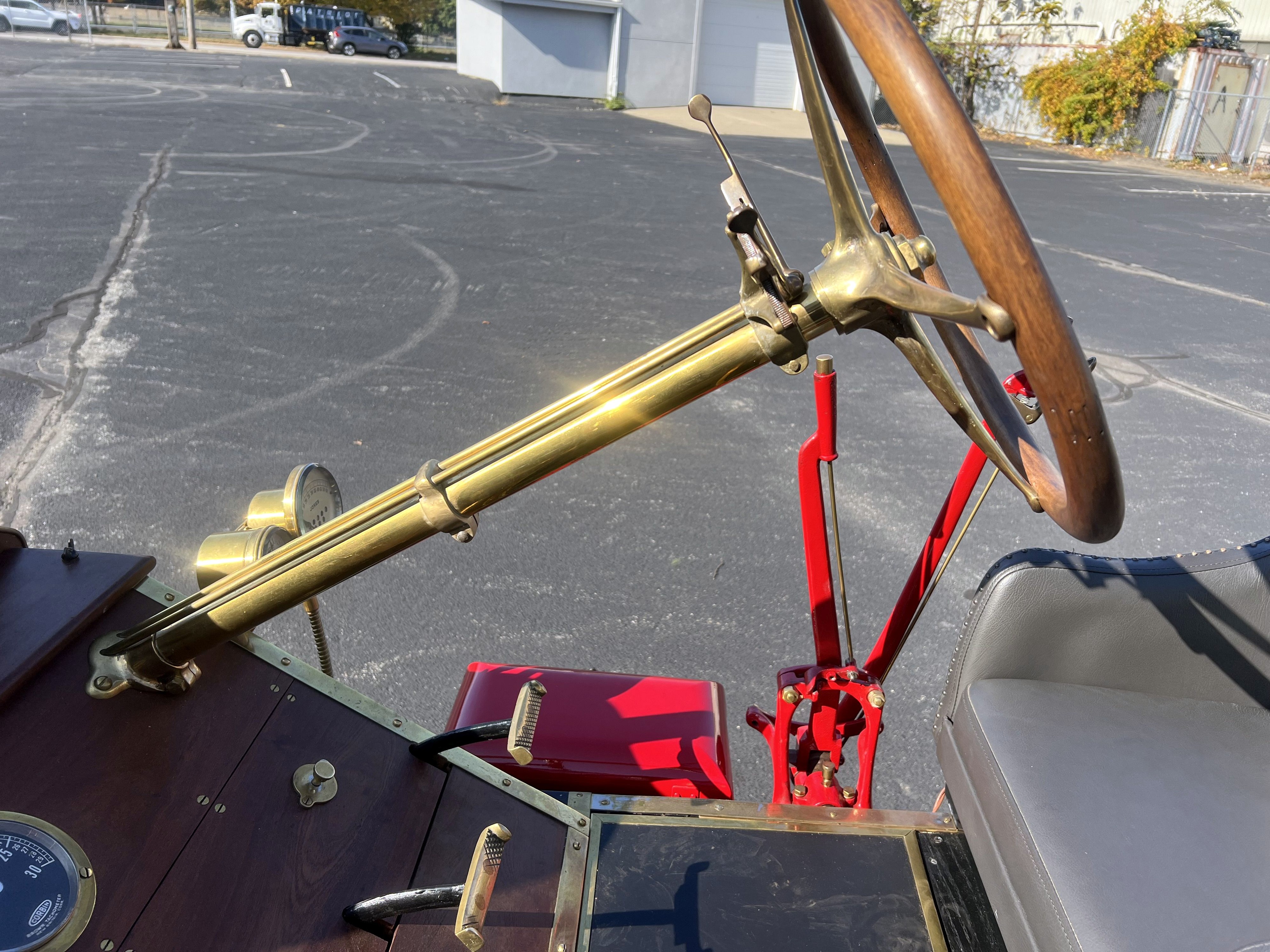
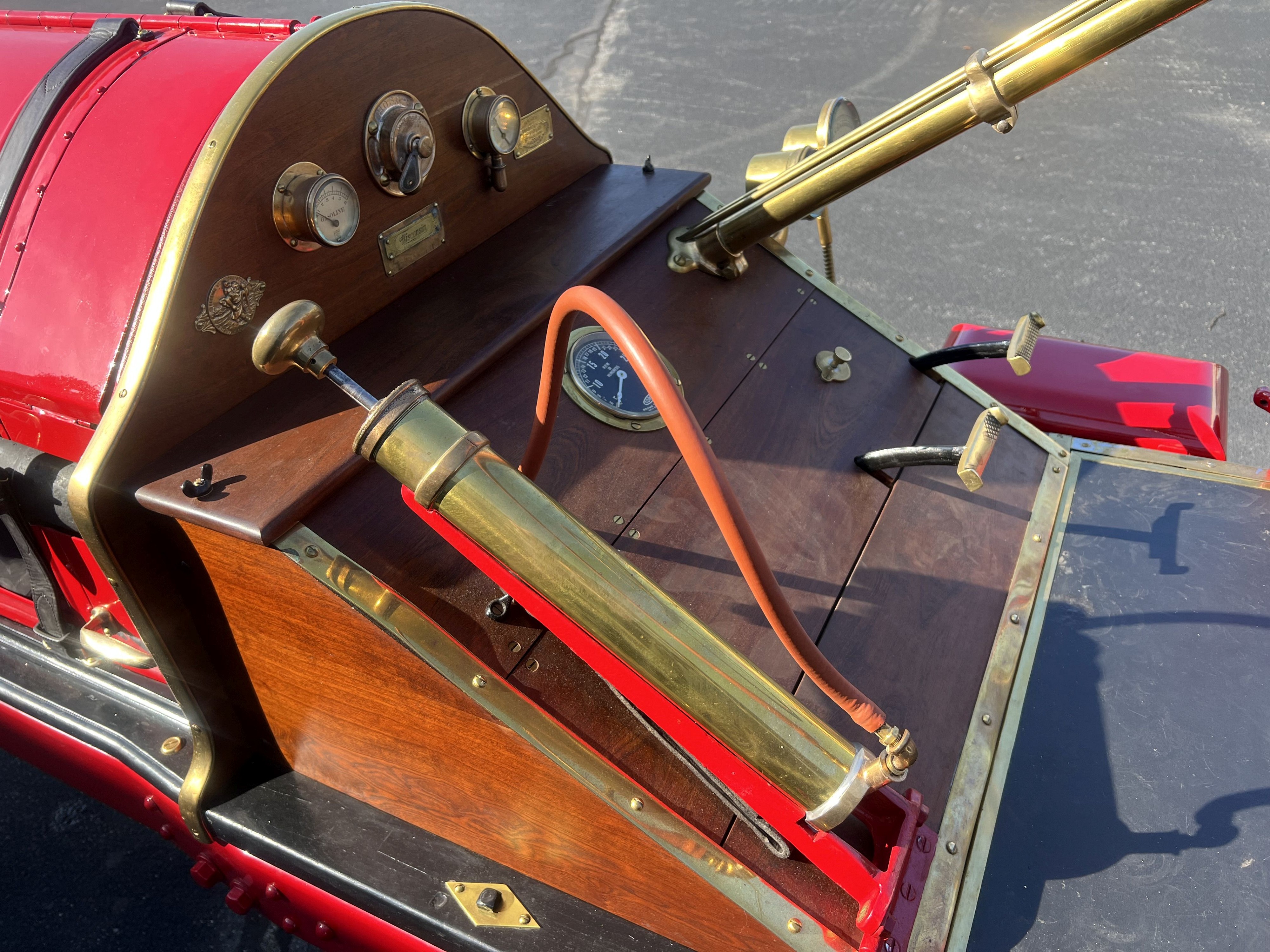
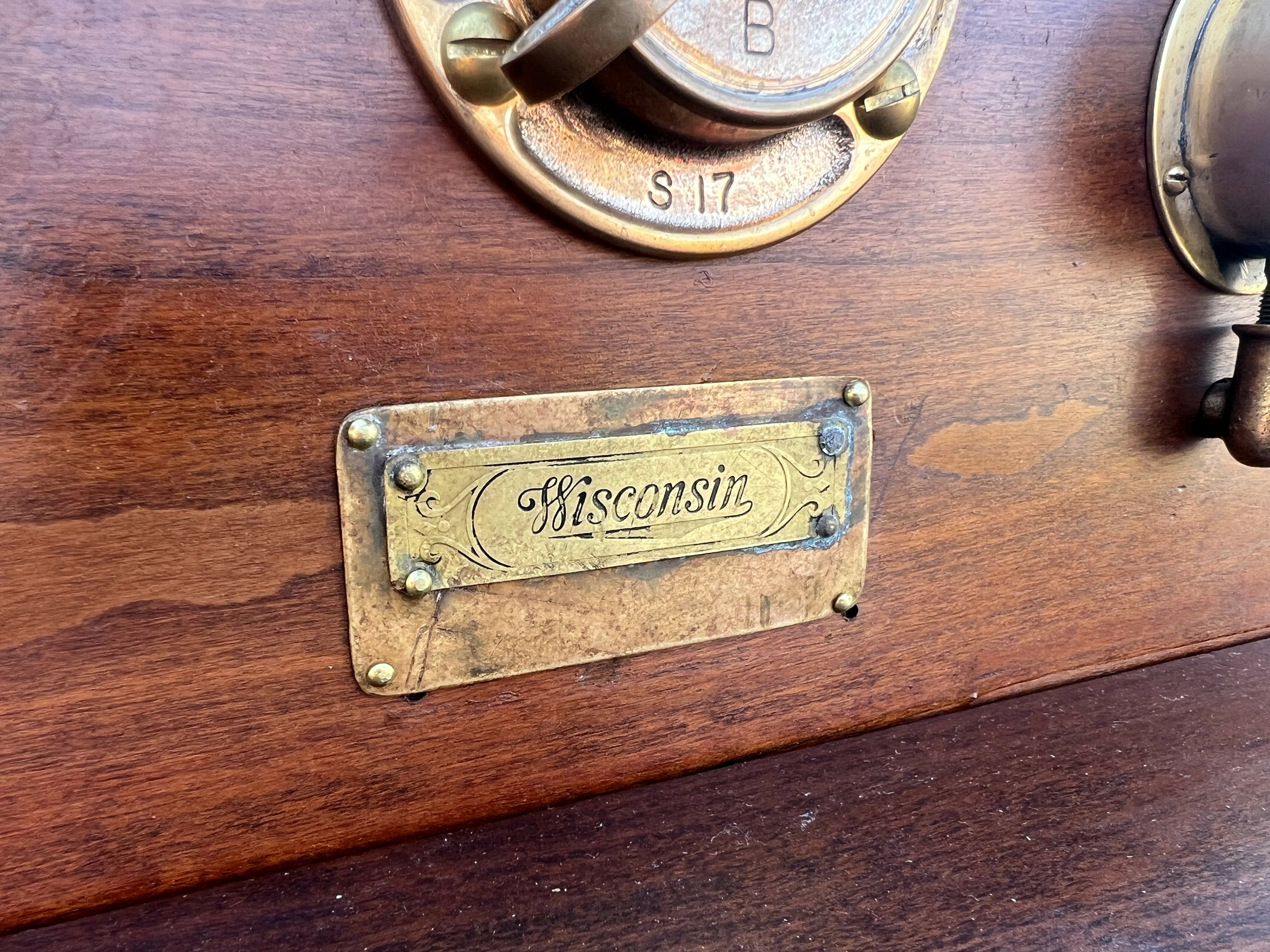
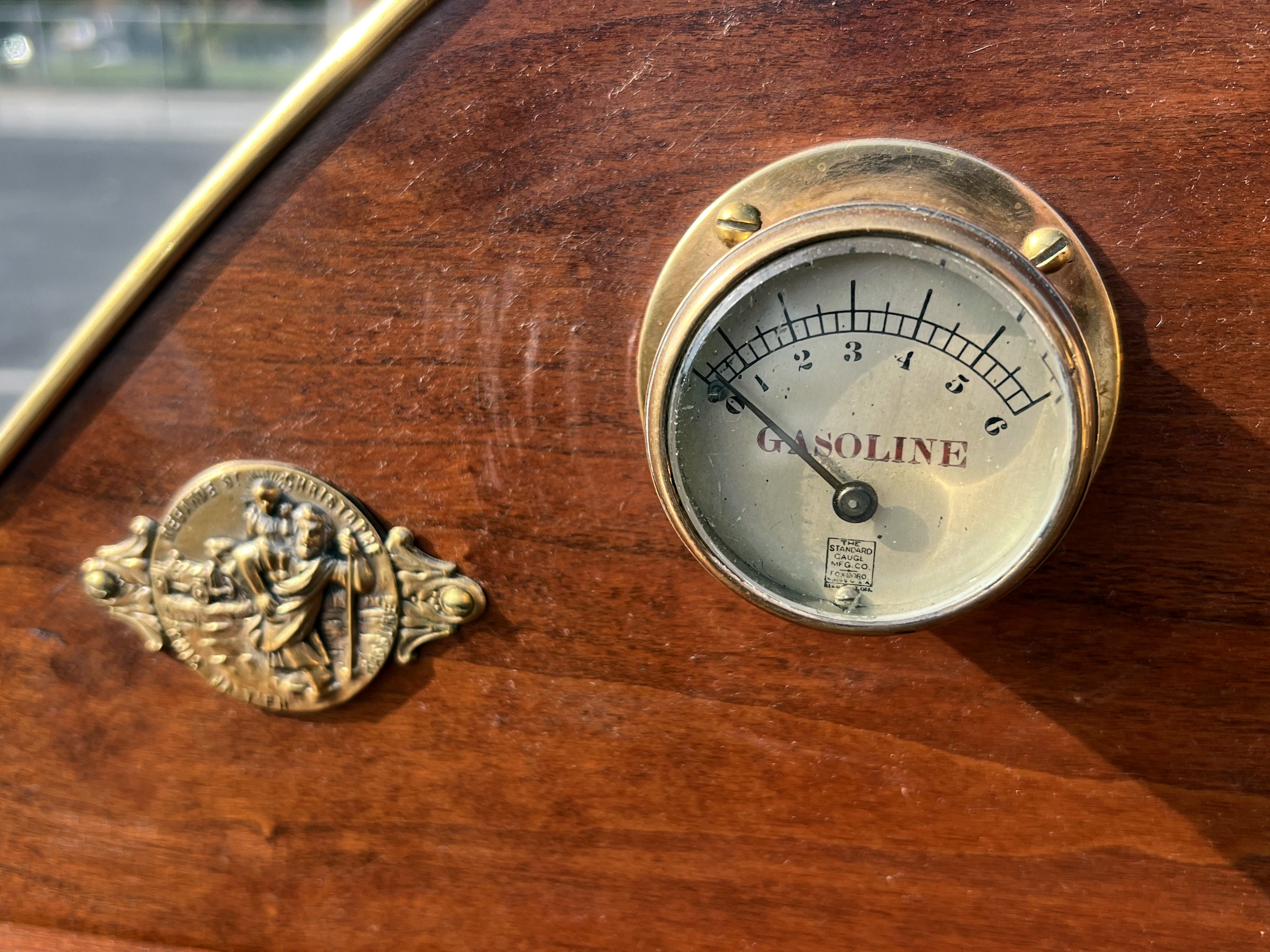
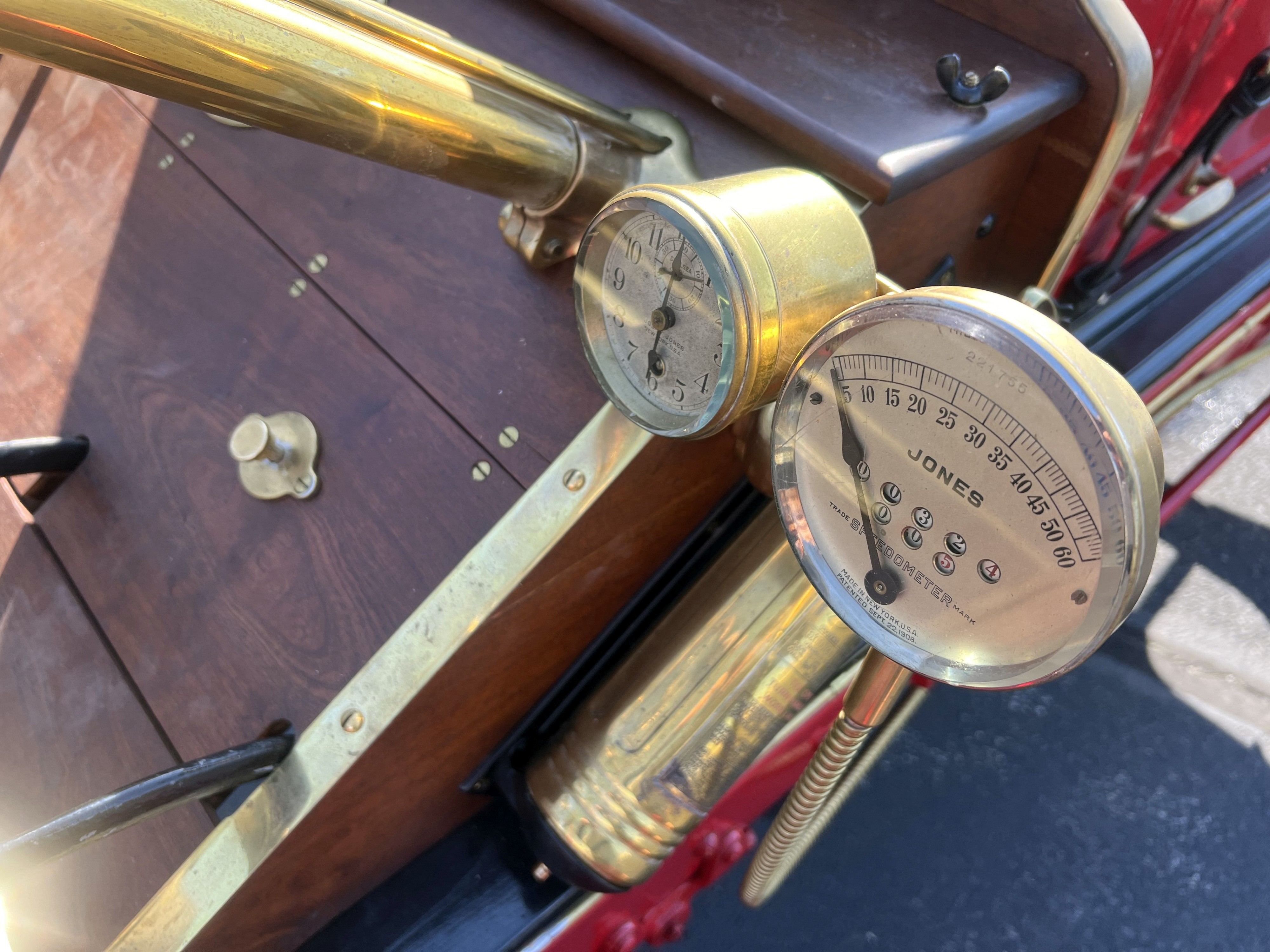
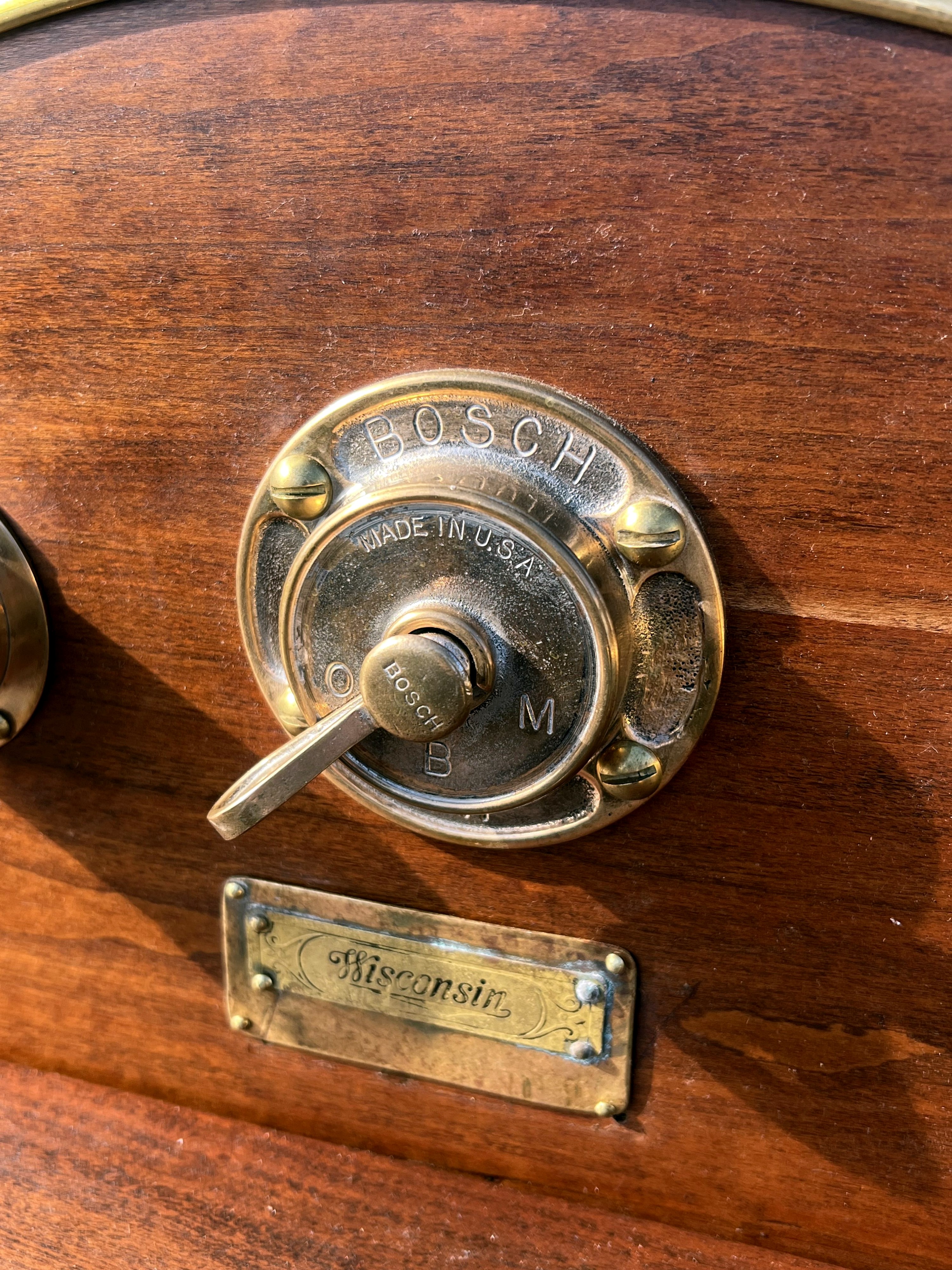
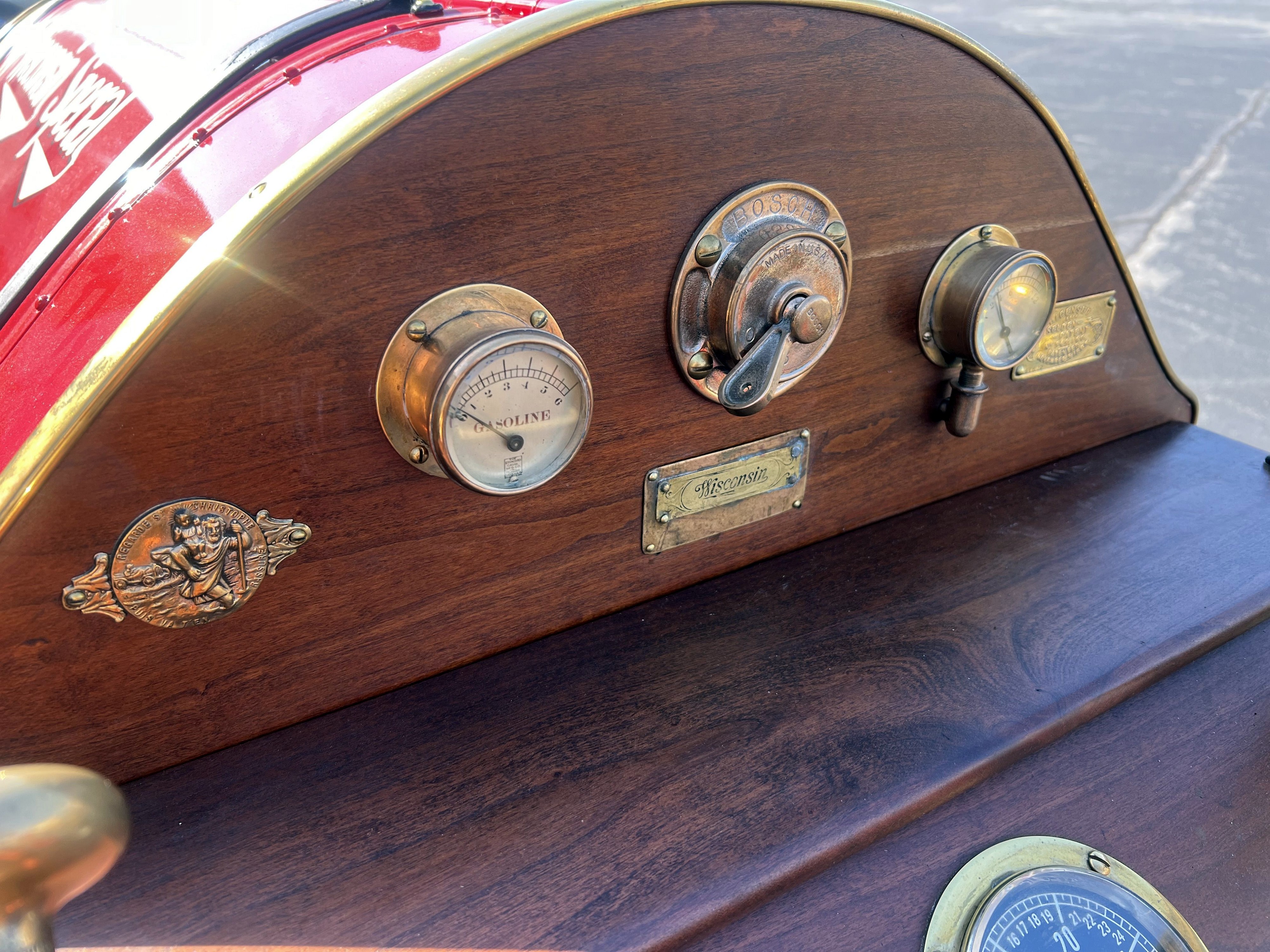
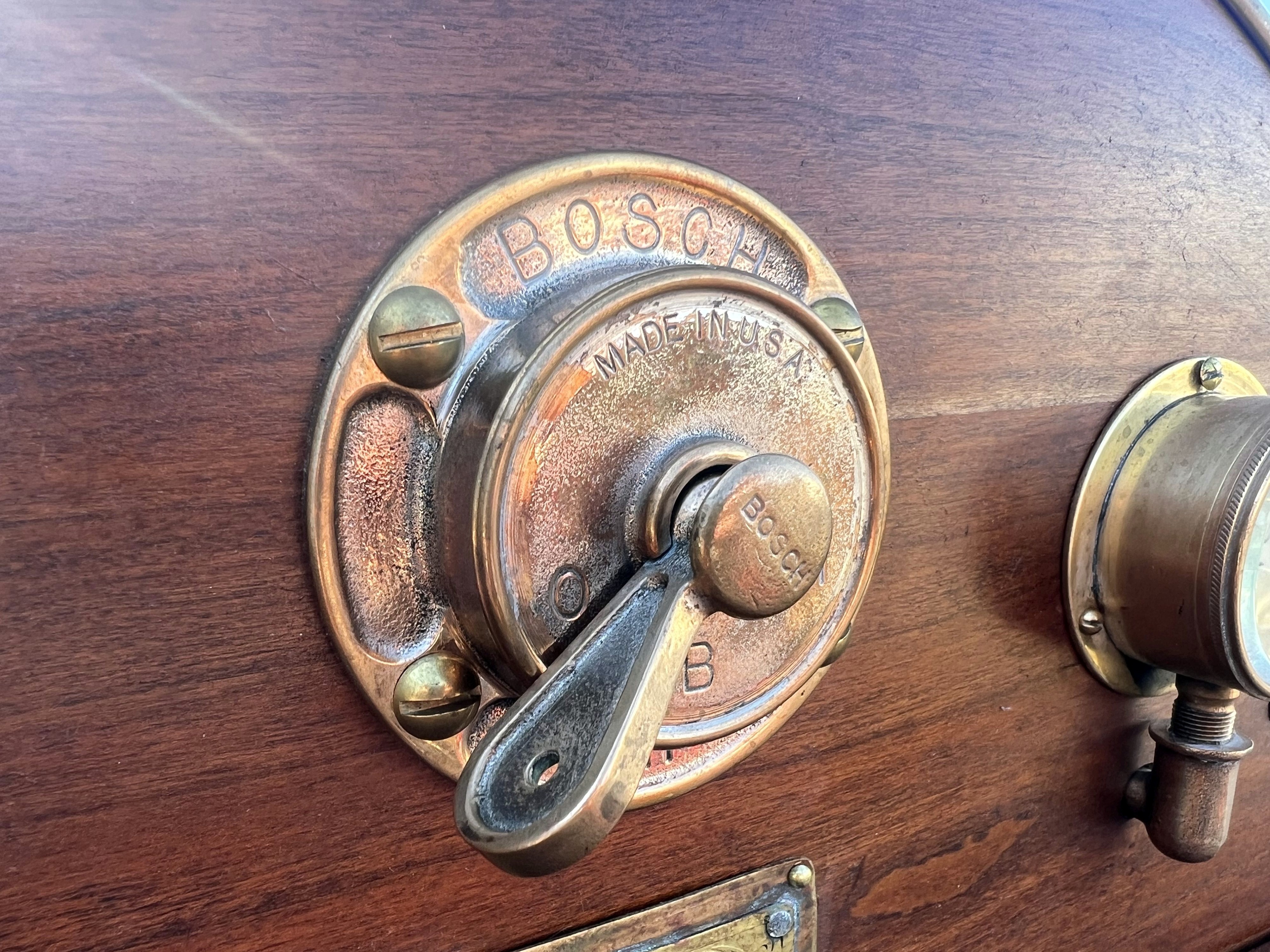
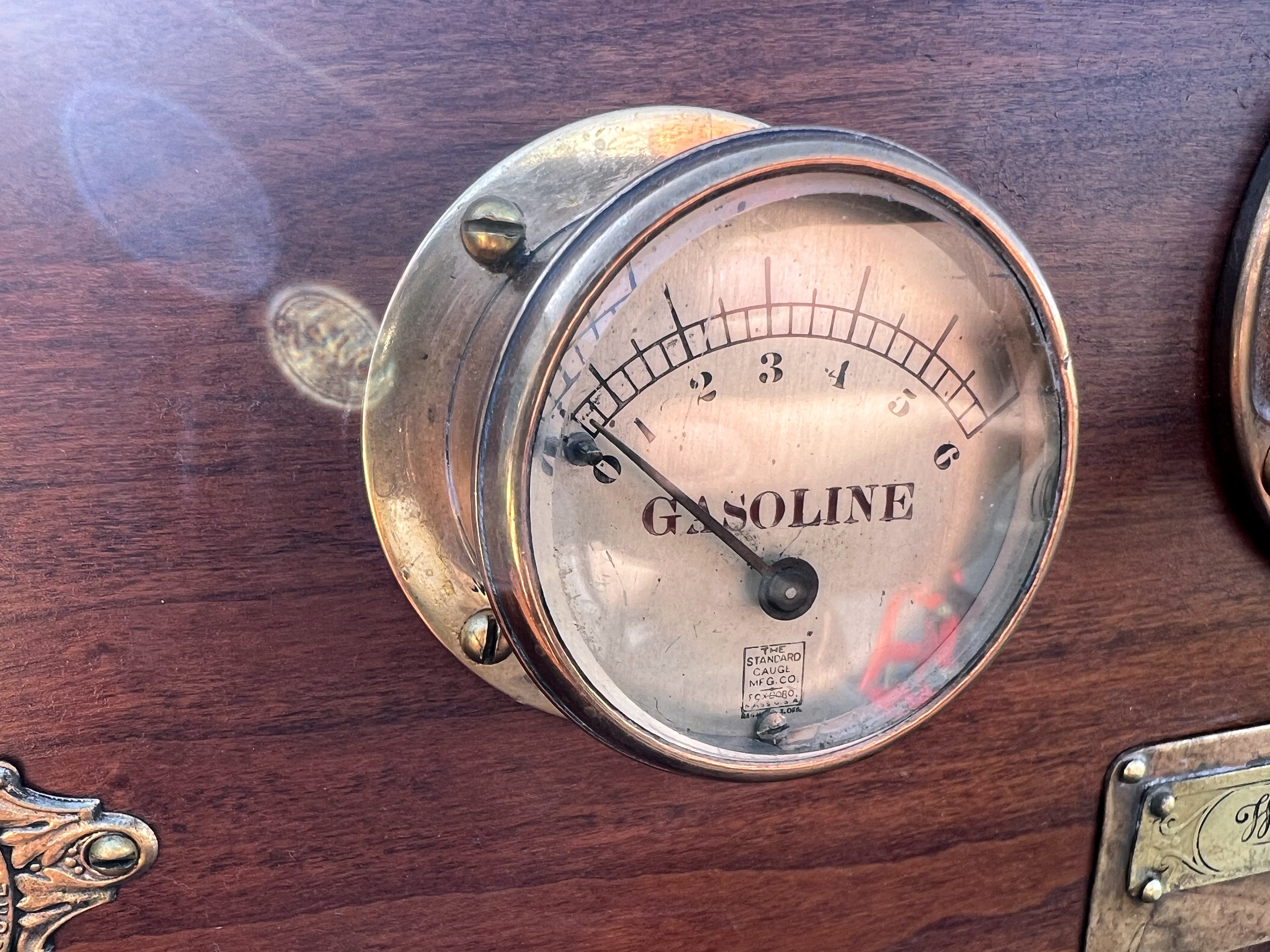
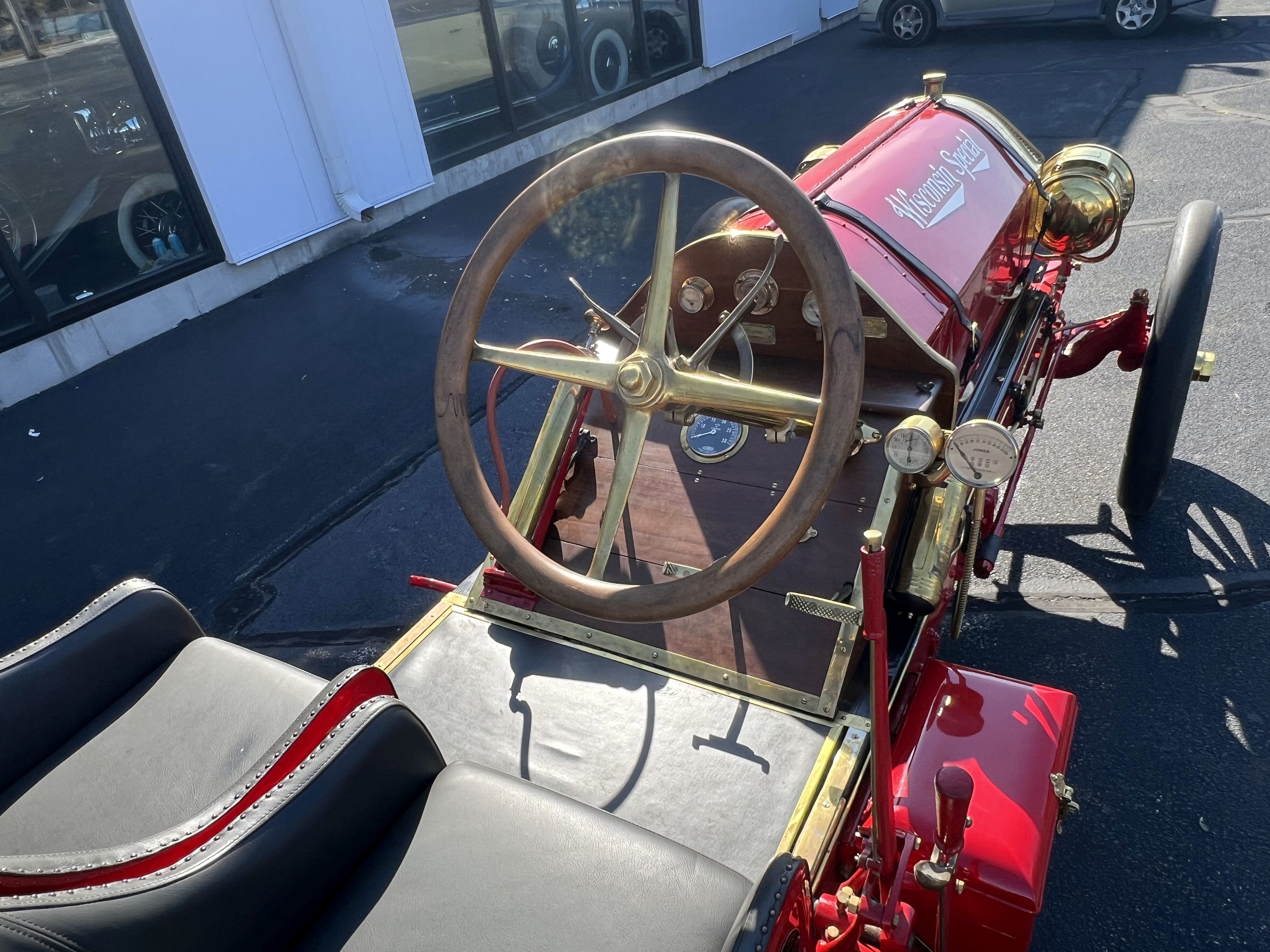
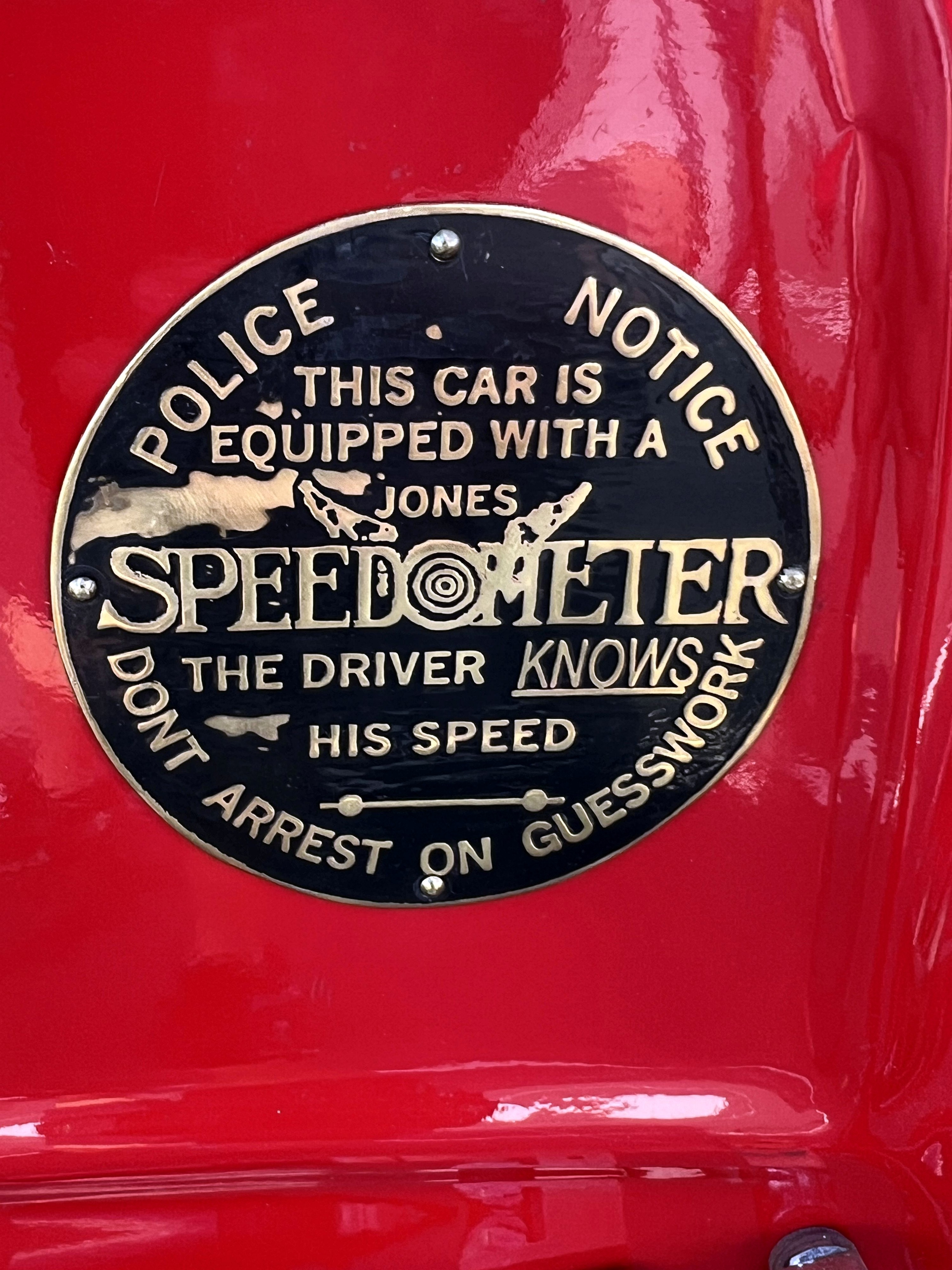
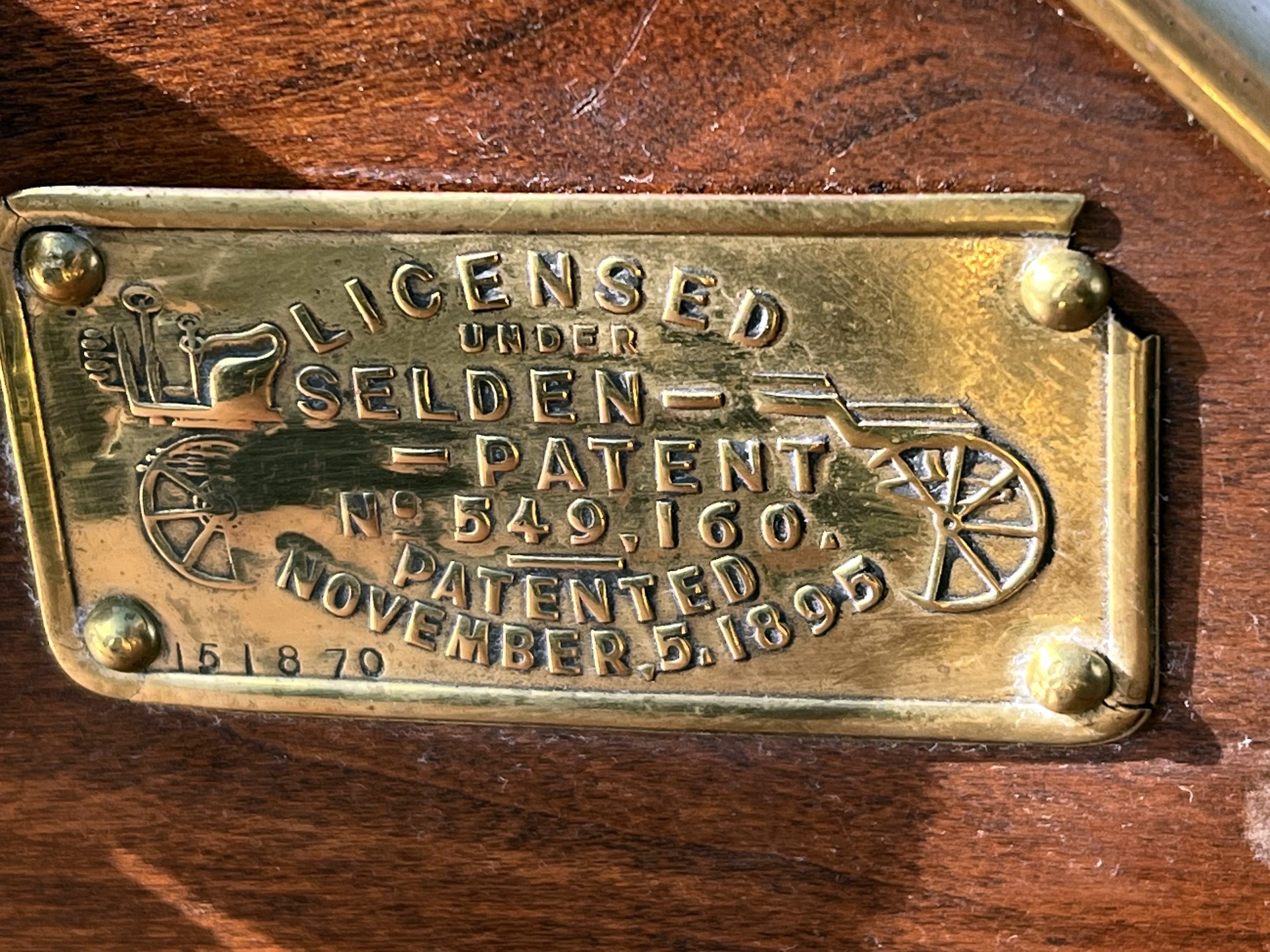
The car’s interior includes gray leather bucket seats. The wood-spoke steering wheel sits ahead of a brass-fitted dashboard panel housing a Corbin-Brown tachometer, a range of ancillary gauges and accessories, and Wisconsin and Selden Patent badges. Mounted to the driver’s right is a Jos. W. Jones clock and a Jones 60-mph speedometer, the latter of which incorporates a five-digit odometer showing 300 miles. The right-hand-drive cockpit hosts a pair of barrel-back seats trimmed in gray upholstery with nailhead accents. Additional features include brass hardware, black floor trim, one hand-operated fuel pump for the passenger and driver, and a Pyrene fire extinguisher.
The car entered the care of the Dick Shappy Collection in October 2023 and is now offered in Providence, Rhode Island.
The Mitchell-Lewis Motor Company of Racine, Wisconsin, produced a wide range of automobiles from 1903 to 1923, including standard cars, trucks, and buses. It started out as a wagon maker before venturing into cars, initially a regional competitor to the Auburn Automobile Company. Mitchell was an early adopter of four-cylinder engines and later offered six-cylinder models, as well as a short-lived V-8 and V-12. It produced expensive vehicles from 1901 until 1938, and Mitchell cars gained a reputation for solid construction and quality, producing a variety of models, including runabouts, touring cars, and limousines. A styling change in 1920, featuring a slanted radiator, was not well-received, earning the nickname “Drunken Mitchell” and contributing to the company’s decline. Despite strong sales in the early years, the company faced financial difficulties in 1913, leading to changes in management and ultimately to its sale to Nash Motors in 1923, marking the end of Mitchell automobile production.
Based in Milwaukee, the Wisconsin Motor Manufacturing Company began building internal combustion engines in 1909 for a wide range of automotive, heavy-duty, industrial, agricultural, maritime, and stationary applications. Wisconsin’s T-head engines were available in both four- and six-cylinder configurations and were utilized by automakers such as Stutz, Pierce-Arrow, and Midget microcars in the 1910s. In the 1960s, it was acquired by Teledyne Technologies. Although the Wisconsin brand is still recognized, the company itself was eventually sold to Subaru, and its engine line was merged with the Subaru Robin division.
Click here for 3-minute video.