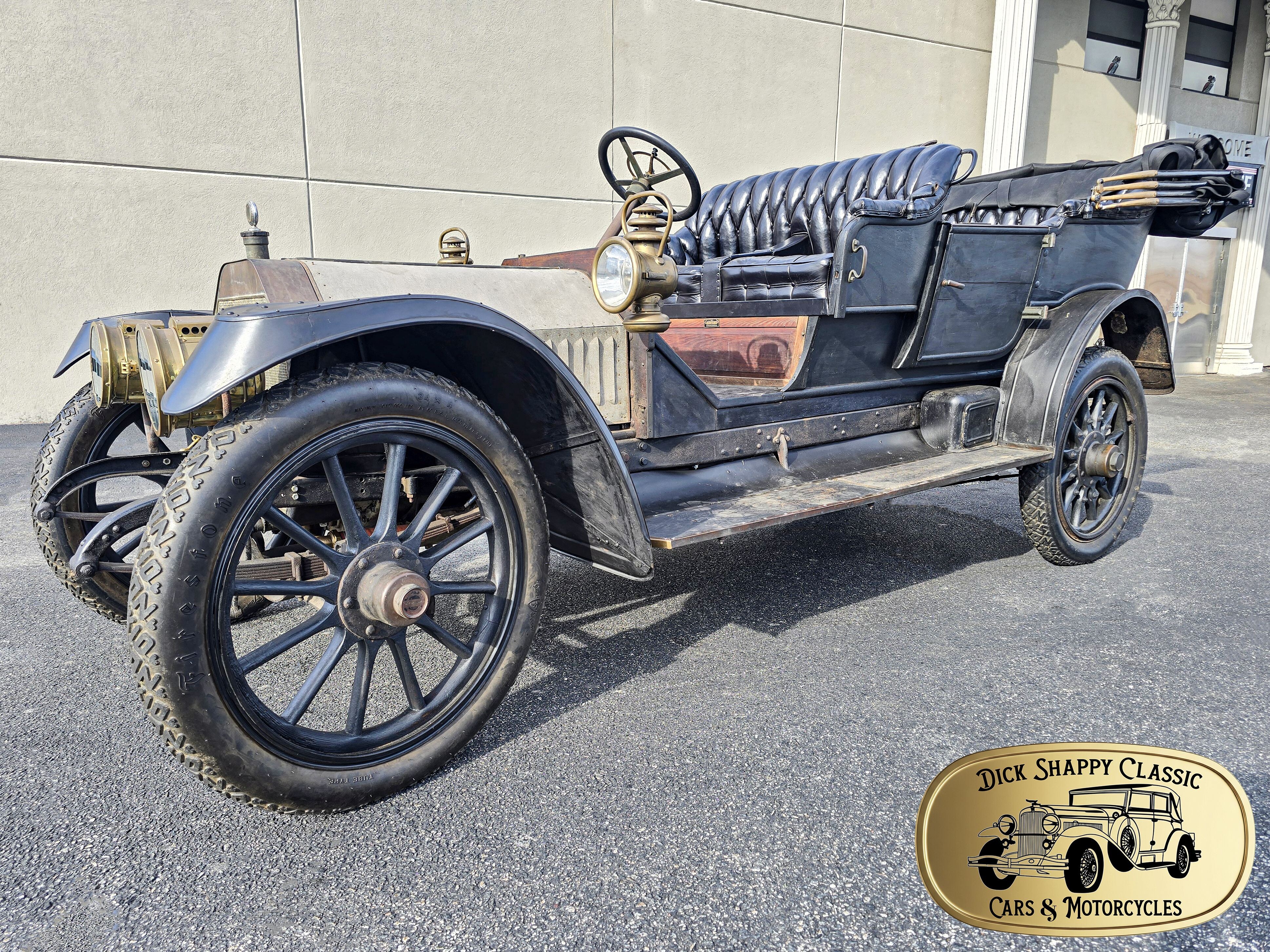
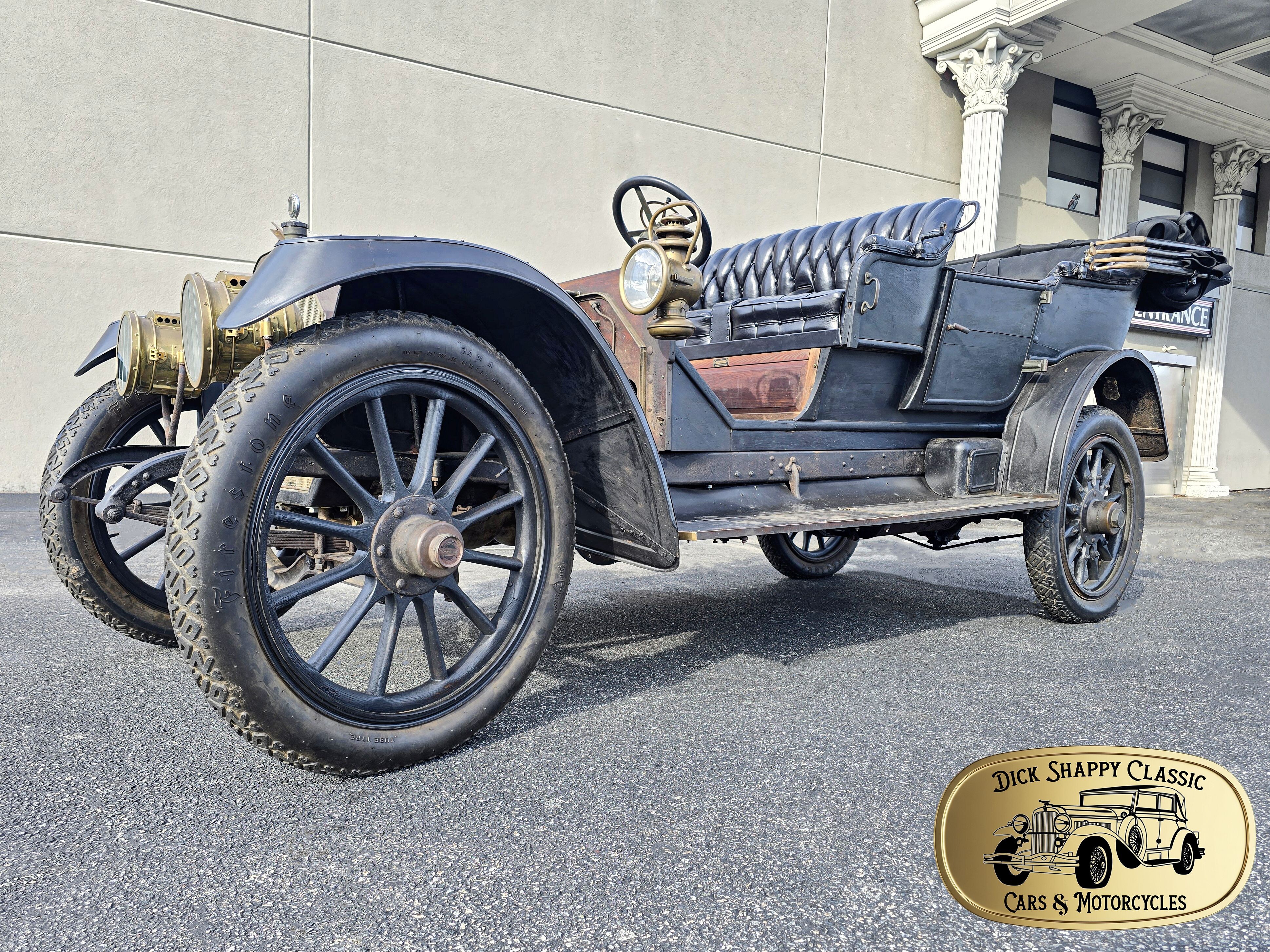
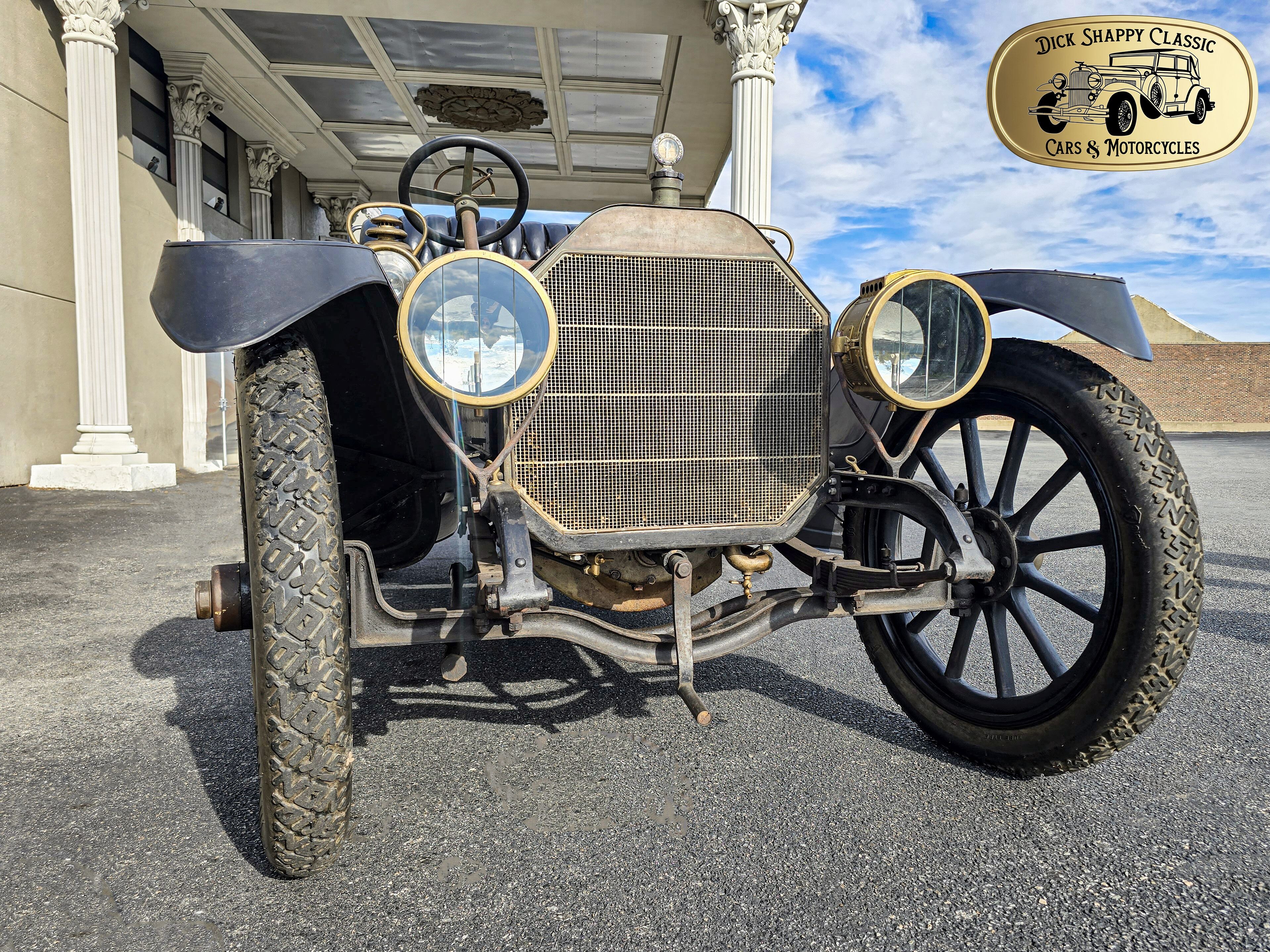
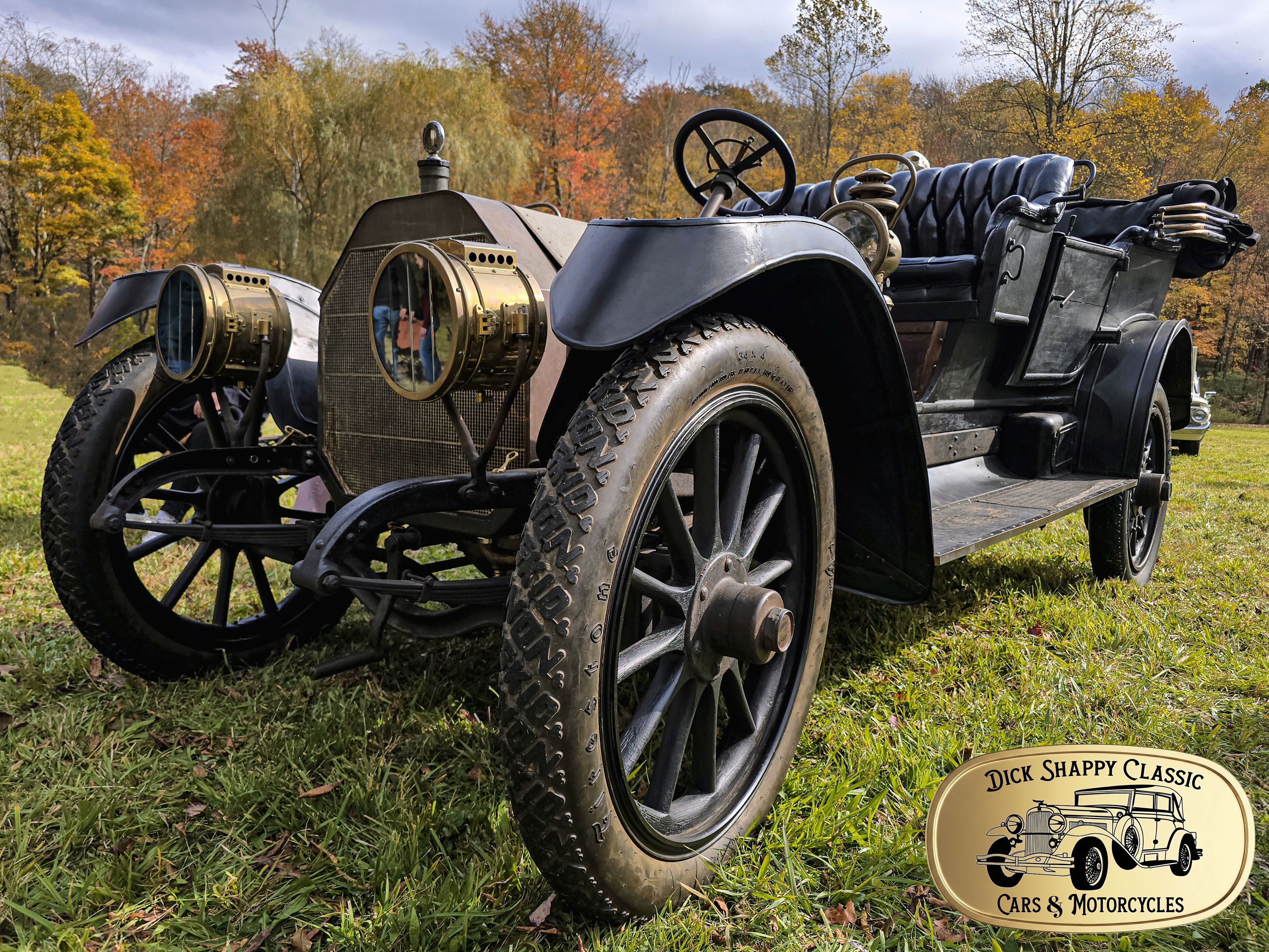
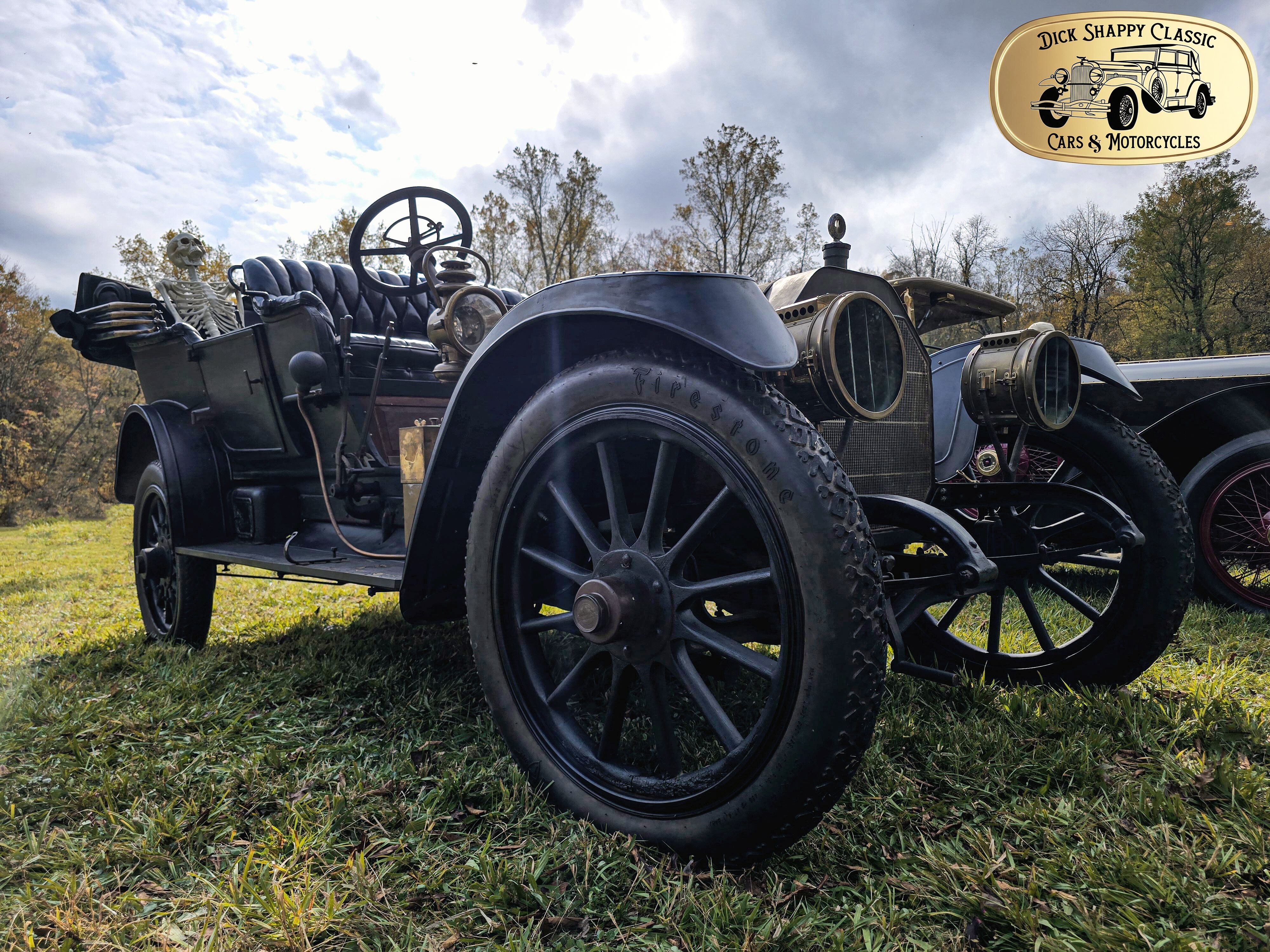
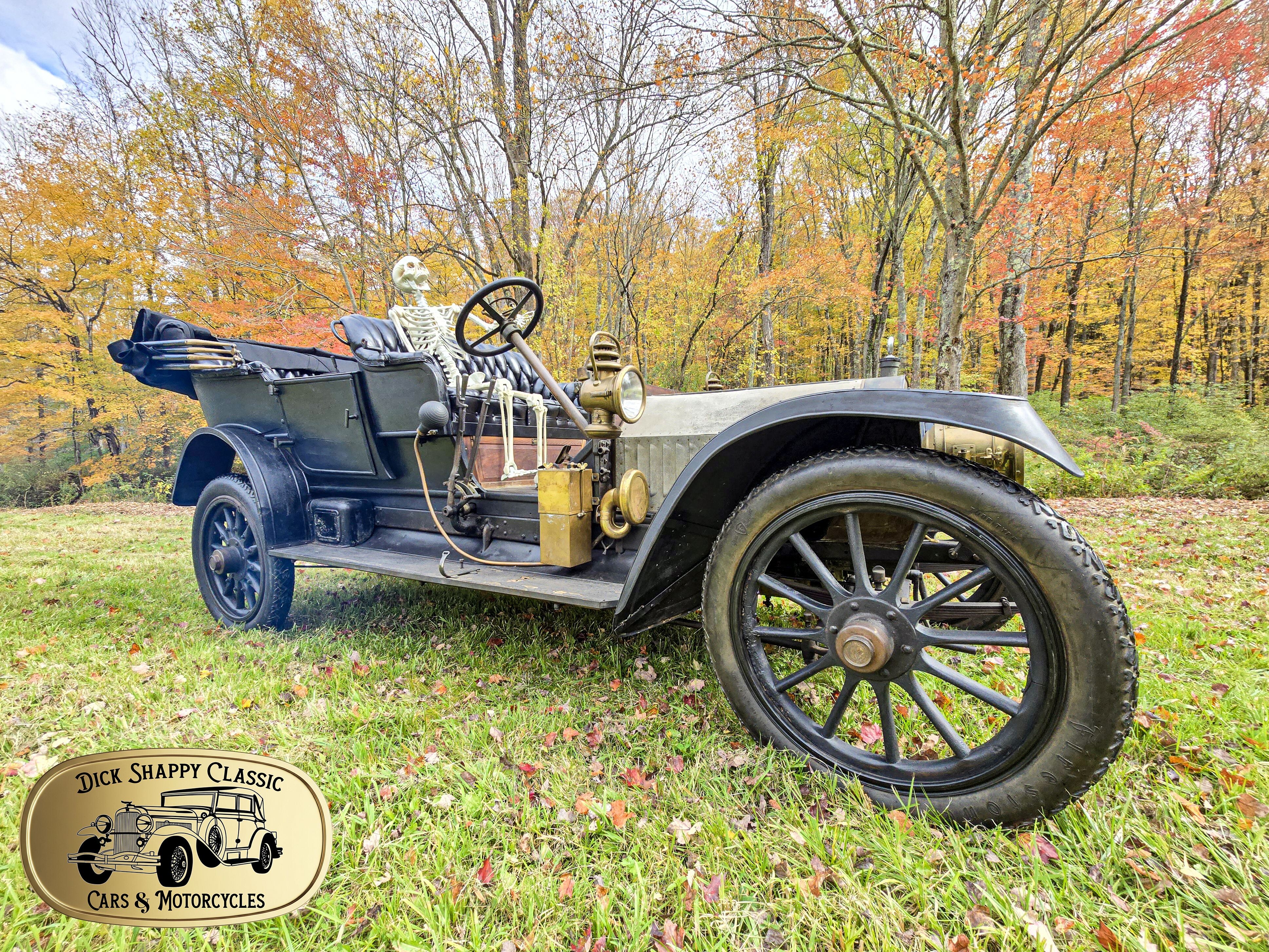
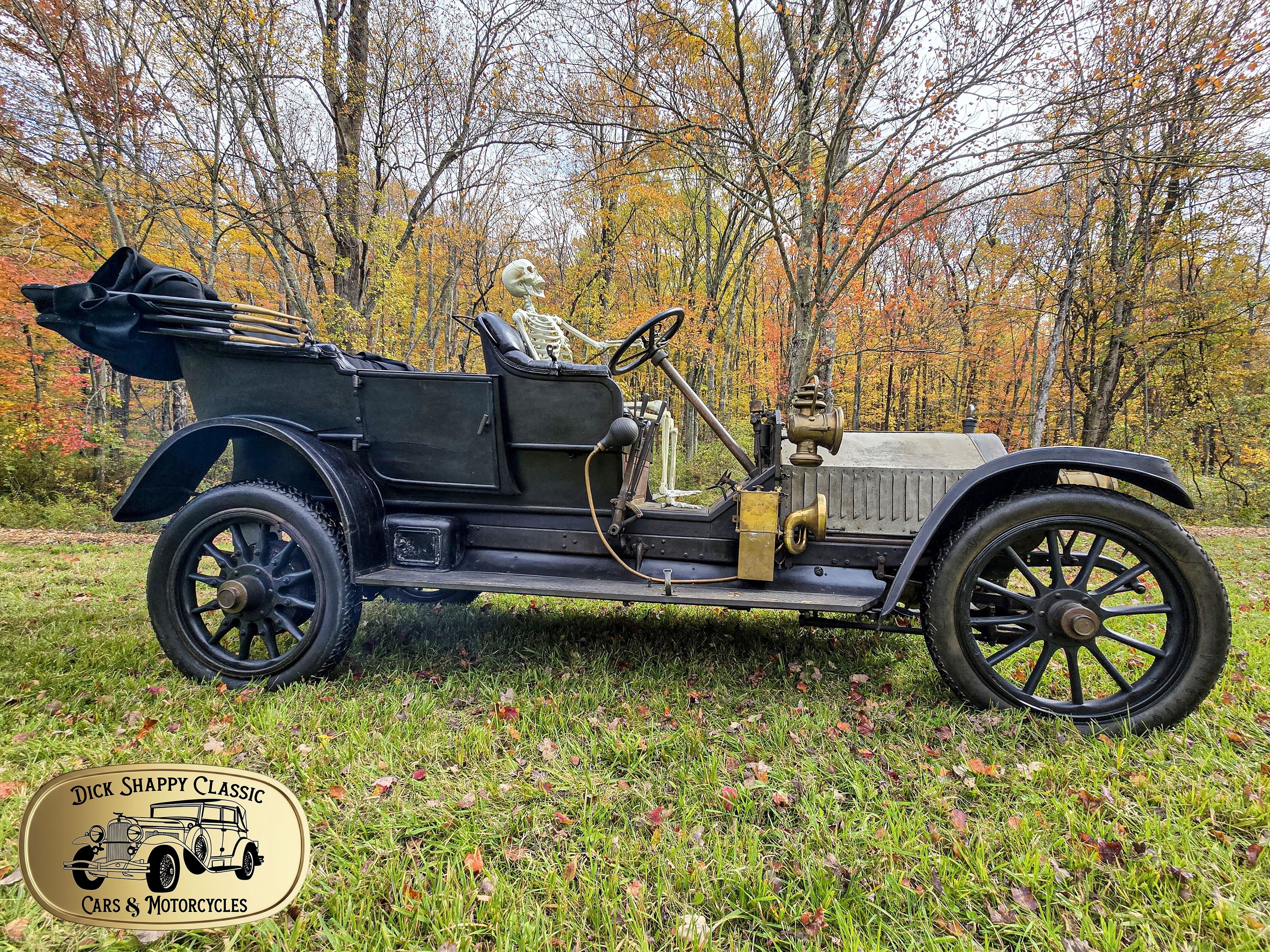
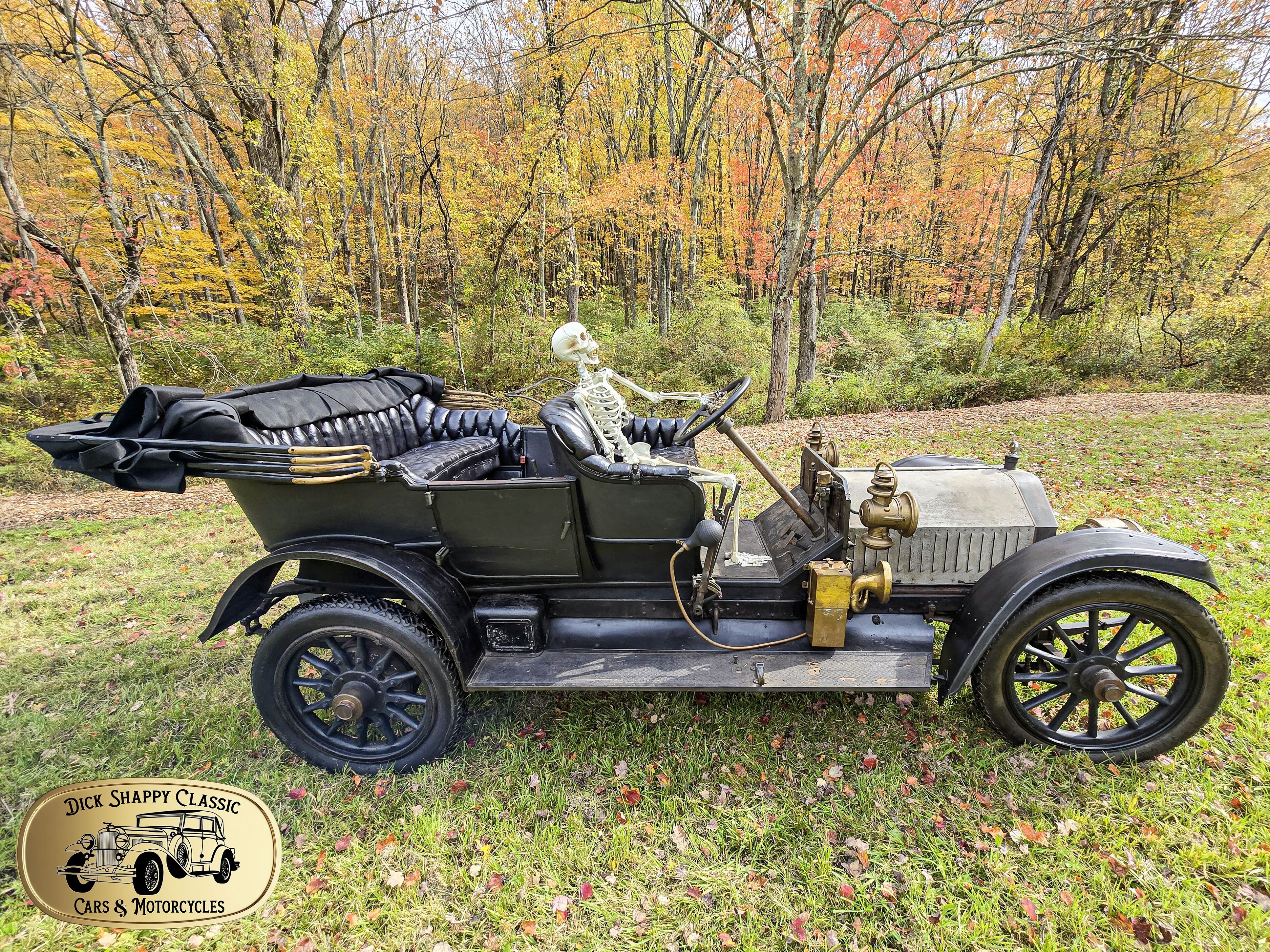
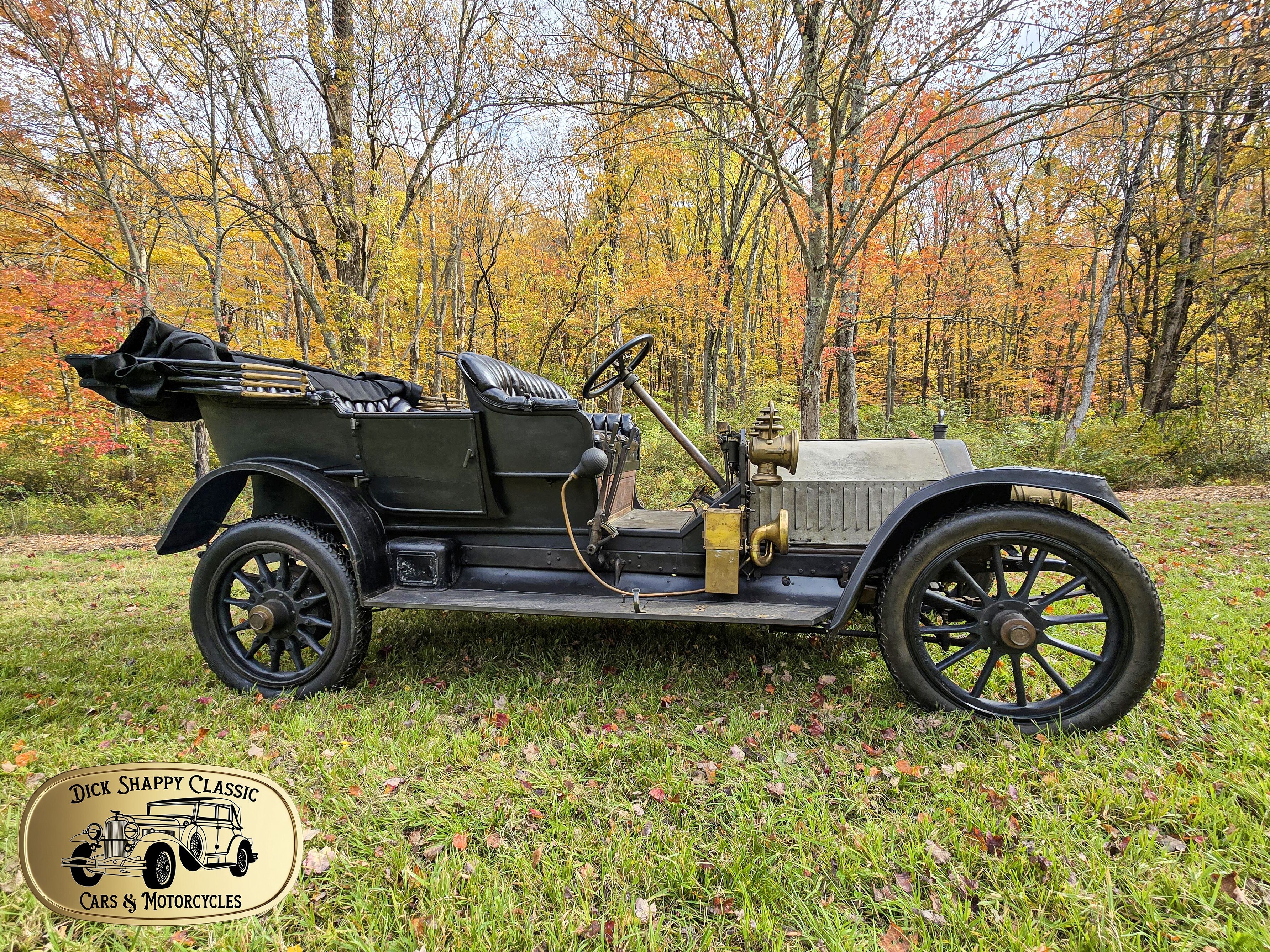
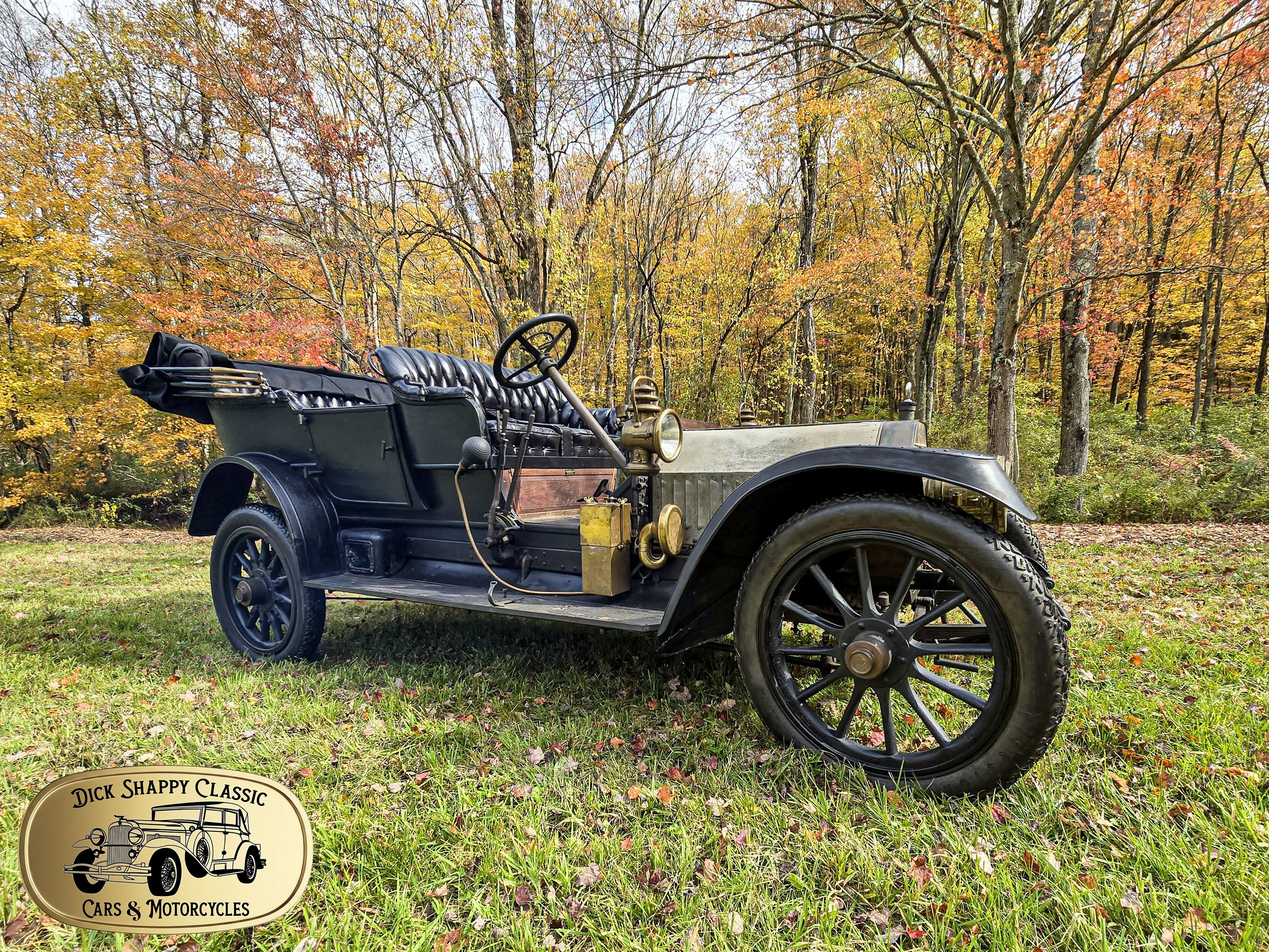


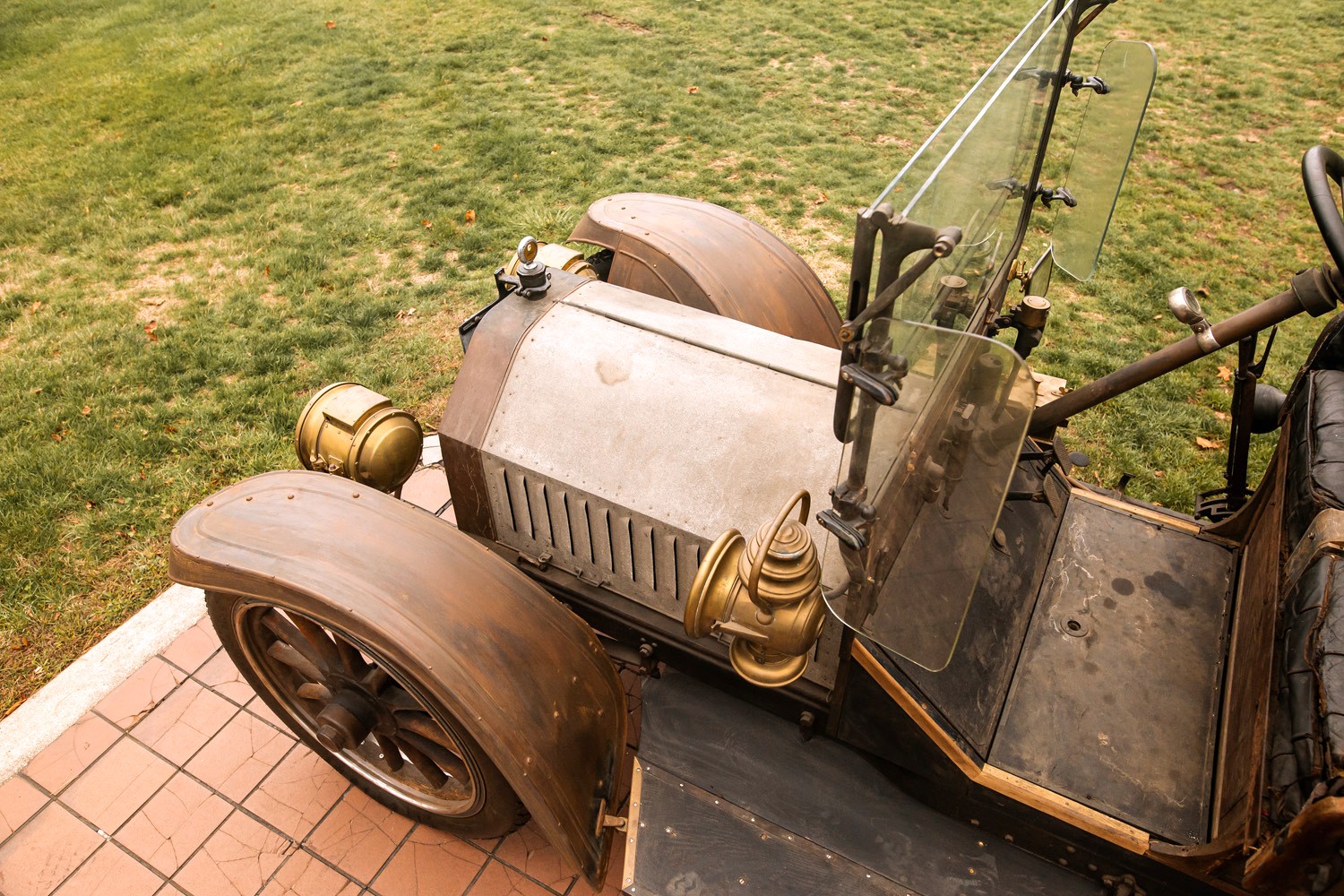

























1909 Locomobile Model 30 Touring
Inventory Number: 3071
$139,000
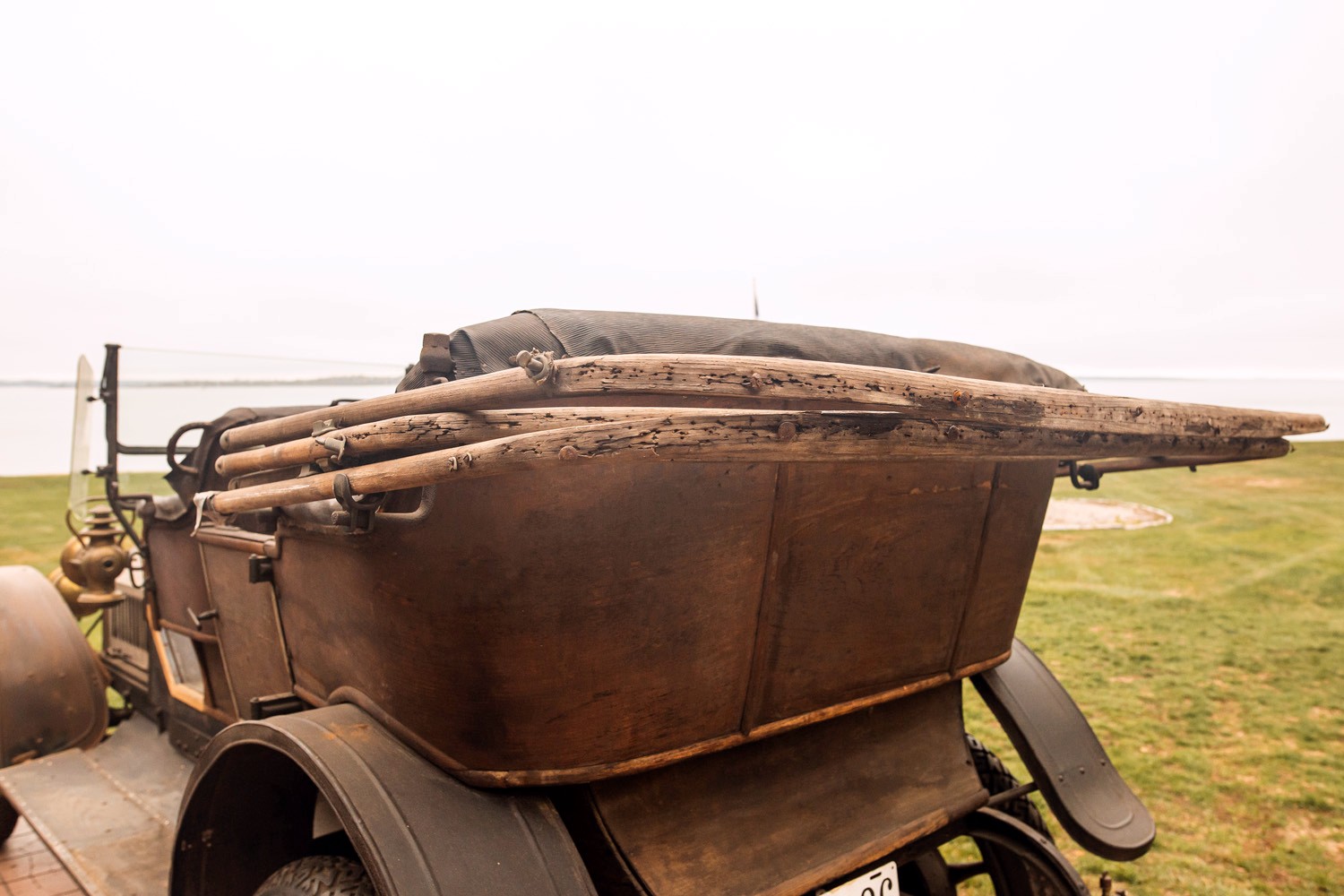
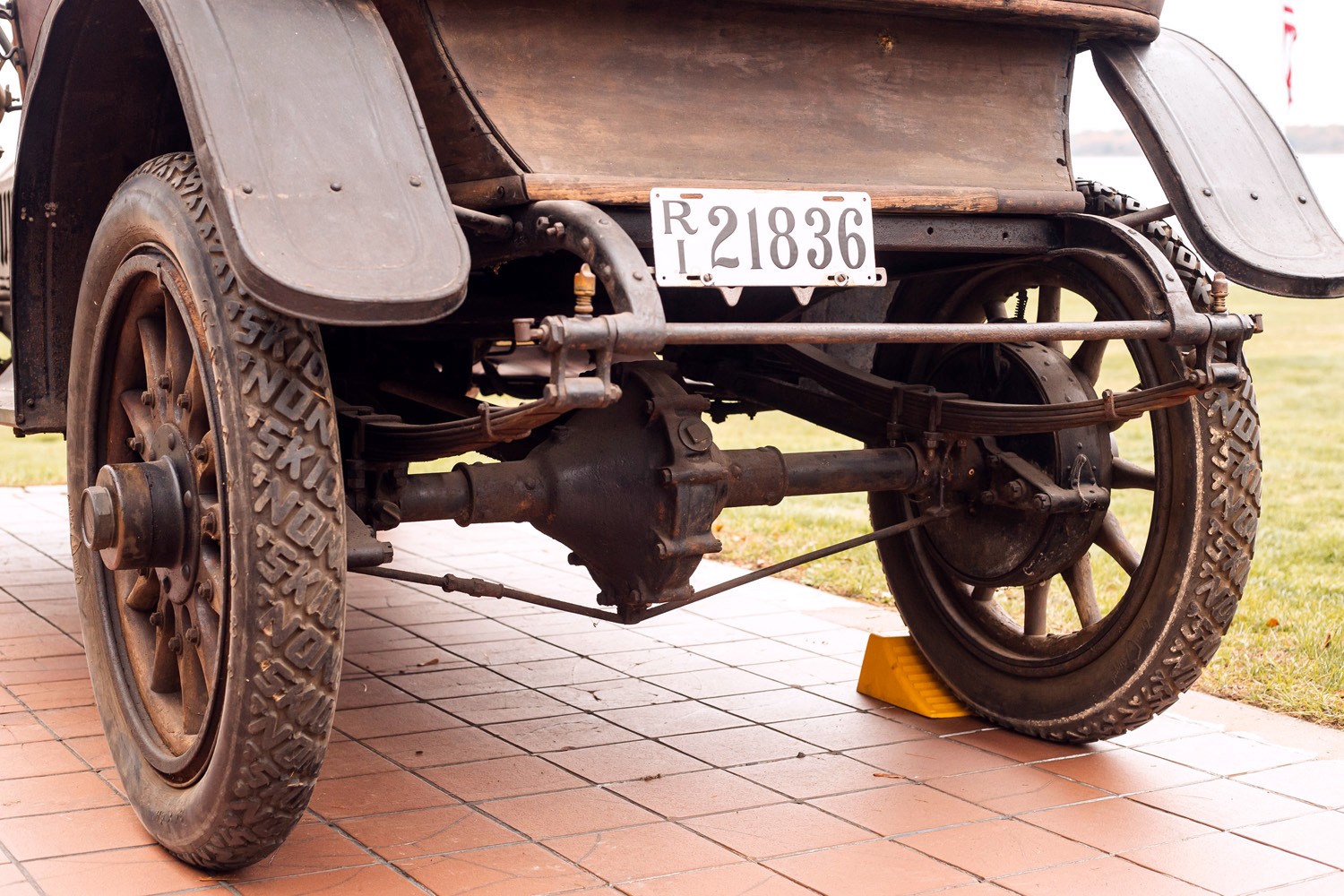
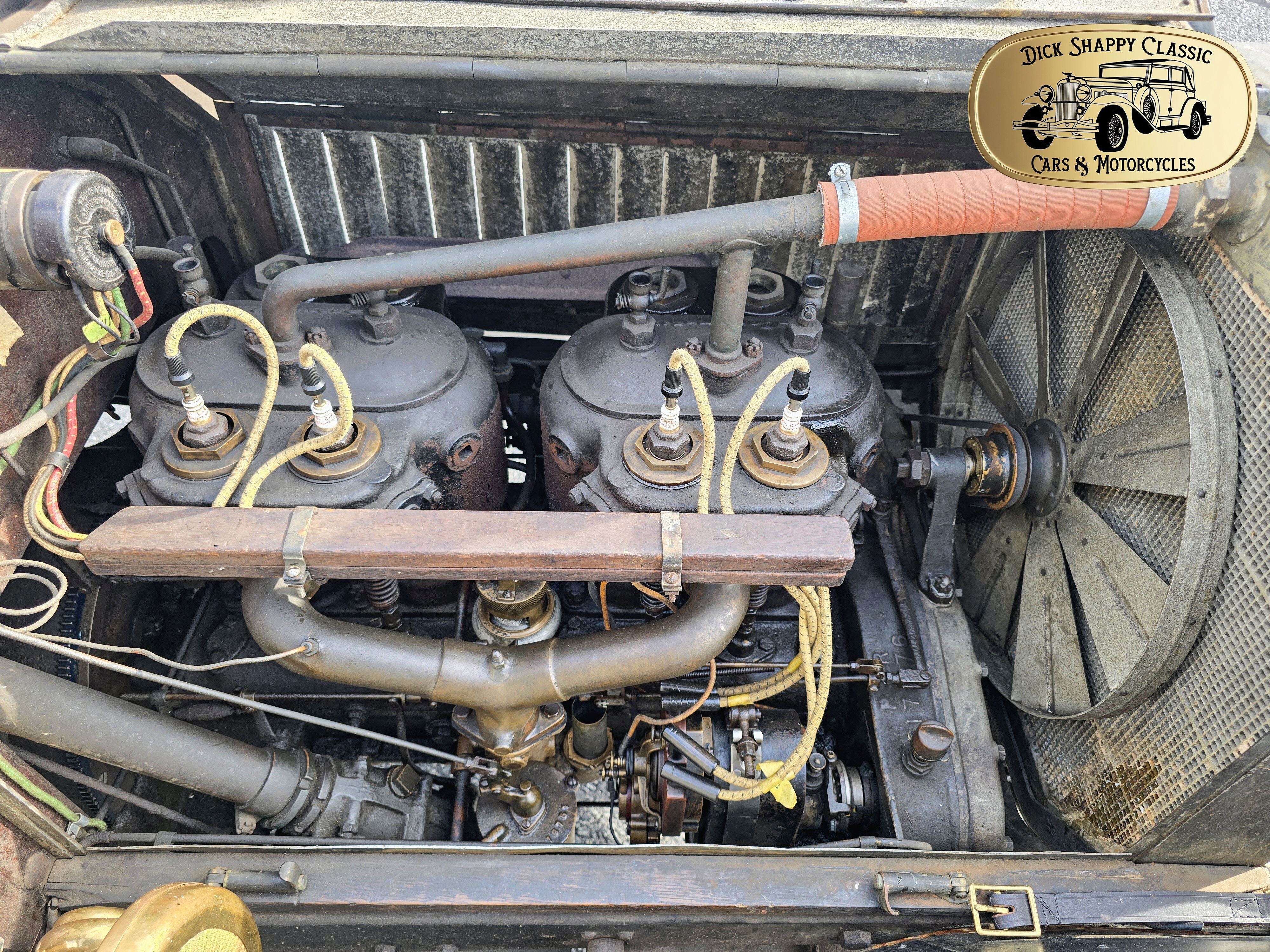
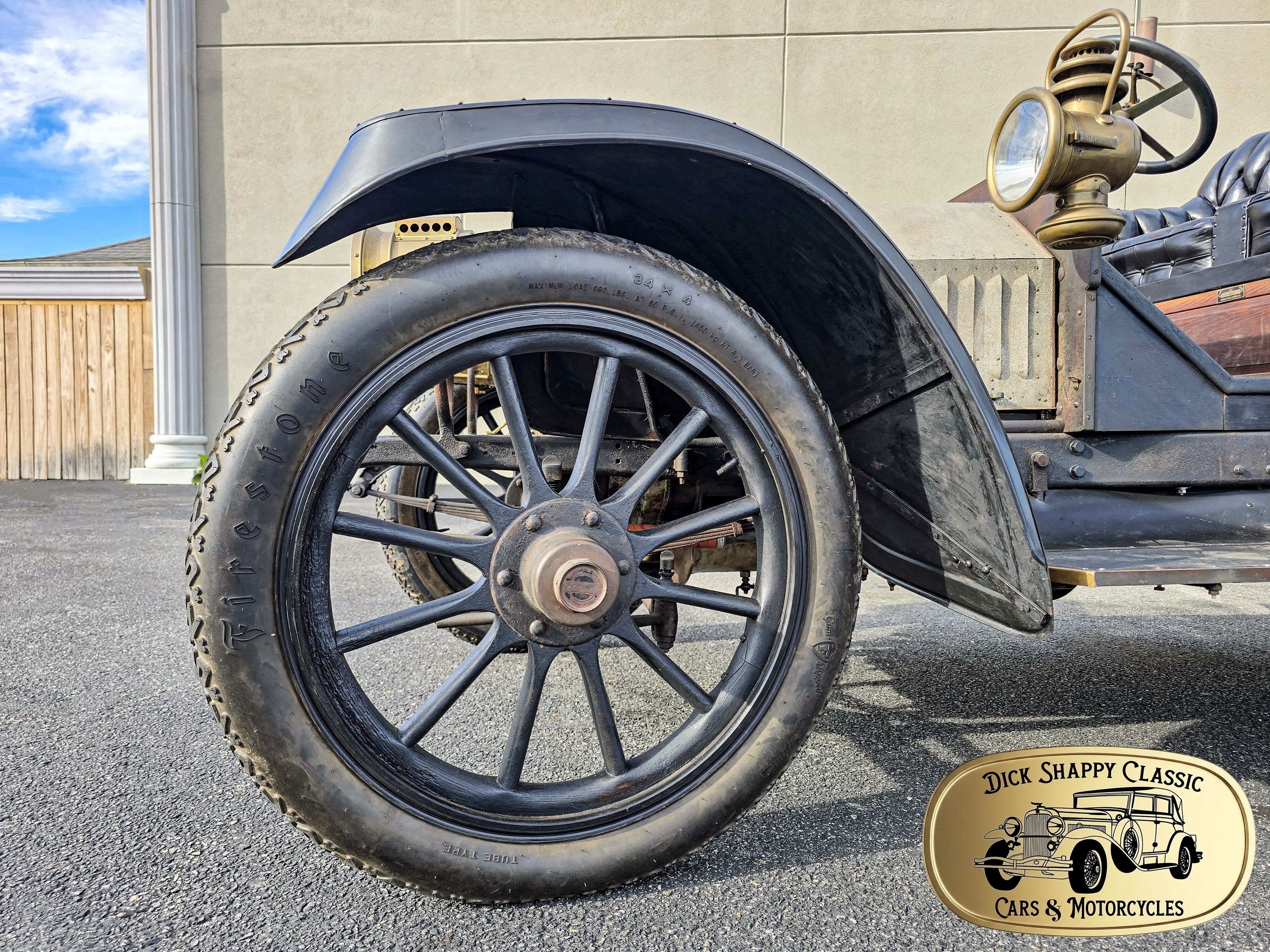
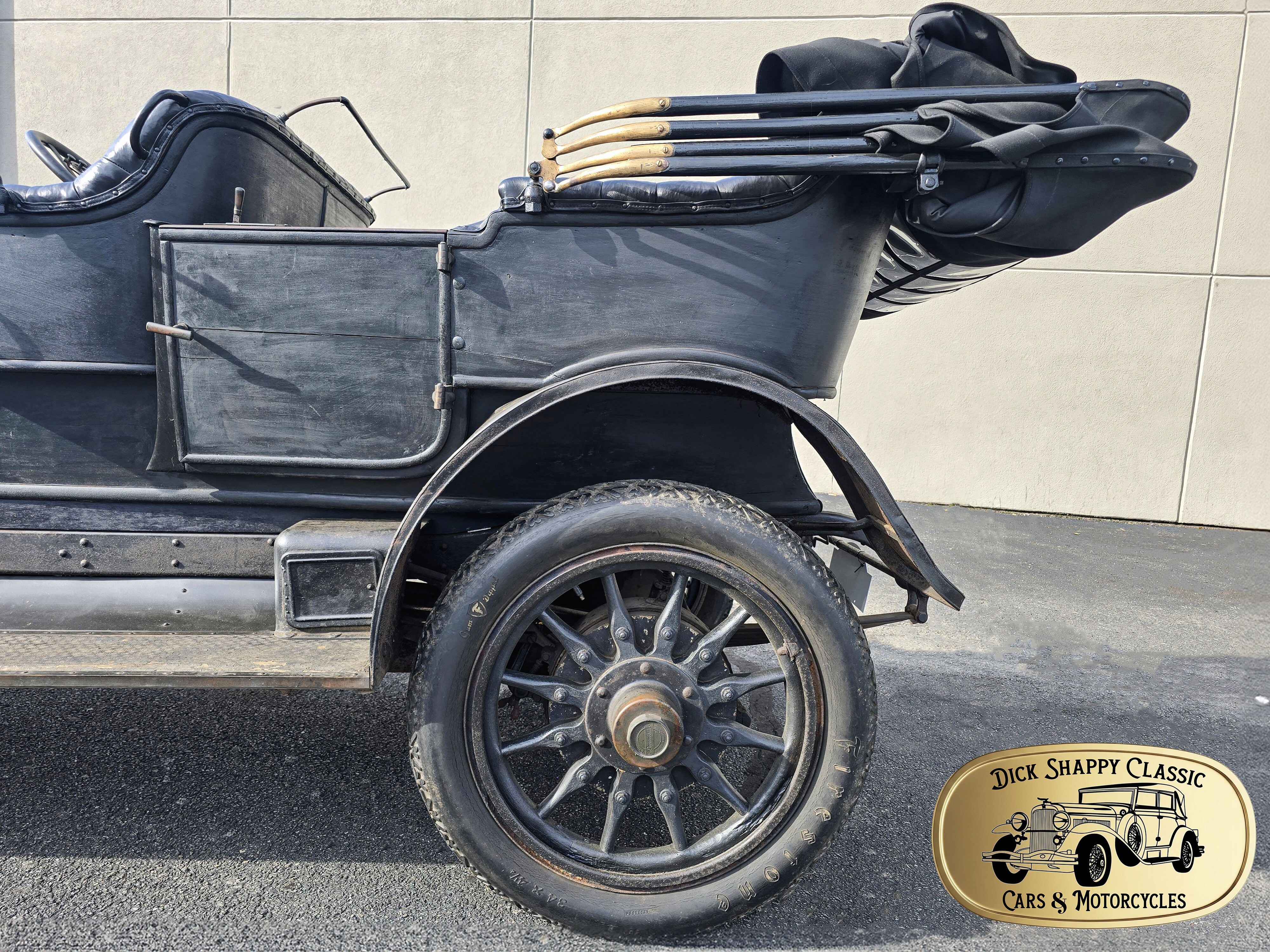
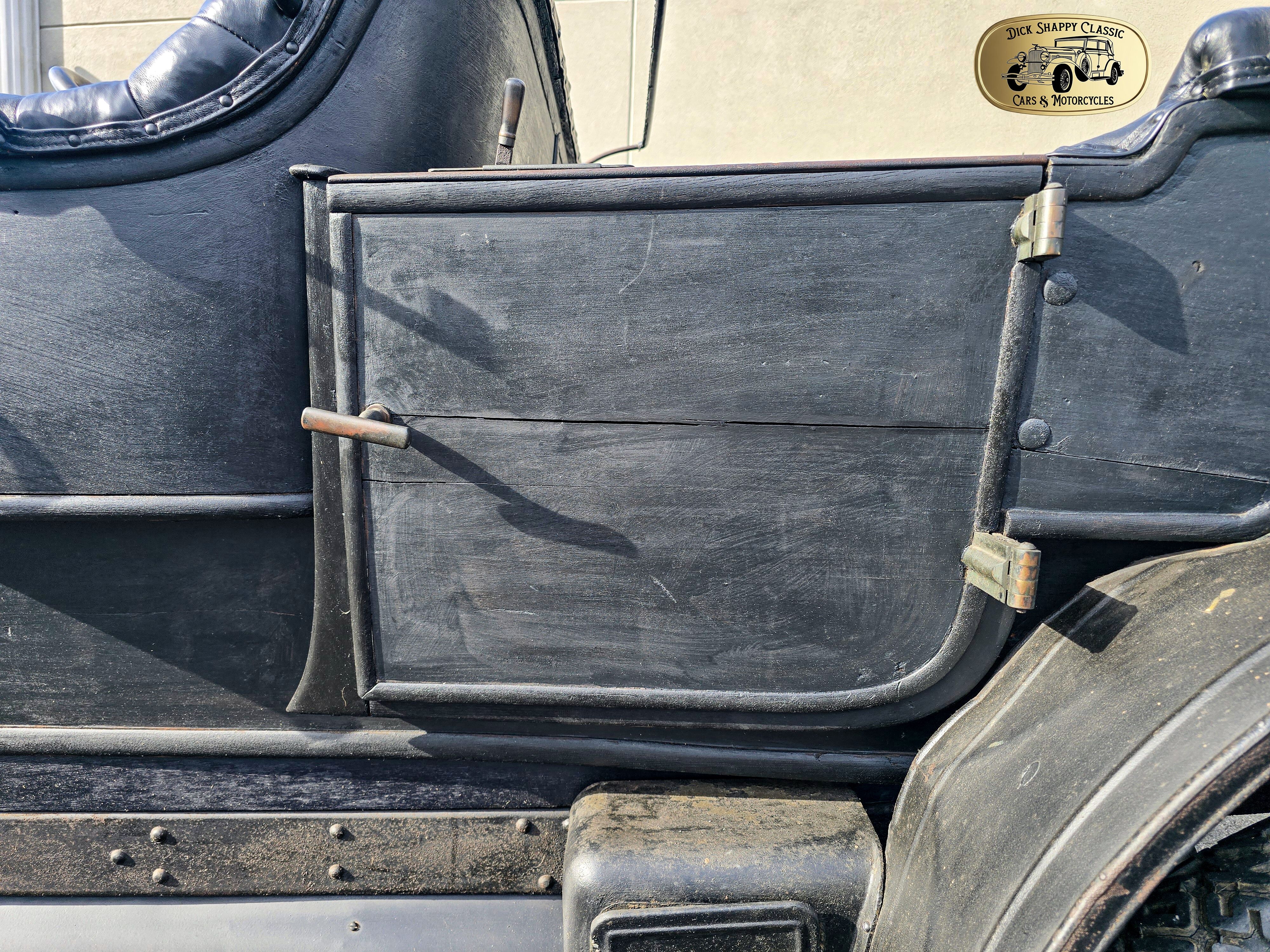
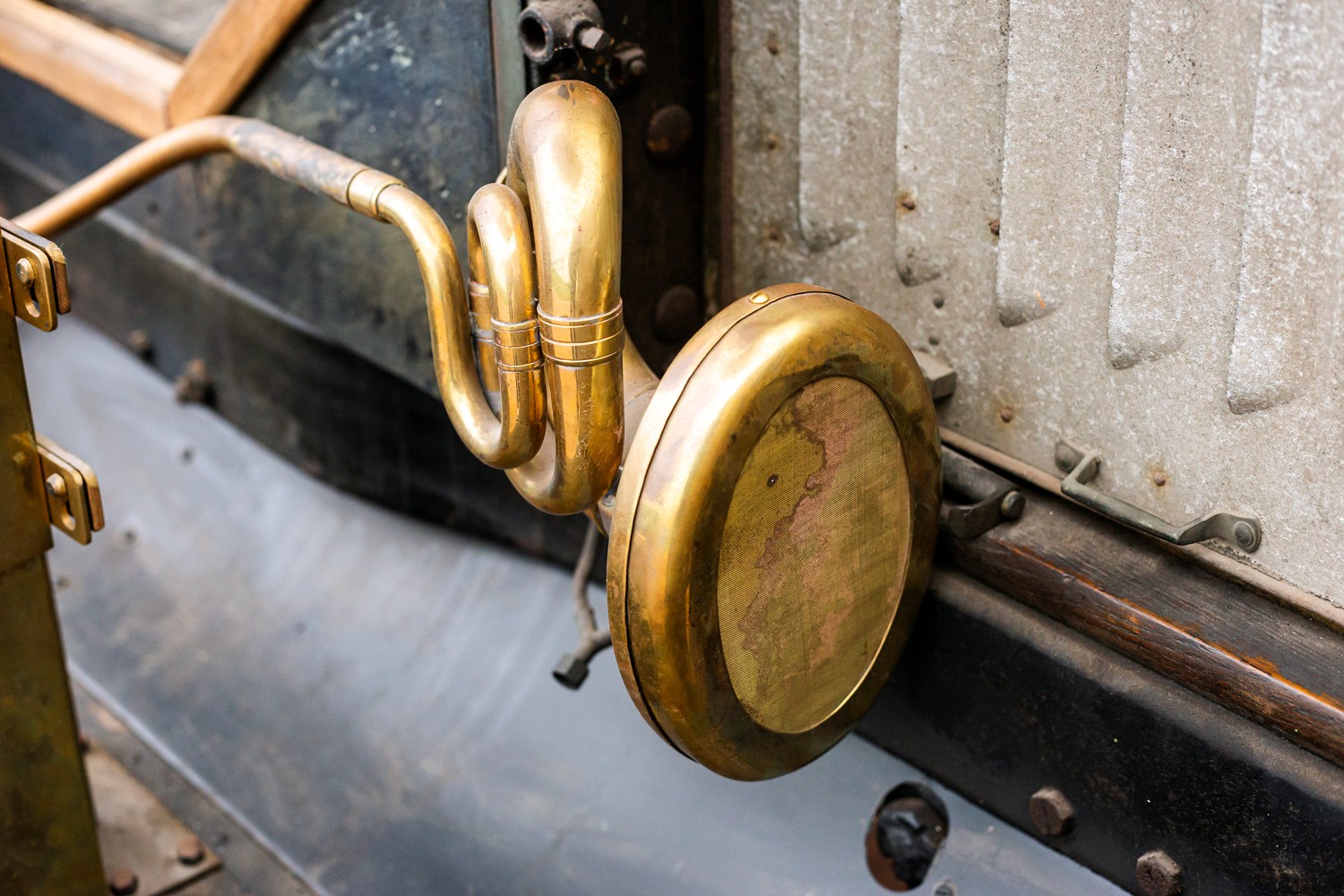
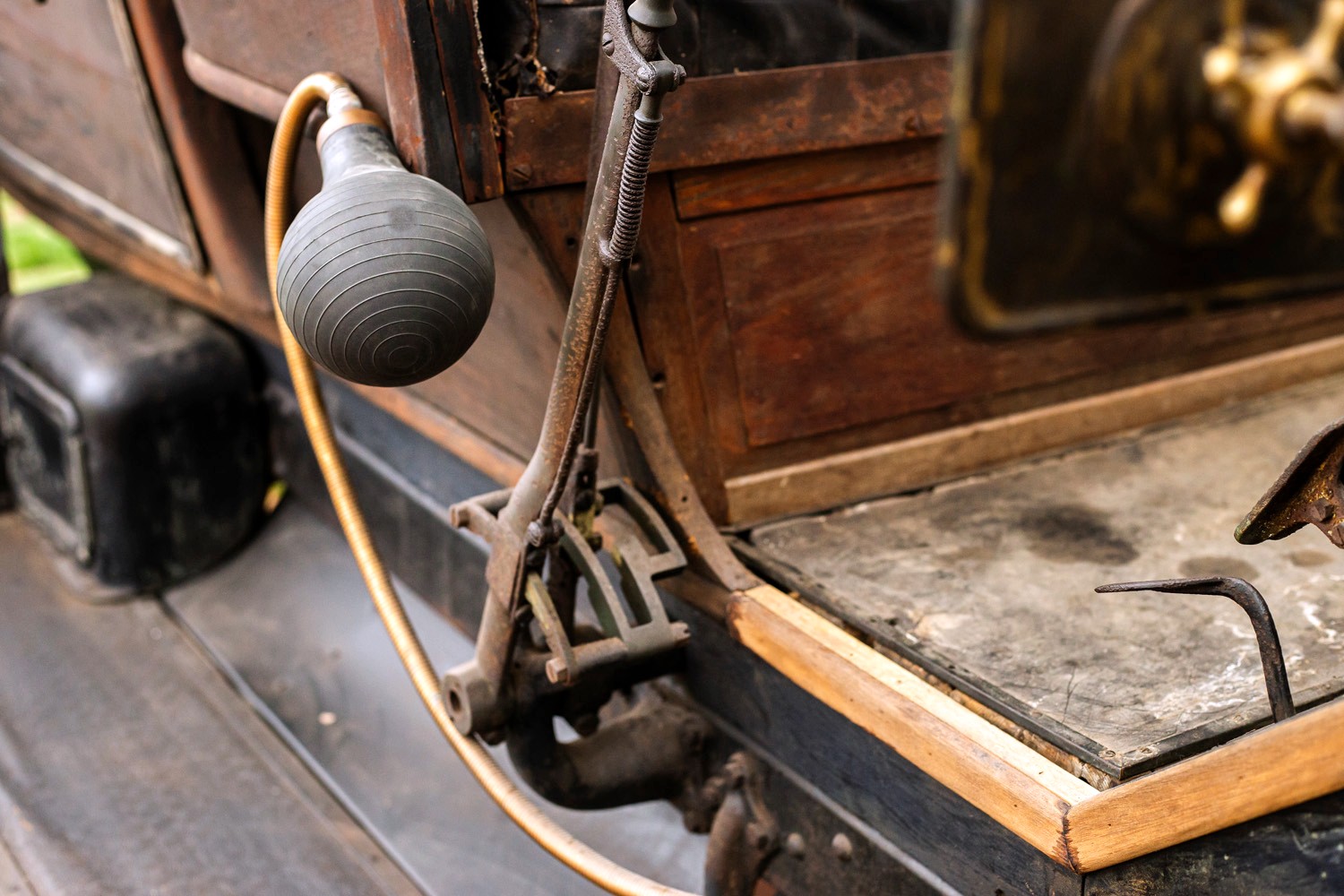
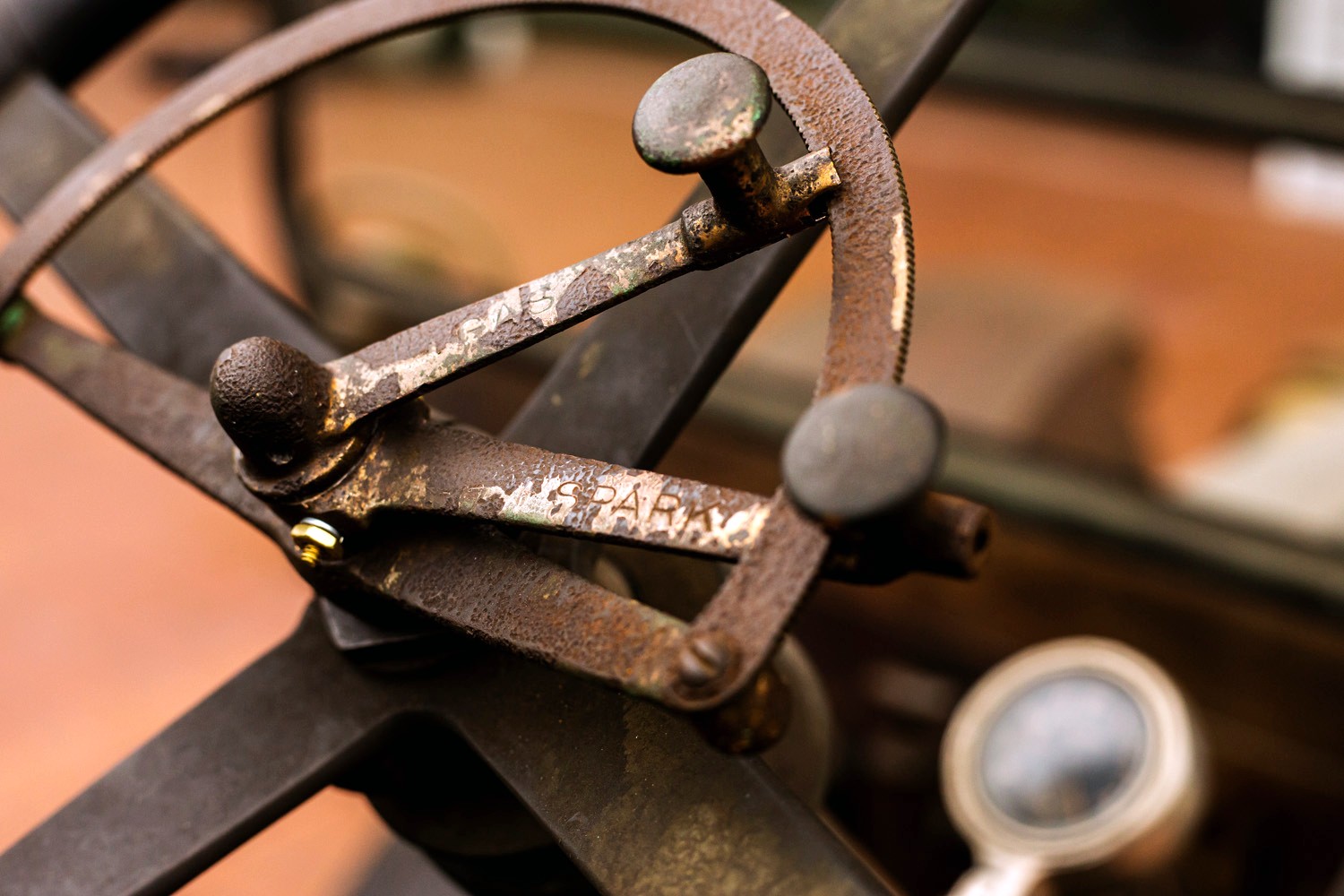
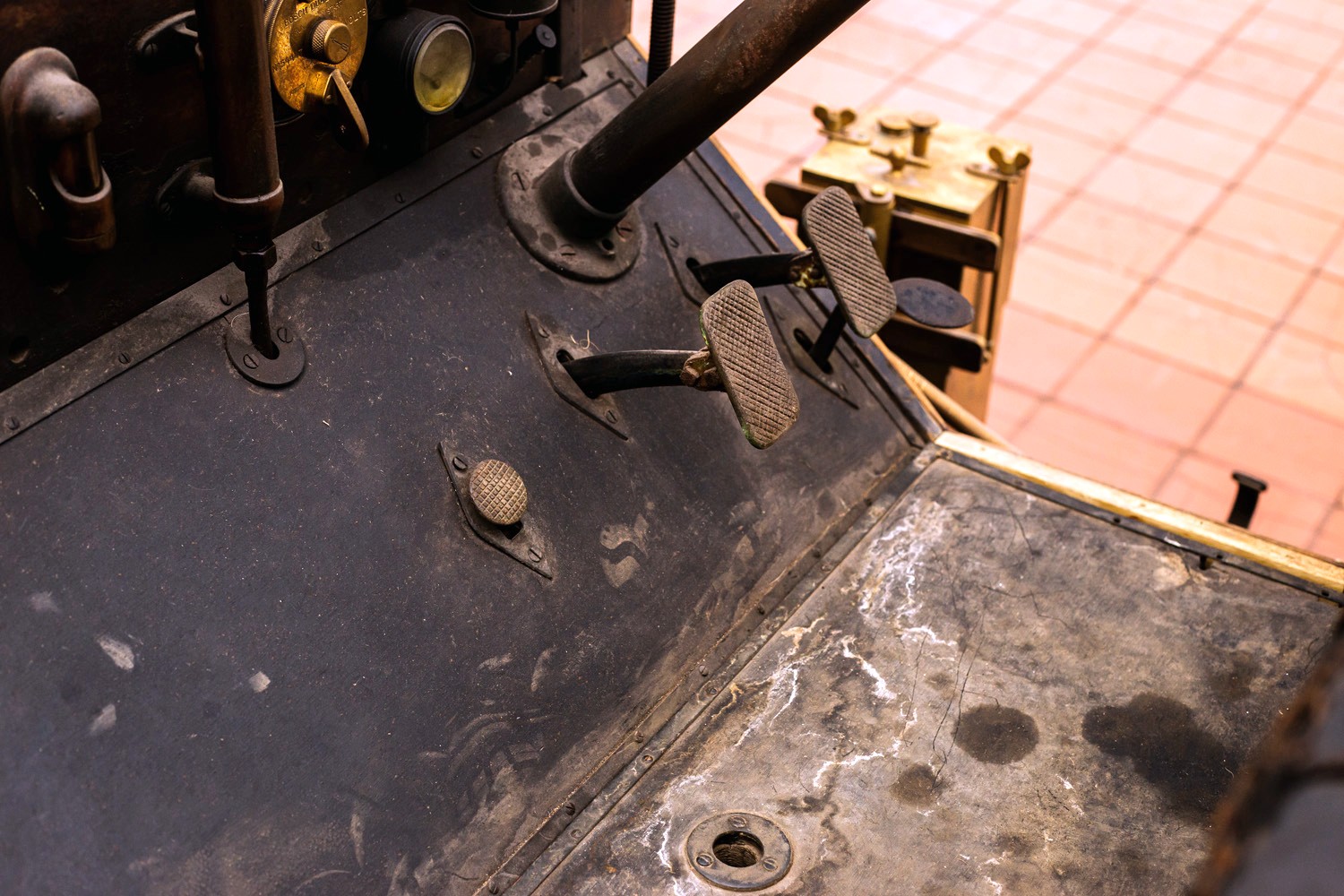
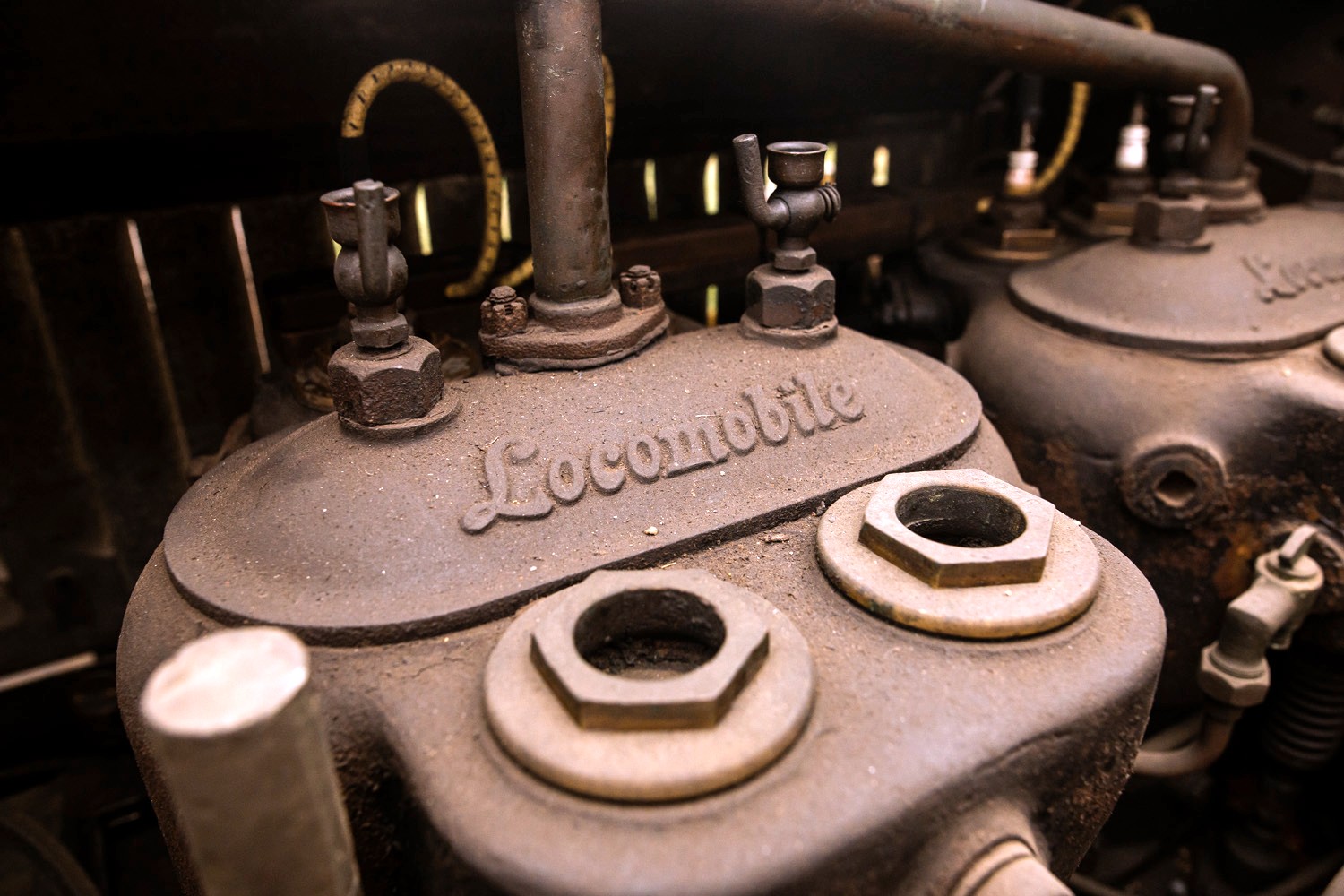
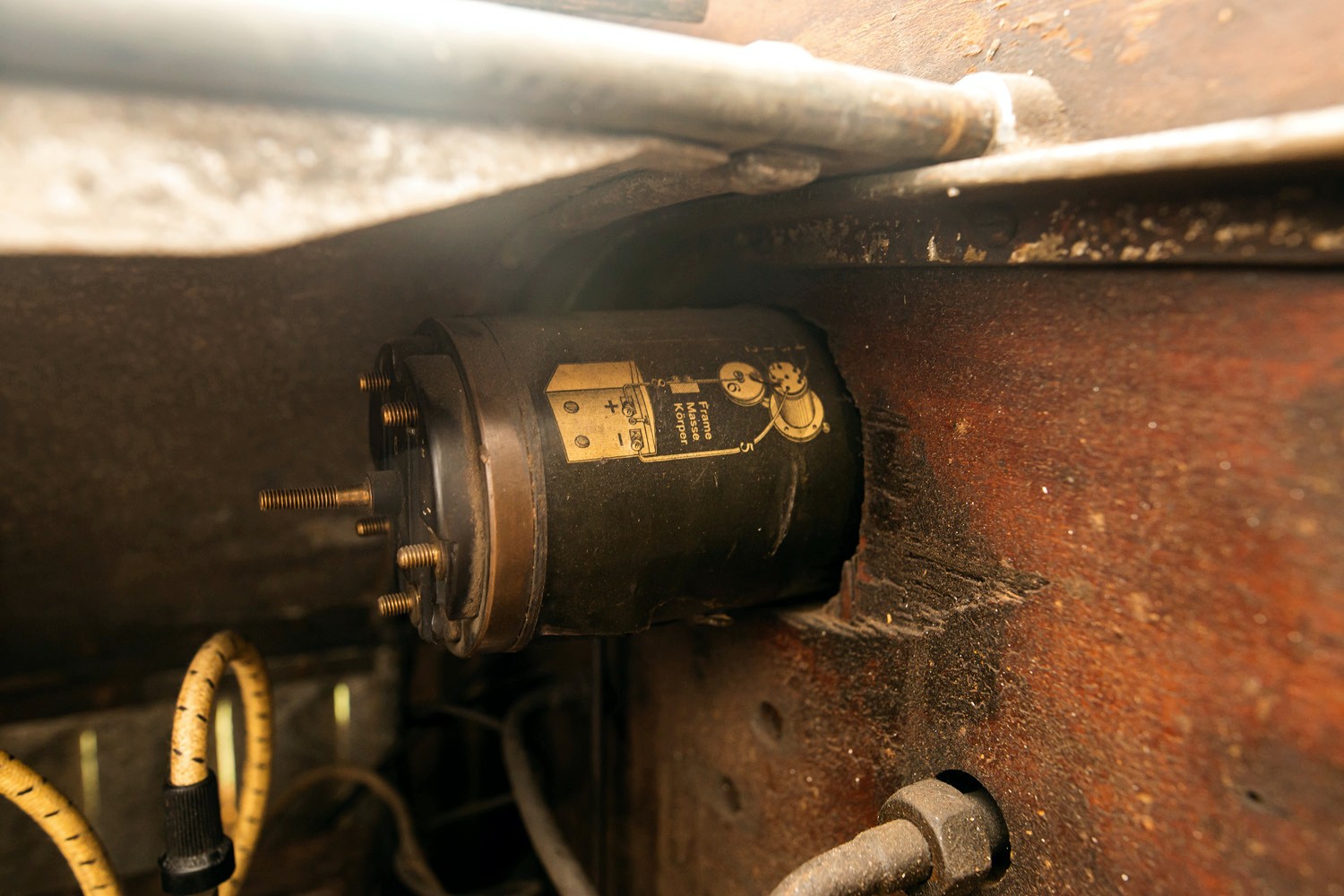
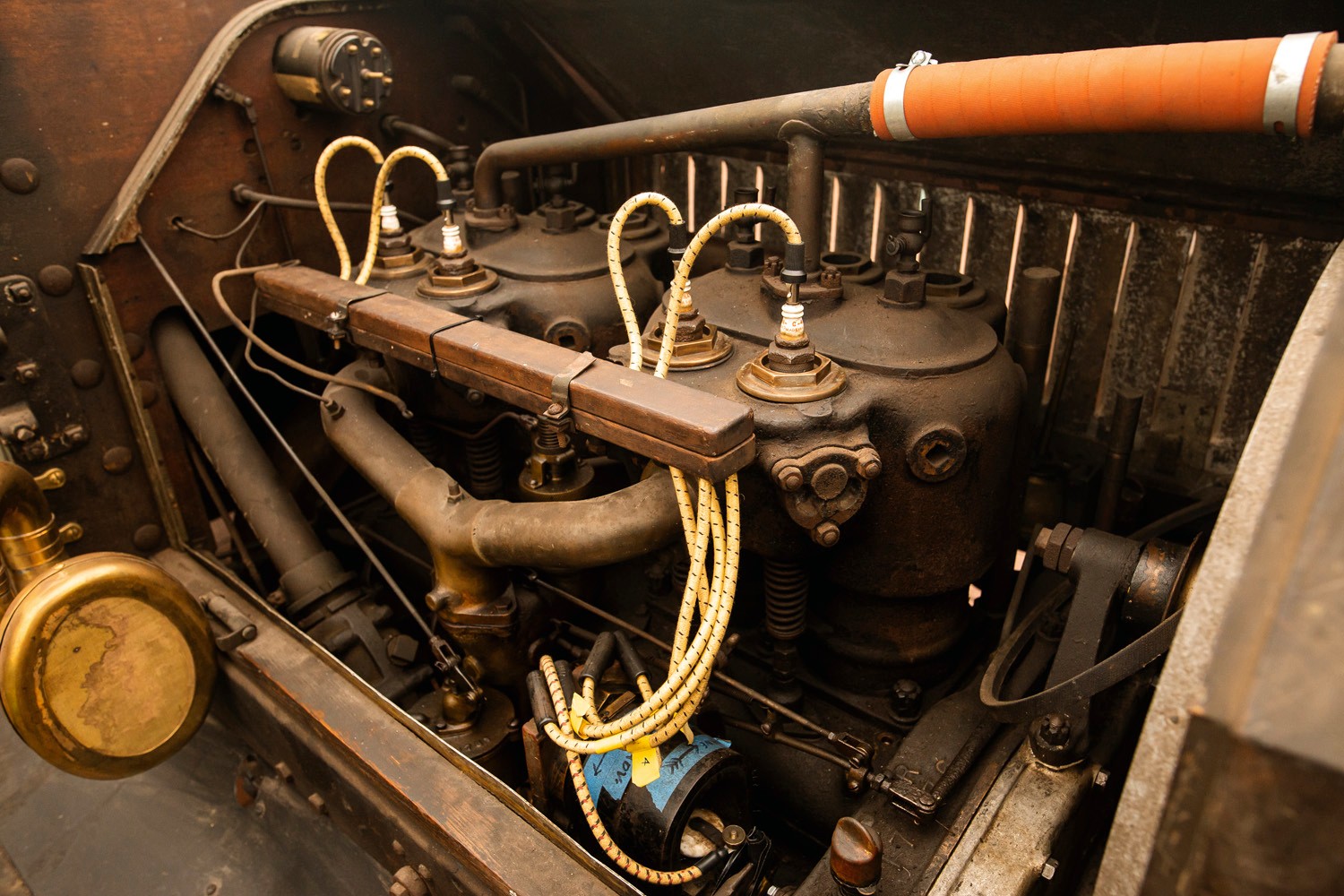
This extremely rare 1909 Locomobile Model 30 is in almost its exact original barn-find
condition with all original and correct accessories. The vehicle has had three owners, the
first of whom, a fruit and vegetable salesman, purchased the car in Connecticut. In the
1940s, he moved to Victor, New York, to farm and he used the car until the 1950s. After that, the
vehicle was tucked neatly into a garage alongside boxes until 1997. The family considered a
restoration at one point and removed most of the original deep blue paint but got no further
than that. The son of the original owner met a father and son, Clark and Clark Rittersbach,
driving an 1899 Locomobile Steam carriage at a local show, and sold the Model 30 to the
enthusiastic pair. They declared that the “Locomobile found them.”
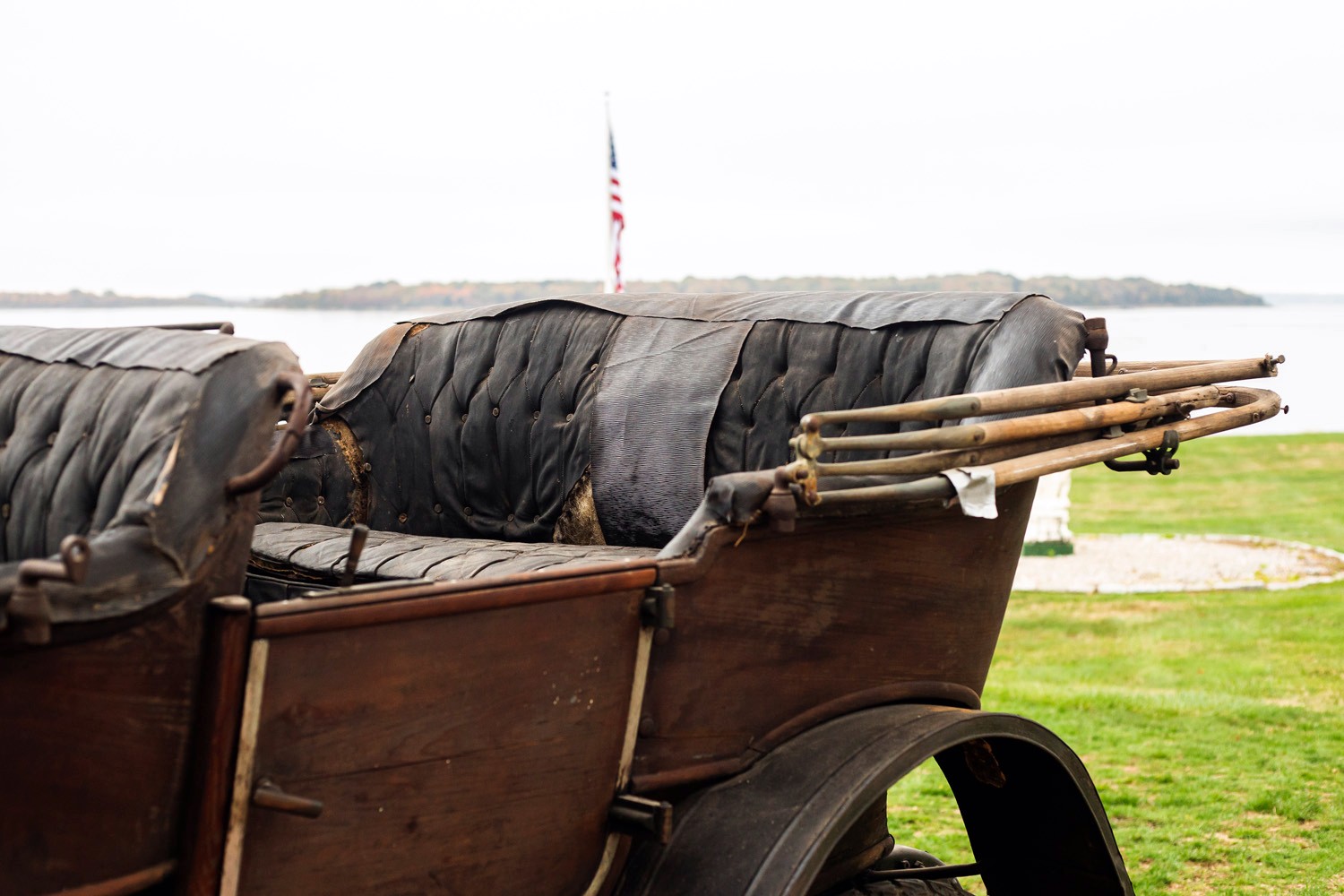
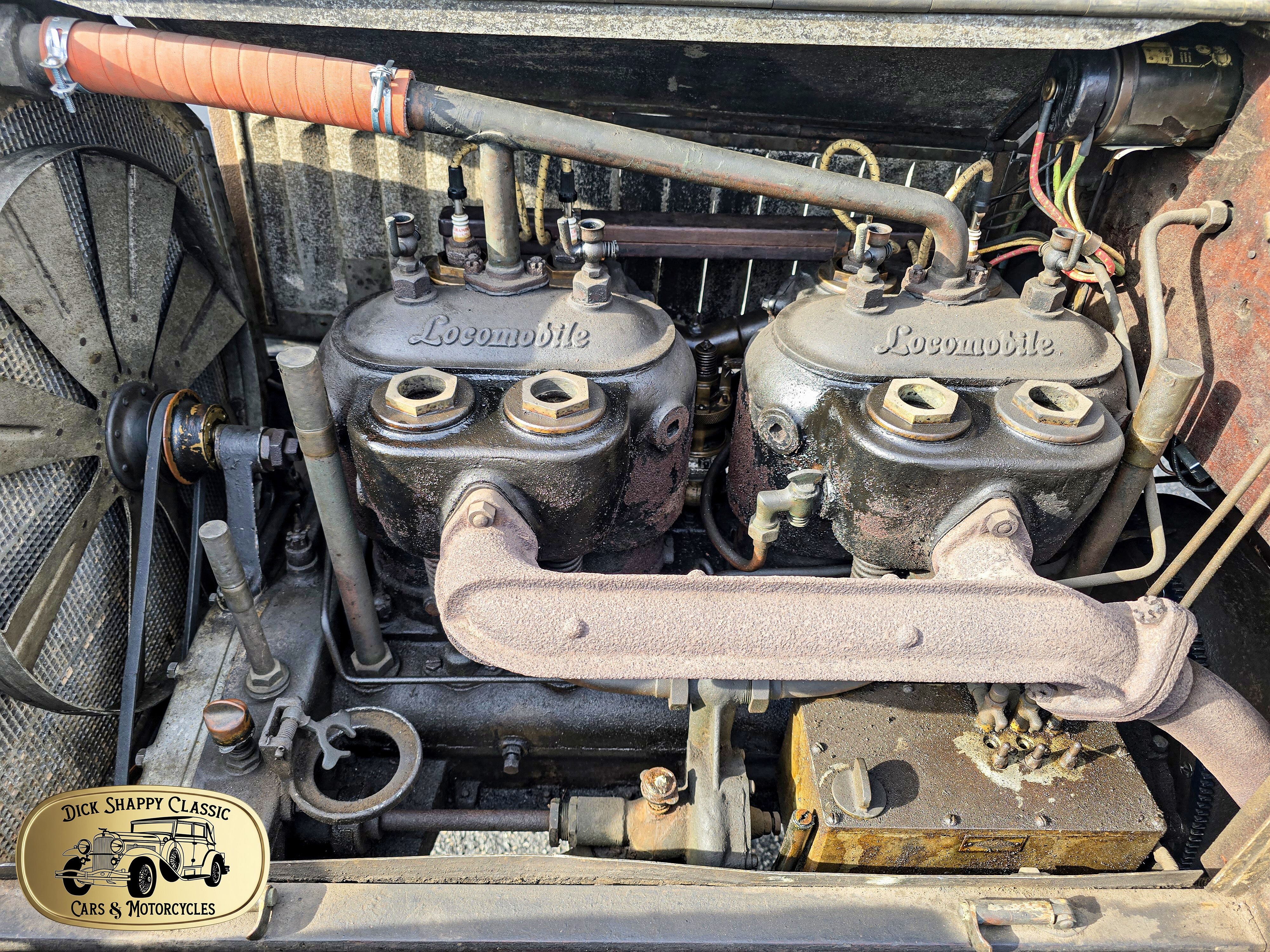
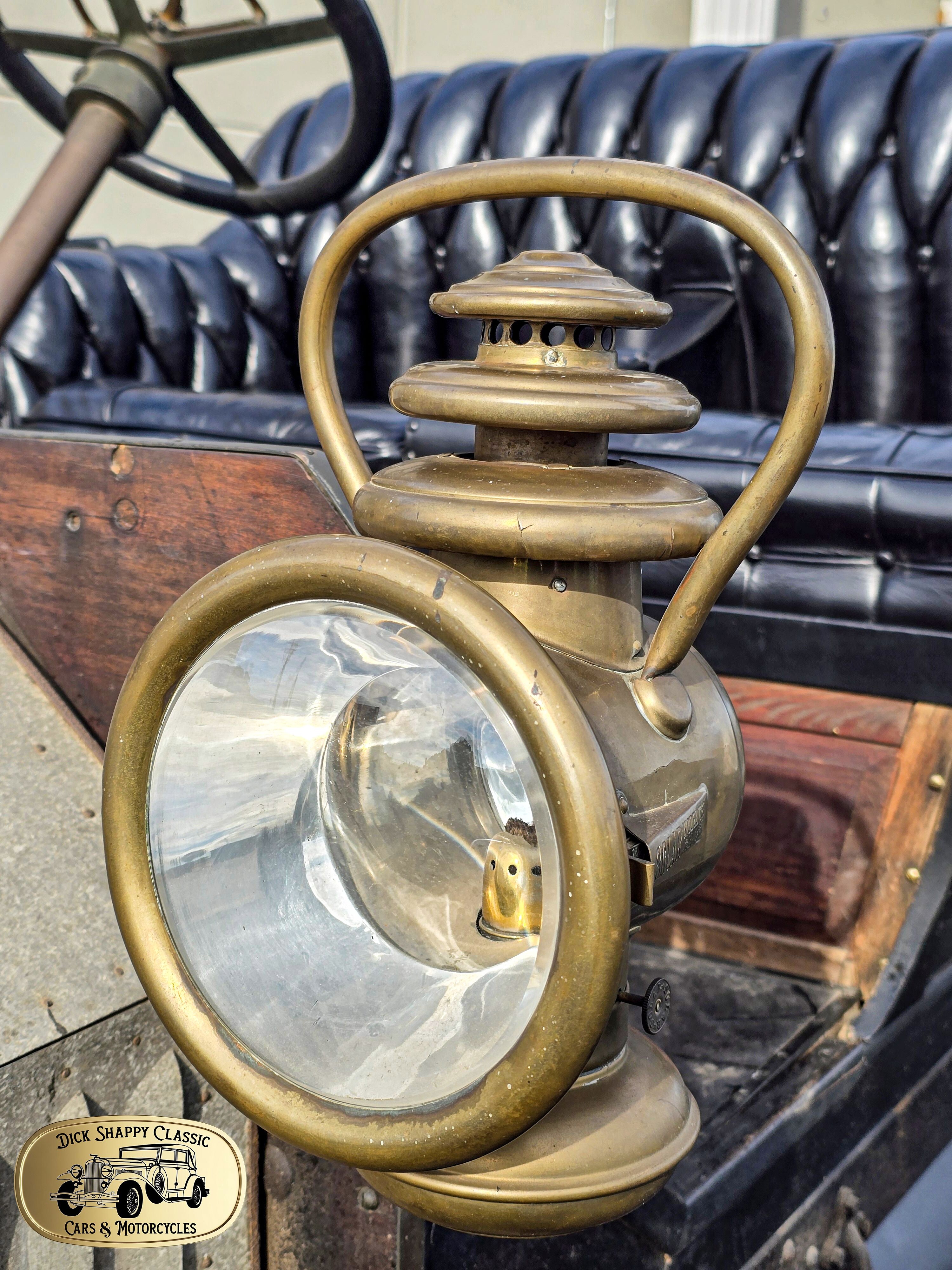
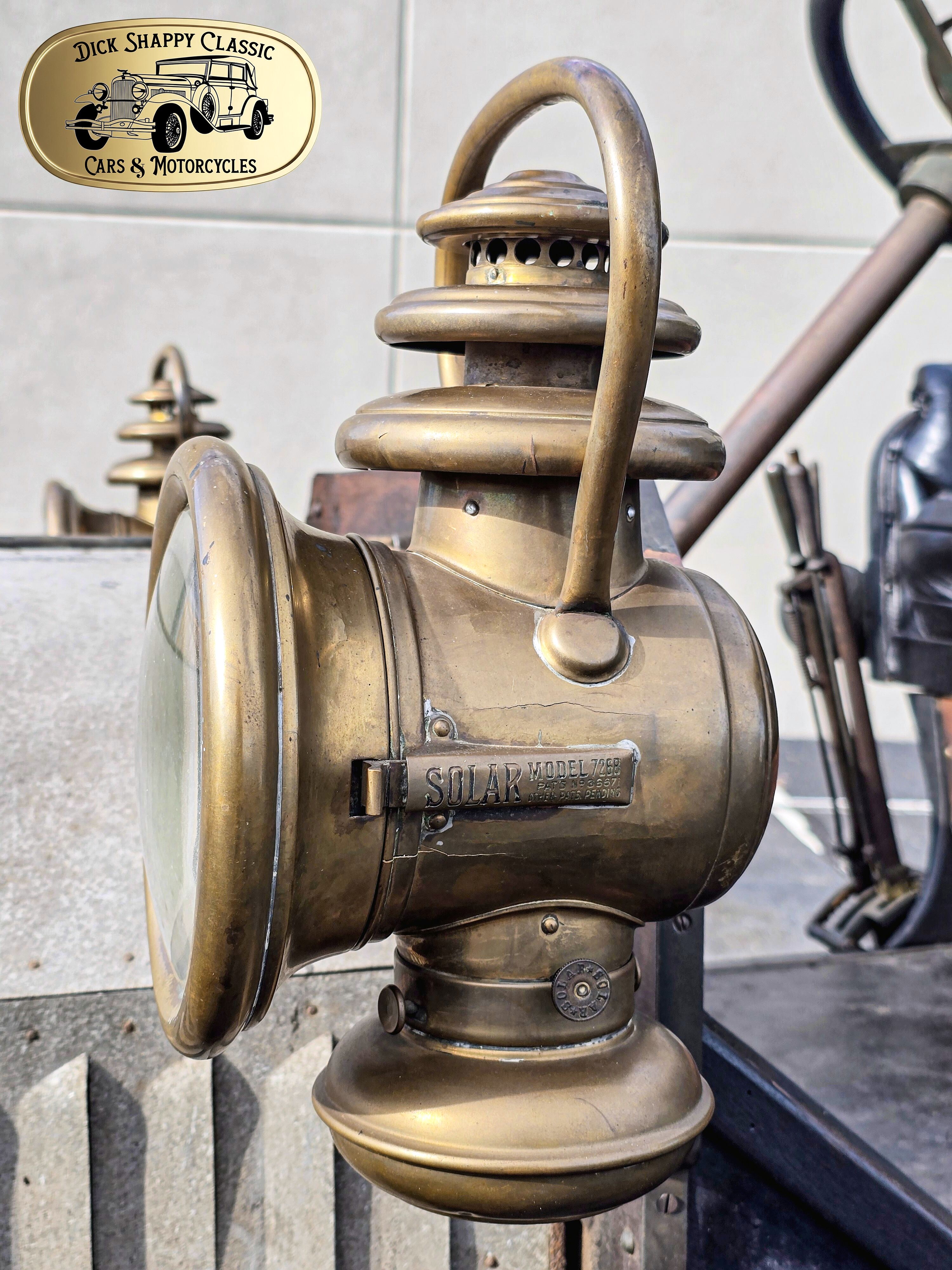
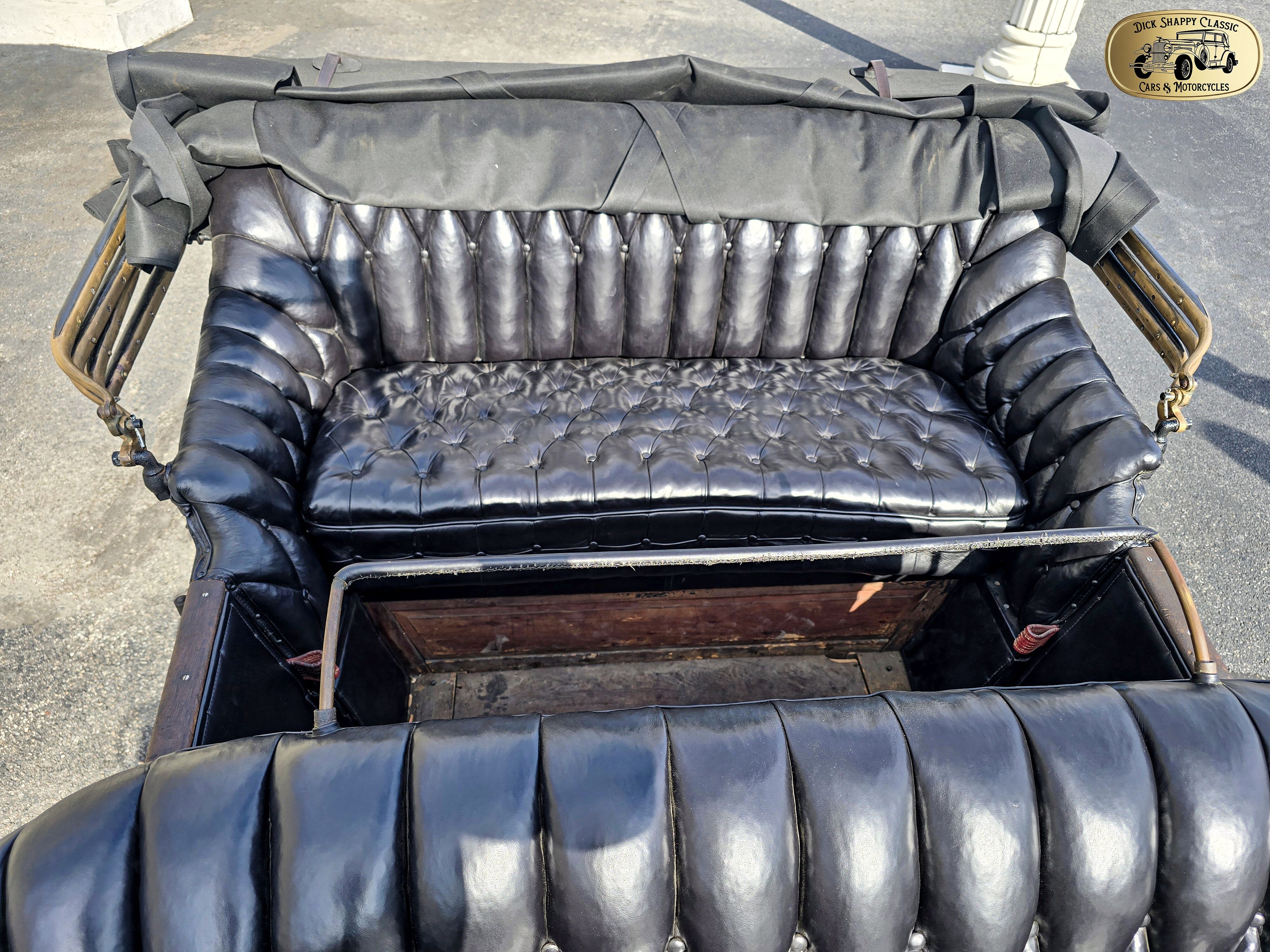
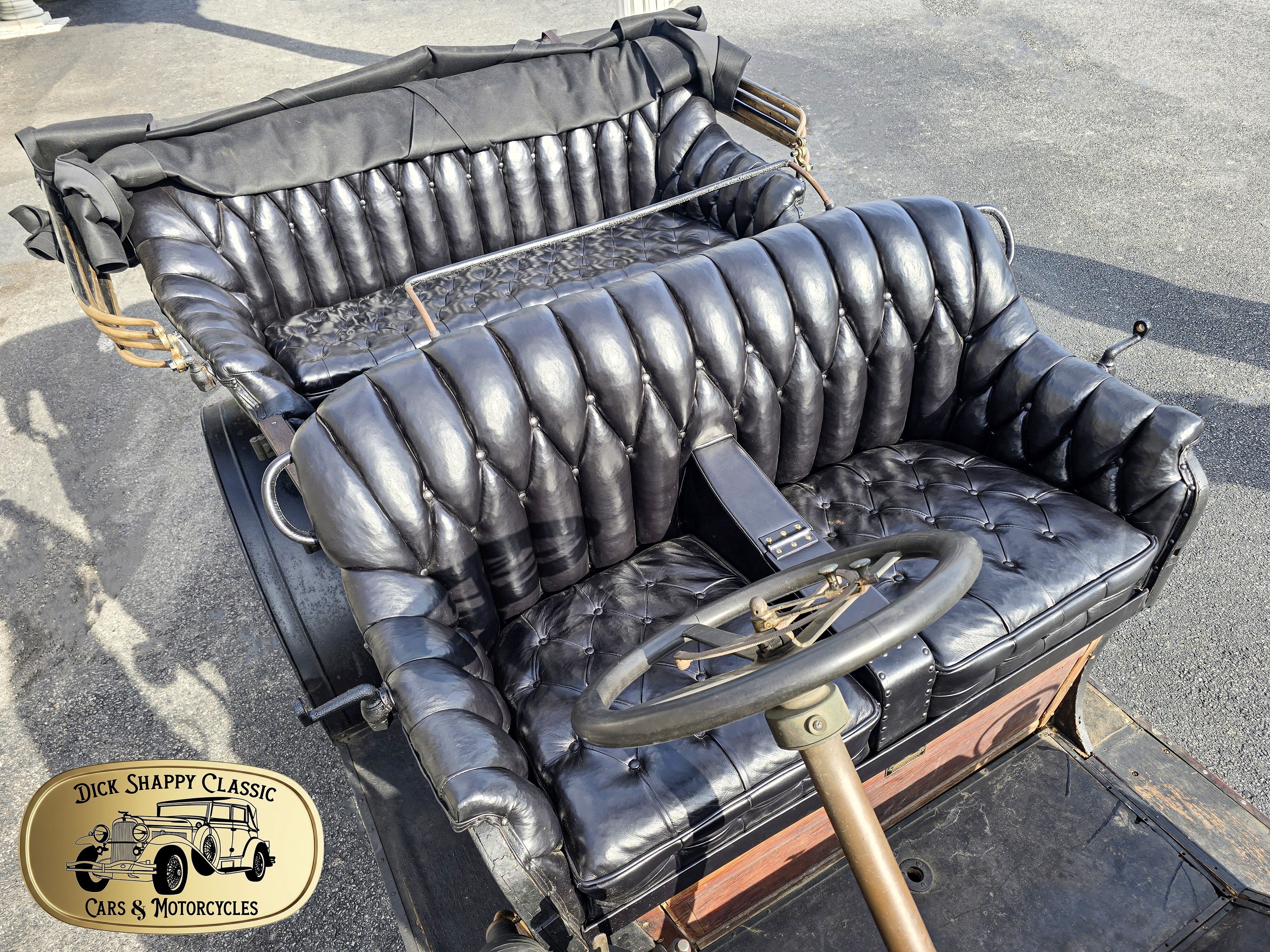
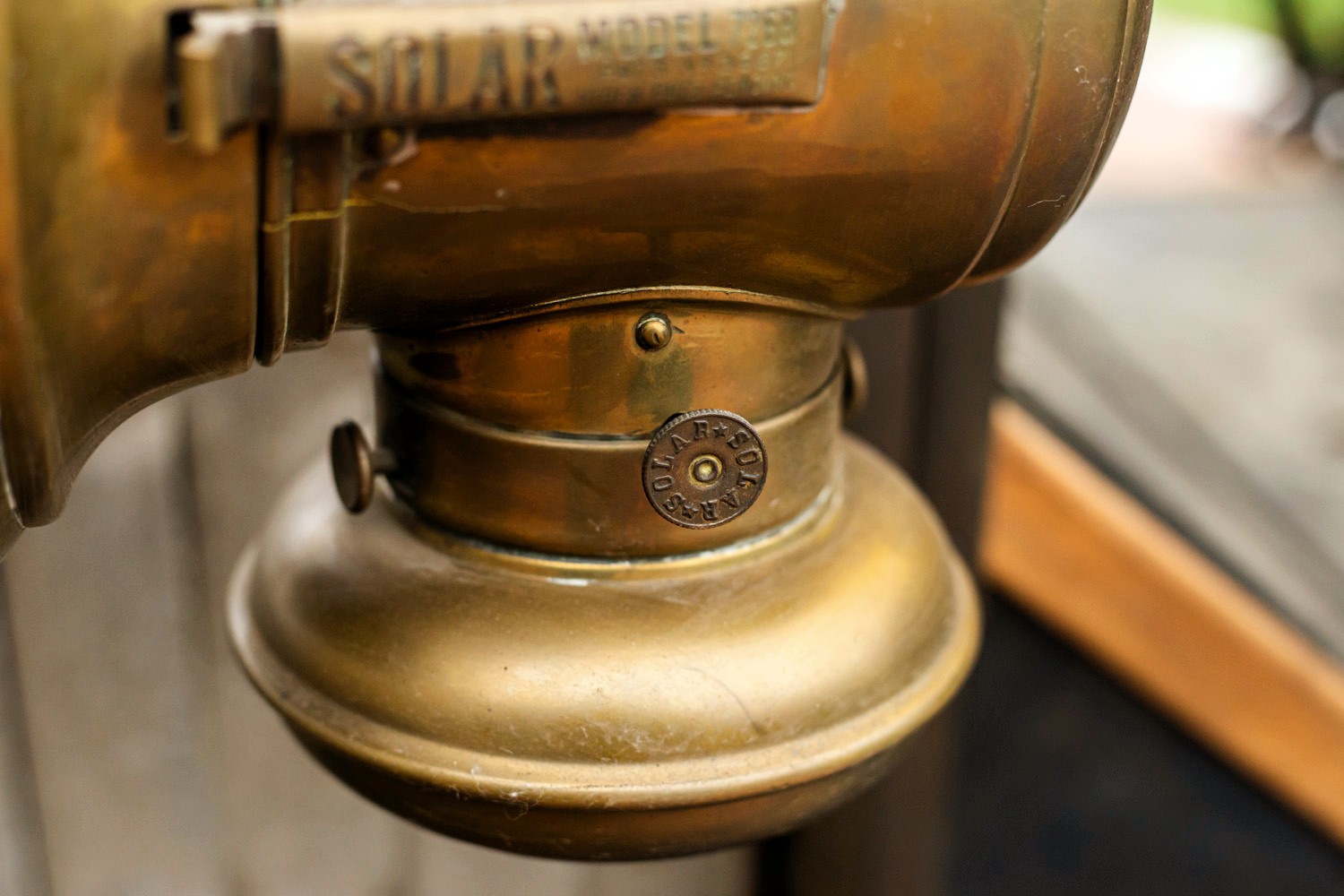
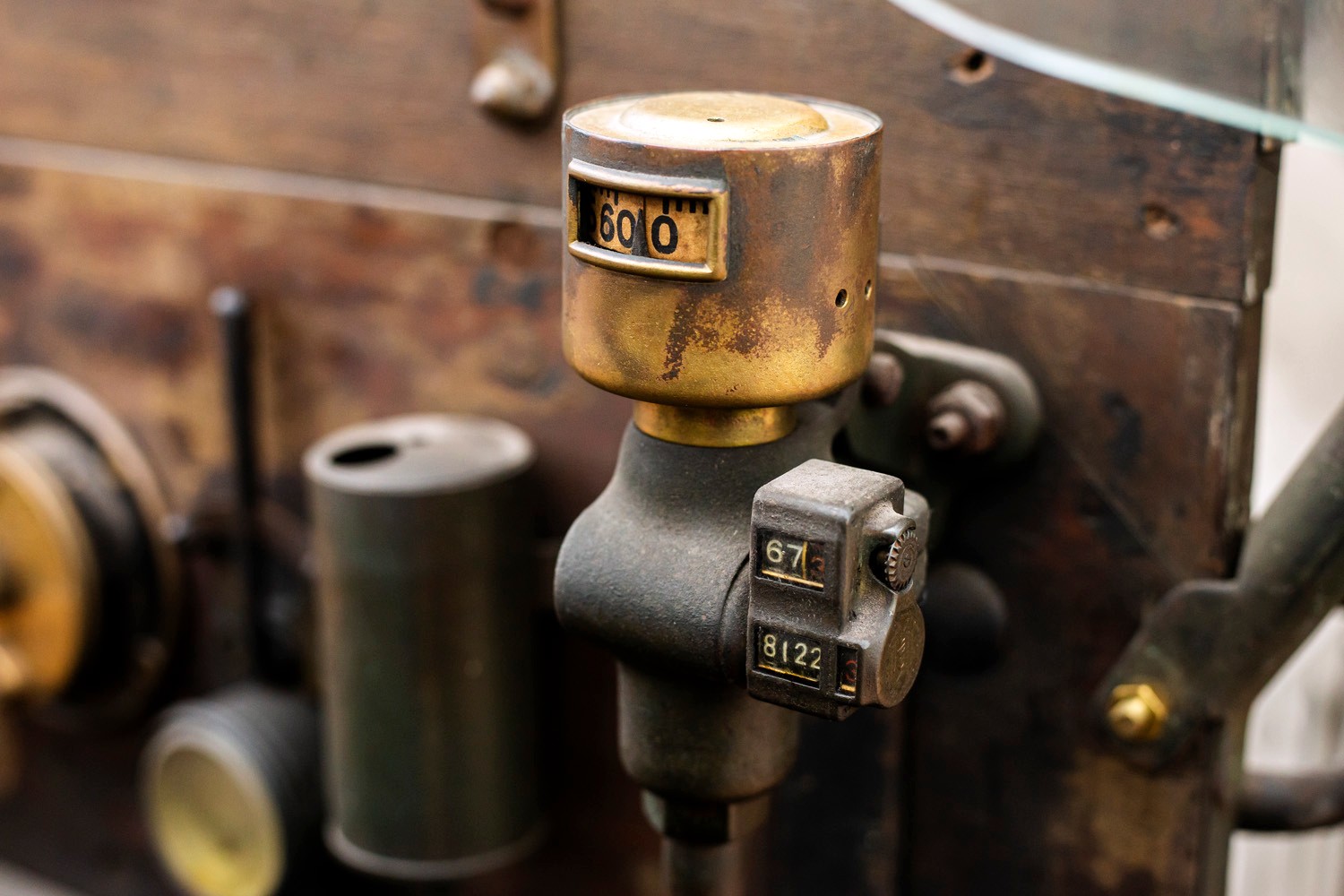
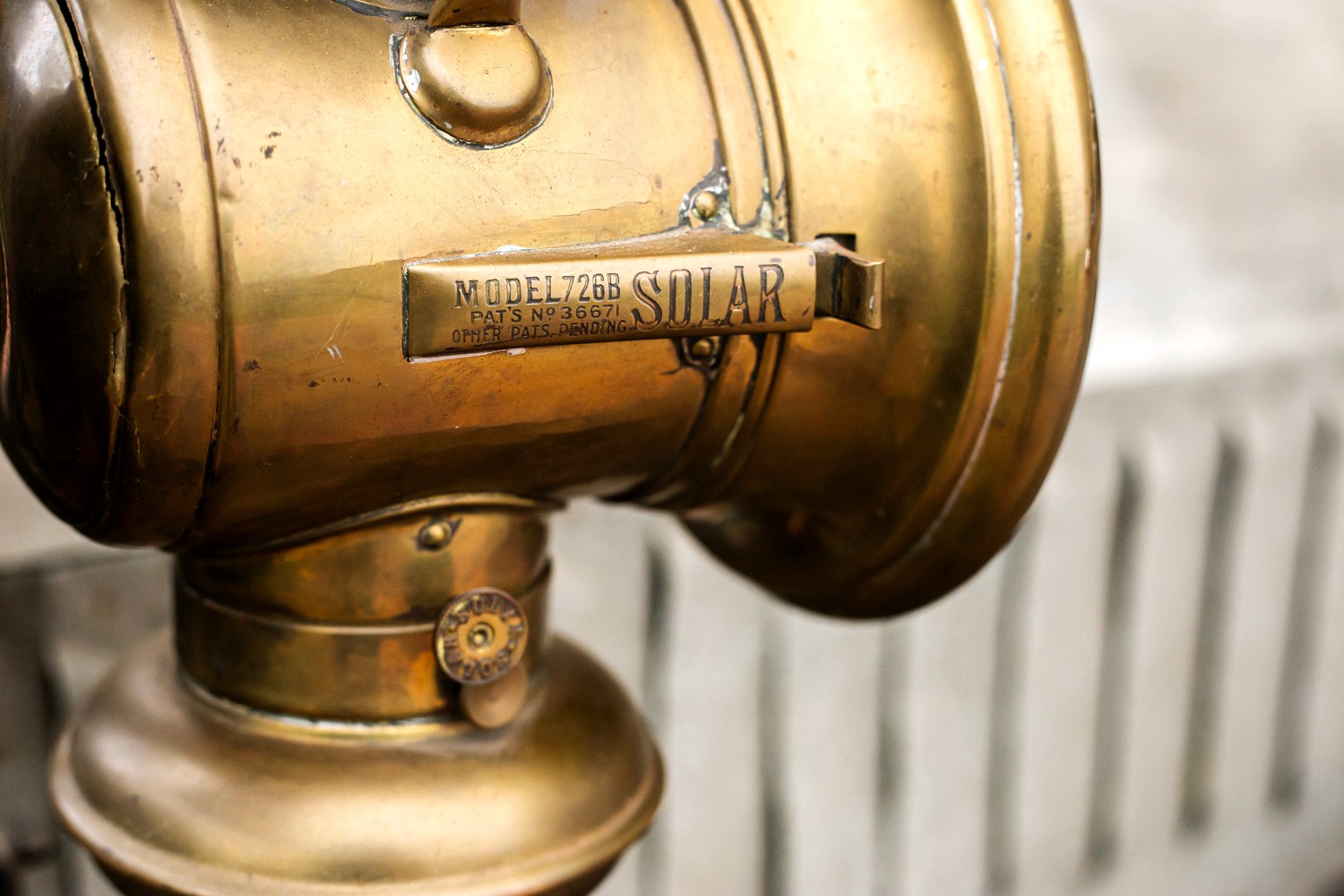
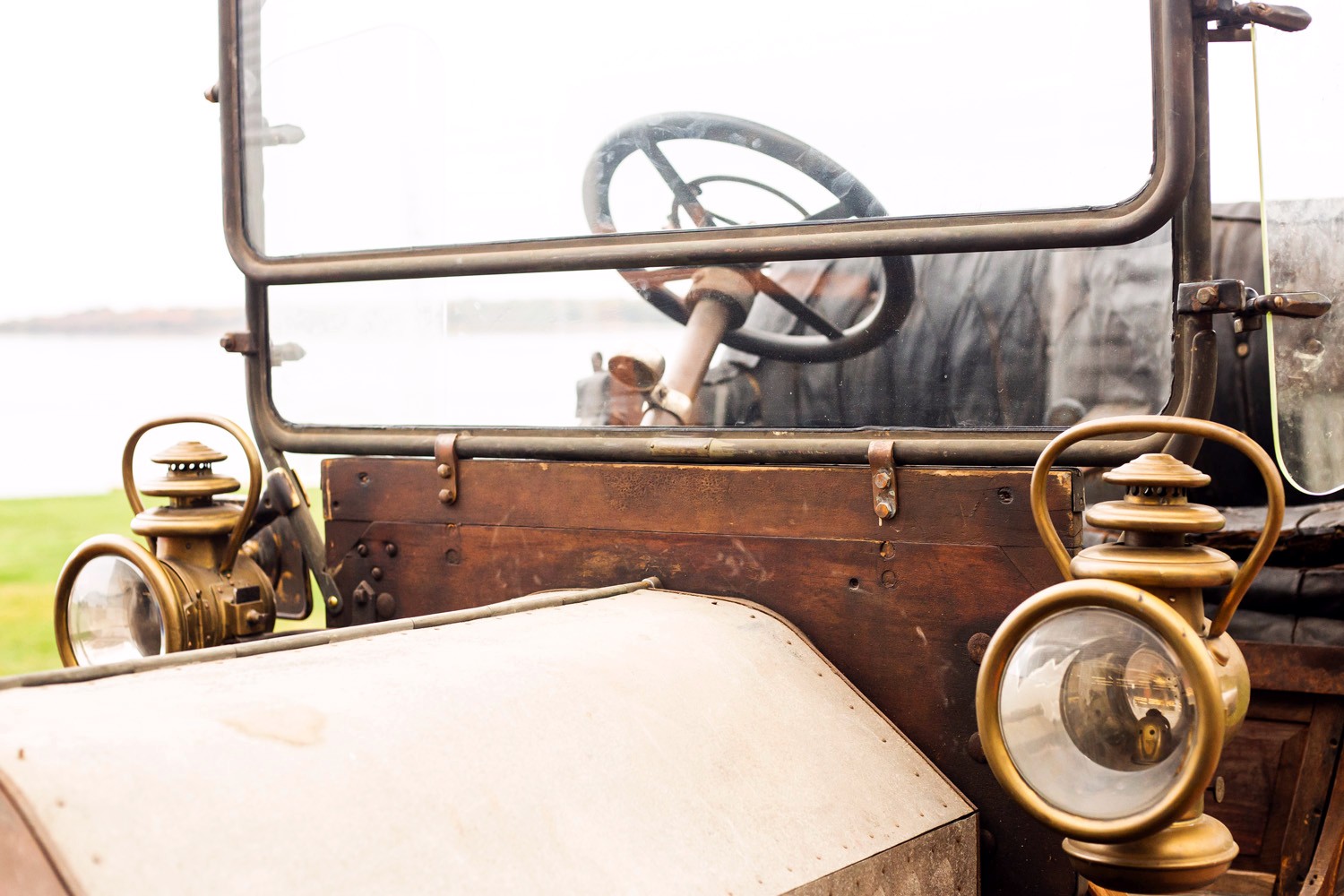
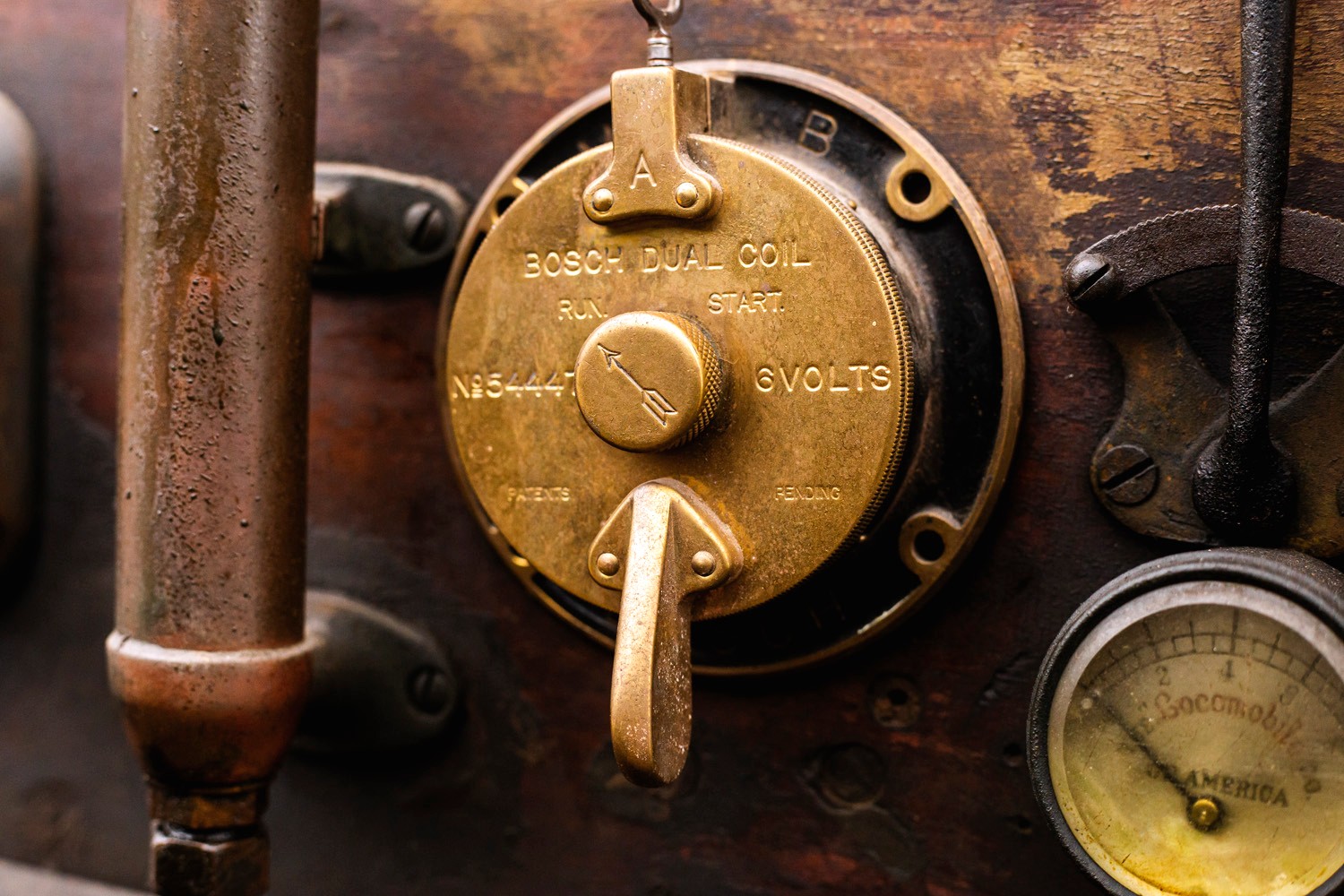
The upholstery did not weather the years as well as the rest of the vehicle, and since entering the collection of Dick Shappy, it has been painstakingly replaced and repaired with era-correct leather along with the top. The clutch has been repaired, and multiple mechanical adjustments to the engine and drivetrain were performed. It now runs smoothly and is ready for touring and show. It comes with the VIN PSR17676 and Rushmore Lens-Mirror Searchlight Solar Model 726B lamps, manufactured by Rushmore Dynamo Works in Plainfield, New Jersey. Rushmore also patented the Automatic Shaking Grate Generator. The ignition is a dual-coil Bosch, and the MotoMeter is a traditional Boyce from the MotoMeter Company. It also comes equipped with an Ingraham steering-column-mounted clock, a Locomobile speedometer, and a Lavigne Mfg. Co. lubricator from Detroit, Michigan.
LOCOMOBILE
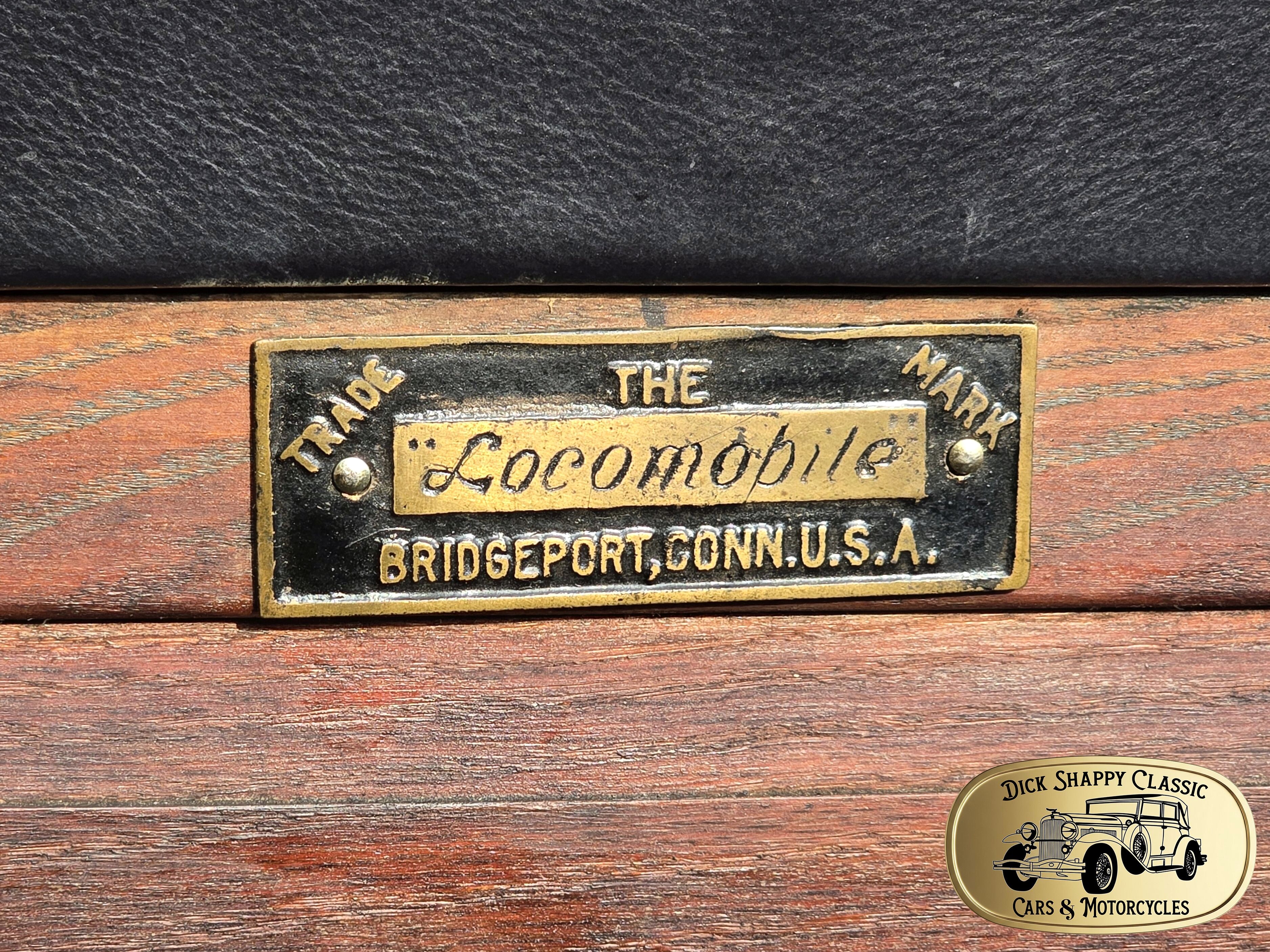
In 1899, John Brisben Walker (editor and publisher of The Cosmopolitan magazine) purchased the plans for a steam-powered vehicle from Francis and Freelan Stanley and partnered with paving contractor Amzi L. Barber to fill the 199 orders. Walker and Barber soon split. Walker founded the Mobile Company of America in New York, while Barber founded Locomobile with the Stanley twins as general managers in Watertown, Massachusetts. One of the earliest car manufacturers, they derived the name from “locomotive” and “automobile” and moved to Bridgeport, Connecticut, in 1900.
Until 1903, they manufactured small, affordable steam cars. Despite being described by author Rudyard Kipling as a “nickel-plated fraud” and being prone to kerosene fires, Locomobile sold over 4,000 unreliable steam-powered runabouts with seven different body styles. They were the first automobiles to be used in war, joining the British in the second Boer War, where they were used to dismantle a minefield and even to serve tea by tapping the boiler.
Andrew L. Riker designed a four-cylinder, steel-chassis, internal-combustion-powered luxury car in 1902 and pivoted production, selling the rights to the steam vehicle back to Stanley. The Stanley twins would go on to found the Stanley Motor Carriage Company, becoming Locomobile’s closest competitors. By 1908, George Robertson had won the Vanderbilt Cup with a Locomobile, making the company the first American-made manufacturer to win an international competition.
In 1911, the prestigious Type M was introduced, known more commonly as the Model 48 for its 48 HP, with an open body, large chassis, straight-six T-head engine with side valves, and impeccable workmanship and materials. It came with a hefty pricetag, going for $10,000 (over $330K in 2025), and offered custom lamp and metalwork from Tiffany Studios.
Orin Davis won the Los Angeles-Phoenix rally with a Locomobile in 1913, but Locomobile did not make much more of an impression in racing history, although Eva Mudge chose the Locomobile as her race car. She is believed to be the first female to hold a driver’s license, race a car, and also to get into an accident. Locomobile joined the war effort again in 1917, selling the Riker Truck to the British army and contributing more vehicles to WWI than any other American company.
Durant Motors Inc., led by Billy Durant, former CEO of General Motors, acquired Locomobile in 1922 and continued producing the Model 48. They came out with their own Locomobile 8-66 Junior Eight with a straight-eight engine and a much lower pricetag, along with several other vehicles, until they placed a Lycoming engine in the 8-70 of 1927, damaging the Locomobile name. Production ended in 1929, despite trying to save the company’s reputation with new 8-86 and 8-88s, after the stock market crash.
Locomobiles were known to be speedy, well-built luxury cars, revered for their precision engineering and beautiful craftsmanship. It’s no wonder the Locomobile Automobile Co. used the slogan, “The Best Built Car in America.”
See the 1909 Locomobile Model 30 Touring promotional video here (3 minute video).
See the 1909 Locomobile Model 30 Touring Completing the Audrain Newport to Bristol Veteran Car Tour 2025 here (2 minute video).
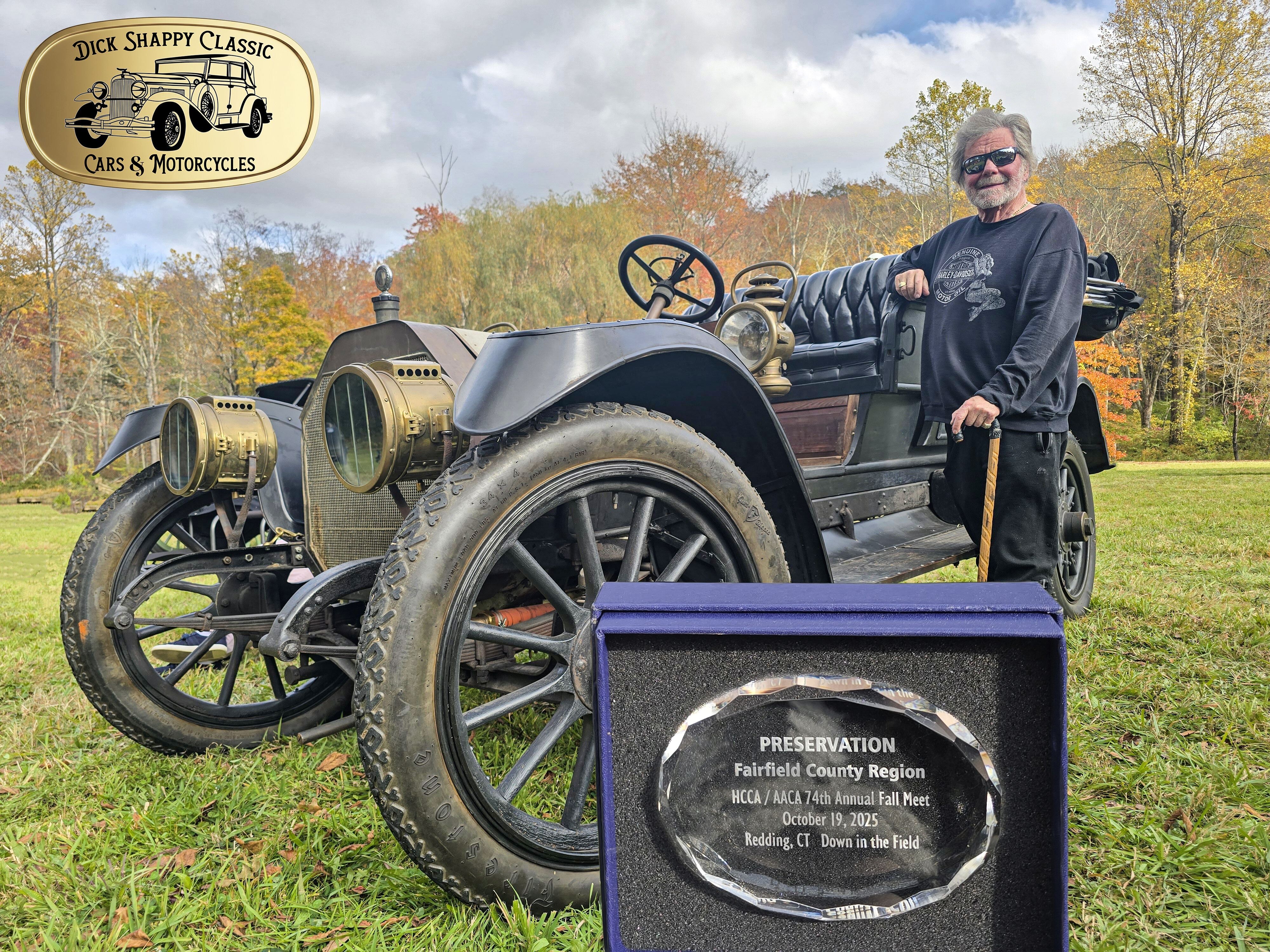
The 1909 Locomobile Model 30 Touring won the “Best Preservation” award at the Horseless Carriage Club of America 74th Annual New England Event in Redding, Connecticut - October 19, 2025. See awards photos here.
The upholstery did not weather the years as well as the rest of the vehicle, and since entering the collection of Dick Shappy, it has been painstakingly replaced and repaired with era-correct leather along with the top. The clutch has been repaired, and multiple mechanical adjustments to the engine and drivetrain were performed. It now runs smoothly and is ready for touring and show. It comes with the VIN PSR17676 and Rushmore Lens-Mirror Searchlight Solar Model 726B lamps, manufactured by Rushmore Dynamo Works in Plainfield, New Jersey. Rushmore also patented the Automatic Shaking Grate Generator. The ignition is a dual-coil Bosch, and the MotoMeter is a traditional Boyce from the MotoMeter Company. It also comes equipped with an Ingraham steering-column-mounted clock, a Locomobile speedometer, and a Lavigne Mfg. Co. lubricator from Detroit, Michigan.
LOCOMOBILE
In 1899, John Brisben Walker (editor and publisher of The Cosmopolitan magazine) purchased the plans for a steam-powered vehicle from Francis and Freelan Stanley and partnered with paving contractor Amzi L. Barber to fill the 199 orders. Walker and Barber soon split. Walker founded the Mobile Company of America in New York, while Barber founded Locomobile with the Stanley twins as general managers in Watertown, Massachusetts. One of the earliest car manufacturers, they derived the name from “locomotive” and “automobile” and moved to Bridgeport, Connecticut, in 1900.
Until 1903, they manufactured small, affordable steam cars. Despite being described by author Rudyard Kipling as a “nickel-plated fraud” and being prone to kerosene fires, Locomobile sold over 4,000 unreliable steam-powered runabouts with seven different body styles. They were the first automobiles to be used in war, joining the British in the second Boer War, where they were used to dismantle a minefield and even to serve tea by tapping the boiler.
Andrew L. Riker designed a four-cylinder, steel-chassis, internal-combustion-powered luxury car in 1902 and pivoted production, selling the rights to the steam vehicle back to Stanley. The Stanley twins would go on to found the Stanley Motor Carriage Company, becoming Locomobile’s closest competitors. By 1908, George Robertson had won the Vanderbilt Cup with a Locomobile, making the company the first American-made manufacturer to win an international competition.
In 1911, the prestigious Type M was introduced, known more commonly as the Model 48 for its 48 HP, with an open body, large chassis, straight-six T-head engine with side valves, and impeccable workmanship and materials. It came with a hefty pricetag, going for $10,000 (over $330K in 2025), and offered custom lamp and metalwork from Tiffany Studios.
Orin Davis won the Los Angeles-Phoenix rally with a Locomobile in 1913, but Locomobile did not make much more of an impression in racing history, although Eva Mudge chose the Locomobile as her race car. She is believed to be the first female to hold a driver’s license, race a car, and also to get into an accident. Locomobile joined the war effort again in 1917, selling the Riker Truck to the British army and contributing more vehicles to WWI than any other American company.
Durant Motors Inc., led by Billy Durant, former CEO of General Motors, acquired Locomobile in 1922 and continued producing the Model 48. They came out with their own Locomobile 8-66 Junior Eight with a straight-eight engine and a much lower pricetag, along with several other vehicles, until they placed a Lycoming engine in the 8-70 of 1927, damaging the Locomobile name. Production ended in 1929, despite trying to save the company’s reputation with new 8-86 and 8-88s, after the stock market crash.
Locomobiles were known to be speedy, well-built luxury cars, revered for their precision engineering and beautiful craftsmanship. It’s no wonder the Locomobile Automobile Co. used the slogan, “The Best Built Car in America.”
See the 1909 Locomobile Model 30 Touring promotional video here (3 minute video).
See the 1909 Locomobile Model 30 Touring Completing the Audrain Newport to Bristol Veteran Car Tour 2025 here (2 minute video).
The 1909 Locomobile Model 30 Touring won the “Best Preservation” award at the Horseless Carriage Club of America 74th Annual New England Event in Redding, Connecticut - October 19, 2025. See awards photos here.